

Managing cyber risk in a digital age powerpoint presentation slides





Try Before you Buy Download Free Sample Product
 Impress Your
Audience
 100%
Editable
 Save Hours
of Time


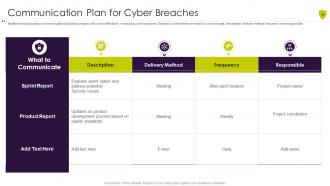
As IT organizations strive for digitization, many face significant cybersecurity challenges. Here is an efficiently designed template on Managing Cyber Risk in A Digital Age that will benefit the companies that want to introduce an information security program for effectively handling cybersecurity risks across their digital landscape. The presentation starts with the global market insights slide. a company can use this slide to address the global market summary of cybersecurity. Market insights slide is followed by declines such as the companys digitalization levels, priority requirements for buying IoT products, threat drivers, and emerging technologies impact cybersecurity. To ensure information security, the company may use defining business priorities slide, focusing on effective risk and incident management. With the gap identification slide, the company may highlight its current approach and the details of its process, significant flaws, and risk management cost. A communication plan for cyber breaches will assist the company in maintaining effective communication between different team owners and coordinators, which will aid in the efficient handling of risk events. Finally, metrics to track the program effectiveness section will help the company track security risk events. Get access to this powerful template now.
People who downloaded this PowerPoint presentation also viewed the following :
Content of this Powerpoint Presentation
Slide 1: This slide introduces Managing Cyber Risk in A Digital Age. State Your Company Name and begin.
Slide 2: This slide shows Agenda of Managing Cyber Risk in A Digital Age.
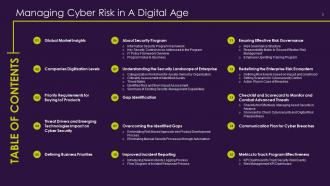
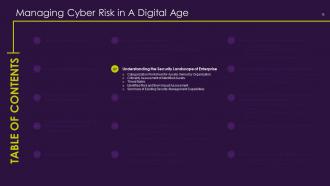
Slide 3: This slide presents Table of Content for the presentation.
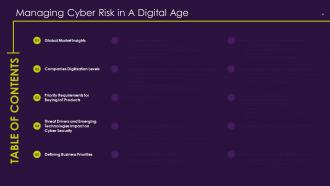
Slide 4: This is another slide continuing Table of Content for the presentation.
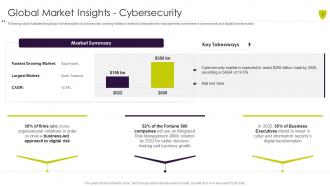
Slide 5: This slide shows global market insights of cybersecurity covering statistics related to integrated risk management, investment in cybersecurity and digital transformation.
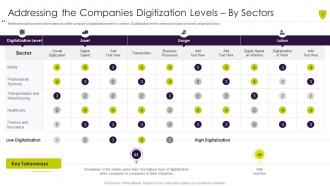
Slide 6: This slide displays Addressing the Companies Digitization Levels – By Sectors.
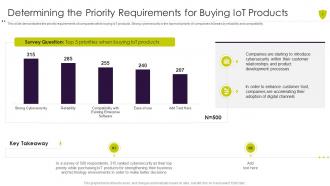
Slide 7: This slide represents Determining the Priority Requirements for Buying IoT Products.
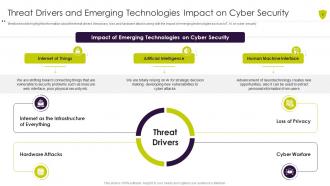
Slide 8: This slide shows Threat Drivers and Emerging Technologies Impact on Cyber Security.
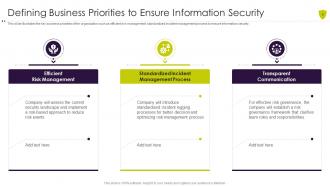
Slide 9: This slide presents Defining Business Priorities to Ensure Information Security.
Slide 10: This slide shows Table of Content for the presentation.
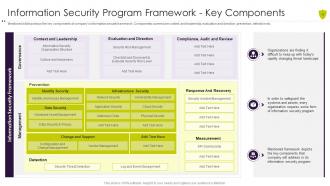
Slide 11: This slide displays key components of company’s information security framework.
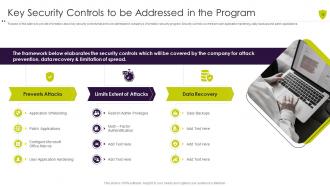
Slide 12: This slide represents Key Security Controls to be Addressed in the Program.
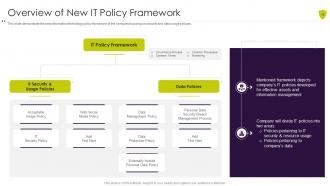
Slide 13: This slide demonstrate the new information technology policy framework of the company focusing on security and data usage policies.
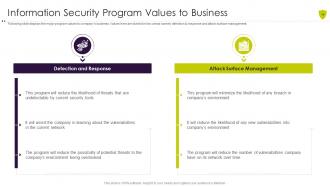
Slide 14: This slide presents Information Security Program Values to Business.
Slide 15: This slide shows Table of Content for the presentation.
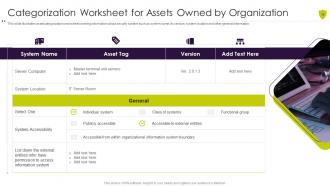
Slide 16: This slide displays Categorization Worksheet for Assets Owned by Organization.
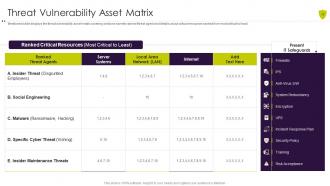
Slide 17: This slide represents threat vulnerability asset matrix covering sections namely ranked threat agent and details about critical resources.
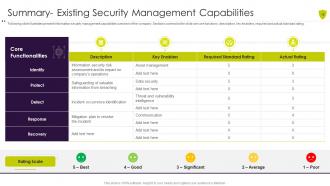
Slide 18: This slide shows Summary- Existing Security Management Capabilities.
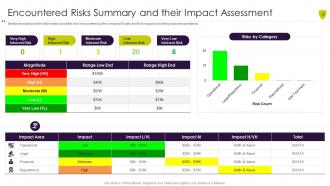
Slide 19: This slide presents Encountered Risks Summary and their Impact Assessment.
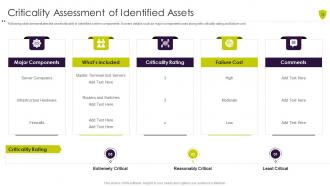
Slide 20: This slide shows asset criticality of identified system components.
Slide 21: This slide displays Table of Content for the presentation.
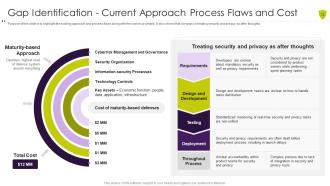
Slide 22: This slide represents Gap Identification - Current Approach Process Flaws and Cost.
Slide 23: This slide shows Table of Content for the presentation.
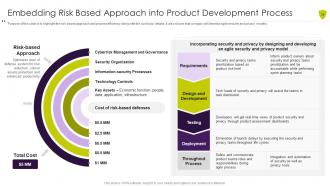
Slide 24: This slide presents risk-based approach and process efficiency along with the cost incur details.
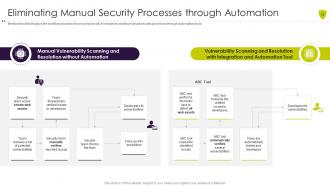
Slide 25: This slide shows Eliminating Manual Security Processes through Automation.
Slide 26: This slide displays Table of Content for the presentation.
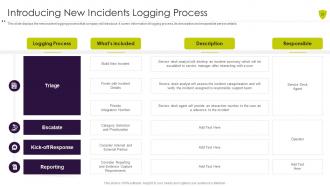
Slide 27: This slide represents the new incident logging process that company will introduce.
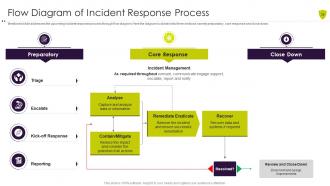
Slide 28: This slide shows upcoming incident response process through flow diagram.
Slide 29: This slide presents Table of Content for the presentation.
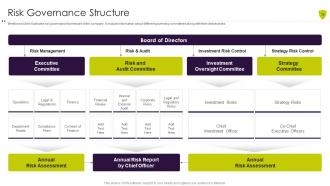
Slide 30: This slide shows risk governance framework of the company.
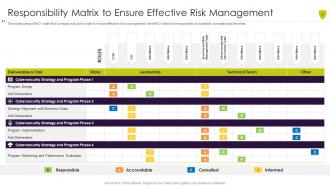
Slide 31: This slide displays RACI matrix that company will use in order to ensure effective risks management.
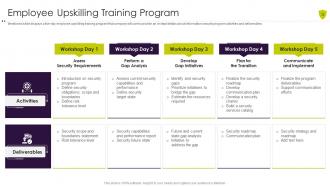
Slide 32: This slide represents five-day employee upskilling training program that company will use to provide an in-dept details about information security program activities and deliverables.
Slide 33: This slide shows Table of Content for the presentation.
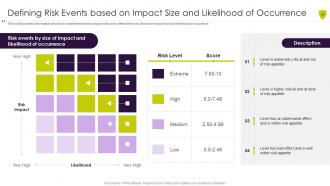
Slide 34: This slide presents Defining Risk Events based on Impact Size and Likelihood of Occurrence.
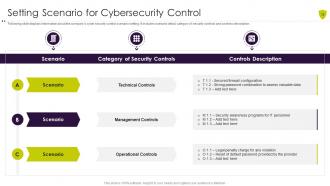
Slide 35: This slide shows information about the company’s cyber security control scenario setting.
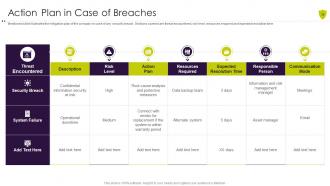
Slide 36: This slide displays mitigation plan of the company in case of any security breach.
Slide 37: This slide represents Table of Content for the presentation.
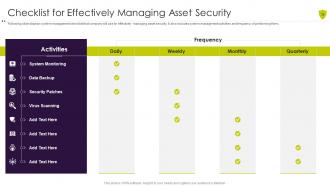
Slide 38: This slide shows Checklist for Effectively Managing Asset Security.
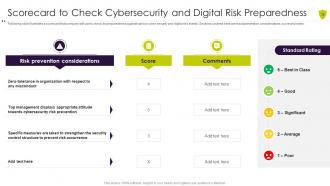
Slide 39: This slide presents Scorecard to Check Cybersecurity and Digital Risk Preparedness.
Slide 40: This slide shows communication plan that company will use for effectively managing cyber breaches.
Slide 41: This slide displays Table of Content for the presentation.
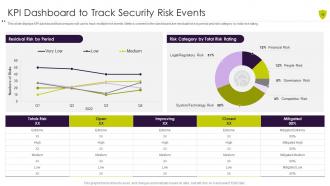
Slide 42: This slide displays KPI dashboard that company will use to track multiple risk events.
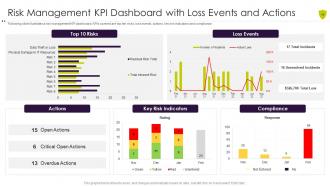
Slide 43: This slide shows Risk Management KPI Dashboard with Loss Events and Actions.
Slide 44: This slide displays Icons for Managing Cyber Risk in A Digital Age.
Slide 45: This slide is titled as Additional Slides for moving forward.
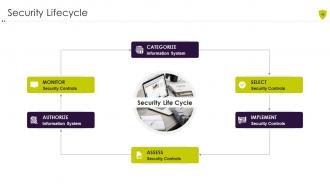
Slide 46: This slide displays Security Life Cycle describing- Information System, Security Controls, etc.
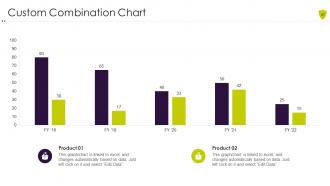
Slide 47: This slide displays Custom Combination chart with two products comparison.
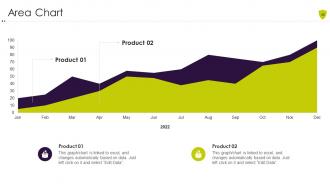
Slide 48: This slide depicts Area chart with two products comparison.
Slide 49: This is About Us slide to show company specifications etc.
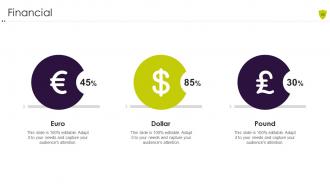
Slide 50: This is a Financial slide. Show your finance related stuff here.
Slide 51: This is an Idea Generation slide to state a new idea or highlight information, specifications etc.
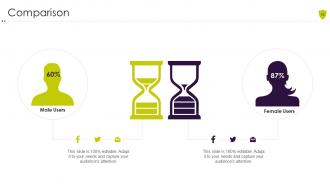
Slide 52: This is a Comparison slide to state comparison between commodities, entities etc.
Slide 53: This slide depicts Venn diagram with text boxes.
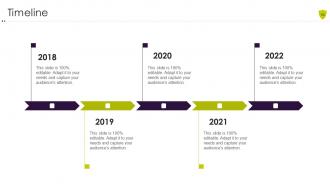
Slide 54: This is a Timeline slide. Show data related to time intervals here.
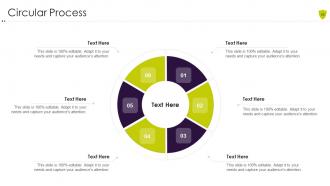
Slide 55: This slide shows Circular Diagram with additional textboxes.
Slide 56: This is a Thank You slide with address, contact numbers and email address.
Managing cyber risk in a digital age powerpoint presentation slides with all 61 slides:
Use our Managing Cyber Risk In A Digital Age Powerpoint Presentation Slides to effectively help you save your valuable time. They are readymade to fit into any presentation structure.








FAQs for Managing cyber risk in a digital age
You'll want to nail down five main things: figure out what you're actually protecting and what could go wrong (risk assessment), set up policies people will follow, have a solid incident response plan, monitor everything consistently, and train your team regularly. Honestly, most places totally mess up the monitoring part - they'll set it up then never touch it again. Oh, and do those tabletop exercises to test your response plan. Trust me, you don't want to discover your plan sucks during an actual attack. If you're starting from scratch though, get your asset inventory sorted first.
Start by making a list of everything you've got - servers, databases, apps, network stuff, all of it. Then score each thing on three areas: how valuable the data is, how much your business needs it, and what happens if it gets hacked. I know it sounds like a pain, but trust me on this one. Use a 1-5 scale for each category, multiply those numbers together, and boom - you've got your priority list. Put your best security on the high-scoring stuff first. Way better than trying to protect everything equally (which never works anyway).
Dude, train your employees regularly - that's where most hackers get in anyway. People click sketchy links or give away passwords without thinking twice. Teach them to spot phishing emails and use decent passwords. Honestly, those boring once-a-year meetings are useless though. You need interactive stuff that actually sticks. Here's the thing - hackers specifically target employees because they know people mess up. But if your team's trained well? They'll catch suspicious stuff and alert you before it becomes a nightmare. Make them your first line of defense instead of your biggest vulnerability.
Start with pen testing to find your real weak spots. Most companies obsess over useless vanity metrics - super annoying. Track stuff that actually matters: how fast you catch incidents, patch rates, response times. Can your people spot phishing emails? That's way more valuable than tracking training completions. Monthly leadership reviews work best. Oh, and definitely set up a simple dashboard - nothing fancy, just the core metrics that show if you're actually reducing risk or just looking busy.
Honestly, start with OpenVAS - it's free and perfect for learning the ropes. Nessus is probably the gold standard for network scanning, though it'll cost you. For web apps, OWASP ZAP works great at catching those annoying security holes. Metasploit is crazy powerful but maybe overkill unless you're doing serious pen testing. Oh, and if you want something that runs constantly in the background, Qualys or Rapid7 are solid choices. I'd definitely mess around with the free stuff first before dropping money on enterprise tools. You'll figure out what you actually need pretty quickly.
Look, compliance basically forces your hand on cyber risk - you're stuck building around stuff like GDPR or SOX whether it fits your actual threats or not. Sometimes it's pure box-checking, which is annoying. But here's the thing - those mandatory requirements actually give you decent groundwork. You get minimum security standards, required incident response plans, regular audits. The trick is using compliance as your starting point, not your finish line. Don't stop there though. Stack your real cyber strategy on top of what's required, because honestly? The bare minimum won't cut it against actual attackers.
Think of your incident response plan as your "oh shit, now what?" playbook for your overall cyber strategy. Match your response procedures to the risks you've already spotted - like if ransomware's your biggest worry, you better have solid ransomware steps locked and loaded. Don't just create generic "cyber incident" responses that could mean anything. Get your IR team involved in risk assessments too so they actually understand what matters to the business. Honestly, most companies mess this up. Start by checking if your current response plans even cover the scenarios in your risk register - bet you'll find some holes.
Here's the thing - you gotta speak their language, which is money. Skip all the tech speak and show them real dollar signs: "Database breach = $2M in fines plus we lose half our customers." That hits different than explaining attack vectors, trust me. Set up simple dashboards with green/yellow/red so they get it instantly. Don't wait for disasters to communicate either - regular updates keep you on their radar. Oh, and here's what separates good security folks from annoying ones: always bring solutions. Nobody wants to hear about problems without fixes.
Look, third-party risk management is basically knowing you're only as strong as your weakest vendor. Your suppliers and contractors can access your systems or data, right? One breach on their end becomes your headache instantly - SolarWinds was a perfect example of this nightmare scenario. You've got to check their security practices and build requirements into contracts. Then keep monitoring them because things change. Here's what actually works: map out which vendors touch what data first. That way you can focus your security reviews on the riskiest ones instead of wasting time on everyone equally.
Track both leading and lagging indicators - you need the full picture. Focus on incident response times, monthly vuln fixes, phishing test results, and training completion rates. Patch compliance and backup success rates sound boring but they'll save your ass. Also measure breach costs, downtime, and compliance scores after incidents happen. Honestly, most people track way too many metrics and get overwhelmed. Pick maybe 5-7 that match your actual risk profile. Start collecting data now, worry about industry benchmarks later once you've got some baseline numbers to work with.
Stop thinking of cybersecurity as just another expense. Figure out what assets would actually kill your revenue if they got hit - that's where you spend first. Map every security investment to real business outcomes: customer trust, staying compliant, keeping operations running. Quick wins are your best friend here because they prove value fast. Then you can build on that momentum. Present it as smart risk management with actual ROI, not just "we need protection from bad guys" (even though we totally do). Leadership responds way better when you connect the dots to money and business goals they already care about.
Dude, the AI stuff is getting genuinely terrifying - deepfakes that can mimic voices perfectly, fake videos, the whole nine yards. Supply chain attacks are massive too since hackers just hit your vendors instead of going after you directly. Way easier for them. Cloud misconfigurations are everywhere because everyone rushed to remote work without thinking security through properly. I swear there's some new attack method trending every other day! Your best bet is keeping your team in the loop with regular threat updates so they know what's actually happening out there.
Look, cyber insurance isn't some cure-all for bad security habits. Do a real risk assessment first - insurers can smell lazy IT practices from miles away. Coverage is all over the place between companies, so definitely shop around. Some policies are basically useless when you actually need them. Business interruption, data recovery, legal fees - that's the stuff you want covered, not just the basic breach notifications. Oh and document everything now while you're thinking about it. Claims are way easier when you've got your paperwork sorted. Match your coverage to what you'd actually lose if things went sideways.
You know how hackers don't exactly work 9-5? That's why continuous monitoring is huge - it's like having eyes on your network 24/7. New threats pop up daily, and honestly, one-time security checks are pretty useless nowadays. It catches weird activity as it happens, shows you if your security stuff is actually doing its job, and flags compliance problems before they blow up. Set up alerts for the big stuff though, or you'll get buried in notifications. Your systems keep changing too, so you need something that adapts with them.
Honestly, just do the free stuff first. Two-factor authentication on everything, auto-updates turned on, and teach your team about phishing - I swear 90% of hacks happen because someone fell for a sketchy email. Get a decent password manager next (like 5 bucks per person monthly) and some basic antivirus. You don't need the fancy enterprise stuff yet. Write down simple rules about handling data and what to do if something goes wrong. Even a crappy one-page document is better than nothing. Build these habits now, then throw money at better tools later when you've actually got some.
-
Good research work and creative work done on every template.
-
Illustrative design with editable content. Exceptional value for money. Highly pleased with the product.