

Media planning and auditing process powerpoint presentation with slides




Try Before you Buy Download Free Sample Product
 Impress Your
 Audience
 100%
100% Editable
 Save Hours
 of Time


Not sure from where to kick start your next media planning and auditing process PPT presentation? Don't worry! Here we are showcasing complete pre built example of great PPT to help you out. Coming to its applications, then it fits well to brief employees about all in's and out's of media planning strategy and media planning process. Besides this our presentation deck helps professionals to share insights with employees about impact, target audience and reach of a specific media advertisement. But that's not all, as you can use our PowerPoint show as a toolkit casting spotlight on important aspects of a social media audit or media management. Additionally, slide templates like audience research, media objectives, communication goal, campaign performance, media budget, target group segmentation and many more like these are included to hone up your visual communication. All these crucial factors makes our PowerPoint slide deck the first choice of media auditors, media strategy planners and marketers. Now what else you want? Just download this PPT sample file and stun your audience with media management show. Folks begin to check back with you due to our Media Planning And Auditing Process Complete Powerpoint Deck With Slides. Establish the datum for further assessment.
People who downloaded this PowerPoint presentation also viewed the following :
Content of this Powerpoint Presentation
Slide 1: This slide introduces Media Planning and Auditing Process. State your company name and get started.
Slide 2: This slide showcases agenda slide. State your agenda and get started.
Slide 3: This is an About The Product slide. State product related specifications, information etc. here.
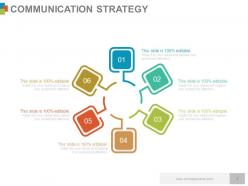
Slide 4: This slide showcases Communication Strategy in a circular image form. State communication aspects, strategies etc. here.
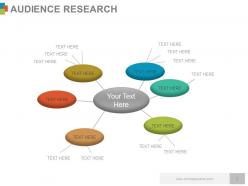
Slide 5: This slide showcases Audience Research in a flow chart form with text boxes.
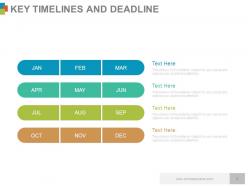
Slide 6: This slide showcases Key Timelines and Deadline to state evolution, growth, milestones etc.
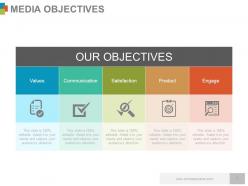
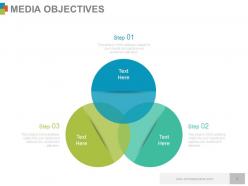
Slide 7: This slide shows Media Objectives categorized into- Satisfaction, Product, Values, Communication, Engage.
Slide 8: This is another slide showing Media Objecive. You can alter or add data as per your requirement.
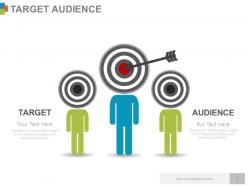
Slide 9: This slide shows Target Audience with imagery. With the help of this you can add your own parameters or use the ones mentioned.
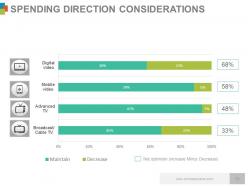
Slide 10: This is Spending Direction Considerations slide. You can put your data in a bar chart form.
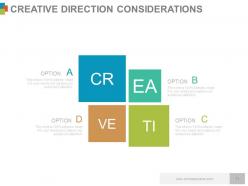
Slide 11: This is Creative Direction Consideration slide. We have created some of the related design, you can use it as per your need.
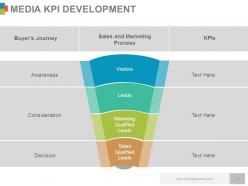
Slide 12: This slide presents Media KPI Development. You can use as such or alter as per need.
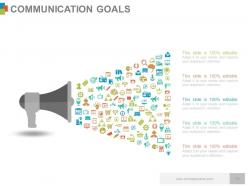
Slide 13: This slide showcases Communication Goals to be displayed with icon imagery.
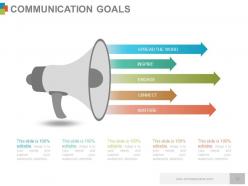
Slide 14: This slide also showcases Communication Goals to be displayed such as- Spread The Word, Nurture, Inspire, Engage, Connect.
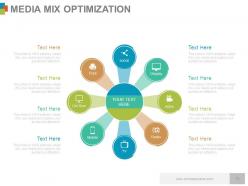
Slide 15: This is Media Mix Optimization slide with these factors- Mobile, Display, Video, Radio, Out Door, Social, Print, TV, Search.
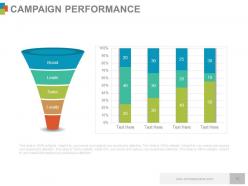
Slide 16: This slide displays campaign performance. We have listed some of them to measure- Brand, Leads, Sales, Loyalty.
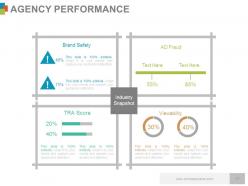
Slide 17: This slide shows Agency Performance with respect to- Brand Safety, Viewability, AD fraud, TRA score.
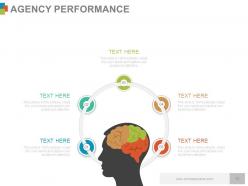
Slide 18: This slide also shows Agency Performance with text boxes
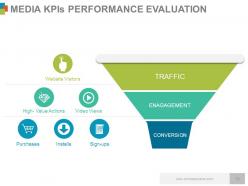
Slide 19: This slide displays Media KPIs Performance Evaluation in a funnel form with three parameters related to it- Engagement, Conversion, Traffic.
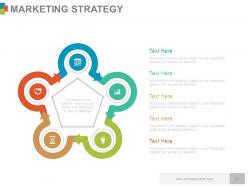
Slide 20: This is Marketing Strategy slide to showcase.
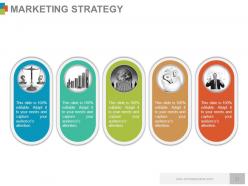
Slide 21: This slide also showcases Marketing Strategy. You can use this slide to put five multiple added information for the strategy.
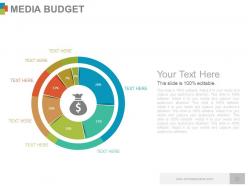
Slide 22: This slide showcases Media Budget with a pie chart diagram. You can put your own media budget here.
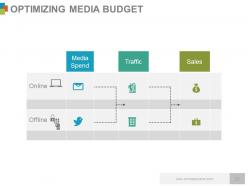
Slide 23: This slide shows Optimizing Media Budget with- Media Spend, Sales, Traffic.
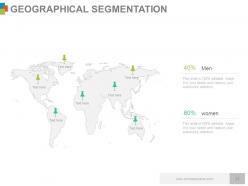
Slide 24: This slide shows Geographical Segmentation of two entities Male and Female on a world map image.
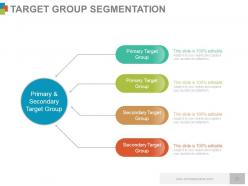
Slide 25: This slide shows Target Group Segmentation divided into two types- Primary Target Group, Secondary Target Group.
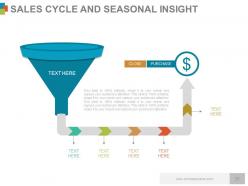
Slide 26: This slide showcases Sales Cycle And Seasonal Insights in a funnel form.
Slide 27: This slide also showcases Sales Cycle And Seasonal Insights. You can add yearly information here.
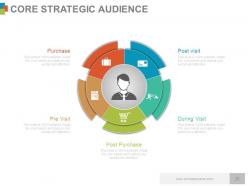
Slide 28: This slide shows Core Strategic Audience with respect to the following factors- Purchase, Post visit, Pre Visit, Post Purchase, During Visit.
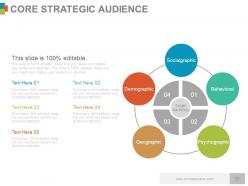
Slide 29: This is another slide showing Core Strategic Audience segregated into- Social Graphic, Psychographic, Geographic, Behavioral, Demographic.
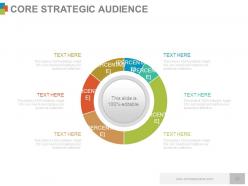
Slide 30: This slide shows another variation of Core Strategic Audience to be stated.
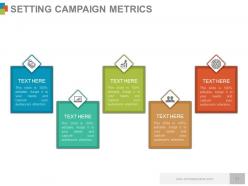
Slide 31: This is Setting Campaign Metrics slide with text boxes to state.
Slide 32: This slide is titled Additional slides for moving forward. Alter the content as per need.
Slide 33: This is Our Mission slide. State mission aspects here.
Slide 34: This is Our Team slide with image boxes to fill name, designation etc.
Slide 35: This is an About Us slide. State company or team specifications here.
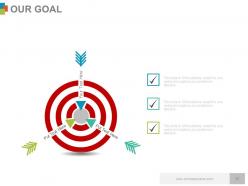
Slide 36: This is an Our Goal slide. State your important goals here.
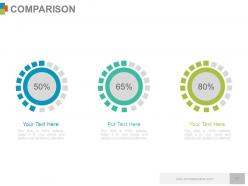
Slide 37: This is a Comparison slide to compare product/ enitities etc.
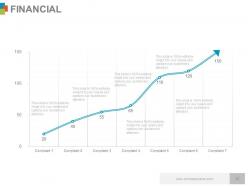
Slide 38: This is a Financial score slide. State financial aspects etc. here.
Slide 39: This is a Quotes slide. State business message, beliefs etc. here.
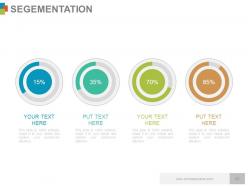
Slide 40: This is a SEGEMENTATION slide to state.
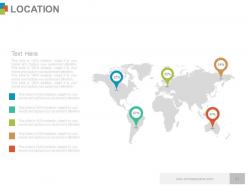
Slide 41: This is Location slide on a world map image to show global growth, presence etc.
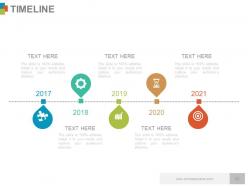
Slide 42: This is a Timeline slide to show milestones, growth or highlighting factors.
Slide 43: This slide showcases Post It Notes to be displayed. Show events, important piece of information, events etc. here.
Slide 44: This slide showcases Newspaper image. Show events, important piece of information, events etc. here.
Slide 45: This is a Puzzle image slide with text boxes.
Slide 46: This is a Target Board With Three Dart image slide. State your goals, targets etc. here.
Slide 47: This is a Circular image slide to show information, specifications etc.
Slide 48: This is a Venn diagram image slide to show information, specifications etc.
Slide 49: This is a Mind map image slide to show information, specifications etc.
Slide 50: This is a LEGO slide with text boxes to show information.
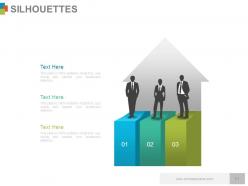
Slide 51: This is a People's silhouettes slide. Use it the way you want to show solutions etc.
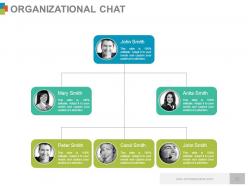
Slide 52: This slide presents Organizational Chart in a hierarchy form.
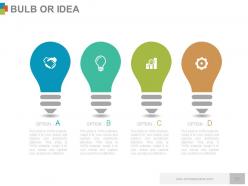
Slide 53: This is a Bulb or Idea slide to state a new idea or highlight specifications/ information etc.
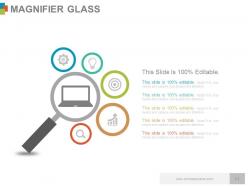
Slide 54: This is a Magnifying glass image slide to show information, scoping aspects etc.
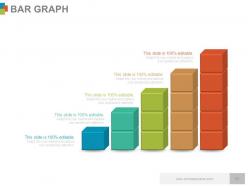
Slide 55: This is a Bar Graph image slide to show product comparison, growth etc.
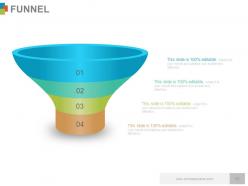
Slide 56: This is a Funnel image slide to show information, funneling aspects, specifications etc.
Slide 57: This is a Thank You slide with Address# street number, city, state, Contact Numbers, Email Address.
Media planning and auditing process powerpoint presentation with slides with all 57 slides:
Arrive at fair decisions with our Media Planning And Auditing Process Complete Powerpoint Deck With Slides. It dislikes discriminatory approaches.



FAQs for Media planning and auditing process powerpoint
Effective media planning strategies include comprehensive audience research, clear objective setting, strategic channel selection, budget allocation optimization, and performance measurement frameworks. These components work together by identifying target demographics, aligning messaging across platforms, and maximizing ROI through data-driven decisions, with many organizations finding that integrated approaches deliver enhanced brand visibility and measurable business growth.
Audience segmentation significantly influences media planning by enabling targeted channel selection, optimized budget allocation, personalized messaging strategies, and strategic timing decisions based on demographic and behavioral insights. Through advanced analytics and data modeling, media planners can identify high-value segments across digital, traditional, and emerging platforms, ultimately delivering higher engagement rates, improved ROI, and more effective campaign performance while minimizing waste in media spend.
Media campaign success metrics include reach, frequency, impressions, click-through rates, conversion rates, cost-per-acquisition, return on ad spend, and brand awareness lift. These measurements enable marketers to optimize budget allocation, refine targeting strategies, and demonstrate ROI across channels, with many organizations finding that combining quantitative performance data with qualitative brand metrics delivers comprehensive campaign insights and competitive advantage.
Media audits help identify inefficiencies by analyzing campaign performance data, budget allocation patterns, audience targeting accuracy, and media channel effectiveness across platforms. Through comprehensive spend analysis, organizations can uncover redundant placements, underperforming channels, and misaligned audience segments, while optimizing budget distribution and eliminating wasteful spending, ultimately delivering improved ROI and more strategic media investments.
Digital media serves as the cornerstone of contemporary media planning, enabling precise audience targeting, real-time campaign optimization, cross-platform integration, and comprehensive performance measurement. Through programmatic advertising and data analytics, organizations streamline media buying processes, enhance customer engagement across multiple touchpoints, and deliver measurable ROI, with many brands finding that digital-first strategies ultimately provide greater flexibility and competitive advantage.
Businesses leverage data analytics in media planning through audience segmentation, performance tracking, predictive modeling, attribution analysis, and real-time optimization capabilities. These analytics-driven approaches enable companies to identify high-performing channels, allocate budgets more strategically, and optimize campaign timing, with many organizations finding that data-driven media planning delivers significantly higher ROI and more precise audience targeting.
Common pitfalls include insufficient audience research, overlooking platform-specific content requirements, setting unrealistic budget allocations, neglecting competitor analysis, and failing to establish measurable KPIs. These oversights can significantly impact campaign effectiveness, with many companies finding that inadequate cross-channel integration and poor timing strategies ultimately result in wasted spend and missed opportunities for meaningful audience engagement.
Media audits should be conducted quarterly for ongoing campaigns and annually for comprehensive strategic reviews, with additional audits triggered by significant budget changes or performance declines. This regular assessment enables businesses to identify inefficiencies, reallocate resources strategically, and optimize ROI across channels, with many organizations finding that consistent auditing delivers measurably improved campaign performance and cost savings.
Emerging technologies like AI-powered analytics, programmatic advertising, cross-platform attribution tools, real-time bidding systems, and predictive modeling are revolutionizing traditional media planning approaches. These innovations streamline campaign optimization, audience targeting, and budget allocation across channels, with many agencies finding that automated insights deliver faster decision-making, reduced waste, and significantly improved ROI outcomes.
Consumer behavior significantly impacts media strategy effectiveness by influencing channel selection, message timing, content format preferences, and engagement patterns across different demographics. Through behavioral analytics, organizations can optimize ad placement, personalize messaging, and adjust campaign timing to match audience habits, with many retailers and financial services finding that behavior-driven strategies deliver higher conversion rates and improved ROI.
Cross-channel media planning enhances brand visibility by coordinating messaging across digital, traditional, and social platforms, ensuring consistent touchpoints throughout the customer journey while maximizing reach and frequency. This strategic approach enables brands to capture audiences at multiple interaction points, significantly improving engagement rates and brand recall, with many organizations finding that integrated campaigns deliver 20-30% better performance than single-channel efforts.
Essential media planning and auditing tools include Google Analytics, Facebook Ads Manager, programmatic platforms like The Trade Desk, attribution software such as Adobe Analytics, and comprehensive dashboards like Tableau or Power BI. These technologies streamline campaign optimization, audience targeting, and performance measurement across channels, with many agencies finding that integrated platforms deliver enhanced ROI tracking and strategic decision-making capabilities.
Cultural factors significantly influence media planning in global markets by determining content preferences, platform usage patterns, messaging approaches, and consumer behavior across different regions. Media planners must adapt campaigns by considering local languages, cultural values, religious sensitivities, and communication styles, with many multinational brands finding that culturally tailored strategies deliver higher engagement rates and stronger market penetration than standardized approaches.
Legal considerations in media planning and advertising include compliance with FTC disclosure requirements, trademark and copyright protections, data privacy regulations like GDPR, truth-in-advertising standards, and industry-specific restrictions. These frameworks streamline campaign development by ensuring regulatory compliance, protecting brand integrity, and minimizing legal risks, with many organizations finding that proactive legal review ultimately delivers greater market access and sustainable competitive advantage.
A/B testing integrates into media planning through systematic campaign variations, audience segmentation, creative rotation, and performance measurement across different channels and timeframes. This approach enables marketers to optimize budget allocation, refine targeting parameters, and enhance creative messaging, with many brands finding that data-driven testing delivers significantly higher ROI and more effective audience engagement strategies.
-
Best way of representation of the topic.
-
Informative design.