


Social media focused online marketing powerpoint presentation with slides





Try Before you Buy Download Free Sample Product
 Impress Your
 Audience
 100%
100% Editable
 Save Hours
 of Time


Joining the bandwagon of online marketing companies is what all corporate houses are aiming these days. However, getting most out of internet marketing is a tough task. To help you out! Here we are showcasing complete PowerPoint slide deck of online marketing strategies. Web marketing professionals can download this PPT example file to use this as a toolkit for becoming a successful online marketing company. With help of this PowerPoint layout professionals of social media advertising can cast spotlight on structured roadmap to establish a successful online business. Apart from this, our PPT sample file proves handy in underlining best practices of web world as well as to review the progress. Covering all significant facets to boost online leads here we have included creative PPT slide themes of SEO Opportunities, Search Engine Rankings, Website Performance Review, Web Traffic Insights, Social Media Metrics and many more. Only thing now you have to do is to click and download our good social media marketing ppt example.
People who downloaded this PowerPoint presentation also viewed the following :
Content of this Powerpoint Presentation
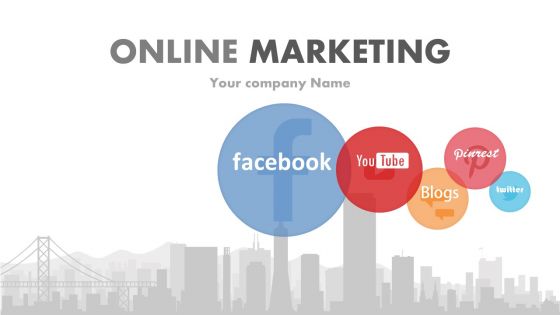
Slide 1: This slide introduces Online Marketing with social media icons. State Your company Name and get started.
Slide 2: This is an Agenda slide. State your agendas here.
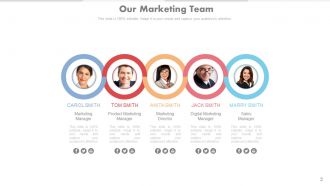
Slide 3: This is Our Marketing Team slide to show specifications with name, deisgnation and image boxes.
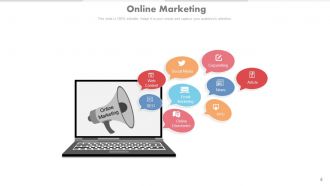
Slide 4: This slide presents Online Marketing with the following content- Article, Web Content, Social Media, Email Marketing, News, Online Directories, Copywriting, SEO, PPC.
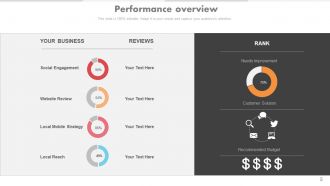
Slide 5: This slide showcases Performance overview with the following subheadings- Rank, Your Business, Reviews.
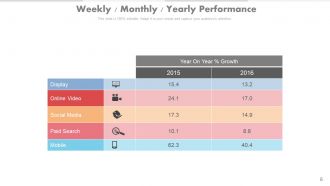
Slide 6: This slide shows Weekly / Monthly / Yearly Performance table.
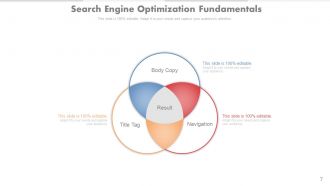
Slide 7: This slide shows Search Engine Optimization Fundamentals such as- Body Copy, Navigation, Title Tag.
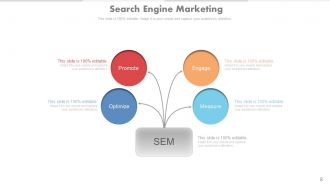
Slide 8: This slide presents Search Engine Marketing divided into the following points- SEM, Promote, Engage, Measure, Optimize.
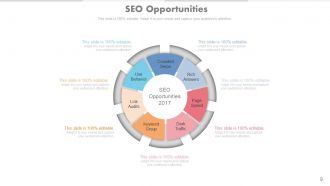
Slide 9: This slide shows SEO Opportunities such as- Keyword Group, Link Audits, Use Behavior, Crowded Serps, Rich Answers, Page Speed, Dark Traffic, SEO Opportunities 2017.
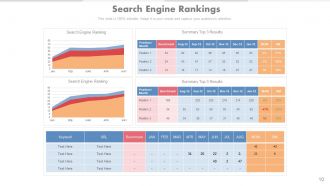
Slide 10: This slide presents Search Engine Rankings table and graph.
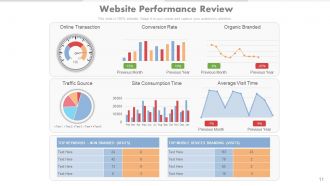
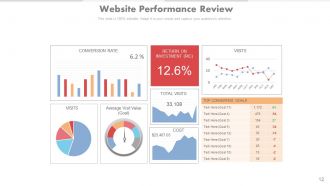
Slide 11: This slide shows a Website Performance Review with the following constituents- Online Transaction, Conversion Rate, Previous Month, Previous Year, Organic Branded, Previous Month, Previous Year, Site Consumption Time, Traffic Source, Previous Month, Previous Year, Average Visit Time.
Slide 12: This slide also presents Website Performance Review with- Return On Investment (RIC), Cost, Total Visits, Visits, Conversion Rate, Average Visit Value (Goal).
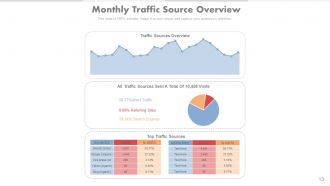
Slide 13: This slide shows Monthly Traffic Source Overview in graph form with text boxes. The constituents are- Direct Traffic, Referring Sites, Search Engines and Top Traffic Sources.
Slide 14: This slide presents Organic Visits And Backlinks.
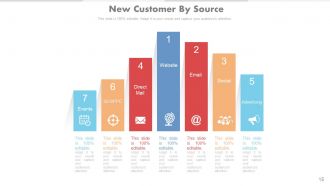
Slide 15: This slide showcases New Customer By Source such as- Advertising, Social, Email, Website, Direct Mail, SEO/PPC, Events.
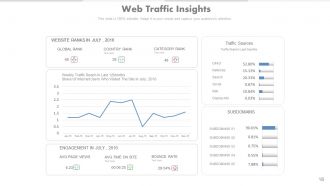
Slide 16: This slide shows Web Traffic Insights with- WEBSITE RANKS, (GLOBAL RANK COUNTRY RANK CATEGORY RANK) ENGAGEMENT, AVG.TIME ON SITE, BOUNCE RATE, AVG.PAGE VIEWS, Traffic Sources, Traffic Share, Direct, Referrals, Search, Social, Mail, Display Ads, SUBDOMAINS.
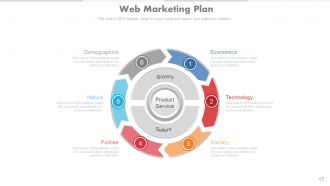
Slide 17: This slide presents a Web Marketing Plan on the basis of- Economics, Demographics, Technology, Nature, Society, Polities, Product Service, Buyers, Sellers.
Slide 18: This slide presents a Website Update plan.
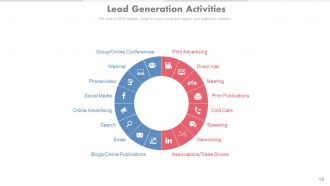
Slide 19: This slide presents Lead Generation Activities such as- Networking, Speaking, Meeting, Print Publications, Direct mail, Cold Calls, Print Advertising, Associations/Trade Shows, Webinar, Blogs/Online Publications, Email, Search, Online Advertising, Phone/video, Group/Online Conferences, Social Media.
Slide 20: This slide shows Marketing Growth Strategy with the following points- Marketing For Growth, Branding To Led, Innovative Design & Media, Websites That Work, Customer Centric Culture, New Ways To Sell, Synchronistic Strategies.
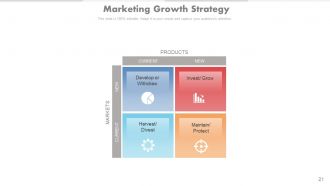
Slide 21: This slide showcases a Marketing Growth Strategy matrix showing in terms of- Products & Markets with Develop or Withdraw, Harvest/ Divest, Maintain/ Protect, Invest/ Grow.
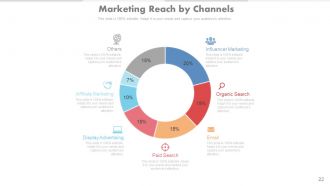
Slide 22: This slide presents Marketing Reach by Channels. The points are- Organic Search, Paid Search, Email, Display Advertising, Affiliate Marketing, Influencer Marketing, Others.
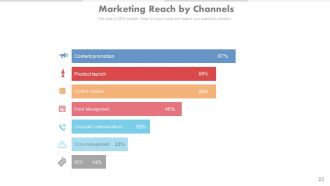
Slide 23: This slide presents Marketing Reach by Channels. The points are- Content promotion, Product launch, Content creation, Event Management, Corporate communications, SEO, Crisis management.
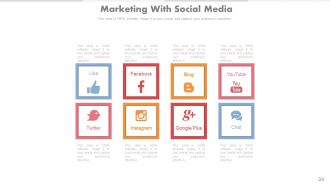
Slide 24: This slide showcases Marketing With Social Media through- Google Plus, Twitter, Chat, Instagram, Like, Facebook, YouTube, Blog.
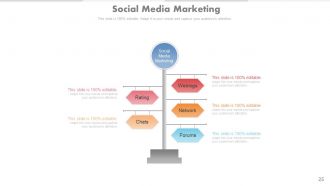
Slide 25: This slide presents Social Media Marketing with the following points- Rating, Chats, Weblogs, Network, Forums.
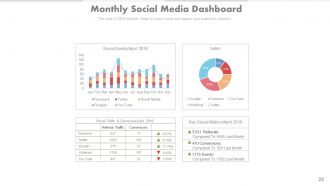
Slide 26: This slide shows a Monthly Social Media Dashboard with- Referrals, Conversions, Social Traffic & Conversion, Facebook, Google+ Twitter, Pinterest, You Tube, Referral Traffic, Conversions.
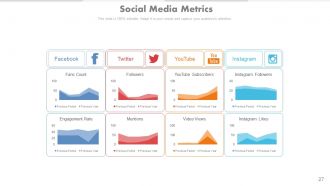
Slide 27: This slide showcases Social Media Metrics for- Facebook, Twitter, YouTube, Instagram.
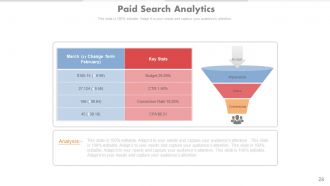
Slide 28: This slide presents Paid Search Analytics for- Impressions, Clicks, Conversions, Budget.
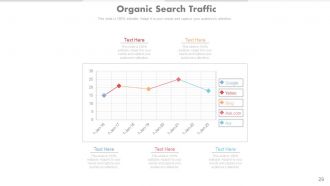
Slide 29: This slide presents an Organic Search Traffic line graph.
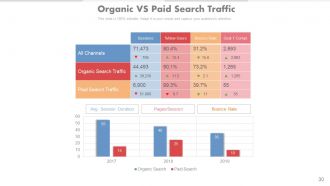
Slide 30: This slide shows Organic VS Paid Search Traffic table with- Avg. Session Duration, Pages/Session, Bounce Rate.
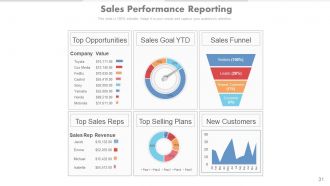
Slide 31: This slide presents Sales Performance Reporting in graphs and charts form. The subheadings include- Top Opportunities, Visitors (100%), Leads (26%), Repeat Customer (13%), Customer (6%), Sales Funnel, Sales Goal YTD.
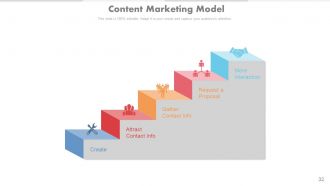
Slide 32: This slide showcases a Content Marketing Model showing- Create, Attract Contact Info, Gather Contact Info, Request a Proposal, More Interaction as factors to consider.
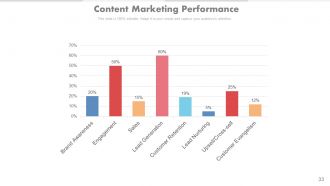
Slide 33: This slide shows Content Marketing Performance in graph form.
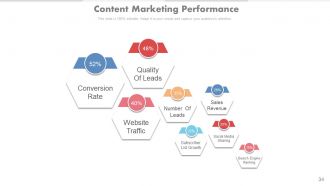
Slide 34: This slide shows Content Marketing Performance with the following points- Conversion Rate, Quality Of Leads, Website Traffic, Number Of Leads, Subscriber List Growth, Sales Revenue, Social Media Sharing, Search Engine Ranking.
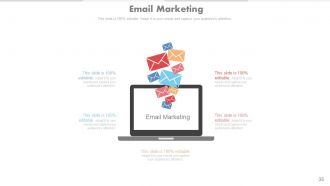
Slide 35: This slide presents Email Marketing aspects. State them here.
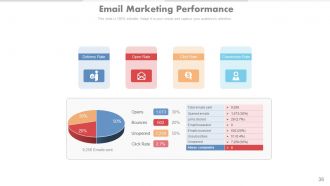
Slide 36: This slide shows Email Marketing Performance with the following constituents- Click Rate, Opens, Bounces, Unopened, Emails sent, Delivery Rate, Open Rate, Click Rate, Conversion Rate.
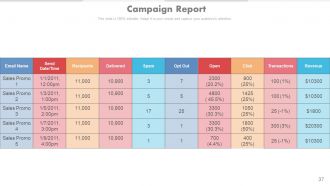
Slide 37: This slide presents a Campaign Report table.
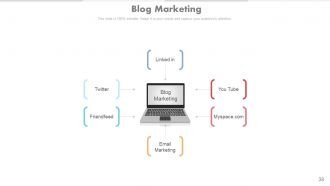
Slide 38: This slide showcases Blog Marketing for different social media platforms.
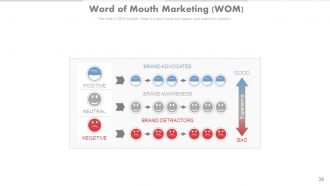
Slide 39: This slide presents Word of Mouth Marketing (WOM) aspects to consider.
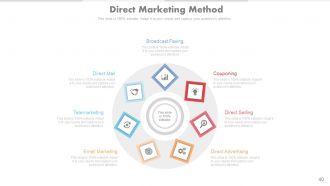
Slide 40: This slide presents Direct Marketing Method comprising of- Broadcast Faxing, Couponing, Direct Mail, Direct Selling, Telemarketing, Email Marketing, Direct Advertising.
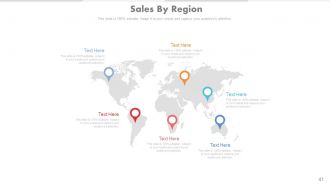
Slide 41: This slide shows Sales By Region on a world map image.
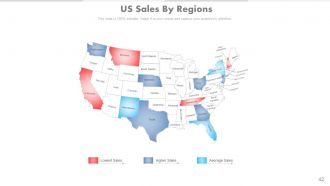
Slide 42: This slide shows US Sales By Region. Present US specific stuff here.
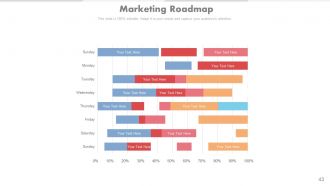
Slide 43: This slide presents a Marketing Roadmap to showcase marketing planning, stages, duration etc.
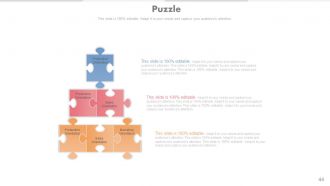
Slide 44: This is a Puzzle image slide with the following content- Production Orientation, Production Orientation, Sales Orientation, Production Orientation, Sales Orientation, Marketing Orientation.
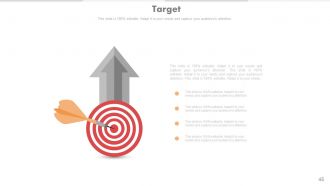
Slide 45: This is a Target slide with imagery to go with. State targets etc. here.
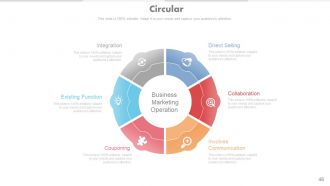
Slide 46: This slide shows a Circular image with the following content- Couponing, Integration, Existing Function, Direct Selling, Collaboration, Involves Communication, Business, Marketing, Operation, Circular.
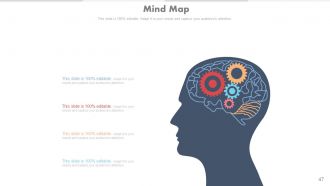
Slide 47: This is a Mind map slide to show specifications, information etc.
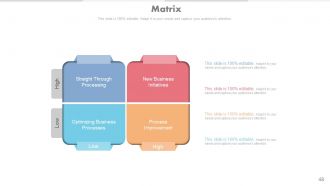
Slide 48: This is a Matrix slide in terms of High& Low showing- New Business Initiatives, Process Improvement, Optimizing Business Processes, Straight Through Processing.
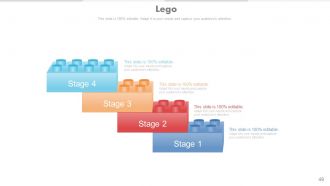
Slide 49: This is a Lego image slide to show information, specifications etc.
Slide 50: This is a Silhouettes slide showing- People, Process, Process, Technology.
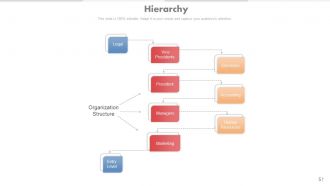
Slide 51: This is a Hierarchy slide for showing an organization structure.
Slide 52: This is a Bulb/Idea slide for showing ideas, innovation, new aspects etc.
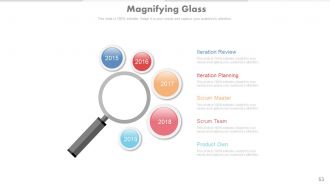
Slide 53: This is a Magnifying Glass image slide with th efollwoing content- Iteration Review Iteration Planning Scrum Master Scrum Team Product Own Magnifying Glass
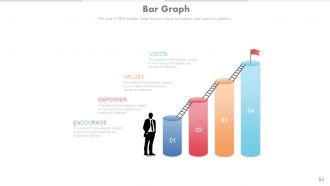
Slide 54: This is a Bar Graph slide showing- VISION, VALUES, EMPOWER, ENCOURAGE.
Slide 55: This is a Funnel image slide showing- Inquiries, Qualified Leads, Opportunities, Revenue.
Slide 56: This is Our Goal slide. State goals, targets etc. here.
Slide 57: This is a Comparison slide to show comparison, information etc.
Slide 58: This is a Financial score slide. State financial aspects etc. here.
Slide 59: This is a Dashboard image slide to show metrics, kpis etc.
Slide 60: This is a Location slide of worldmap image to show male female comparison etc.
Slide 61: This is a Timeline slide to show growth factors, evolution, highlights etc.
Slide 62: This is a Thank You slide for acknowledgement.
Social media focused online marketing powerpoint presentation with slides with all 54 slides:
Our Social Media Focused Online Marketing Powerpoint Complete Deck are given to accomplishments. They are completely committed till the end.


FAQs for Social media focused online marketing powerpoint
Honestly, I'd focus on engagement first - likes, comments, shares, all that stuff. Reach and impressions matter too, but engagement shows people actually care. Track your follower growth and click-through rates to your site. The conversion stuff is where the real money talks though - how many people actually buy something after finding you on social? Brand mentions are solid gold too. You can see if people love you or... well, don't. My advice? Pick maybe 3-4 that match what you're trying to do. Don't go crazy tracking everything or you'll lose your mind.
Okay so Facebook and Instagram have insane targeting options - like you can literally find "dog owners who just moved" which is wild. LinkedIn's your best bet for B2B stuff, targeting by job titles and company size. TikTok and Twitter are harder to crack but solid for younger crowds. Here's what I'd do though - pick maybe 2 or 3 platforms max and test with small budgets first. See where people actually respond to your stuff. Don't try to be everywhere at once because you'll just burn through money. Once you figure out what's working, then you can throw more budget at it.
Honestly, user-generated content is like getting your customers to do half your marketing work. People trust other customers way more than polished brand ads - when they see real unboxing videos or honest reviews, it just hits different. Your followers actually get excited when you repost their stuff too, which creates this cool cycle where more people want to share. The best part? You're not constantly scrambling for new content ideas. I'd start with a branded hashtag and begin featuring customer posts right away. It's seriously one of those things that sounds too good to be true but actually works.
Oh totally! Posts with images get like 650% more engagement than just text - that stat always blows my mind. People scroll so fast these days, but good visuals actually make them stop and read your caption. They're also perfect for explaining complicated stuff quickly. I bet you remember visual posts way better than boring text ones, right? Just make sure you're using quality images that actually match what you're saying. Nothing worse than those random stock photos that have nothing to do with the post - drives me crazy lol.
Honestly, just make stuff people actually want to see. Tell stories instead of being all corporate-y, and use visuals that don't suck. Ask questions in your captions - gets people commenting. Oh, and timing is huge! Post when your followers are actually online scrolling around. I'd definitely look at your best posts first though - see what worked and just do more of that. User-generated content kills it because people trust random users way more than brands. Keep captions conversational and throw in calls-to-action like "tag someone who needs this."
So here's the thing - you're not just posting for your followers anymore, you're posting for the algorithm first. Instagram wants engagement and saves. TikTok? They're all about watch time. LinkedIn pushes professional stuff that gets people talking in comments. It's super annoying how much this changes honestly, but once you get it, focus on making content that actually gets people responding instead of just throwing random posts out there. Oh and each platform is totally different so what works on one probably won't work on another.
Honestly, consistency beats everything else. Pick like 2-3 times a week to post and actually stick to it - I've watched accounts tank when they disappear for weeks. Your followers need to know when you'll show up. Tell real stories people can connect with. Polls and Q&As work great too because people want to feel part of something, not just watching from the sidelines. Oh, and reply to your comments! Sounds obvious but so many people ignore this. The whole thing's pointless if you're not actually talking to anyone. Just commit to a schedule for a month and see what happens.
Social listening is basically just stalking what people say about your brand online (but legally lol). Set up alerts for your company name and industry keywords - Google Alerts is free and works fine. You'll catch customer complaints early, spot trends, and see what content your audience actually wants. Honestly, the competitor intel is pretty gold too. Watch what they're doing right or screwing up. Track your brand mentions, relevant hashtags, stuff like that. It helps you jump on opportunities before everyone else does. Way better than guessing what people think about you.
Okay so first off - always disclose sponsored stuff or the FTC will come for you. Privacy matters too, don't be creepy with people's data. Honestly the biggest thing I see is brands trying way too hard and coming off super fake? Just don't manipulate people's emotions for clicks, that's gross. Oh and obviously don't spread false info. I always tell people to think about how different communities might react to your content. My test is basically - would you feel weird explaining your strategy out loud to your actual audience?
So influencer marketing is basically piggybacking on someone else's audience and credibility instead of grinding to build your own reach. You want to pick creators who actually vibe with your brand voice and hit the same demographics you're targeting. The smart move? Repurpose their content across your own channels and time their posts with your launches. I've seen way too many brands treat it like this separate thing - that's honestly where most people mess up. It should flow with your organic strategy, not fight against it. Works way better when everything feels connected, you know?
Honestly, Buffer or Hootsuite are lifesavers for scheduling posts - saves me like 2 hours a day. Later's good too if you're more visual. Sprout Social costs more but the analytics are actually useful, not just vanity metrics. For tracking what works, Facebook's built-in insights plus Google Analytics will tell you everything. Oh and Canva makes designing posts so much easier, even my terrible design skills look decent. If you're tech-savvy, Zapier connects all these tools together but that might be overkill starting out. Pick one scheduler and one analytics thing first though - I made the mistake of trying everything at once and it was chaos.
Dude, just be real with people. Show who's actually running your brand - post messy behind-the-scenes stuff, own your mistakes when they happen. The brands I actually follow? They're not afraid to share when something went wrong or they're struggling with something. People can spot BS immediately, so don't even try it. Actually respond to comments like you're talking to a friend, not broadcasting some corporate message. Oh and here's what I always do - before posting anything, I ask myself "would I actually say this out loud?" Works every time.
AI tools are getting crazy good for content creation - definitely worth checking out. Short vertical videos are where it's at now, but make them feel real, not super produced. Social commerce is blowing up too. People buy stuff right through Instagram without even thinking about it anymore. Oh, and get your employees posting about work - sounds weird but people actually trust that more than company posts. Honestly? Pick one thing and just try it next quarter. Don't overthink it.
Dude, you've got this! Big companies throw money at ads, but honestly? People are so over that polished corporate BS. Your superpower is being real - respond to every comment, share messy behind-the-scenes stuff, actually care about your community. Don't spread yourself thin trying to post everywhere though. Just pick 1-2 platforms where your people actually are. I'd start local and jump into industry conversations - that organic stuff hits different than paid ads anyway. You're nimble in ways they'll never be.
Honestly, social media ads work best when you use them alongside your traditional stuff, not instead of it. The targeting is insane compared to TV or print - you can literally adjust everything in real time. Way cheaper to start too. Most brands I've seen do this thing where they'll run a TV campaign and then use social ads to keep hitting the same audience online. It's pretty smart actually. My advice? Start small on social, see what clicks with people, then ramp it up. But don't ditch your other marketing - that's still doing work you probably don't even realize.
-
Excelente
-
Easily Editable.
-
Innovative and attractive designs.