


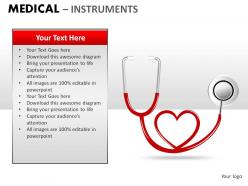
Medical instrument powerpoint presentation slides
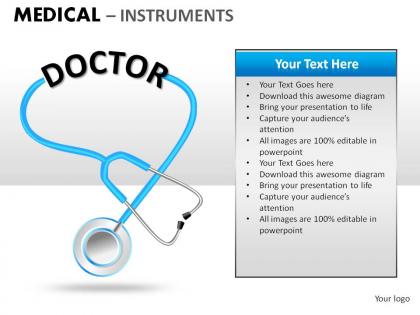




Try Before you Buy Download Free Sample Product
 Impress Your
 Audience
 100%
100% Editable
 Save Hours
 of Time


Sit back, relax and let your thoughts flow. Our Medical Instrument Powerpoint Presentation Slides will work out the rest for you.
People who downloaded this PowerPoint presentation also viewed the following :
Medical instrument powerpoint presentation slides with all 11 slides:
Catch the big fish with our Medical Instrument Powerpoint Presentation Slides. Bait them with your enticing ideas .
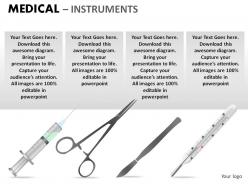
FAQs for Medical instrument
Okay so the basics are stethoscope, BP cuff, thermometer, otoscope and ophthalmoscope. Reflex hammer too. You'll want tongue depressors, gauze, bandages - all that wound care stuff. Get a really good penlight though, seriously I'm always using mine for pupils, throats, whatever. Most places keep pulse oximeters around and urine dipsticks for quick checks. Honestly this covers like 90% of patients you'll see. Don't go crazy buying everything at once - just get these essentials and add more as you figure out what you actually need day to day.
Dude, the tech advances are wild right now. Better sensors can pick up biomarkers at way lower levels than before. AI spots patterns we'd totally miss - honestly, some of these algorithms are getting scary good. Digital pathology has insane resolution now, like you can see everything. Machine learning catches human errors in real-time too, which is clutch. Oh, and the false positive rates have dropped big time. Bottom line? You can catch stuff earlier and be way more confident in your diagnosis than you could even a few years back.
Dude, sterilization is literally everything when it comes to medical instruments. I mean, you could have the most expensive surgical tools ever made, but if they're dirty? Completely worthless and actually dangerous. Without proper cleaning protocols, you're basically turning instruments into infection-spreading machines - which is the exact opposite of what we want, obviously. My old supervisor used to drill this into us constantly, and honestly she was right. Never skip steps in your facility's sterilization process. I've seen too many preventable complications from people cutting corners on this stuff.
Honestly, these mobile devices are pretty incredible for patient care. You get real-time data on heart rhythms, blood glucose, blood pressure - all while patients stay comfortable at home. Way better than those clunky machines collecting dust! The continuous monitoring helps you spot trends and tweak treatments faster instead of relying on those quick office visit snapshots. People actually use stuff they can carry around, which is half the battle with patient compliance. I'd say pick one device type first and test it out - you'll probably be surprised how much it changes your patient relationships. The early detection alone makes it worth it.
Honestly, robotic surgery systems are where it's at right now - surgeons are getting crazy precision they never had before. Smart instruments can actually detect different tissue types and flag potential complications, which blows my mind. Minimally invasive tools keep getting tinier and more advanced too. Oh, and there's this big shift toward single-use sterile equipment to avoid infections. My cousin's a surgeon and she's obsessed with how much cleaner everything is now. If you're thinking upgrades, I'd definitely look into robotic platforms first - that's where you'll see the best return on investment for your specialty.
X-rays are great for bones and basic stuff. CT gives you those detailed slices - honestly a lifesaver in trauma situations. MRI is where you'll get amazing soft tissue detail, so brain/spine issues, joint problems, that kind of thing. Ultrasound works perfectly for real-time viewing and pregnancy (obviously), plus anything with fluids. PET scans basically show where cells are most active, which is why they're huge for cancer staging. Each one has its own specialty. The trick is just picking the right tool for whatever question you're trying to answer clinically.
Downtime's your biggest enemy - every minute equipment's down, you're bleeding money and patients wait. The tech side is brutal too since these machines need specialists most places don't have. Documentation requirements? Total nightmare, honestly. Plus you've got regulatory stuff breathing down your neck, good service techs are hard to find, and don't get me started on sourcing parts for older equipment - sometimes it's like hunting unicorns. Oh, and compliance audits are their own special hell. Build solid relationships with vendors early though, that'll save your butt. Always have backup plans for anything critical.
Get your team trained by the manufacturer first - don't let anyone wing it. Most companies have decent programs, though honestly some are pretty terrible so ask around. Document everything for compliance stuff. After the formal training, I'd pair newbies with experienced people for their first real cases - way better than throwing them in alone. Quick reference cards help too, especially for your specific setup. Oh and don't skip the refresher courses! High-risk equipment isn't something you want people getting rusty on. Trust me, spending money upfront beats dealing with expensive mistakes later.
Look, disposable instruments are honestly terrible for the environment - we're dumping tons of plastic and metal into landfills every single day. Reusables are way better since you can sterilize them hundreds of times, though yeah they do need water and energy for cleaning. The annoying thing is some procedures actually require disposables because contamination risks are legit serious. I'd say run the numbers for your specific situation - manufacturing costs, transport, sterilization, disposal, all that stuff. Figure out which instruments you could realistically switch without messing with patient safety. That's probably your starting point.
Oh totally - culture plays a huge role in what medical tools people are comfortable with. Like, some places really prefer non-invasive options because of how they view the body. Others are all about single-use stuff for cleanliness reasons, which honestly makes sense. Traditional medicine backgrounds matter too - think acupuncture needles versus regular injections. Religious stuff comes into play as well. If you're expanding somewhere new, definitely chat with local healthcare folks first. They'll tell you what actually works in their area instead of you just guessing.
Dude, ergonomics makes such a difference with surgical instruments. Your hands won't cramp up during those marathon procedures if the tools actually fit properly. Bad ergonomics? You're looking at fatigue, shaky hands, maybe even repetitive strain injuries down the road. Not exactly what you want when lives are on the line, you know? Plus well-designed stuff is way easier to learn new techniques with. Honestly, I've seen surgeons struggle with poorly designed instruments and it's just painful to watch. When you're checking out new tools, hold them for a few minutes first. Mimic the actual motions you'd use in surgery.
Honestly, telemedicine is getting crazy good now. High-res cameras, digital stethoscopes, even portable ultrasound that patients can use at home while you walk them through it. Your phone basically becomes a diagnostic tool - which still blows my mind sometimes. Patients skip the drive for routine stuff and minor issues, so you end up seeing more people and they get help way faster. I'd say start small with just video calls for chronic condition check-ins. Makes such a difference, and you don't have to go all-in with fancy equipment right away.
So the FDA runs the show here with their Federal Food, Drug, and Cosmetic Act. They sort devices into three risk classes - Class I is easy enough, but Class III? That's a nightmare process with full Pre-Market Approval. You'll need ISO 13485 for quality stuff, maybe some IEC standards too depending what you're making. Europe wants CE marking, obviously. Other countries have their own headaches. Honestly, just figure out your device classification first - everything else flows from there. Oh, and don't even think about international until you've got FDA sorted.
Honestly, AI's everywhere in healthcare now and it's pretty wild. Imaging scans use ML to catch tumors way faster than radiologists can. Surgical robots got way smarter with real-time help, plus monitoring devices predict when patients might crash hours ahead of time. Even basic stuff like stethoscopes can spot heart murmurs automatically now, and microscopes identify infections without anyone looking. Your glucometer? Probably running algorithms too. Most of it works behind the scenes though, so you don't need to be some tech wizard. Just understand what your tools are actually doing - trust but verify, you know?
Honestly, the difference precision instruments make is huge - we're talking millimeter-level accuracy that literally determines whether you hit healthy tissue or not. Your patients get better outcomes across the board: fewer infections, less scarring, way faster recovery times. Minimally invasive procedures become way more feasible too. The diagnostic accuracy alone is worth it, but then you add reduced surgical complications on top of that. Oh, and if you're looking at new equipment - prioritize anything with real-time feedback first. Those visualization capabilities are game-changers. Less patient trauma overall, which is obviously what we're all after.
-
Excellent template with unique design.
-
Great quality product.