


Merger And Acquisition Synergy Opportunities Improvement Investment Optimization Arrow





Try Before you Buy Download Free Sample Product
 Impress Your
 Audience
 100%
100% Editable
 Save Hours
 of Time


Our Merger And Acquisition Synergy Opportunities Improvement Investment Optimization Arrow are topically designed to provide an attractive backdrop to any subject. Use them to look like a presentation pro.
People who downloaded this PowerPoint presentation also viewed the following :
Merger And Acquisition Synergy Opportunities Improvement Investment Optimization Arrow with all 12 slides:
Use our Merger And Acquisition Synergy Opportunities Improvement Investment Optimization Arrow to effectively help you save your valuable time. They are readymade to fit into any presentation structure.







FAQs for Merger And Acquisition Synergy Opportunities Improvement
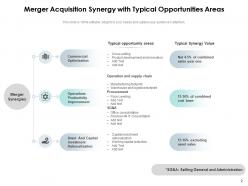
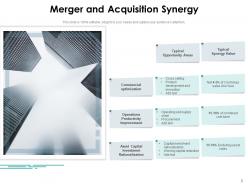
M&A synergies include revenue synergies, cost synergies, financial synergies, operational synergies, and strategic synergies. These combinations streamline operations by eliminating redundancies, enhancing market reach, and optimizing resource allocation, with many organizations finding that strategic integration ultimately delivers competitive advantages, improved efficiency, and accelerated growth in increasingly complex markets.
Companies measure synergy success through cost reduction tracking, revenue enhancement analysis, operational efficiency metrics, and integration milestone assessments against pre-merger projections. Through financial benchmarking and performance dashboards, organizations monitor combined entity performance, market share gains, and resource optimization outcomes, with many finding that quarterly synergy realization reports and cross-functional KPIs ultimately deliver measurable competitive advantages.
Corporate culture plays a pivotal role in realizing M&A synergies, as cultural misalignment can undermine operational integration, employee retention, communication effectiveness, and strategic goal achievement. While successful cultural integration enables streamlined decision-making, enhanced collaboration, and accelerated value creation, many organizations find that proactive cultural assessment and alignment strategies ultimately deliver higher synergy realization rates and sustainable competitive advantages.
Companies can effectively identify synergies by conducting comprehensive operational audits, analyzing overlapping functions, evaluating technology integration opportunities, and assessing market expansion potential during due diligence. Through detailed financial modeling and cross-functional team evaluations, organizations streamline cost structures, eliminate redundancies, and enhance revenue streams, ultimately delivering measurable value creation and competitive advantage post-merger.
Strategies include early due diligence planning, phased integration approaches, cross-functional integration teams, technology platform consolidation, and cultural alignment programs. These methods streamline operations by eliminating redundancies, preserving key talent, and accelerating decision-making processes, with many organizations finding that strategic communication and clear milestone tracking ultimately deliver faster cost reductions and enhanced operational efficiency.
Technology integration enhances M&A synergies by consolidating systems, automating workflows, and eliminating redundant processes across merged entities. Through strategic digital alignment, organizations streamline operations, reduce costs, and accelerate data sharing, with many companies finding that unified platforms deliver improved efficiency, better customer experiences, and competitive advantages within the first year.
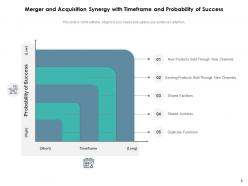
Market conditions significantly influence synergy realization through timing constraints, resource availability, competitive pressures, and stakeholder expectations during integration phases. In volatile markets, companies often struggle with delayed cost synergies and revenue targets, while stable conditions enable smoother operational integration, with many organizations finding that favorable market timing accelerates projected synergy timelines by 20-30%.
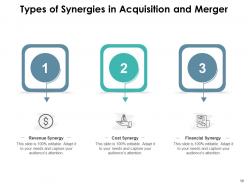
Cost synergies involve reducing expenses through operational efficiencies, eliminating redundancies, consolidating facilities, and streamlining processes, while revenue synergies focus on increasing income through cross-selling, market expansion, enhanced product offerings, and improved customer reach. In practice, merged banks achieve cost synergies by consolidating branches and systems, while revenue synergies emerge from offering comprehensive financial services to combined customer bases, ultimately delivering competitive advantage.
Common pitfalls include cultural misalignment between organizations, inadequate due diligence on operational compatibility, overestimation of cost savings, and poor integration planning across systems and processes. These challenges often result from rushed timelines, insufficient communication strategies, and underestimating human resource complexities, with many companies finding that focusing on cultural integration and realistic target-setting significantly improves synergy realization outcomes.
Stakeholders perceive synergy value through measurable financial metrics, strategic market positioning, operational efficiency gains, and competitive advantages that justify deal premiums. While investors focus on cost savings and revenue growth projections, employees and customers evaluate integration success through service continuity and enhanced capabilities, with many organizations finding that transparent communication and realistic timeline expectations ultimately determine stakeholder confidence and long-term value realization.
Communication strategies enhance synergy realization by establishing unified messaging frameworks, creating cross-functional collaboration channels, and implementing transparent progress tracking systems. These approaches streamline integration processes by aligning organizational cultures, facilitating knowledge transfer between teams, and maintaining stakeholder engagement, with many merged entities finding that structured communication ultimately delivers faster operational integration and stronger competitive positioning.
Technology, healthcare, financial services, telecommunications, and retail sectors typically benefit most from M&A synergy due to their scalable operations, shared infrastructure opportunities, and customer base consolidation potential. These industries enable significant cost reductions through eliminating redundancies, combining distribution networks, and leveraging complementary technologies, while delivering enhanced market reach and operational efficiency that ultimately strengthens competitive positioning.
Leadership alignment is absolutely critical for M&A success, as misaligned executives can derail integration efforts, create cultural conflicts, and undermine strategic objectives. Strong leadership coordination streamlines decision-making, accelerates synergy realization, and ensures consistent communication across merged organizations, with many companies finding that early leadership integration workshops and shared governance structures ultimately deliver faster operational alignment and significantly higher deal value capture.
Revenue growth, cost reduction percentages, EBITDA improvement, operational efficiency ratios, and employee productivity metrics serve as key indicators for synergy tracking. These measurements enable organizations to monitor integration progress across departments, validate strategic assumptions, and demonstrate tangible value creation, with many companies finding that quarterly assessments ultimately deliver enhanced stakeholder confidence and competitive advantage.
Globalization enhances cross-border acquisition synergies by enabling market expansion, cost optimization through global supply chains, and access to diverse talent pools and technologies. Through strategic international combinations, companies streamline operations across multiple regions, leverage regulatory arbitrage opportunities, and capture economies of scale, with many multinational organizations finding that cultural integration ultimately delivers competitive advantages in increasingly interconnected markets.
-
Good research work and creative work done on every template.
-
Informative design.
-
Qualitative and comprehensive slides.
-
Great product with highly impressive and engaging designs.
-
Great quality slides in rapid time.