


Monthly Calendar For Best Talent Recruitment Process




Try Before you Buy Download Free Sample Product
 Impress Your
 Audience
 100%
100% Editable
 Save Hours
 of Time


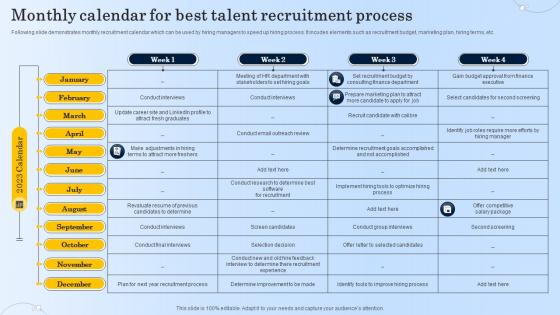
Following slide demonstrates monthly recruitment calendar which can be used by hiring managers to speed up hiring process. It incudes elements such as recruitment budget, marketing plan, hiring terms, etc.
People who downloaded this PowerPoint presentation also viewed the following :
Monthly Calendar For Best Talent Recruitment Process with all 6 slides:
Use our Monthly Calendar For Best Talent Recruitment Process to effectively help you save your valuable time. They are readymade to fit into any presentation structure.





FAQs for Monthly Calendar For Best
Honestly, start by figuring out when people actually need to be in their seats, not when you want to post the job. Senior hires? Plan for 3-4 months. Entry level is more like 4-6 weeks. Industry timing screws everyone over - don't compete with the whole market during peak hiring season if you can help it. Your interview team's gonna be MIA around holidays anyway. I always work backwards from start dates and tack on an extra 20% because recruiting timelines are basically made-up numbers. Oh, and check your business cycles first - there's no point rushing to hire someone right before your slow season hits.
Honestly? Monthly is way better than quarterly, especially if your company moves fast. I learned this the hard way when we stuck to some January plan while everything around us was changing. Budget shifts happen. People quit out of nowhere. New priorities just... appear. Your calendar's gotta roll with it or it's basically trash. What I do now is set a monthly reminder to check if our pipeline still makes sense with current goals. Review what actually happened vs what we thought would happen. Sometimes I feel like a fortune teller trying to predict this stuff, but monthly tweaks definitely keep you from falling behind.
So January and September are golden months - New Year motivation kicks in, plus people get serious about job hunting after summer ends. Focus your biggest hiring pushes then since you'll actually have candidates responding. August though? Total wasteland. Everyone's brain is still on vacation mode, so don't even bother posting anything important. Use that dead time to write better job descriptions or whatever internal stuff you've been putting off. Honestly, timing your hiring around when people are actually job searching beats trying to force it when your business urgently needs someone but nobody's looking.
Honestly, start with industry-specific stuff - tech meetups for developers, nursing fairs for healthcare, you know? University career events are solid too. Virtual platforms have gotten way better since 2020, so don't sleep on those. I'd definitely hit up diversity-focused events and professional conferences - people there are usually super engaged. Community college events work great if you're filling entry-level spots. Map out maybe 8-12 key events first, then figure out your budget and who's traveling where. Way easier than trying to do everything at once.
Honestly, just automate the whole mess. Get an ATS that syncs with everyone's calendars and auto-schedules based on availability. Calendly works great too - integrates right into most recruitment platforms. No more of those awful email threads where you're trying to coordinate five people's schedules. The AI suggestions are actually pretty decent at finding good time slots. Oh, and definitely set up auto-reminders for both sides - you'd be surprised how many people just forget. I'd start with one tool first though, don't try to overhaul everything at once. Way less stressful than doing it manually!
Focus on time-to-fill and cost-per-hire first - those are your bread and butter metrics. Quality of hire matters way more though, so check performance reviews and retention at 90 days plus one year. Most people totally skip candidate experience scores, which is dumb because they tell you everything about your employer brand. Track offer acceptance rates too. Interview-to-offer ratios will show you where things get stuck. Oh, and source effectiveness - gotta know what's actually working. Just throw it all in a weekly dashboard so you can fix stuff fast when it breaks.
First thing - check when companies in your space actually hire. Tech firms usually start recruiting hard after Q1 budgets get approved. Retail's the opposite, they're scrambling before holiday season. Healthcare? They're basically always desperate for people lol. Timing matters for candidates too. New grads flood the market in spring, but experienced folks usually start looking after bonus season or performance reviews. Industry conferences are goldmines - everyone's already thinking about their next move. Really comes down to syncing your timeline with when people are actually ready to jump ship.
Honestly, you gotta map your hiring to when stuff's actually happening in your business. New product launches, scaling up teams, entering markets - work backwards from those dates like you're planning a project. Senior roles take forever (learned that the hard way), so build in extra time. Also sync this with your budget calendar or you'll be stuck waiting for headcount approvals while your perfect candidate goes elsewhere. It's way better than just scrambling to replace people after they quit. Treat it like actual business strategy, not just filling empty chairs.
Look, timing is everything with recruiting. Retail and hospitality go nuts before holidays - total chaos but lots of jobs. Tech companies? They basically check out in December because who wants to interview when everyone's at office parties. Summer's weirdly slow since half your team's on vacation, but honestly it's the best time to prep for fall campus recruiting. My advice: figure out when your industry gets busy, then work backwards from there. Need people by November? Better start hunting in September or you're screwed.
Your internal people are basically running the show when it comes to recruitment planning. Hiring managers will tell you about upcoming departures and new roles they need filled. Finance controls when budget actually gets released (which is honestly the most important part). HR handles all the timing and compliance headaches. Department heads know what their teams can realistically handle and when. The trick is getting everyone together early to hash out timelines that actually work. Otherwise you'll just have a calendar that looks great but falls apart when reality hits. Don't skip this step - their input makes or breaks everything.
Set actual diversity targets for each hiring round and block time on your calendar for sourcing activities. Most teams totally bomb here - they'll set goals then completely forget about them until the end of the quarter. Build relationships with diverse professional orgs and HBCUs way ahead of time since that stuff takes forever. Oh, and definitely schedule bias training for hiring managers before busy seasons hit. I learned this the hard way when we tried cramming it in last minute. Short version: make D&I a real calendar priority instead of something you remember at 5pm on Friday.
Okay so compliance stuff is honestly such a pain but you've gotta plan for it upfront. Different states have their own posting requirements - some make you keep jobs up for like 10 days minimum. Background checks need disclosure forms, and if someone requests accommodations during interviews, that takes extra time too. Equal opportunity laws are another thing to track. I learned this the hard way once when we had to restart a whole process because we missed something dumb. Check with your legal team early about what applies in your state. My advice? Build in at least 2-3 extra weeks just for all the compliance hoops.
Honestly, start by figuring out when you're actually hiring - like when job posts go live or campus recruiting kicks off. Then work backwards and get your content rolling 4-6 weeks early. People take forever to apply (I swear they bookmark stuff and forget about it). Post your employer branding during busy times - Monday mornings are solid, or when there's some big industry event happening. Batch your content creation so you're not posting random stuff at 11pm because you forgot. Oh, and don't just post when you feel like it - stay consistent or candidates won't see you when they're job hunting.
Honestly, start with whatever project management thing your company's already using - Asana, Monday, Trello, whatever. They're all pretty good for tracking who's doing which interviews and when you need people hired. Slack's a lifesaver for quick check-ins (seriously, how did we survive before it?). For calendars, Google Workspace or Microsoft 365 work fine so everyone can see interview schedules without constantly asking "wait, when's that candidate coming in again?" Don't try to implement everything at once though. Pick one tool, get comfortable with it, then slowly add more recruitment-specific features as you need them.
Honestly, dig into your old recruitment data first. Which months did candidates bail the most? When were hiring managers totally buried? Some roles probably dragged on way longer than they should've. I swear, companies make the same timing mistakes every single year - it's painful to watch. Get feedback from candidates and your team about scheduling disasters or when things felt rushed. Then build in buffer time and avoid those crazy-busy company periods. Sequence everything better. Just make a simple doc of what bombed vs. what actually worked.
-
Editable, diversified, compatible with MS PPT and Google Slides, and on top of that finest graphics!! I mean in the words of the famous Ross Geller, “What more do you want!”
-
Informative and engaging! I really like the design and quality of the slides.