

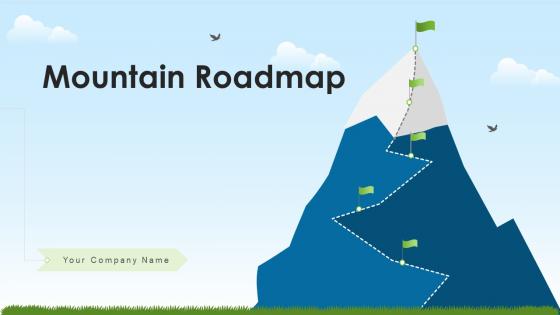
Mountain roadmap powerpoint ppt template bundles




Try Before you Buy Download Free Sample Product
 Impress Your
 Audience
 100%
100% Editable
 Save Hours
 of Time


Our Mountain Roadmap Powerpoint Ppt Template Bundles are topically designed to provide an attractive backdrop to any subject. Use them to look like a presentation pro.
People who downloaded this PowerPoint presentation also viewed the following :
Mountain roadmap powerpoint ppt template bundles with all 20 slides:
Use our Mountain Roadmap Powerpoint Ppt Template Bundles to effectively help you save your valuable time. They are readymade to fit into any presentation structure.










FAQs for Mountain roadmap powerpoint
Start with your end goal and work backwards to figure out the big milestones you need to hit. Then map out what deliverables get you to each milestone, plus how tasks depend on each other. Realistic timelines are huge - don't be overly optimistic here. I always try to spot potential roadblocks early because they'll definitely show up at the worst possible moment. The visual part really matters too since you're basically drawing the path from start to finish. Each phase should build on the last one. Oh, and dependencies between tasks will make or break your timeline, so don't overlook those.
Honestly, mountain roadmaps are game-changers for getting teams aligned. You know how everyone usually has their own idea of what's priority? This fixes that. Everyone's literally staring at the same visual - the "peaks" are your big milestones, and you can see how everything connects. Makes spotting dependencies so much easier too. I've been in way too many meetings where people argue past each other about timelines. The visual just clicks for people faster than spreadsheets or whatever. Try mapping your next project's key milestones as peaks. You'll probably see alignment happen way quicker than usual.
Dude, scope creep will kill you - stakeholders always want "one tiny addition" mid-project. Weather mapping is a pain since mountain conditions flip constantly. Remote areas with zero cell service make data collection brutal, and coordinating teams at different elevations? Total mess. Honestly, mountain projects are just harder than people think. Lock your scope down early and pad your timeline by like 30%. Otherwise you'll spend the whole season playing catch-up with impossible deadlines while everyone acts surprised that working at altitude takes longer.
So instead of those linear timeline roadmaps, picture your strategy like climbing a mountain. Each peak is a major goal or milestone. The cool part? You see the whole journey at once - including those valleys (aka the messy challenges) between each summit. Way better than staring at another soul-crushing Gantt chart, honestly. Steeper sections show where the real work happens. Teams actually get excited because they can visualize the mountain they're tackling together. Seriously, just sketch your next quarter's goals as peaks and watch how different your planning meetings feel.
Honestly, mountain roadmaps are clutch for anything with lots of moving parts where stuff might change. Product launches, big strategic projects - that kind of thing. I used to waste so much time trying to nail down every detail from day one (huge mistake). With mountains, you can map out the major milestones but stay flexible on how you'll actually get there. Your executives will love it too since they get the bird's-eye view without drowning in timeline weeds. Next time you're staring down a project with tons of unknowns, give it a shot.
Dude, you absolutely need visuals for your mountain roadmap. It's like the difference between having GPS and those terrible written directions your dad used to print out. When your team can actually *see* the strategy laid out, they get where they are and what's coming next. Plus nobody wants to stare at a boring text wall trying to decode priorities - that's just cruel. The visual stuff helps you catch bottlenecks and dependencies super quickly. Honestly, I'd map out your big milestones visually first, then worry about adding all the nitty-gritty details later.
Honestly, the biggest game-changer is making your roadmap actually responsive instead of some dusty document you made six months ago. Project management tools can auto-track your milestones, and dashboards show you where things are getting stuck in real time. I'd definitely set up feedback loops so you're not just guessing what's working. Analytics will show you the gap between what looked amazing in theory versus reality (trust me, there's always a gap). Don't go overboard though - pick tools your team will actually use. Start by connecting your roadmap to whatever project tracker you're already using, then add more from there.
Honestly, the biggest mistake people make is creating the roadmap in isolation then trying to sell it after. Interview your key stakeholders first - figure out what they actually care about, not what you assume matters to them. Getting them involved in defining success metrics and milestones makes a huge difference. Nobody wants to be handed a finished plan they had zero input on (learned that the hard way). Show how their feedback shaped things and tie it back to business goals. Oh, and set up regular check-ins so you can catch any issues before they blow up.
So basically, you treat those big milestones like flexible anchor points instead of hard deadlines. When priorities shift or budgets change, just move the "peaks" around while keeping your overall direction. That's honestly what I love about this approach - you're not stuck doing detailed weekly sprints like other methods. Project dynamics change all the time, right? Just figure out which summit makes sense to tackle next and adjust your route. Oh, and definitely keep your team in the loop when you make major shifts so everyone's still climbing the same mountain.
Track your milestone completion rates and budget variance - those are non-negotiables. Resource utilization matters too, plus stakeholder satisfaction (though honestly, some stakeholders are never happy regardless). I'd watch scope changes like a hawk since they kill timelines. Risk mitigation progress is huge for mountain projects because costs get weird fast. Don't overwhelm yourself though - pick 3-4 main metrics for weekly check-ins, then dive deeper monthly on the rest. A basic dashboard helps you catch issues early. Way better than scrambling when everything's already sideways.
So basically you map out your work like mountains - each peak is a major goal or feature. Plot everything by effort vs impact and suddenly it's obvious what to tackle first. Way better than those messy spreadsheet lists where everything looks equally urgent (hate those things). The visual aspect is clutch for stakeholder meetings since people can actually see the trade-offs instead of just hearing about them. Just start by plotting your current projects as different mountains, then use that for sprint planning. You'll actually be shocked how much clearer everything becomes.
Quarterly reviews are your friend here. Most teams just shuffle dates around (huge mistake!) but you want to actually reassess which features matter based on real user feedback and data. Pull in your whole team, especially anyone talking to customers daily - they'll have the best insights. Honestly, the hardest part is remembering your roadmap isn't set in stone. It should change as you learn new stuff. Oh, and definitely set a recurring calendar reminder or you'll totally forget to do this. Trust me on that one.
Think of it like a mountain roadmap - everyone's looking at the same peak instead of wandering random trails. Map your big goal at the top, then work backwards to show how each department's quarterly stuff connects. Marketing campaigns feed into sales targets, which hit product milestones, etc. Honestly, it's pretty cool when teams finally see how their work fits the bigger picture. Skip the generic "we're all in this together" BS though. Each department needs to see their actual role in reaching that summit. One visual story that connects all the dots - that's what makes it work.
Oh nice! Miro's got some solid mountain roadmap templates - they're super visual and great for team collab. FigJam has decent ones too. ProductPlan if you're already using that (though honestly their interface can be kinda clunky). The whole point is mapping your features by effort vs impact. Quick wins go at the base, your big ambitious stuff hits the summit. Sometimes I've seen teams just grab a whiteboard and sketch it out old school - works surprisingly well actually. Start with Miro's basic template and tweak it for whatever you're building. Way easier than starting from scratch.
Dude, you can't just map mountain routes without thinking about local culture first. Some places treat mountains as sacred - certain paths are totally off-limits or need special permission. Traditional pilgrimage routes might look "inefficient" on paper but they're huge culturally. Also, not everyone navigates the same way we do. Some communities use landmarks and storytelling instead of GPS, which honestly makes way more sense sometimes. My advice? Talk to locals before you design anything. You'll avoid pissing people off and probably learn something cool about their traditions too.
-
Colors used are bright and distinctive.
-
Thanks for all your great templates they have saved me lots of time and accelerate my presentations. Great product, keep them up!
-
Innovative and attractive designs.
-
Best way of representation of the topic.
-
Unique design & color.