


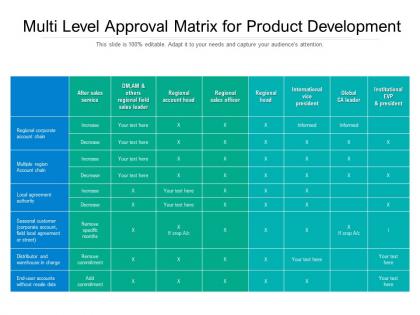
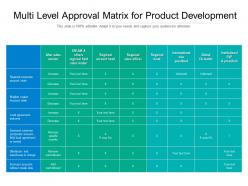
Multi level approval matrix for product development




Try Before you Buy Download Free Sample Product
 Impress Your
 Audience
 100%
100% Editable
 Save Hours
 of Time


Our Multi Level Approval Matrix For Product Development are topically designed to provide an attractive backdrop to any subject. Use them to look like a presentation pro.
People who downloaded this PowerPoint presentation also viewed the following :
Multi level approval matrix for product development with all 2 slides:
Use our Multi Level Approval Matrix For Product Development to effectively help you save your valuable time. They are readymade to fit into any presentation structure.
FAQs for Multi level approval matrix
So an approval matrix is just a chart showing who signs off on decisions at different dollar amounts or project stages. Honestly, it's like having a roadmap for "who do I actually need to ask?" You'll know if that $500 expense needs your manager or if it has to go all the way up to the VP. Without one, projects get stuck in this endless approval ping-pong game - super annoying. Or even worse, someone makes a call they weren't supposed to make. Get one set up early and make sure everyone on the team has it. Trust me, it saves so much headache down the road.
Dude, it's a game changer - no more "wait, who do I even ask about this?" moments. Your $500 software purchase? You'll know right away if it just needs your manager or has to go up the food chain. Saves you from those painful email chains where everyone's just guessing who should approve what. Plus it stops those annoying situations where you're halfway done and someone's like "oh actually you needed approval from Karen in finance." Everyone knows their role, decisions happen faster. Honestly, the ping-pong approval thing is the worst. Start with whatever requests your team does most often.
Okay so first figure out who can approve what dollar amounts - saves everyone headaches later. Map out the decision-maker roles too, plus you'll definitely need backup approvers for when people are out sick or whatever. Cover different scenarios like urgent stuff and cross-department requests. Honestly, I've seen so many companies mess this up by making it too complicated. Keep it simple enough that people will actually use it, but specific enough to avoid those awkward "um, who handles this?" conversations. Test it on a few real situations before you launch it company-wide.
So basically, an approval matrix stops you from making expensive mistakes by routing big decisions to people who actually know what they're doing. Higher-stakes stuff automatically goes up the chain to folks with more experience and authority. It's like having guardrails - prevents someone from accidentally signing off on something way beyond their level. Plus you get this nice paper trail if things go sideways later (and trust me, they sometimes do). Just make sure you set clear dollar limits and decision categories so people aren't constantly asking "wait, do I need approval for this?"
Healthcare's crazy strict - you need multiple sign-offs for anything touching patient data or compliance. Tech companies? They usually go lighter on approvals to keep development moving fast. Manufacturing gets really into safety protocols with technical experts signing off on everything (some of those processes are honestly a nightmare). Financial services lock down hard on transactions and regulatory stuff. Retail focuses more on vendor decisions and inventory management. Look at your biggest risks first - that's where you'll want the tightest controls. Each industry's totally different though.
Don't overcomplicate it from the start - that's the
No Reviews