

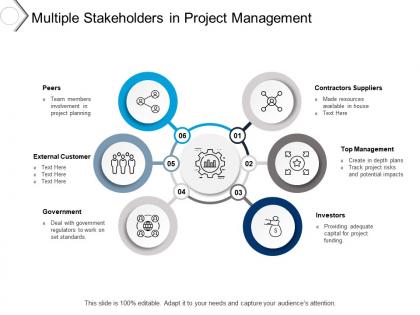
Multiple stakeholders in project management





Try Before you Buy Download Free Sample Product
 Impress Your
 Audience
 100%
100% Editable
 Save Hours
 of Time


Project management generally involves coordinating and managing the work of multiple stakeholders. In many cases, these stakeholders may have conflicting objectives or interests in the project. Effective project managers must be able to manage these conflicting interests and ensure that the project remains on track.Managing a project is never an easy task, but it can be made easier when you have the right tools. That’s why we encourage you to download our project management PowerPoint templates. These templates are designed to help you communicate with all of the stakeholders in your project, from team members to clients. With clear and concise slides, you can keep everyone on track and ensure that your project stays on schedule. So don’t wait any longer – download SlideTeam’s project management PowerPoint templates today.
People who downloaded this PowerPoint presentation also viewed the following :
Multiple stakeholders in project management with all 5 slides:
Develop faster and better with our Multiple Stakeholders In Project Management. They are great examples of before and after.

FAQs for Multiple stakeholders
Honestly, start building those relationships way before you actually need anything from people - that's huge. Map out who your stakeholders really are first (you'd be surprised how many obvious ones get missed). Then just be real with them about your goals and what you can't do. Listen when they talk instead of just waiting for your turn. Regular check-ins beat crisis-mode scrambling every time. Oh, and here's the thing that'll make or break you - if you ask for their input, show them what you did with it or explain why it didn't work out. People hate feeling ignored after they've helped.
So basically, you make a visual map of everyone who matters for your project and how much clout they have. Plot them by interest level and power - think of it as your project cheat sheet, honestly. High-power people with lots of interest? They need constant updates and the full VIP experience. Low-interest folks just get the occasional "hey, here's what's happening" message. Start by brainstorming anyone who could mess with or get affected by your project. Then map 'em out. It's way better than randomly guessing who you should be talking to - learned that the hard way once.
Honestly, online surveys are your best bet for speed - Typeform or Google Forms can hit a ton of people quickly. Focus groups give you way deeper insights but eat up more time. One-on-ones are gold for rich feedback, just don't expect to interview everyone and their mom. Tools like Miro or Slack work well for catching input as things develop. Also those little feedback widgets on your existing stuff? Super underrated. I'd stick to maybe 2-3 methods tops based on your timeline. Mixing different approaches usually gives you the full story instead of just one angle.
Oh man, cultural stuff can make or break stakeholder meetings. Germans love directness - get straight to the point. Try that in Japan though? You'll offend everyone. Some cultures want to chat and build relationships first before any business talk, others think that's a waste of time. You'll need to switch up everything - how you communicate, run meetings, even decision timelines. Honestly, the best thing you can do is research their norms ahead of time and find a local teammate who can save you from looking like an idiot.
Honestly, tech is like a megaphone for stakeholder engagement. You'll reach way more people faster and cheaper than old-school methods. Virtual town halls, surveys, social platforms - suddenly you're getting input from folks who'd never drag themselves to some boring conference room meeting. Geographic barriers? Gone. Run feedback portals 24/7, send targeted messages, track everything in real-time. The data's cleaner too, which is nice. My advice though - don't go crazy with every shiny tool out there. Pick one or two that actually match how your stakeholders prefer to communicate. Less overwhelming that way.
Honestly, start with the basics - participation rates and how fast people respond to feedback. Satisfaction surveys help too, though they're kinda boring. The real magic happens when you actually talk to people and see if they feel heard. I always forget this part but set your baseline first, otherwise you're just guessing later. Check if your decisions are actually better informed now - that's the whole point, right? Conflicts going down is another good sign. Pick maybe 3-4 things that match what you're trying to achieve and review quarterly. Numbers don't tell the whole story though.
Honestly, the worst part is when stakeholders have totally different agendas and nobody's communicating properly. Half the people won't even show up to meetings, which is super frustrating. Unclear expectations will kill your project before it starts. Figure out what each group actually wants early on. Set up regular check-ins and be upfront about how decisions get made. People need to see their feedback matters - otherwise why would they bother? I'd start with mapping everyone out by importance and how much they need to be involved. Sounds boring but it actually saves tons of headaches later.
Dude, stakeholder engagement is honestly what separates successful projects from total disasters. You get everyone on the same page early, which saves you from those awful surprises later when someone's like "wait, this won't work because..." Getting people involved in decisions means they'll actually support what you're doing instead of fighting it. Plus you tap into their knowledge - they know stuff you don't. I learned this the hard way on my first big project. The trick is figuring out who actually matters for each decision and when to loop them in. Don't overdo it though.
So I always use this stakeholder matrix thing - basically you map everyone on influence vs interest. High/high are your VIPs who need constant updates. High influence but low interest? Those are the scary ones (like executives who could axe your project but don't really care day-to-day). You want to keep them happy without annoying them. Low influence/high interest people just need regular info dumps. And low/low... honestly just check in occasionally. Some folks get fancy with 1-10 scoring but the grid works fine. Just list everyone first and be brutally honest about where they land.
Honestly, just talk to people regularly - even when stuff's going sideways. Stakeholders can tell when you're bullshitting them, so don't sugarcoat everything. I've watched companies stay silent until they have "perfect" updates, which actually makes everyone more suspicious. Listen to what people are saying back to you. Set up ways for them to give feedback and actually respond fast. Oh, and this is huge - if you promise something, follow through. Nothing kills trust faster than saying you'll handle something and then... crickets. Short version: communicate often, be real about problems, and do what you say you'll do.
First thing - figure out who actually matters for your project and what they care about. Map out their influence levels so you're not wasting energy on everyone equally. Pick different communication styles for different people. Some want emails, others need actual conversations. Honestly, the face-to-face folks can be pretty demanding but they're usually worth it. Set up proper feedback loops because nobody likes being talked at without getting heard. Give each stakeholder group clear objectives and maybe assign someone to own the whole process? Check in regularly or it'll all fall apart. Trust me on that one.
Honestly, you gotta tackle this stuff directly - set up meetings where everyone can actually speak without getting cut off. Usually the real issue isn't that people hate each other, it's just mixed-up priorities or bad communication. If things are super tense, meet with each group separately first (I've watched too many meetings completely blow up when you skip this step). Once you get what everyone's thinking, bring them together. Keep pushing the conversation back to what you all want to achieve together. Write down whatever you agree on - people have terrible memories about this stuff. Oh, and check back later to make sure it's actually working.
Dude, you'll get way better results if you tell stories instead of just dumping data on people. Like, frame your updates as actual narratives - what happened, who was involved, how it turned out. I watched this one guy turn the most boring budget meeting into something people actually cared about just by starting with "So last quarter we tried this thing..." People remember stories. They zone out on spreadsheets. Plus stories help them picture what your decisions actually mean in real life - not just numbers on a slide. Honestly, even a quick story about how your work helped one customer makes everything stick better.
Honestly, the main thing is just being real about how much their input actually matters. Don't ask for feedback if you've already decided everything - people can tell and it's super frustrating. Also, watch out for only talking to people who'll tell you what you want to hear. I've seen so many projects where they "engage stakeholders" but somehow miss the folks who'd actually be affected most. Short sentences work too. And please don't just take their expertise without giving anything back - that's just rude. Think of them as actual partners you're working with, not items on your to-do list.
Honestly, you've gotta be way more intentional now that those random hallway chats don't exist. I'd start by figuring out who you're barely talking to anymore - that's usually eye-opening. Set up virtual coffee meetings with your key people, and please use video instead of just phone calls. Trust me, seeing faces makes such a difference for building actual relationships. Mix things up too: throw out quick surveys for broad feedback, do smaller breakout sessions when you need to dig deeper, and record updates people can watch later. Oh, and tools like Miro or Figma are great for getting real-time input during sessions. It's about recreating those natural connection moments on purpose.
No Reviews