

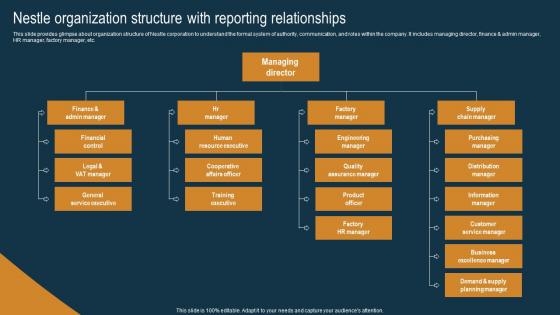
Nestle Organization Structure With Reporting Nestle Internal And External Environmental Strategy SS V




Try Before you Buy Download Free Sample Product
 Impress Your
 Audience
 100%
100% Editable
 Save Hours
 of Time


This slide provides glimpse about organization structure of Nestle corporation to understand the formal system of authority, communication, and roles within the company. It includes managing director, finance and admin manager, HR manager, factory manager, etc.
People who downloaded this PowerPoint presentation also viewed the following :
Nestle Organization Structure With Reporting Nestle Internal And External Environmental Strategy SS V with all 9 slides:
Use our Nestle Organization Structure With Reporting Nestle Internal And External Environmental Strategy SS V to effectively help you save your valuable time. They are readymade to fit into any presentation structure.








FAQs for Nestle Organization Structure With Reporting Nestle Internal And External Environmental
So Nestlé basically runs this matrix setup where local teams can make quick calls without waiting for Switzerland to approve everything. Smart move when you're in like 180+ countries. People end up reporting to both regional managers AND product line bosses though, which honestly sounds like a nightmare sometimes. But hey, it works - you get local market expertise plus global brand consistency. If you're dealing with them, regional stuff moves fast. Cross-market changes? That's when things slow down because everyone has to coordinate.
So Nestlé basically breaks things up by product and region, which works really well for them. Their baby food people can focus on local parenting stuff while coffee handles totally different consumers. Makes sense, right? Each division moves fast without waiting for some corporate exec who doesn't get their market. Like, the cereal team in Asia probably knows way more about breakfast preferences there than headquarters does. It keeps them flexible when they're expanding globally - no cookie-cutter strategies that flop everywhere.
So Nestlé basically tears down those department walls on purpose - marketing people work directly with R&D, supply chain collaborates with brand managers, all that stuff. It's pretty clever honestly. Consumer goods moves so fast that you can't afford to have everything go through rigid hierarchies. They've designed their whole structure around these cross-team partnerships instead of the old-school silo approach. Worth looking at how they set up formal ways for different functions to actually intersect regularly - not just random meetings but real collaboration. Makes sense when you think about it.
So Nestlé does this "glocal" thing where they keep some stuff consistent worldwide - like quality standards and basic branding. But then regional teams get to tweak products for local markets. McDonald's does something similar, right? Same core menu but they'll throw rice burgers on there in Taiwan. Nestlé's structure actually makes this work pretty well - global divisions handle the big picture strategy while country managers can make real decisions for their specific markets. Honestly, it's kinda genius. If you're studying their approach, just focus on what they keep global versus what they let each region customize.
So Nestlé uses this matrix thing where people report to two bosses instead of one. Breaks down those stupid departmental walls, you know? Their chocolate team in Switzerland can directly share discoveries with the Asian candy folks without jumping through hoops. Knowledge moves sideways between regions AND up-down between functions like R&D and marketing. Pretty smart actually - they pool resources way better since managers coordinate across different divisions. Oh, and if you're ever doing cross-team projects at work, you could totally steal this dual-reporting idea. Works surprisingly well for getting stuff done faster.
Okay so Nestlé's whole decentralized thing actually works pretty well for keeping people engaged. You get way more autonomy - local managers can just make decisions instead of waiting forever for Swiss HQ approval. The "shared value" stuff makes your job feel like it matters more since you're working toward actual social impact. Their matrix structure is honestly confusing as hell at first (took me ages to figure out the reporting lines), but you end up collaborating across departments which keeps work interesting. Performance is usually better because there's clearer accountability and you can pivot quickly for local markets. If you're thinking about similar setups, just make sure you balance that freedom with solid company values.
Look, Nestlé's hierarchy is a real mixed bag. Sure, having clear chains of command works when you're dealing with thousands of brands globally. But man, those approval layers will kill your momentum - I've seen good ideas die just moving through all the red tape. The geographic setup is smart for local markets, though it creates these weird silos between regions. My advice? Figure out who actually makes decisions early on and don't just focus on one level. You'll need allies up and down the ladder to get anything done there.
So Nestlé basically has their Chief Sustainability Officer reporting straight to the CEO, which is huge. They've got sustainability teams in every region too. What's clever is they tied sustainability metrics to executive pay - now that's how you get people's attention! Their whole "Creating Shared Value" thing restructured how they operate. Cross-functional councils connect all the departments. Honestly, the key takeaway is making it a C-suite priority instead of some random side department. That's where you actually get things done, you know?
Honestly, Nestlé's main problem is their whole top-down Swiss headquarters thing just doesn't work in emerging markets. Local teams need to make quick decisions, but everything gets stuck waiting for approval from Europe. Their standardized products are totally off too - you can't sell premium European coffee to rural Indian customers who want something completely different at way lower prices. The matrix structure makes it even messier since nobody knows who's actually in charge when you need to adapt to local culture. I'd say give regional teams way more autonomy to make their own calls. That's really the only way forward.
Oh, Nestlé actually did something pretty clever here. They built these tech hubs that cut right across their old regional boundaries - no more working in silos, you know? Digital teams now work directly with local markets, which honestly makes way more sense than the old top-down approach. Everything runs on shared platforms now, from supply chains to consumer data. But here's the thing that's actually smart - they didn't just slap tech onto their existing mess of processes. They completely rebuilt workflows around what digital could actually do first. That's probably why it worked so well for them.
Honestly, Nestlé's decentralized thing is pretty smart for supply chains. Regional managers can make quick calls on suppliers without waiting for Swiss headquarters to approve everything. They build better local relationships too, which saves your ass when shortages happen. Sure, you lose some bulk buying power, but the speed makes up for it. Each division adapts to their market instead of forcing a one-size-fits-all approach from the top. What's cool is how they let regions run independently while still keeping global quality standards. That balance is tricky but it works.
So Nestlé basically bakes diversity goals right into their leadership setup. They've got D&I councils at different levels that all report upward, plus - and this is clever - executive pay is tied to hitting diversity numbers. That way people actually care about making it work. Their regional teams mirror local markets, which makes sense since what works in Asia might be totally different from Europe. Oh, and they rotate people between regions constantly to mix up perspectives. Honestly pretty solid approach since their decentralized structure lets regional leaders tweak strategies for their own cultural stuff.
So basically they save money and innovate faster by sharing resources globally but still tweaking stuff for local markets. Smart move honestly. They centralize the expensive stuff like R&D and buying materials to get better deals, then let regional teams adjust products for local tastes. Moving talent between regions becomes way easier too - I think that's actually underrated as a benefit. Plus they can compete against both the big global players and smaller local companies in each market. For your analysis, definitely focus on that balance between global efficiency and local adaptation.
So Nestlé has this matrix setup where regions aren't just doing their own thing - you're constantly working with teams across Asia, Europe, Americas on global projects. Pretty neat how a packaging breakthrough in Brazil can pop up in Thailand like a month later. They've got these cross-regional forums and digital platforms, plus people actually rotate between markets which is huge for learning. My advice? Jump on those global project teams whenever you can. That's honestly where you'll pick up the most insights, way more than just sitting in regional meetings all day.
So Nestlé basically split into three big regions - Americas, Europe/Middle East/Africa, and Asia/Oceania/Africa - which makes way more sense for targeting local tastes. They also carved out special divisions for health science and premium coffee since everyone's obsessed with wellness stuff now (and honestly, who isn't?). The whole point was ditching their old global cookie-cutter approach. Instead they flattened out all those corporate layers to make decisions faster. Smart move because those region-specific strategies can actually pivot when trends change, unlike their old system that moved like molasses.
-
I discovered this website through a google search, the services matched my needs perfectly and the pricing was very reasonable. I was thrilled with the product and the customer service. I will definitely use their slides again for my presentations and recommend them to other colleagues.
-
SlideTeam, Please don’t stop sharing discount coupons! I love your occasional discounts and tend to buy your products around that corner.