

New cost benefit analysis template ppt design templates






Try Before you Buy Download Free Sample Product
 Impress Your
Audience
 100%
Editable
 Save Hours
of Time


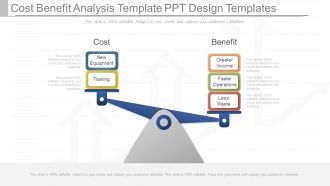
In order to estimate and total out the monetary benefit, it becomes important to stay updated and the same can be achieved via the mode of presentation layout, cell phones or computers. However if you wish to put to public domain the related information then an all new cost benefit analysis template sort PPT design template can be put to use as it supports a logical measuring diagram which puts cost at one end of the balance and benefits on the other end, thus placing the related characteristics in a sequential manner. A colorful yet professional PPT design adds to the decision and policy making as it systematically processes in it the strengths, weakness along with transaction and business functionality so as to not miss on the quantitative and qualitative factors of any project in progress. Before investing in capital everyone looks in to key factors like cost involved and possible profit which one can make with, this can be tracked after aligning the information in a PPT slide show. Appease the gods in heaven with our New Cost Benefit Analysis Template Ppt Design Templates. They are an example of divine beauty.
People who downloaded this PowerPoint presentation also viewed the following :
New cost benefit analysis template ppt design templates with all 7 slides:
Get through with aplomb with our New Cost Benefit Analysis Template Ppt Design Templates. Cover all aspects with complete confidence.


FAQs for New cost benefit analysis template
So you'll want sections covering all your costs - upfront stuff, ongoing expenses, plus those sneaky hidden ones that always pop up. Then quantify the benefits: revenue boosts, savings, efficiency gains. Set a realistic timeframe too. Honestly, the assumptions section is where it gets weird but that's what makes people trust your numbers. Add space for risk assessment and sensitivity analysis - sounds fancy but it's just "what if we're wrong" scenarios. Include your final ROI calcs and recommendation. Keep it simple enough that your team will actually use the damn thing instead of letting it collect dust.
Honestly, those templates are lifesavers when you're paralyzed by big decisions. Just dump all your costs and benefits into columns, then slap real numbers on everything - even the fuzzy stuff. I learned this the hard way after making some terrible choices based purely on feelings (though don't totally ignore your gut). Compare scenarios side-by-side and you'll catch costs you never thought about. Calculate your ROI or payback period and suddenly the right choice becomes super obvious. Plus stakeholders actually listen when you've got numbers backing you up instead of just "it feels right."
NPV is your bread and butter - start there. ROI and payback period are obvious ones too. IRR matters if you're weighing different projects against each other. Cash flow timing though? That's where people screw up all the time. Like, seriously, I can't tell you how many smart people forget to think about *when* the money actually moves. Sensitivity analysis is clutch for stress-testing your numbers. Oh, and opportunity cost - that capital could be working elsewhere, right? Honestly just nail these basics first. You can get fancy later depending on what your boss actually cares about.
Here's what I'd do - make a scoring system next to your financial stuff. Give those squishy benefits like employee morale or brand rep a 1-5 score, then weight them by how much they actually matter to your company. Yeah, it feels super weird putting numbers on fuzzy things at first, but honestly it works better than you'd think. If the scoring thing feels too made-up, just use "high/medium/low impact" instead. The trick is staying consistent with how you evaluate everything and writing down your reasoning. That way when people ask "how'd you get that number?" you're not just shrugging.
Don't treat the template like it's set in stone - customize that thing for your actual situation. Also, you'll probably be way too optimistic about benefits (we all do this) and forget about weird hidden costs that pop up later. Include stuff like how much time your team will spend on it, or what you're giving up by doing this instead of something else. Oh and definitely don't fill it out alone in a corner somewhere. Get other people involved because they'll catch things you miss. Templates are just starting points anyway - you gotta make them work for you, not the other way around.
Get everyone involved from the start - seriously, this is where most people mess up. Run workshops with each department because finance folks care about totally different stuff than operations does. Map out who's actually gonna use this thing first, then figure out what decisions they're making with it. I'd do collaborative sessions to nail down the key variables and reporting formats they want. Otherwise you'll build something pretty that nobody uses. Oh, and definitely get feedback on drafts before you call it done - saves so much headache later.
Honestly, just start with Excel or Google Sheets - they're solid for most scenarios and your team probably knows them already. Most people I know overcomplicate this stuff with fancy software when a basic spreadsheet handles like 90% of what you need. If you're dealing with lots of uncertainty though, maybe look into @RISK for risk modeling or PowerBI for the visual stuff. Monte Carlo simulation tools are worth it if you're running multiple scenarios. But seriously, nail your basic template in Excel first. You can always upgrade later if you actually need more bells and whistles.
Definitely tailor your template for each industry - what drives costs and benefits is totally different everywhere. Healthcare needs patient outcomes and compliance costs tracked. Manufacturing? Equipment depreciation and efficiency metrics. Tech moves so ridiculously fast you'll want scalability and dev cycle stuff front and center. Financial services gets tricky with risk assessments and regulatory capital. The thing is, stakeholders in each sector care about completely different success measures. Construction timelines and risks have zero overlap with retail concerns, you know? Start with your basic framework, then swap out the categories that actually matter for decision-making in whatever industry you're targeting.
Look, risk assessment keeps you from being way too optimistic about your numbers. Most people totally skip this step because yeah, it's boring as hell, but you really shouldn't. Basically you identify what could go wrong - stuff that might bump up costs or kill your expected benefits. Then assign percentages and dollar amounts to each risk. Without doing this, your analysis might say "go for it!" when the project could actually tank. Oh and definitely add a risk section to whatever template you're using - it'll show you how these scenarios mess with your projections.
Hey! So you'll want to break your template into time chunks - immediate stuff, short-term (1-2 years), and long-term (3+ years). Super crucial because money today is literally worth more than money later, thanks inflation. Add a discount rate row to calculate present value - honestly this part can get a bit nerdy but it's worth doing right. Don't forget timeline milestones for when you'll revisit everything. Oh and leave space for time-sensitive assumptions, like when benefits actually start or if you're front-loading costs.
Put your main recommendation first thing - don't make people hunt for it. Charts and tables are your friend here because nobody wants to read paragraphs of numbers (trust me on this). Show them best case, worst case, and what'll probably actually happen so they get the full picture. I always tell people upfront what I'm assuming and what could go wrong - makes you look way more credible than pretending you know everything. Do a sensitivity analysis so they see which factors really move the needle. Wrap it up with a clear yes/no and what happens next.
I'd set up different columns or tabs for your scenarios - best case, worst case, realistic case. Make some cells dynamic so when you tweak discount rates or cost estimates, everything updates automatically. Super satisfying to mess with, honestly! Focus on finding the 2-3 variables that actually move the needle on your final decision. Those are what you'll want to run sensitivity tests on. Structure it so you can flip between scenarios easily - saves you tons of time later when you're trying to build your case. Having all those angles covered makes me way more confident in whatever recommendation I'm making.
Definitely lead with an executive summary - people want the punchline first. Charts and graphs are your best friend here because tables of numbers make everyone's brain shut off (learned this the hard way). I'd break it into sections: costs, benefits, timeline, risks. Keep the language super straightforward since you want the whole room following along, not just finance people. Oh and don't just dump data on them - weave it into a story that builds toward whatever you're recommending. Makes it way easier for them to actually make a decision.
Look, you should probably update that template once a year minimum. But honestly? Don't wait if your business changes - new products, economic weirdness, whatever. I've watched teams crash and burn using ancient templates that missed half the relevant stuff. Quick story - my last company kept using the same format for three years while we pivoted twice. Total mess. Set a reminder right now for like 30 minutes of review time. Short bursts work better than marathon sessions anyway. Your future self will thank you when stakeholders aren't constantly poking holes in your numbers.
Honestly, check with your finance team first - they might already have training stuff sitting around. Coursera and edX have solid free courses on the basics. YouTube's actually pretty decent for this too (way less painful than those corporate webinars). Once you get the concepts down, just start practicing with real projects you're working on. That's where it actually clicks. Most template sites have documentation and tutorials, though some are kinda meh. I'd go basics first, then jump into real scenarios.
-
Very well designed and informative templates.
-
Very unique and reliable designs.