


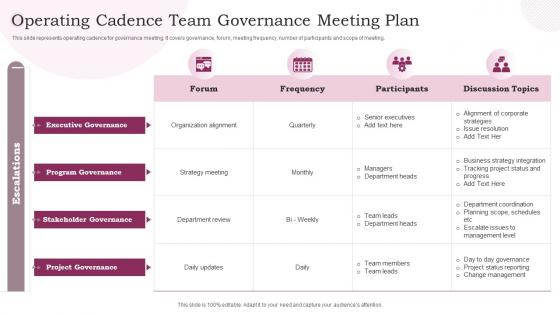
Operating Cadence Team Governance Meeting Plan




Try Before you Buy Download Free Sample Product
 Impress Your
 Audience
 100%
100% Editable
 Save Hours
 of Time


This slide represents operating cadence for governance meeting. It covers governance, forum, meeting frequency, number of participants and scope of meeting.
People who downloaded this PowerPoint presentation also viewed the following :
Operating Cadence Team Governance Meeting Plan with all 6 slides:
Use our Operating Cadence Team Governance Meeting Plan to effectively help you save your valuable time. They are readymade to fit into any presentation structure.





FAQs for Operating Cadence Team
So operating cadence is just the regular rhythm your team gets into - weekly check-ins, monthly reviews, quarterly planning stuff. You know the drill. Without it? You're basically just putting out fires all day. Trust me, I've watched teams spiral when they don't have this nailed down. Having that consistent schedule means people actually stay on the same page and problems come up before they blow up in your face. Plus you'll actually move toward your goals instead of just running around being "busy." Start simple - figure out what meetings you genuinely need, then don't skip them.
So operating cadence is basically about creating steady rhythms across your whole company - like regular check-ins, planning cycles, that kind of thing. Traditional project management? That's more about getting specific stuff done from A to Z. Picture it this way: cadence is like your organizational heartbeat that just keeps going. Project management is running individual sprints with clear start/finish lines. The cadence approach is honestly less chaotic once you get used to it. You're not constantly scrambling between projects because you've got these predictable touchpoints keeping everyone aligned. Agile and Waterfall are solid for delivering specific outcomes, but they don't really solve the bigger picture coordination stuff. I'd start by looking at your current meetings - probably a mess, right? - and see where you can build more consistent patterns.
Honestly, you need three things: consistent meetings, clear ownership, and standard reporting. The meeting part is such a pain - everyone wants in on everything but you really just want the right people showing up regularly. Then figure out who actually owns what decisions (this saves so many headaches later). Standard reports keep everyone on the same page about what's working and what's stuck. When all three click together, things actually run smoothly. Oh, and start by looking at your current meetings - I bet you'll find weird gaps or too much overlap.
Honestly, just start with the basics - weekly team check-ins and maybe monthly retros. Don't overthink it (I've watched so many teams go overboard and burn out). Pick 2-3 regular meetings max and stick to them religiously. That consistency matters way more than having perfect agendas. Also set some ground rules about response times and how often people should give updates. Skip the status meetings that could be Slack messages - waste of everyone's time. Build your rhythm first, then add stuff later if you actually need it.
Look, good tech is what makes your whole operating rhythm actually function when you scale up. Without it, you're stuck doing manual updates forever and your meetings become these soul-crushing status reports instead of solving real problems. You'll want dashboards, project management tools, automated reporting - basically anything that keeps data flowing without you having to chase people down. The trick is picking stuff that plays nice together so your team can focus on making decisions rather than hunting for information. Trust me, I've been in those meetings where half the time is spent figuring out what's actually happening.
Honestly, just track three things: attendance (boring but crucial), how fast decisions actually happen, and whether you're hitting your goals. The attendance thing sounds dumb but trust me - if people aren't showing up, nothing else matters. Check if your recurring meetings create action items that people complete, not just endless discussion. Your team should feel in the loop about priorities too. When it's working right? Decisions don't get stuck forever, everyone knows what's happening, and you consistently nail quarterly targets. Start by looking back at last month's meetings - that'll tell you everything.
Honestly, the worst thing you can do is go overboard right away. Your team will burn out on meetings before anything actually sticks. Most places mess up by not having clear agendas too - so you end up with these pointless status update sessions instead of actually making decisions. Leadership buy-in is huge. Without it, priorities keep changing and your whole rhythm falls apart. People always want to ditch the operational meetings when things get crazy, but that's literally when you need them most. My advice? Start with just 2-3 meetings, get those running smoothly, then slowly add more.
Honestly, you've gotta get way more structured with communication now. Weekly team syncs instead of those random hallway conversations - and actually document decisions where everyone can find them later. Remote work really exposed how much we all used to just wing it, didn't it? Build in buffer time for delayed responses and the inevitable tech disasters. If you're dealing with different time zones, map out clear handoff points. The biggest shift? Being super explicit about timelines since you can't just walk over to bug someone. Start by looking at your current touchpoints and figure out which ones need more structure.
Honestly, the biggest thing is sticking to a solid agenda every time - wins first, then metrics, blockers, and what's next. Don't let these drag on forever (I've sat through way too many hour-long "quick syncs"). If you're just sharing updates, skip the meeting and send a Slack instead. Someone needs to own the follow-ups and get notes out the same day. Oh, and actually make decisions - that's the whole point, right? Find whatever rhythm works for your team's vibe and makes everyone feel like it's worth their time.
Honestly, having regular check-ins actually makes decisions happen faster. Think about it - instead of scrambling to schedule meetings every time something comes up, you've already got the right people in a room at predictable times. Problems get surfaced before they blow up. Urgent stuff? Everyone knows it'll get handled at the next standup or whatever cadence you set up. I'd start by figuring out where decisions are currently getting stuck - that's probably where you need those regular touchpoints most. Way better than endless Slack threads that go nowhere.
Monday.com, Asana, or ClickUp work great for tracking recurring meetings and action items. But honestly? I've watched teams go crazy with fancy dashboards when a basic Google Sheet does the trick for smaller groups. Bigger orgs might want Microsoft Viva Goals or Lattice for OKRs. Oh, and definitely block your calendar slots with something like Calendly - people love stealing meeting time otherwise. The real trick is finding what your team will actually stick with. Don't go for the shiniest tool right away. Start simple, then add bells and whistles once everyone's in the groove.
Work backwards from what actually matters to your business. Figure out the critical decisions and checkpoints first, then build meetings around those moments. Customer retention driving everything? Review those numbers weekly - don't wait for some monthly meeting where the data's already stale. Honestly, most teams just copy what other departments do and wonder why nothing clicks. Map your rhythm to when you can actually fix things: quarterly for strategy stuff, monthly for operations, weekly for the tactical fires. Each meeting should clearly connect to moving your key metrics. Otherwise you're just filling calendars.
Honestly, having a solid meeting rhythm is a game-changer for keeping people engaged. Your team stops feeling lost when they know what happens when and how their work actually matters. Think of it like - I don't know, maybe a workout schedule? The routine itself becomes the thing that keeps you going. Without that structure, you'll get endless meeting fatigue and people spinning their wheels on unclear priorities. Super frustrating. I'd start by looking at your current meeting setup and figuring out where people feel most disconnected from what's actually getting done.
Just fold it into meetings you're already having - don't make feedback this big separate thing. Pick your weekly or monthly check-ins and carve out actual time for retrospectives. Here's what kills most teams though: they never follow through on what they commit to fix. Get different perspectives too - your team, stakeholders, maybe even customers if you can swing it. Not just the people who always speak up. Short sentences work. The real trick is circling back later to show what actually changed from last time's feedback. Honestly? Start super small this week. Just grab one meeting and one simple way to collect input.
Look at Netflix - they nailed this with their quarterly reviews and data focus, which is honestly why they crushed everyone in the streaming shift from DVDs. Amazon does those weekly leadership meetings (the 6-page memo thing) to stay laser-focused on customer numbers. I actually know this SaaS startup that was a total mess until they started doing monthly all-hands and weekly team syncs. Boom - 40% growth. Don't overthink it though. Pick whatever schedule you can actually maintain, then tweak it later. Consistency beats having the "perfect" system.
-
I want to express my gratitude to SlideTeam’s presentation design services team for helping me create the best presentation of my life!
-
This PowerPoint layout is very helpful from a business point of view, and it's visually stunning too! I'm so happy with this product because it has helped me understand and deliver great presentations.