


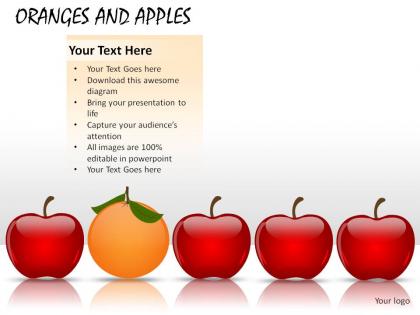
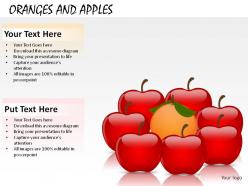
Oranges and apples powerpoint presentation slides




Try Before you Buy Download Free Sample Product
 Impress Your
 Audience
 100%
100% Editable
 Save Hours
 of Time


Our Oranges And Apples Powerpoint Presentation Slides are bullish on you. They are confident of investing in your ideas.
People who downloaded this PowerPoint presentation also viewed the following :
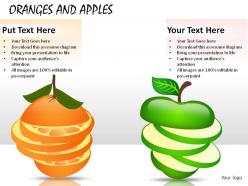
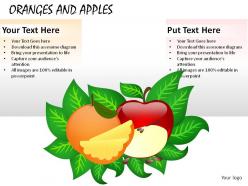
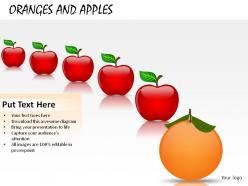
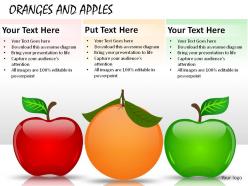
Oranges and apples powerpoint presentation slides with all 25 slides:
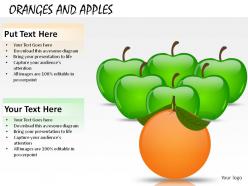
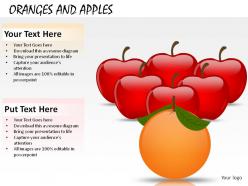
Our Oranges And Apples Powerpoint Presentation Slides provide you the cutting edge. Slice through the doubts in the minds of your listeners.
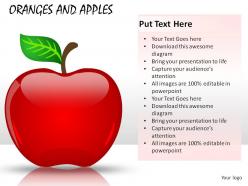
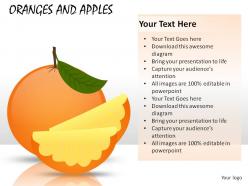
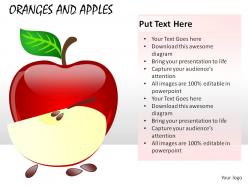
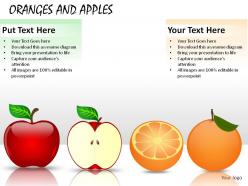




FAQs for Oranges and apples
Oranges provide significantly more vitamin C, folate, and calcium, while apples deliver higher fiber content, antioxidants like quercetin, and longer-lasting energy from natural sugars. These nutritional profiles make oranges ideal for immune support and hydration, while apples enhance digestive health and sustained energy, with many health-conscious consumers finding that combining both fruits delivers comprehensive nutritional benefits and dietary variety.
Oranges deliver bright acidity and citrusy sweetness that enhances marinades, dressings, and desserts, while apples provide balanced tartness and crisp texture ideal for baking, salads, and savory preparations. These complementary flavor profiles enable chefs and food manufacturers to create diverse menu offerings, seasonal specialties, and innovative product lines, ultimately expanding culinary possibilities and enhancing consumer dining experiences.
Oranges and apples differ significantly in their growing requirements, with oranges thriving in warm, subtropical climates with consistent temperatures, while apples prefer temperate regions with cold winters for proper dormancy. These distinct climate needs enable agricultural diversification across regions, with citrus operations flourishing in Florida and California, and apple orchards dominating cooler areas like Washington and Michigan, ultimately delivering year-round fruit availability.
Oranges and apples serve as powerful symbols across cultures, representing prosperity, knowledge, hospitality, fertility, and seasonal celebrations in traditions worldwide. These fruits appear in religious ceremonies, wedding rituals, harvest festivals, and cultural mythology, with oranges symbolizing good fortune in Asian cultures and apples representing wisdom in Western traditions, ultimately connecting communities through shared agricultural heritage and seasonal abundance.
Understanding botanical classifications enhances fruit presentations by providing scientific credibility, clear organizational structure, and educational depth that distinguishes citrus fruits from pome fruits with precise taxonomic details. This approach enables presenters to deliver comprehensive comparisons of genetic origins, cultivation requirements, and nutritional profiles, while ultimately creating more engaging educational content that demonstrates expertise and builds audience trust in agricultural or nutritional consulting contexts.
Oranges provide higher vitamin C content, enhanced immune system support, superior antioxidant levels, and better iron absorption compared to apples. Through their citrus compounds and flavonoids, oranges deliver significant anti-inflammatory benefits, cardiovascular protection, and collagen synthesis support, while many health-conscious consumers find that oranges offer more immediate immune-boosting advantages than apples.
Oranges and apples have symbolized wealth, temptation, knowledge, and mortality across centuries of artistic expression, appearing in religious paintings, still lifes, classical literature, and folk tales. These fruits enhance storytelling by representing forbidden knowledge, prosperity, and life's fleeting nature, with many artists and writers finding that their universal symbolism delivers powerful metaphorical depth and cultural resonance.
Orange and apple farming impacts include water consumption, pesticide use, soil degradation, carbon emissions from transportation, and biodiversity effects from monoculture practices. These agricultural challenges present opportunities for sustainable farming methods, with many growers finding that organic practices, water-efficient irrigation, and integrated pest management ultimately deliver reduced environmental footprints while maintaining competitive yields.
Oranges and apples contribute to local economies through job creation in farming, processing, and distribution, significant export revenue, and supporting ancillary industries like packaging and transportation. These fruit industries generate billions annually for regions like California's Central Valley, Washington State, and Florida's citrus belt, while creating seasonal employment opportunities, enhancing rural community stability, and driving agricultural tourism that ultimately strengthens regional economic resilience.
Innovative orange-apple recipes include spiced apple-orange galette, citrus apple chutneys, caramelized fruit grain bowls, orange-glazed apple pork dishes, and refreshing fruit salsas with herbs. These creative combinations enhance seasonal menus by balancing sweet and tart flavors, reducing ingredient costs through versatile applications, and ultimately delivering memorable culinary experiences for restaurants and home cooks.
Oranges and apples can enhance sustainable farming through crop rotation, integrated pest management, companion planting, water-efficient irrigation, and organic composting methods. These practices streamline resource allocation by reducing chemical inputs, improving soil health, and maximizing yield efficiency, with many orchards finding that strategic combinations ultimately deliver lower operational costs and enhanced environmental stewardship.
Effective preservation methods include refrigeration at optimal temperatures, controlled atmosphere storage, proper humidity management, protective coatings, and strategic packaging techniques. These approaches work by slowing respiration rates, reducing moisture loss, and preventing oxidation, with commercial operations and households finding that combining temperature control with moisture regulation extends freshness significantly while minimizing waste.
Orange and apple popularity has evolved significantly, with apples maintaining steady consumer preference while oranges have experienced declining fresh consumption but increased juice demand. Changing dietary trends, convenience factors, and health consciousness have influenced these patterns, with many retailers finding that apple varieties like Honeycrisp drive premium sales, while orange consumption increasingly shifts toward processed forms, ultimately reshaping traditional fruit market dynamics.
Effective strategies for oranges emphasize seasonal freshness, vitamin C benefits, and juice versatility, while apple marketing focuses on year-round availability, variety differentiation, and snacking convenience. Grocery retailers increasingly find that oranges perform better with health-focused displays and seasonal promotions, while apples benefit from variety sampling, back-to-school campaigns, and premium organic positioning, ultimately delivering targeted customer engagement.
Presentations on oranges and apples benefit from infographics and visual data representation by transforming complex nutritional comparisons, production statistics, and market trends into easily digestible formats that enhance audience comprehension and retention. Through strategic visual elements like comparative charts and data visualizations, presenters can streamline complex agricultural data, highlight key differences in vitamin content and market performance, ultimately delivering more engaging educational experiences and stronger stakeholder buy-in.
-
Informative presentations that are easily editable.
-
Very unique, user-friendly presentation interface.