


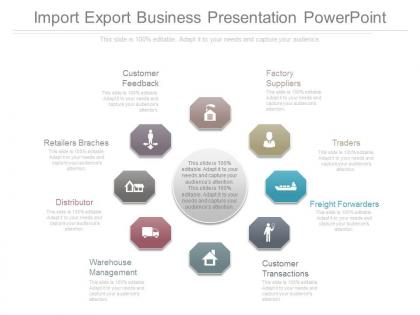
Import export business presentation powerpoint




Try Before you Buy Download Free Sample Product
 Impress Your
 Audience
 100%
100% Editable
 Save Hours
 of Time


Our Import Export Business Presentation Powerpoint can be of great help. Just try them out and you will be thrilled.
People who downloaded this PowerPoint presentation also viewed the following :
Import export business presentation powerpoint with all 7 slides:
Dynamic Import Export Business Presentation Powerpoint design help you show your work in your best light. Make sure that your next presentation is a success.

FAQs for Import export
Honestly, pick a niche you actually know something about first. The paperwork side is brutal - customs regulations will destroy you if you mess up, so do your homework there. Cash flow gets weird with international stuff because of shipping delays and payment schedules. Find good suppliers and freight people early, that's huge. Currency swings can wreck your profits overnight (learned that one the hard way). I'd stick to just one country pair at first instead of going crazy - get the whole process figured out, then expand. Way less headache that way.
Honestly, market research is like having GPS instead of wandering around lost. You'll figure out what people actually want, how much they'll pay, and what cultural stuff matters. Competition analysis is huge too - see what's already working. Oh, and customs regulations are absolutely brutal if you don't know what's coming. Been there. Start with basic market size for your target countries, then dive into consumer behavior and import rules. It beats throwing darts at a board and hoping something sticks. Way better than just picking random products and crossing your fingers.
So first thing - get your business registered and apply for an Import Export Code (IEC). That's basically your ticket to trade internationally. The customs paperwork is honestly a pain at first, but once you get the hang of it, not too bad. You'll need tax registrations too, plus you gotta follow trade laws both here and wherever you're selling. Insurance is a must. Oh and depending on your products, there might be special permits involved - my cousin had to jump through hoops for food imports. Start with the IEC though, everything else kinda flows from there.
Honestly, tariffs are brutal for profit margins - they jack up your import costs whether you like it or not. You've gotta bake those rates into your pricing right away. Trade deals can save you serious money though, like USMCA or other bilateral agreements. The annoying thing? Politics can flip everything overnight, so your margins aren't guaranteed. I learned this the hard way with some clients last year. Build cushion into your prices. Stay on top of policy changes too. Short sentences help sometimes. Your specific products might get hit differently than others.
Honestly, I'd hit up Alibaba or Global Sources first - they're solid starting points. Trade shows are where it's at though, nothing beats actually shaking hands and seeing stuff in person. LinkedIn's weirdly effective too for connecting with potential partners. Start small with test orders and always check references through chambers of commerce. Industry associations in whatever country you're targeting usually have member directories that are super helpful. Oh, and don't put all your eggs in one basket - spread your search around. Just make sure you verify everything before jumping into any deals.
Oh man, definitely do your homework first on basic stuff - how people communicate, business etiquette, decision-making processes. Countries are SO different with this. I got burned pretty bad in Japan once because I didn't! But honestly, research only gets you so far. You've gotta build real relationships and actually respect local customs. Listen way more than you talk. Be patient when people have different concepts of time (this one's huge). And seriously, get local partners or cultural liaisons if you can. They'll save your ass from mistakes you'd never even see coming.
Dude, logistics will literally make or break your whole import-export thing. I'm talking shipping coordination, customs paperwork, warehousing - all across different countries and time zones. Mess it up? You're looking at delays, damaged products, or costs that'll destroy your profits. I've watched companies tank because they thought shipping was the easy part (spoiler: it's not). Find solid freight forwarders you can trust. Always have a Plan B when stuff goes wrong - and it will. Map out your supply chain first and spot the weak points before you even think about moving product.
Honestly, going digital with your shipping stuff will save you so much time. Automated customs filing alone cuts processing by like 70% - that's huge. I'd start with whatever paperwork process drives you crazy most, probably customs clearance or tracking. Digital platforms handle all the compliance checks automatically, plus you get real-time monitoring of your cargo. AI even predicts delays now, which is pretty cool. Oh and blockchain keeps your documents secure (though that might be overkill depending on your volume). The cloud-based systems are nice because you can manage everything from your phone. Trust me, it's night and day compared to paper forms.
Honestly, the biggest mistake is thinking what works at home will work everywhere else. Do your homework on each market first - I can't stress this enough. Customs and regulations will absolutely destroy you if you're unprepared, trust me. Currency swings are brutal too, so definitely hedge against those. Don't go cheap on local partners either. I've seen companies try to save a few bucks only to lose way more from cultural screwups. Pick one market, really get it down, then move on. Oh and test small before throwing serious money at anything - learned that one the hard way.
Definitely hit up Dun & Bradstreet or Coface first - they do international credit reports and know their stuff. Your bank's probably got connections with foreign banks too, so they can check if the company's legit. Getting trade references is clutch. Ask for other businesses they've worked with and actually call them. I always do a quick Google search because you never know what drama might pop up lol. Oh, and for the first few deals? Make them get a letter of credit. Yeah it's a pain, but better safe than sorry until you see how they handle payments.
Forward contracts and options are your best bet - they'll lock in rates ahead of time. Natural hedging is solid too, just match your income and costs in the same currencies when you can. Honestly, I wish I'd known this during that crazy market swing last year! Don't put everything in one currency basket. Monitor exchange rates regularly and set clear rules for when you'll hedge. Oh, and tackle your biggest exposures first - around 70-80% coverage usually works well without being too aggressive about it.
Honestly, economic ups and downs will hit your import-export business hard. Demand tanks when things get rough - customers just stop buying or delay everything. Currency swings are brutal though, probably your worst enemy since you're constantly dealing with different money. Your shipping costs go crazy too depending on what's happening globally. Oh, and good luck getting financing when credit tightens up during downturns. Both you and your buyers feel that squeeze. I'd definitely hedge against currency moves in your contracts. Also spread your markets around - don't put all your eggs in one country's basket, you know?
So you've got three main ways to ship stuff - air, ocean, or ground transport. Air's crazy expensive but super fast, perfect for electronics or anything that'll spoil. Ocean freight takes forever (like 2-4 weeks) but it's dirt cheap for heavy stuff. Ground shipping is decent for anything regional and won't break the bank. Honestly, just depends on how much you're shipping and how quickly you need it there. Oh, and definitely get quotes from different freight companies - I've seen prices vary by like 30% for the exact same shipment. Some of these guys are just gouging people.
Honestly, intermediaries are pretty much a mixed bag. They'll handle all the messy logistics stuff - regulations, shipping headaches, payment risks - which is awesome when you're just getting started. Their networks took decades to build, so that's valuable. But you're handing over control of your customer relationships, which kinda sucks. Commission fees will definitely hurt your margins too. Oh, and you won't get direct market feedback, so you're flying a bit blind. I'd say start with them to figure things out, then slowly cut them out as you get more comfortable. Makes the most sense that way.
Dude, first thing - don't just translate your stuff and call it a day. That's like marketing suicide lol. Really dig into what that culture actually wants and how they buy things. Find local partners or influencers who get it, because honestly they know way more than you ever will about their own market. Your messaging needs to fit their vibe, maybe even tweak the actual product. Oh and social media? Totally different game in each country. I'd say your biggest win is building real relationships with people there - they're gonna be your lifeline when you're trying to figure out why nobody's buying.
-
Colors used are bright and distinctive.
-
Perfect template with attractive color combination.