

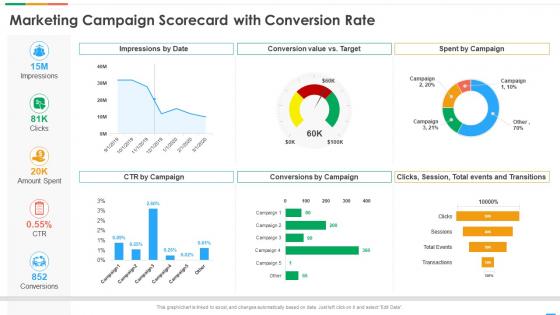
Marketing Scorecard Marketing Campaign Scorecard With Conversion Rate




Try Before you Buy Download Free Sample Product
 Impress Your
 Audience
 100%
100% Editable
 Save Hours
 of Time


People who downloaded this PowerPoint presentation also viewed the following :
Marketing Scorecard Marketing Campaign Scorecard With Conversion Rate with all 2 slides:
FAQs for Marketing Scorecard Marketing Campaign Scorecard
Okay so you definitely want to mix leading and lagging indicators. Pipeline stuff like MQLs, conversion rates between stages, cost per acquisition - that's your foundation. Then layer in the money metrics: actual revenue, customer lifetime value, ROI by channel. Email opens, website traffic, social engagement matter too. Here's the thing though - resist tracking everything or you'll drown in data. Stick to like 8-12 key ones max. Figure out what actually connects to your business goals first, then build around those. I'd review monthly but only tweak quarterly when you see what's really driving decisions.
Look, a marketing scorecard just makes you tie your metrics to actual business stuff that matters - revenue, customer costs, growth numbers. No more tracking pointless likes and calling it success. It's honestly like having a translator between what marketing thinks is important and what execs actually care about. You can finally show how your campaigns affect the KPIs leadership obsesses over. Lead quality, customer lifetime value, market share - that's the stuff that gets budgets approved. I'd start by matching your current metrics to your company's top business goals. You'll probably find some weird gaps you didn't expect.
So traditional scorecards are all about the big picture stuff - brand awareness, market share, those quarterly numbers from surveys and sales reports. Digital ones? Totally different beast. You're tracking clicks, conversions, social engagement in real time. Like, you can refresh your dashboard and actually see things changing throughout the day, which is honestly pretty addictive once you get into it. The feedback is instant with digital, while traditional metrics take forever to show results. I'd say start with digital since it's way easier to set up and measure. Then add the brand stuff later once you've got your digital game figured out.
Monthly updates work best for most marketing scorecards - gives you real trends without getting lost in daily fluctuations that honestly just stress you out. Pick a schedule and stick with it so you can actually compare stuff meaningfully. Fast-moving paid campaigns though? Those might need weekly check-ins. I learned this the hard way when I was obsessing over daily metrics and couldn't see the bigger picture. Just don't fall into the trap of spending more time updating your scorecard than using it to fix what's broken. Consistency beats perfection here.
So for marketing scorecards, Google Data Studio is your best free bet - works great with most tools. If you need something beefier, Tableau and Power BI are solid choices. Already on HubSpot or Salesforce? They've got built-in scorecard stuff that's pretty decent. Honestly though, don't sleep on a good Excel or Google Sheets setup. I've seen small teams crush it with simple spreadsheets. The real trick is finding something your team won't ignore after two weeks. Start basic, then level up when you actually need the fancy features.
So marketing scorecards are basically your cheat sheet for seeing what's actually working vs what's just bleeding money. You'll spot the obvious problems right away - like campaigns with terrible conversion rates or social channels that aren't doing jack. Honestly, I love how you can compare different time periods side by side because then it's super clear which campaigns are your stars and which ones need to get axed. The whole thing works like a dashboard that screams "FIX THIS NOW" at your worst performers. Makes prioritizing way easier than just guessing.
Honestly, visuals are what make marketing scorecards actually work. Nobody wants to stare at endless spreadsheet rows - I mean, who has time for that? Good charts and graphs let you spot problems or wins instantly instead of hunting through data for hours. Bar charts and line graphs are your best friends starting out. Once your team gets the hang of reading them, you can try fancier stuff. But seriously, pick the right visual for each metric or people just get confused. Dashboards are game-changers too - everything important right there at a glance.
Okay so think of it like this - you know how marketing meetings turn into total chaos when everyone's arguing about which campaign worked better? A scorecard fixes that mess. Your whole team looks at the same numbers instead of going with random gut feelings. Honestly, it saves so much time in those meetings where people just talk in circles for an hour. You'll catch problems way earlier too. Don't overcomplicate it though - just grab 5-7 metrics everyone already tracks and start there. Game changer for keeping people focused on what actually matters.
So qualitative metrics basically tell you the "why" behind all those numbers you're tracking. Customer sentiment, feedback patterns, market perception - stuff that your conversion rates can't explain. You'll catch trends way earlier too, before they even hit your revenue. Honestly, your presentations become so much more convincing when you've got the full story instead of just charts going up and down. Oh, and make sure you standardize how you collect this stuff so it's actually useful over time, not just random comments you remember hearing.
Honestly, just ditch the generic metrics and focus on what actually moves the needle for your business. B2B? Track lead quality and how long your sales cycles are running. E-commerce is all about conversion rates and why people bail on their carts. For SaaS, churn and LTV are way more telling than vanity metrics like impressions or whatever. Pick maybe 5-7 KPIs that directly tie to revenue - I learned this the hard way when I was tracking everything under the sun. Work backwards from what actually closes deals, then find the metrics that predict those moments.
Honestly? Focus on engagement rate and reach first - that stuff actually matters. Click-through rates to your site are huge too. I know your boss probably obsesses over follower count, but those numbers are pretty useless if nobody's buying anything. Track how social converts compared to your other channels. Oh, and if you're doing paid ads, definitely watch cost-per-acquisition or you'll blow through budget fast. Don't try measuring everything at once though. Pick like 3-4 metrics that connect to actual business goals and stick with those.
So here's what I'd do - grab those survey responses, NPS scores, and social sentiment, then treat them like actual KPIs alongside your conversion rates. Makes way more sense than just tracking vanity metrics, honestly. Set satisfaction targets for each customer touchpoint and watch how feedback trends match up with your other data. That's where you'll catch problems early. I learned this the hard way after missing some obvious red flags in customer comments that showed up in our numbers weeks later. Short version: let their voices guide what you measure, not just what's easy to track.
Don't go crazy with too many metrics - you'll track everything and understand nothing. Stick to maybe 5-7 that actually matter for your business. Skip the vanity stuff like follower counts (honestly, who cares if they don't buy anything?). I've watched teams build these elaborate scorecards that just... sit there. Nobody uses them. Each metric needs an owner and a plan for when things tank. Test it out for a month first. See what your team actually looks at when making decisions, then build around that instead.
So basically, a marketing scorecard shows you which channels are actually bringing in money vs which ones are just draining your budget. Track your paid search, social, email - whatever you're running. The best part? Budget meetings get way less annoying because you're not arguing over opinions anymore. Just cold hard numbers. I'd review quarterly and move money around based on what's working. Short sentences help too - some campaigns are winners, others aren't. The trick is picking the right metrics from the start and sticking with them consistently.
So marketing scorecards and ROI analysis are like a power couple - you need both. Your scorecard tracks the usual stuff: leads, conversions, engagement rates. Then ROI analysis takes those numbers and shows you what's actually making money vs. what's just eating your budget alive (and trust me, some campaigns are total money pits). The scorecard gives you raw data. ROI tells you if that data translates to profit. Without one or the other, you're either buried in meaningless metrics or completely guessing about your finances. I'd set up the scorecard first, then add ROI calculations for each big campaign.
-
I came across many PowerPoint presentations with excellent creatives and I believe they would be beneficial to my work.
-
Great quality product.