

Organic Strategy To Help Business Grow Strategy CD





Try Before you Buy Download Free Sample Product
 Impress Your
 Audience
 100%
100% Editable
 Save Hours
 of Time


Organic growth helps businesses accelerate through their internal resource, which leads to an increase in their overall growth. Grab our insightfully designed template on Organic Strategy to Help Business Grow. It highlights organic growth strategies that help develop a customer base and increase revenues. The following presentation is helpful for managers with an objective to utilize the organizations internal resources and increase business through organic strategies. This deck serves as a strategic guide, providing an overview of the organic strategy and how it can impact the organization. It also emphasizes the key points of differentiation between organic and inorganic growth strategies. Multiple strategies, such as selling existing products to existing customers and developing new products, and entering new markets, have been highlighted in this presentation. At last, it displays essential metrics used to measure the impact of such strategies on the organization. Download our 100 percent editable strategy presentation and get access to our highly researched and skillfully designed product.
People who downloaded this PowerPoint presentation also viewed the following :
Content of this Powerpoint Presentation
Slide 1: This slide introduces Organic Strategy to Help Business Grow. State your company name and begin.
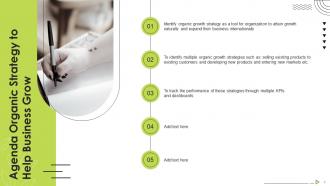
Slide 2: This slide states Agenda of the presentation.
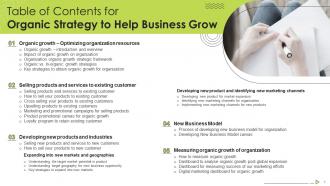
Slide 3: This slide presents Table of Content for the presentation.
Slide 4: This slide highlights title for topics that are to be covered next in the template.
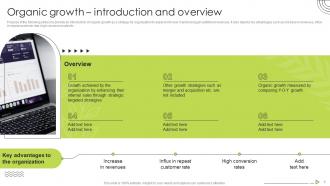
Slide 5: This slide displays Key advantages to the organization.
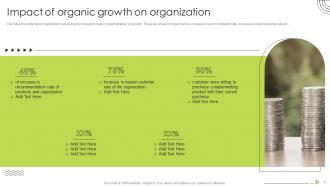
Slide 6: This slide represents Impact of organic growth on organization.
Slide 7: This slide showcases Key strategies to obtain organic growth for organization.
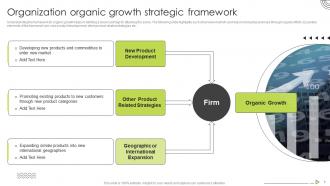
Slide 8: This slide shows Organization organic growth strategic framework.
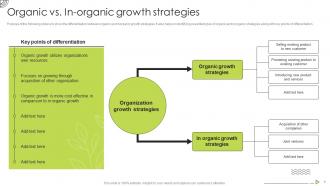
Slide 9: This slide presents Organic vs. In-organic growth strategies.
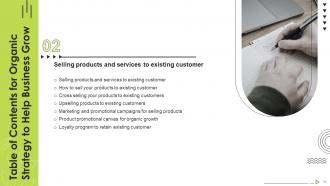
Slide 10: This slide highlights title for topics that are to be covered next in the template.
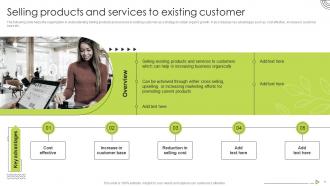
Slide 11: This slide displays Selling products and services to existing customer.
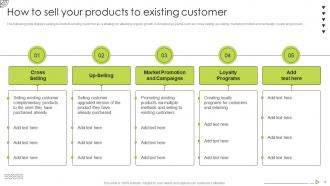
Slide 12: This slide represents How to sell your products to existing customer.
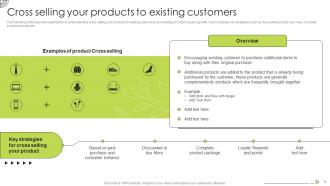
Slide 13: This slide showcases Cross selling your products to existing customers.
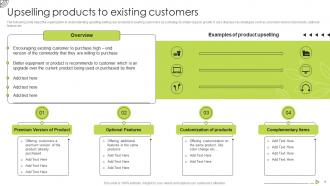
Slide 14: This slide shows Upselling products to existing customers.
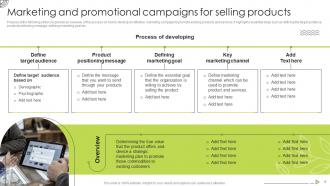
Slide 15: This slide presents Marketing and promotional campaigns for selling products.
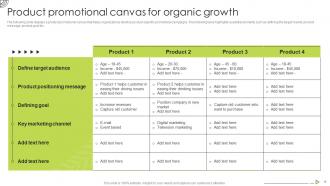
Slide 16: This slide displays Product promotional canvas for organic growth.
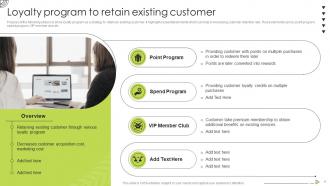
Slide 17: This slide represents Loyalty program to retain existing customer.
Slide 18: This slide highlights title for topics that are to be covered next in the template.
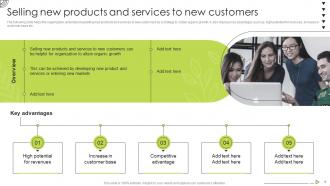
Slide 19: This slide showcases Selling new products and services to new customers.
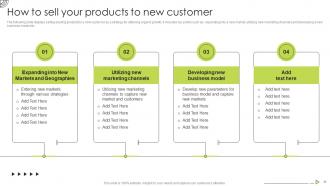
Slide 20: This slide shows How to sell your products to new customer.
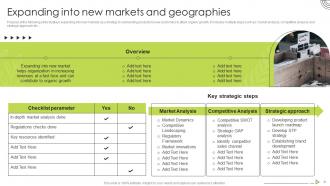
Slide 21: This slide presents Expanding into new markets and geographies.
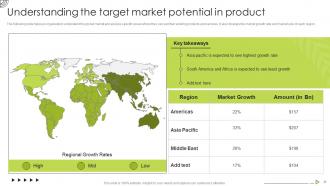
Slide 22: This slide helps Understanding the target market potential in product.
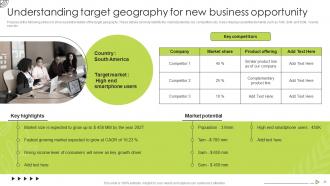
Slide 23: This slide helps Understanding target geography for new business opportunity.
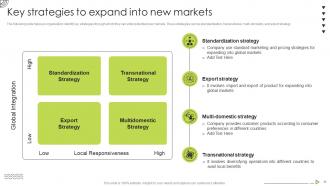
Slide 24: This slide displays Key strategies to expand into new markets.
Slide 25: This slide highlights title for topics that are to be covered next in the template.
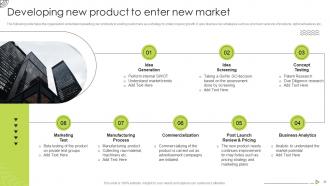
Slide 26: This slide represents Developing new product to enter new market.
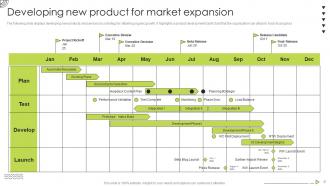
Slide 27: This slide showcases Developing new product for market expansion.
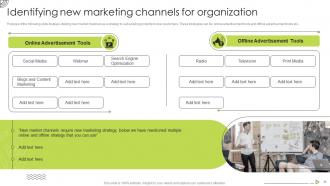
Slide 28: This slide shows Identifying new marketing channels for organization.
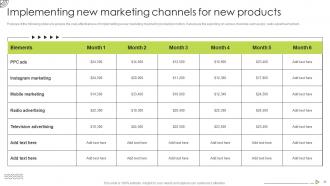
Slide 29: This slide presents Implementing new marketing channels for new products.
Slide 30: This slide highlights title for topics that are to be covered next in the template.
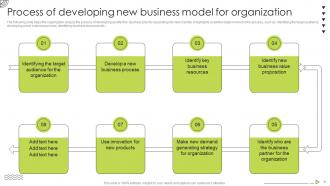
Slide 31: This slide displays Process of developing new business model for organization.
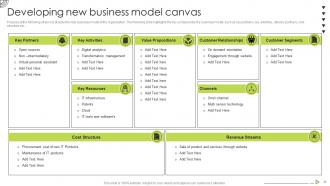
Slide 32: This slide represents Developing new business model canvas.
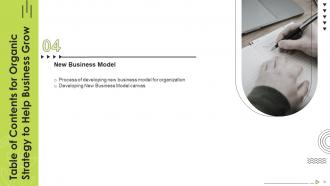
Slide 33: This slide highlights title for topics that are to be covered next in the template.
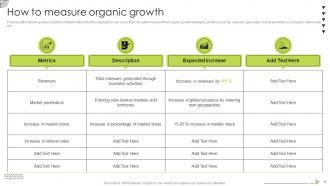
Slide 34: This slide showcases How to measure organic growth.
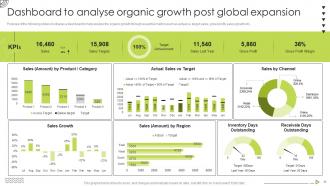
Slide 35: This slide shows Dashboard to analyse organic growth post global expansion.
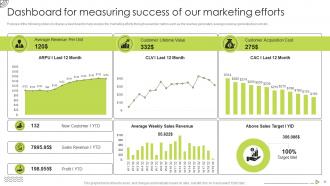
Slide 36: This slide presents Dashboard for measuring success of our marketing efforts.
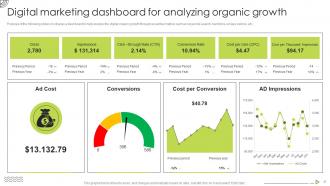
Slide 37: This slide displays Digital marketing dashboard for analyzing organic growth.
Slide 38: This slide contains all the icons used in this presentation.
Slide 39: This slide is titled as Additional Slides for moving forward.
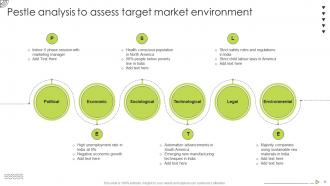
Slide 40: This slide represents Pestle analysis to assess target market environment.
Slide 41: This slide showcases Porter 5 forces model to analyse competitive environment.
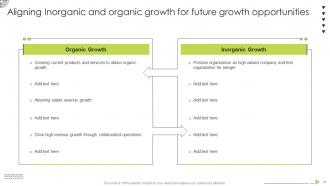
Slide 42: This slide shows Aligning Inorganic and organic growth for future growth opportunities.
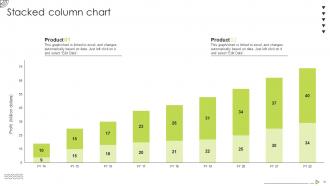
Slide 43: This slide represents Stacked column chart with two products comparison.
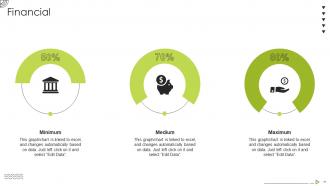
Slide 44: This is a Financial slide. Show your finance related stuff here.
Slide 45: This slide showcases Magnifying Glass to highlight information, specifications, etc.
Slide 46: This is a Timeline slide. Show data related to time intervals here.
Slide 47: This slide depicts Venn diagram with text boxes.
Slide 48: This is Our Target slide. State your targets here.
Slide 49: This slide shows Post It Notes. Post your important notes here.
Slide 50: This slide contains Puzzle with related icons and text.
Slide 51: This is a Thank You slide with address, contact numbers and email address.
Organic Strategy To Help Business Grow Strategy CD with all 56 slides:
Use our Organic Strategy To Help Business Grow Strategy CD to effectively help you save your valuable time. They are readymade to fit into any presentation structure.












FAQs for Organic Strategy To Help Business
Dude, start with your existing customers - that's where the easy money is. Customer retention, market penetration, product development. Those are your big three. Most companies completely skip over organic growth and jump straight to buying other businesses, which is kinda backwards if you ask me. Look at your sales team first - can they actually handle more volume? Then dig into your customer data to see who's not buying enough from you yet. Oh, and audit where you're bleeding revenue with current customers. That stuff's usually the quickest wins before you worry about anything fancy.
Start with your customer data - who's missing? Different age groups, locations, people who could use your stuff but aren't buying yet. Surveys are honestly the best because customers just tell you what other problems they have. Also check where your competitors suck or don't exist at all. Industry reports show you emerging markets, and your sales team probably has stories about "almost customers" who didn't quite fit. The trick is finding spots next to what you already do well instead of reinventing everything. Way easier that way.
Look, content marketing is honestly the best way to grow without feeling like a sleazy salesperson. You're solving real problems for people, which builds trust over time. Google eats that stuff up too. I'd start by writing down every question customers ask you - seriously, those are your goldmine topics right there. Publishing helpful content consistently means people find YOU when they're ready to buy instead of you having to chase them down. It's like planting seeds that keep growing. Way better than cold calling or whatever. Focus on what they're actually struggling with and you'll become their go-to person.
Honestly, engagement is everything for organic growth. When you actually respond to comments and share stuff people care about, you're building real relationships. Those turn into referrals and loyal customers way faster than just posting ads constantly. The trick? Be consistent but don't make it all about sales. Answer questions, share useful insights, hype up your customers when they succeed. I've seen businesses totally blow up just from being genuinely helpful in their comments section. People recommend brands they actually feel connected to - it's that simple. Focus on giving value first and the growth follows naturally.
Focus on CAC, CLV, and monthly recurring revenue growth - those are your money metrics. Conversion rates and retention matter way more than follower counts (honestly, vanity metrics are such a trap). Your CLV to CAC should hit 3:1 minimum for decent growth. Track organic traffic and product adoption rates too - you need to see what features people actually use vs. what they ignore. Monthly dashboards help you catch trends before they bite you. Oh, and keep an eye on how fast people adopt new features since that'll tell you if your organic growth is real or just surface-level.
Honestly, customer feedback is like a cheat code for growth. It tells you what's broken, what people love, and who might refer others. I've watched companies build flashy features nobody wanted while ignoring obvious user pain points. Pretty frustrating to see, tbh. The data helps you figure out where to spend your time and money instead of just guessing. You'll spot product gaps faster and know which customers to focus on. Just make sure you're actually listening regularly and doing something with what people tell you - otherwise it's pointless.
Honestly, just start with keyword research but don't go crazy stuffing them everywhere - that's so 2005. Your page titles and meta descriptions matter way more than people think. Internal linking is clutch too (seriously, everyone sleeps on this). Google's obsessed with user experience now, so your site better load fast and work on mobile. Oh, and audit what you already have first - there's probably some easy wins hiding in your existing content. Headers should flow naturally while still hitting those search terms. Quick fixes on old pages can give you better results than starting from scratch.
Honestly, partnerships are like shortcuts to stuff you can't do well yourself. You get access to their customers, they get access to yours. Way cheaper than trying to build everything in-house - and trust me, that gets expensive fast. Look for partners where you're strong in areas they suck at, and vice versa. Like if you make great products but your marketing is trash, find someone with killer distribution. First figure out what gaps you actually have, then hunt for companies in related fields who might want to swap strengths. It's basically trading resources instead of burning cash.
Yeah, positioning is huge for organic growth - like, you can't skip this step. It's your foundation for literally everything else. Without it, you're just throwing stuff at the wall hoping something works (been there lol). Good positioning makes people actually get what you do and why they should give a damn. Your content suddenly has direction. Word-of-mouth becomes way easier when people can explain you to their friends. Plus the right customers start finding you naturally instead of you chasing everyone. Figure out what makes you different from your competition first, then just be consistent about that message everywhere you show up.
Honestly, the worst thing you can do is try scaling everything at once - you'll just burn out your team and tank quality. Been there, seen it happen way too many times. Focus on whatever's actually making you money right now and pour more into that. Don't get distracted by every new opportunity either. Oh, and here's something people forget - your existing customers are literally sitting on referral gold. Stop ignoring them while chasing new leads. Skip the vanity metrics too. Revenue's what matters. Just audit what's working and scale those specific things first.
Honestly, you gotta make people feel safe to mess up. Celebrate the smart failures, not just wins - otherwise nobody takes risks. Give teams actual time to experiment (that Google 20% thing isn't just hype). Mix up your departments more because the coolest ideas happen when different people bounce thoughts around. Run brainstorming sessions with real budgets behind them. But here's the key part - actually DO something with the good suggestions. I've seen so many companies kill innovation with those useless suggestion boxes that disappear into a black hole. Oh, and flip the script: make it clear that playing it safe is what'll hurt careers, not trying new stuff.
Dude, retention is where the real money is. Most companies chase new customers while their existing ones slip away - kinda backwards if you ask me. When people stick around longer, you naturally get more chances to sell them other stuff. They also become your biggest cheerleaders, bringing in referrals without you spending anything. The numbers don't lie either - bump retention up 5% and profits can jump 25-95%. I've watched so many businesses obsess over leads while completely ignoring their current customers. Figure out why people stay and what makes them buy more. That's your goldmine.
Honestly, just work with what you've got - your current customers and free stuff online. Make your customer service amazing so people actually refer you (seriously, happy customers do your selling for you). Pick like 1-2 social platforms and stick with them instead of jumping around everywhere. Email marketing still works crazy well and barely costs anything. Oh, and fix up your Google Business page - people actually look at that. Ask customers you know are happy for reviews. The biggest mistake I see? Businesses constantly switching tactics instead of sticking with something long enough to see if it works. Track just one thing so you know what's actually helping.
Dude, AI and cybersecurity companies are killing it with organic right now. Health tech too. E-commerce is solid if you're doing sustainable stuff or really niche products - broad retail is harder though. Climate/renewable energy content just spreads like crazy for some reason. People can't get enough of it. What's actually working? Skip the paid ads and focus on educational content that solves real problems. Build community around your brand. User-generated content performs way better than polished corporate stuff. If you're in any of these spaces, just make content that genuinely helps people. That's where you'll see real growth happen organically.
Build stuff that can grow before you actually need it - like buying your kid shoes a size up. Document your main processes now and get decent tech infrastructure early, even if it feels excessive. Too many companies I've worked with hit brick walls because they waited until crisis mode to upgrade. Train your people to work systematically instead of just grinding harder. Honestly, most founders are terrible at seeing bottlenecks coming. Look 6-12 months ahead and fix problems before they explode. Do quarterly check-ins to catch what's about to break.
-
“Slides are formally built and the color theme is also very exciting. This went perfectly with my needs and saved a good amount of time.”
-
You know what? I'm so glad I opted for this PPT design. It has been a total game-changer for me and my presentations. Thank you!