


Agriculture Crop Marketing Strategy Powerpoint Presentation Slides Strategy CD V




Try Before you Buy Download Free Sample Product
 Impress Your
 Audience
 100%
100% Editable
 Save Hours
 of Time


Presenting our Agriculture Crop Marketing Strategy PowerPoint Presentation, meticulously crafted to optimize farm produce efforts. This comprehensive Organic Food template outlines market trends, demand assessment, and production costs to drive sales and enhance brand awareness for Farm Produce, Organic Food, Dairy Products, Livestock, and Nutritional Food Items. Furthermore, the Farm Produce Module showcases our range of products and business model canvas while highlighting primary advertising channels, ensuring maximum visibility and impact. Lastly, the Nutritional Food Items PPT deck offers innovative solutions to challenges, empowering your business with easy tracking and monitoring through a customizable dashboard. Download now for a highly researched and skillfully designed marketing strategy ppt that unlocks growth potential.
People who downloaded this PowerPoint presentation also viewed the following :
Content of this Powerpoint Presentation
Slide 1: This slide introduces Agriculture Crop Marketing Strategy.
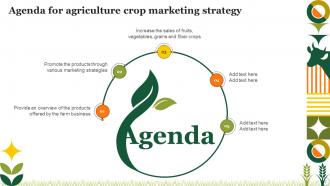
Slide 2: This is an Agenda slide. State your agendas here.
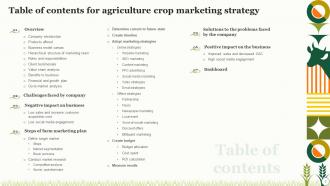
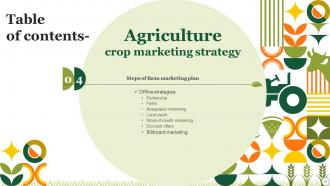
Slide 3: This slide shows Table of Content for the presentation.
Slide 4: This slide shows title for topics that are to be covered next in the template.
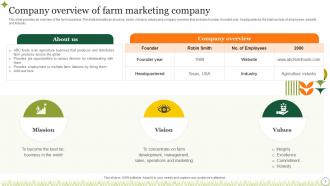
Slide 5: This slide provides an overview of the farm business.
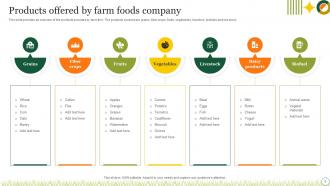
Slide 6: This slide presents an overview of the products provided by farm firm.
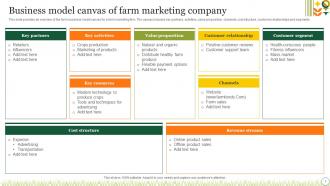
Slide 7: This slide provides an overview of the farm business model canvas for a farm marketing firm.
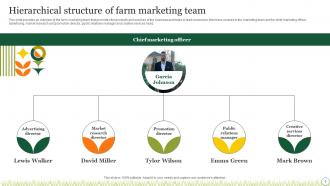
Slide 8: This slide displys farm marketing team that promotes the products and services of the business and helps in lead conversion.
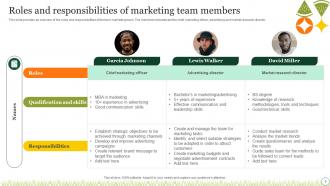
Slide 9: This slide provides an overview of the roles and responsibilities of the farm marketing team.
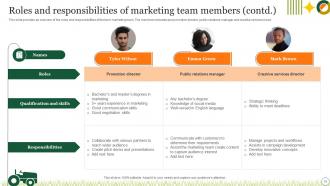
Slide 10: This slide presents the roles and responsibilities of the farm marketing team.
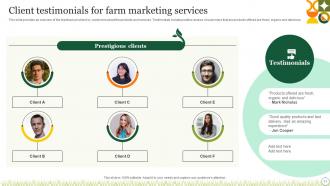
Slide 11: This slide provides feedback provided by customers about the products and services.
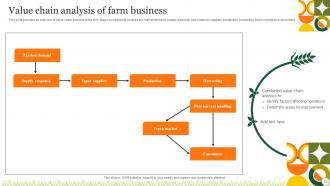
Slide 12: This slide describes an overview of value chain analysis of the firm.
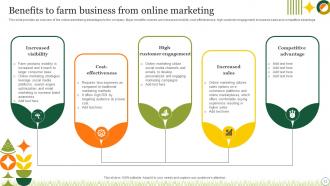
Slide 13: This slide provides an overview of the online advertising advantages to the company.
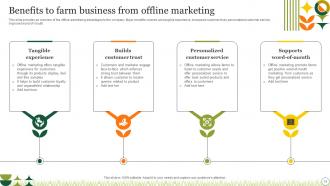
Slide 14: This slide presents an overview of the offline advertising advantages to the company.
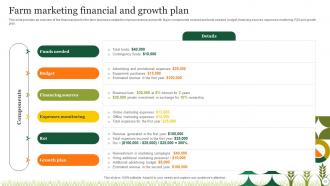
Slide 15: This slide provides an overview of the financial plan for the farm business created to improve revenue and profit.
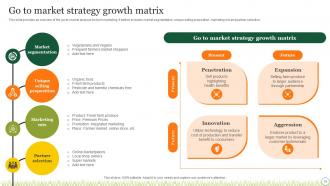
Slide 16: This slide presents an overview of the go-to-market analysis for farm marketing.
Slide 17: This slide shows title for topics that are to be covered next in the template.
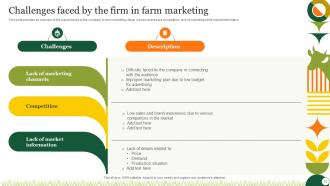
Slide 18: This slide provides an overview of the issues faced by the company in farm marketing.
Slide 19: This slide shows title for topics that are to be covered next in the template.
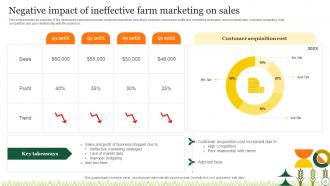
Slide 20: This slide provides an overview of the decreased sales and increase customer acquisition cost.
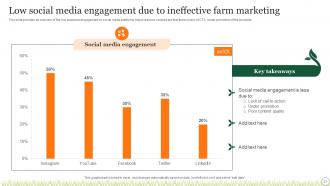
Slide 21: This slide displys an overview of the low audience engagement on social media platforms.
Slide 22: This slide shows title for topics that are to be covered next in the template.
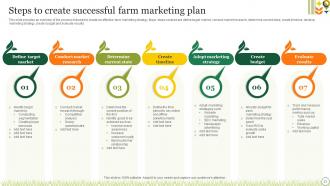
Slide 23: This slide provides an overview of the process followed to create an effective farm marketing strategy.
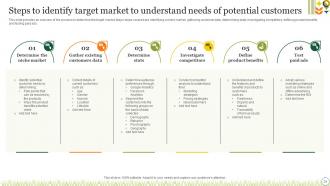
Slide 24: This slide presents an overview of the process to determine the target market.
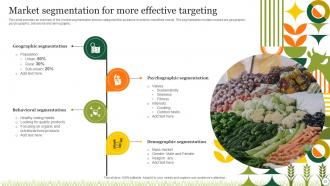
Slide 25: This slide displys market segmentation done to categorize the audience in order to meet their needs.
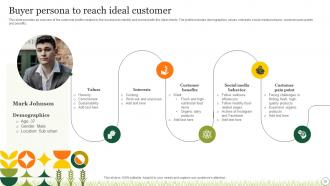
Slide 26: This slide provides customer profile created by the business to identify and connect with the ideal clients.
Slide 27: This slide shows title for topics that are to be covered next in the template.
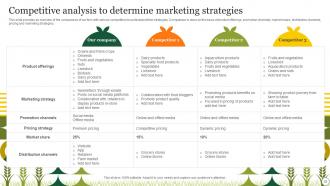
Slide 28: This slide provides comparison of our firm with various competitors to understand their strategies.
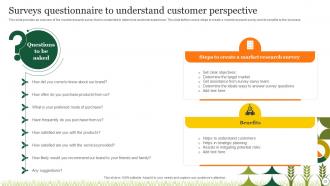
Slide 29: This slide displys market research survey that is conducted to determine customer experience.
Slide 30: This slide shows title for topics that are to be covered next in the template.
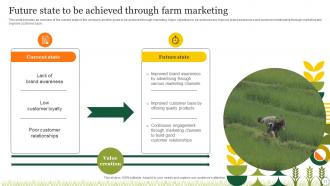
Slide 31: This slide provides an overview of the current state of the company and the goals to be achieved through marketing.
Slide 32: This slide shows title for topics that are to be covered next in the template.
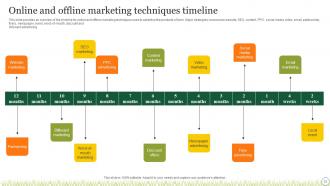
Slide 33: This slide presents timeline for online and offline marketing techniques used to advertise the products of farm.
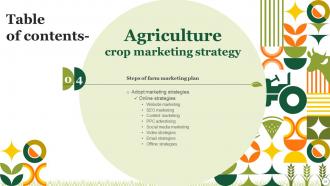
Slide 34: This slide shows title for topics that are to be covered next in the template.
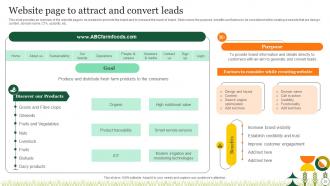
Slide 35: This slide presents website page to be created to promote the brand and to increase the reach of brand.
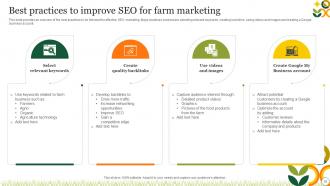
Slide 36: This slide provides an overview of the best practices to be followed for effective SEO marketing.
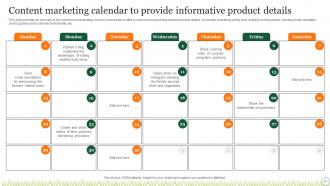
Slide 37: This slide displays content market strategy used by businesses to attract customers by providing relevant product details.
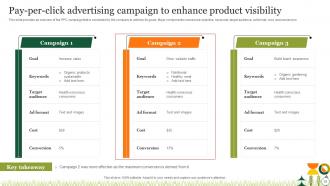
Slide 38: This slide provides an overview of the PPC campaign that is conducted by the company to achieve its goals.
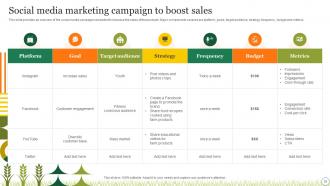
Slide 39: This slide displays social media campaign conducted to increase the sales of the products.
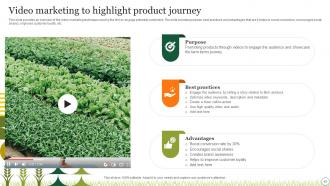
Slide 40: This slide provides an overview of the video marketing technique used by the firm to engage potential customers.
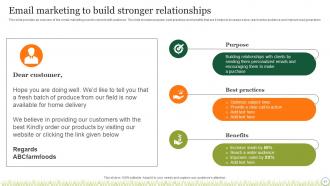
Slide 41: This slide describes an overview of the email marketing used to connect with audience.
Slide 42: This slide shows title for topics that are to be covered next in the template.
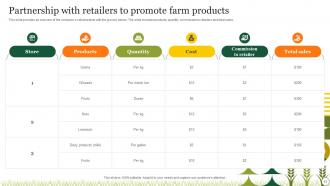
Slide 43: This slide provides an overview of the company’s collaboration with the grocery stores.
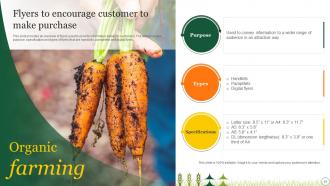
Slide 44: This slide presents an overview of flyers used to provide informative details to customers.
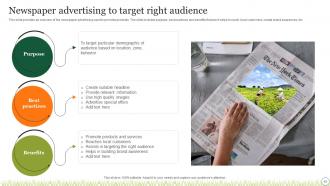
Slide 45: This slide provides an overview of the newspaper advertising used to promote products.
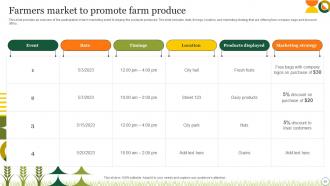
Slide 46: This slide presents participation in farm marketing event to display the products produced.
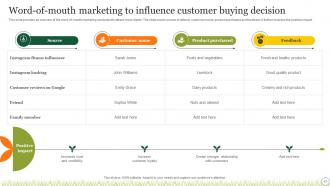
Slide 47: This slide provides an overview of the word-of-mouth marketing conducted to attract more clients.
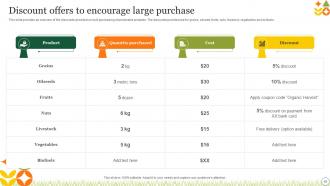
Slide 48: This slide displays discounts provided on bulk purchasing of perishable products.
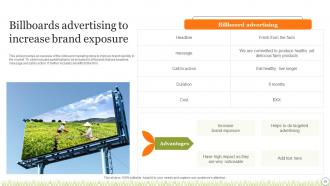
Slide 49: This slide provides an overview of the billboard marketing done to improve brand visibility in the market.
Slide 50: This slide shows title for topics that are to be covered next in the template.
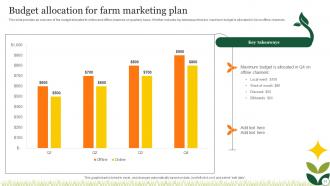
Slide 51: This slide provides an overview of the budget allocated to online and offline channels on quarterly basis.
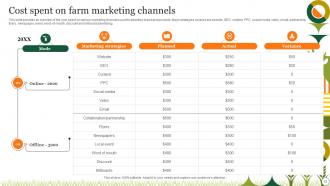
Slide 52: This slide presents an overview of the cost spent on various marketing channels used to advertise brand and products.
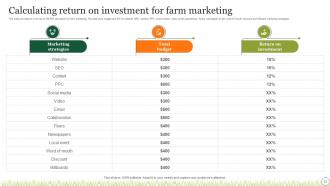
Slide 53: This slide provides an overview of the ROI calculation for farm marketing.
Slide 54: This slide shows title for topics that are to be covered next in the template.
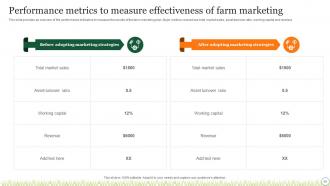
Slide 55: This slide presents an overview of the performance indicators to measure the results of the farm marketing plan.
Slide 56: This slide shows title for topics that are to be covered next in the template.
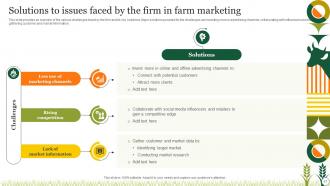
Slide 57: This slide provides an overview of the various challenges faced by the firm and its key solutions.
Slide 58: This slide shows title for topics that are to be covered next in the template.
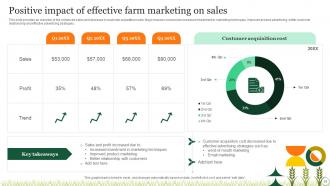
Slide 59: This slide provides an overview of the enhanced sales and decrease in customer acquisition costs.
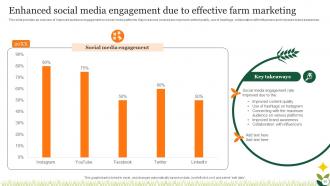
Slide 60: This slide presents improved audience engagement on social media platforms.
Slide 61: This slide shows title for topics that are to be covered next in the template.
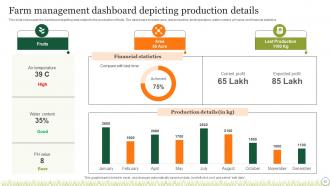
Slide 62: This slide showcases the dashboard depicting data related to the production of fruits.
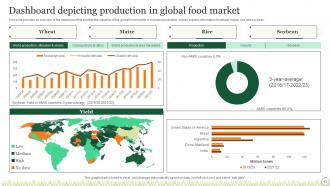
Slide 63: This slide provides an overview of the dashboard that exhibits the situation of the global food market.
Slide 64: This slide shows all the icons included in the presentation.
Slide 65: This slide is titled as Additional Slides for moving forward.
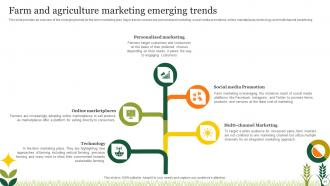
Slide 66: This slide provides an overview of the emerging trends for the farm marketing plan.
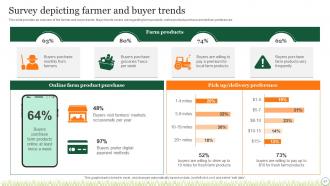
Slide 67: This slide presents an overview of the farmer and buyer trends.
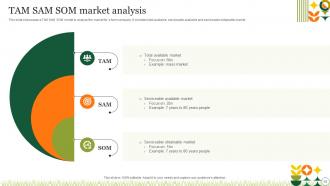
Slide 68: This slide showcases a TAM SAM SOM model to analyze the market for a farm company.
Slide 69: This slide describes Line chart with two products comparison.
Slide 70: This is a Timeline slide. Show data related to time intervals here.
Slide 71: This is a financial slide. Show your finance related stuff here.
Slide 72: This is a Comparison slide to state comparison between commodities, entities etc.
Slide 73: This slide shows Post It Notes for reminders and deadlines. Post your important notes here.
Slide 74: This is a Thank You slide with address, contact numbers and email address.
Agriculture Crop Marketing Strategy Powerpoint Presentation Slides Strategy CD V with all 79 slides:
Use our Agriculture Crop Marketing Strategy Powerpoint Presentation Slides Strategy CD V to effectively help you save your valuable time. They are readymade to fit into any presentation structure.








FAQs for Agriculture Crop Marketing Strategy Powerpoint Presentation Slides
Track your costs like crazy first - that's your foundation. Timing is everything though, so don't dump everything at harvest when prices are garbage. Spread sales throughout the year if you can swing storage. Mix up your tools too - forward contracts, basis contracts, options. Honestly the best farmers I know treat marketing like it's another crop that needs daily attention. My buddy Jake says diversification saved his butt last year when corn tanked in October. Set target prices before you even plant, and stick to your plan. Break-even numbers don't lie.
Honestly, tech is a game-changer for selling crops these days. Apps let you sell straight to buyers without dealing with middlemen taking their cut. GPS and sensors help you track quality data - customers eat that stuff up when you're pushing for premium prices. Social media's where you build those personal connections (people love the whole "know your farmer" thing). Oh, and blockchain's getting big for traceability too. My cousin started with just Facebook marketplace for his tomatoes and now he's got restaurant contracts. Don't overthink it - pick one platform and see what happens.
Dude, you can't just wing it with crop sales - that's how you end up broke. Track commodity prices every day and figure out demand patterns before you plant anything. Build solid connections with local elevators too, they'll give you the real scoop on what's moving. Timing is everything here. You don't want to be that guy who harvests a massive corn crop right when everyone else floods the market. Honestly, half of farming is just reading the market right. Research what buyers actually need, watch price trends, and plan your next season around projected demand. It's like having GPS instead of driving blind.
Okay so first thing - figure out who actually wants your stuff. Hit up local restaurants, farmers markets, grocery stores, food processors, whatever's around you. Pricing and how much they need matters obviously. I know it sounds like a lot but honestly once you start talking to people it clicks. What makes your crops special? Organic, weird heirloom varieties, super consistent? Find buyers who actually care about that stuff. Oh and definitely have these conversations before you plant anything - saved me from growing way too much kale one year. You can tweak your whole plan based on what they're actually looking for.
So here's the deal - direct sales get you way better profit margins and you actually know your customers. But you're doing everything yourself, which is exhausting tbh. Going through brokers or co-ops? Lower margins but they handle all the annoying stuff like storage and finding buyers. Most farmers I know do both honestly. Like, sell your best produce at farmers markets for premium prices, then move the bulk stuff through regular channels. Really depends on what you're growing and how much risk you can handle. I'd test direct sales small first - see if you even like dealing with customers before going all in.
Look, timing is everything with crop sales. Harvest season? Prices tank because everyone's dumping their stuff on the market at once. So here's what works - sell just enough to cover your bills right away, then sit on the rest. Prices usually climb back up once supply gets tight again. Weather can throw a wrench in this whole plan though, so don't get too locked into one strategy. I'd track what your crops did price-wise over the past few years and make sure you've got decent storage. Otherwise you're stuck selling everything when prices suck.
Check out what other farmers around you are charging first - hit up local markets, browse online, maybe even call a few places. I usually go with cost-plus pricing myself. Figure out what it costs you to grow, then tack on 15-30% profit depending on the crop. Pricing honestly feels like throwing darts sometimes, but at least data gives you a target! Seasonal stuff matters too - strawberries in December vs June, you know? If you can swing organic certification or sell direct, that's extra cash right there. Start small with different prices and see what actually sells.
Dude, branding changes everything for crop marketing. You're not just selling regular tomatoes anymore - you're selling YOUR tomatoes with a whole story. Look at how "organic" or "locally grown" labels work. Farmers slap those on and boom, higher prices. What makes your stuff different? Maybe it's how you grow it, sustainability angle, or just being local. Social media's perfect for showing this off too. Once you nail down your thing, stay consistent with packaging and messaging. Honestly, people will pay more when they feel connected to where their food comes from. It's wild how much a good story can boost your margins.
Honestly, just show the real stuff - farmers can smell BS marketing from a mile away. Your phone pics of planting progress or dealing with crappy weather? That's gold. Way better than waiting around for some perfect shot. Instagram and Facebook are solid for connecting with other farmers. LinkedIn's surprisingly good if you want to reach distributors or ag companies. The farming community online is pretty tight, so definitely comment on other people's posts too. Pick one platform first - don't spread yourself thin. I'd say 2-3 posts a week is plenty to start building something. Consistency beats perfection every time.
Hit up restaurants and grocery stores that care about local stuff - farm-to-table places and co-ops are usually stoked to find reliable suppliers. Build real relationships first, then business stuff just happens naturally. Maybe try collaborating on events or CSA programs too? Oh, and farmers markets are obvious but gold for networking. Honestly, the hardest part is just making that first call. Start small - reach out to like 2-3 places this week. Cross-promotion works great once you've got those connections going.
Look, consumer trends are everything when it comes to what you grow and how you market it. People obsessing over organic? You better pivot fast. Plant-based stuff, local sourcing, sustainability - whatever's hot, that's your cue. Honestly, avocado toast made some farmers rich just because Instagram went nuts for it. Don't wait around reacting to trends after everyone else jumps in. Monitor food reports, check what's buzzing on social media, watch retail data. Spot the shifts early and change your crops before competitors catch on. It's really about timing.
Just weave your green practices right into your sales pitch, honestly. Talk up the concrete stuff - less pesticides, better soil health, water conservation methods. Retailers are obsessed with sustainable sourcing right now, so you've got a real edge there. Document everything though, you'll need receipts for your claims. Get certified organic or whatever sustainable standards apply first - those credentials open up premium markets where you can actually charge more. My neighbor did this and wow, the price difference is nuts. Start there and build from it.
Dude, the paperwork is honestly such a headache but you gotta stay on top of it. Contract terms are huge - nail down your pricing, delivery dates, and quality standards upfront. What happens if things go sideways? Make sure that's covered too. Food safety regs are non-negotiable, obviously. Going organic? Then you're dealing with certification rules on top of everything else. Each state has their own marketing laws too, which is fun. Oh, and grab liability insurance before someone tries to blame their stomachache on your tomatoes or whatever. Always read contracts twice before signing - I learned that one the hard way.
Honestly, diversifying crops is a game changer for marketing. You're not stuck relying on one thing anymore - different crops hit different markets and seasons. Say you do fresh veggies for farmers markets plus grain for wholesale deals. Way less risky. The downside? You'll juggle way more relationships and marketing strategies. Each crop needs its own approach, which gets hectic fast. But when corn prices crash, your tomatoes might be killing it. My advice - try adding just one new crop first. See how you handle the extra marketing workload before going crazy with it.
Packaging is basically your product's first handshake with customers - it protects your crops AND sells them at the same time. Fresh produce needs that protection during shipping, obviously. But honestly, great packaging can make people pay more for the exact same product. Retailers eat this stuff up too because consistent boxes stack nicely and make their warehouses run smoother. Happy retailers = better shelf spots for you. Figure out what your buyers actually care about first - are they sustainability nuts or just want convenience? Then build everything around that. My neighbor learned this the hard way with his tomatoes last season.
-
Great work on designing the presentation. I just loved it!
-
Happy to incorporate such stunning templates in my presentation. Made my presentation look professional and engaging.