Organization Structure Of Recruitment Team Developing Social Media Recruitment Plan
Try Before you Buy Download Free Sample Product
Audience
Editable
of Time
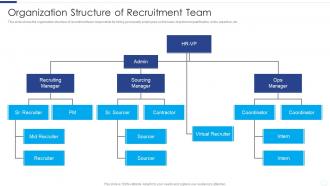
This slide shows the organization structure of recruitment team responsible for hiring good quality employees on the basis of preferred qualification, skills, expertise, etc.
People who downloaded this PowerPoint presentation also viewed the following :
Organization Structure Of Recruitment Team Developing Social Media Recruitment Plan with all 6 slides:
Use our Organization Structure Of Recruitment Team Developing Social Media Recruitment Plan to effectively help you save your valuable time. They are readymade to fit into any presentation structure.
FAQs for Organization Structure Of Recruitment Team Developing Social
So you'll need recruiters, obviously. Sourcers are huge for building your pipeline - don't skip that role. Get a recruiting coordinator too for all the scheduling chaos and keeping candidates happy. A recruiting manager ties everything together with strategy stuff. Once you get bigger, specialized recruiters make sense. Like having someone who actually knows what developers are talking about when they say "full-stack" instead of just nodding along. Some teams split tech and non-tech recruiting completely, which honestly makes a lot of sense. Just cover each part of your funnel first, then add the fancy specialized roles later.
Your team size totally impacts how fast you hire and the quality you get. Bigger teams? You can juggle more roles at once, but keeping everyone on the same page becomes a nightmare. Smaller teams give each hire more attention - way more consistent too. Though you'll definitely move slower when things get busy. I've honestly watched 2-person teams absolutely kill it with smart tools and solid processes. It really comes down to your volume and how complex your roles are. Don't just throw bodies at the problem - figure out what structure actually makes sense for your situation first.
Honestly, just start with a Slack channel where everyone drops daily updates about candidates and what's urgent. Skip the fancy meeting agendas - do weekly roundtables instead. Each person shares wins, what's blocking them, and where they need backup. Shared calendars help too so you're not interrupting someone mid-interview. Create some basic handoff process when candidates move between team members. Oh, and definitely set response time expectations for internal stuff - that one's huge. Don't overthink it though. Pick one thing this week and see how it goes before piling on more.
Honestly, I'd go with a mix - get some specialists for your tricky stuff like tech roles or executive searches, then have generalists who can jump around as needed. Specialists are clutch when you're dealing with high-volume or super niche positions. But generalists? They're lifesavers when things get crazy or someone calls out sick. I've watched teams get way too specialized and then completely panic when priorities change overnight - total nightmare. Figure out your hardest hires first and put specialists on those. Cross-train your generalists in 2-3 areas so you're not scrambling later.
Track time-to-hire and cost-per-hire first - those are your bread and butter metrics. Quality of hire matters too (look at performance reviews and how long people stick around). Recruiter productivity is worth watching - like how many roles each person fills monthly. Honestly, skip the busy work metrics like email counts. They're pretty useless for seeing if you're actually effective. Oh, and don't forget candidate satisfaction scores since word spreads fast in most industries. Pick maybe 3-4 of these and check them monthly. You'll start seeing patterns that'll help you balance speed with quality instead of just rushing to fill seats.
Dude, recruitment tech is totally flipping how teams work. Sourcers barely cold call anymore - they're all about AI tools and fancy Boolean searches now. Recruiters? They've become relationship people since screening happens automatically. Coordinators turned into data nerds tracking metrics and candidate stuff. Even hiring managers have to mess with ATS systems directly these days, which is kinda annoying honestly. But here's the thing - nobody's getting replaced. Everyone's just doing more strategic work instead of boring manual tasks. You should figure out what your team could automate next.
Dude, get a sourcing specialist if you can swing it. They'll hunt down passive candidates all day while your recruiters focus on interviews and closing deals. The division of labor is clutch - no more context switching between finding people and actually recruiting them. These specialists get really good at the technical stuff too, like Boolean searches and mapping out talent markets. Quality goes way up because they're not rushing through sourcing to get to their next interview. I'd start small though, maybe just for your toughest roles to see how it works. Once you try it you won't go back.
Honestly, it's all about those upfront conversations where you really dig into what they want - not just the obvious stuff like skills, but how someone fits with their team. I love asking hiring managers about their nightmare hires because they get so much more specific after that! Weekly check-ins are huge too, even when you've got nothing exciting to report. "Still looking, but here's what I'm seeing out there" goes a long way. Oh, and make sure you're both rating candidates the same way - can't tell you how many times that's bitten me. Basically just stay ahead of it instead of making them hunt you down for updates.
Interview skills are absolutely critical - plus employment law updates and bias training. Boolean search techniques will change your game completely, trust me on this one. Most recruiters still use methods from like 2015 and then get frustrated when they can't find candidates. Communication and negotiation skills matter way more than people think. Industry-specific knowledge helps too, depending on what sectors you're working. I'd set up training every quarter and push for certifications - SHRM's solid, or hit up recruiting conferences. Your team will actually thank you later when their job gets easier.
Start by checking who's actually on your team right now - you might be surprised by the gaps. Job descriptions matter more than people think; ditch the corporate jargon that scares people off. Post openings on different boards, not just LinkedIn. Partner with groups that work with underrepresented folks, and honestly? Structure your interviews so it's not just "gut feelings" deciding who gets hired. Mix up your interview panels too. Track the numbers as you go - way easier to fix problems when they're small. Building this stuff in from day one beats trying to scramble and fix it later when you're already 50 people deep.
Ugh, remote recruiting is such a pain - you're basically trying to run interviews when half your team's scattered across time zones. The biggest issues? Nobody talks to each other properly, candidates get confused about next steps, and those quick "hey can you call this person back?" conversations just don't happen anymore. Daily standups help a ton, plus you need some shared system where everyone can see candidate status. Honestly, hop on actual video calls to debrief instead of endless Slack messages - way more efficient. Oh, and set up urgent channels with clear response times or people will just... disappear for hours.
Yeah, you should totally adjust your team based on what industries you're recruiting for. Tech needs people who actually get the difference between backend and frontend devs - trust me, candidates can tell when recruiters are clueless about this stuff. Healthcare's tricky with all the licensing requirements, so having someone who knows that world helps a lot. Finance is honestly the worst if you don't understand compliance. I'd probably start with generalists for basic roles, then bring in specialists as you grow. Really depends on how technical your positions get.
Your employer brand is basically the foundation for everything recruitment-wise. Strong brand means candidates already want to work there, so your team can focus on actually screening people instead of convincing them to apply. With a weak brand though? You're constantly selling the company and doing tons of outreach just to get decent applicants. It totally changes how you write job posts, which platforms you use, your whole messaging strategy really. Oh and LinkedIn becomes way easier when people recognize your company name. My advice - figure out how candidates currently see you, then build your recruitment strategy around that reality.
Honestly, just build in regular check-ins throughout your whole process. Send quick surveys after interviews, do brief follow-up calls with everyone - even the people you rejected. Ask what confused them or what actually worked well. The hard part? Getting real feedback instead of polite "thanks anyway" responses, especially from rejected candidates. Monthly team reviews help - look for patterns in what people are saying and figure out specific tweaks. Oh, and close the loop! When someone suggests something useful, tell them if you actually changed it. People appreciate knowing their input mattered.
So here's what I'm seeing - companies are basically copying the gig economy model for their own recruiting teams. They'll throw together these "pod" things with specialists for specific projects, then break them apart when done. Some mix their regular recruiters with freelancers who pop in for weird niche roles or when things get crazy busy. Makes total sense honestly, since old-school hierarchies are useless when you need to move fast. I'd start by figuring out which chunks of your recruiting could actually work this way - probably not everything, but definitely some parts.
-
Thanks to SlideTeam, we have an ideal template to present all the info we need to cover. Their slides give our numbers and projections a more clear and enchanting look.
-
“Superb. What a great finding. Thankful for SlideTeam. We were paying people to make slides which went all in vain. We are so happy to have found you.”