

Organization Structure Of Marketing Team Developing E Commerce Marketing Plan




Try Before you Buy Download Free Sample Product
 Impress Your
 Audience
 100%
100% Editable
 Save Hours
 of Time


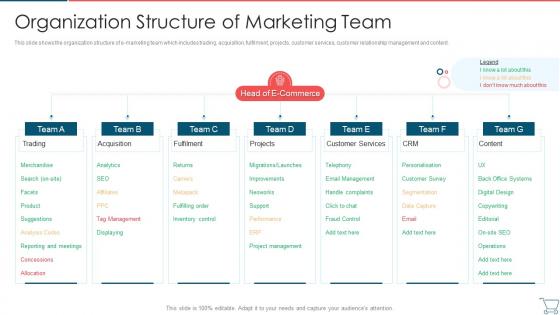
This slide shows the organization structure of e marketing team which includes trading, acquisition, fulfilment, projects, customer services, customer relationship management and content.
People who downloaded this PowerPoint presentation also viewed the following :
Organization Structure Of Marketing Team Developing E Commerce Marketing Plan with all 6 slides:
Use our Organization Structure Of Marketing Team Developing E Commerce Marketing Plan to effectively help you save your valuable time. They are readymade to fit into any presentation structure.






FAQs for Organization Structure Of Marketing Team Developing E
So you've got your core people - Marketing Manager who basically runs everything, Content Creator, Digital Marketing Specialist, and someone doing analytics. Social media is huge now too, way more complex than it used to be. Bigger companies might have specialized roles like SEO or email marketing coordinators, maybe even dedicated graphic designers. Smaller teams? Everyone does a bit of everything honestly. Oh and don't get too hung up on titles - figure out what actual work needs doing first, then worry about what to call people.
Honestly, it's not really about throwing more bodies at the problem. Get the right skills first - strategy, content, analytics - then worry about scaling up. I've watched tiny 3-person teams absolutely crush these bloated 15-person departments because nobody was stepping on each other's toes. Too few people and you're scrambling to cover everything. Too many and suddenly everyone's in meetings about meetings, you know? The magic number totally depends on your budget and how complex your marketing actually is. Start lean, hire based on real workload not some fantasy about what you think you'll need.
Centralized marketing = one main team controls everything from HQ. Decentralized means each region or product line has their own marketing people making calls locally. With centralized, you get consistent messaging and better budget control, but it's slower to pivot. Decentralized? Way more flexible and responsive, though you risk mixed messages across teams. Honestly, most companies I know do some mix of both - they'll have brand guidelines from corporate but let regional teams adapt campaigns. Really depends on whether your company values tight control or speed more.
Look, you've gotta match your team structure to whatever the business actually needs right now. Growth mode? Load up on demand gen and performance marketing people. Brand awareness phase? Stack your team with content and creative folks. I swear half the companies I see just copy what everyone else is doing without thinking it through. Report up to whoever owns your metrics - CMO, VP Sales, doesn't matter. Just make sure you're having regular check-ins so you can shift team focus when priorities change. Oh and definitely audit your current setup against your OKRs first.
Honestly, you need a mix of analytical and creative people - data nerds who can also write decent content. Digital marketing skills are a must. Communication is probably the biggest thing though, since marketing teams are always working with sales and product folks. Project management helps too because there's always like 10 things happening at once. Technical stuff like CRM and social platforms matter, but you can teach that. The real gold is finding people who think big picture but aren't afraid to get their hands dirty with the actual work. Look for curious people who won't freak out when the next new tool drops.
Honestly, cross-functional teams are a game changer for breaking down those stupid departmental walls. You get your designers, analysts, product people, and marketers all working together from day one instead of passing things back and forth like hot potato. The cool thing is you'll spot issues way earlier - like when your creative team makes something gorgeous but totally misses what the data's telling you about your audience. Oh, and everyone's actually invested in the strategy since they helped build it. Start with just one campaign though - don't go crazy restructuring your whole company right away.
Honestly, it depends on what kind of marketing work your team does. Remote works great for content creation, analytics, digital campaigns - that stuff doesn't need face-to-face time. But if they're constantly brainstorming or collaborating with designers, being in the same room helps a ton. Budget matters too obviously. Remote definitely opens up your hiring pool though, which is huge right now. I'd probably just ask your current team what they actually want - they'll tell you what works best for the type of projects they're handling. Company culture is tricky to maintain virtually but not impossible.
Honestly, just dig into your data and see where the magic's actually happening. If social media is crushing your other channels, why not move more people there? The numbers don't lie about what's working. Check out your team's current output and see how it maps to actual business results - that's where you'll spot the gaps. Analytics will also show you weird workflow stuff and who's collaborating well (or not). I swear, the data always reveals something totally unexpected about how work really flows vs what you think is happening. Start with an audit of what everyone's producing and go from there.
Honestly, it depends on where you're at right now. Small team? Go with generalists who can handle multiple things - way more budget-friendly and they'll adapt when your priorities change. Specialists are amazing for the technical deep dives though, like SEO or paid ads stuff. They'll get you better results in those specific areas. My take? Start with generalists when you're smaller, then bring in specialists later as you grow. Focus on the areas that are actually driving revenue first - no point getting a specialist for something that's not moving the needle yet.
Dude, yes! Break down those old department walls and make cross-functional squads instead. Like 5-7 people per team - mix your copywriters, designers, data people, maybe someone from product. Each squad tackles specific campaigns or customer segments. Run 2-week sprints with daily check-ins, basically steal what the dev teams do. Way better than everyone working in isolation then hoping it all fits together at the end (spoiler: it never does). Give each team their own metrics to own and let them pivot fast based on what's actually working. Honestly just test it on one campaign first - you'll be sold immediately.
Okay so for team tools, you'll need a few basics. Slack or Teams for messaging - honestly Teams is kinda clunky but works if you're already using Office stuff. Then grab something like Asana for project tracking (way better than endless email chains). Figma's clutch for design collabs. Here's the thing though - doesn't really matter which specific tools you pick as long as everyone actually uses them. I'd go with Notion or Airtable for content calendars since they're pretty flexible. Just don't go crazy with like 15 different platforms or your team will hate you.
Honestly, having a diverse marketing team is a game-changer. Different backgrounds mean fresh perspectives that'll catch things you'd totally miss otherwise. Your campaigns get way more creative when people are challenging each other's assumptions. Brainstorming becomes actually fun instead of the same ideas recycling. Plus your team can genuinely connect with different audiences because they get it on a personal level. I've seen teams where everyone felt comfortable speaking up - the collaboration was insane. Oh, and psychological safety in meetings is huge. Start with diverse hiring but don't forget about creating that safe space for people to share their real thoughts.
Have them shadow different people for the first week - they'll actually see how campaigns work from start to finish. Pair them with someone for the whole first month too, makes such a huge difference. Get all their logins sorted day one because waiting around for access is the worst. I'd do check-ins at 30, 60, and 90 days to see how they're doing. Oh and definitely have them sit in on client calls early, even if they're just listening. They need brand guidelines and old campaign stuff right away. Honestly the buddy system thing works way better than I expected it would.
One generalist handles everything at first. Around 10-50 people, you'll want to split things up - content/social usually breaks off first, then demand gen, product marketing after that. Most teams screw this up by getting too specialized too early though. Creates these weird silos where nobody talks to each other. Once you hit 50+ employees, definitely get a marketing ops person. I can't stress this enough - it'll save your sanity. Past 100 people you can finally afford the fancy specialists like brand managers and growth folks. Here's the thing: hire where you're actually drowning, not where some blog post says you should. Your bottlenecks won't look like everyone else's.
Track the big stuff first - campaign ROI, lead quality, how fast you're getting campaigns out the door. Those show if your team actually works together or just talks about it. Behind the scenes, measure collaboration between teams and whether people are happy (unhappy teams = messy execution, trust me). I'd throw in boring metrics too like cost per lead and turnaround times. They're not sexy but they tell you if people are stepping on each other. Pick maybe 3-4 that actually matter for your situation and check monthly. Don't overcomplicate it.
-
Very unique and reliable designs.
-
Innovative and creative templates with high-quality designs. Helped me with my presentation as the slides were easy to edit.