

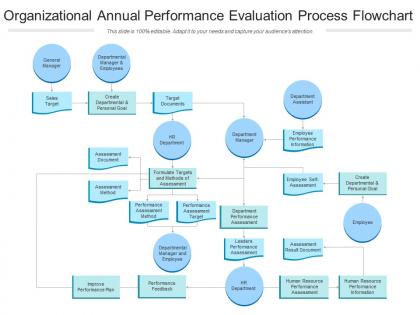
Organizational annual performance evaluation process flowchart




Try Before you Buy Download Free Sample Product
 Impress Your
 Audience
 100%
100% Editable
 Save Hours
 of Time


Our Organizational Annual Performance Evaluation Process Flowchart are topically designed to provide an attractive backdrop to any subject. Use them to look like a presentation pro.
People who downloaded this PowerPoint presentation also viewed the following :
Organizational annual performance evaluation process flowchart with all 2 slides:
Use our Organizational Annual Performance Evaluation Process Flowchart to effectively help you save your valuable time. They are readymade to fit into any presentation structure.
FAQs for Organizational annual performance
Honestly, it totally depends on what industry you're in. Sales folks need their revenue numbers and conversion rates - that's obvious. Customer service? Track satisfaction scores and how fast they respond. Tech people should focus on code quality and how quickly they squash bugs. Manufacturing is all about safety, productivity, and quality control. But here's the thing - don't go crazy with like 15 different metrics. Pick 3-5 that actually matter for each role. I've seen companies track everything under the sun and it becomes meaningless noise. Figure out what success looks like first, then work backwards to find the numbers that tell that story.
Numbers only tell half the story, honestly. You'll see if someone hit their sales goals, but qualitative feedback shows you HOW they got there - did they collaborate well or steamroll everyone? The "why" behind the data is where the real insights live. Some of your best people might look mediocre on spreadsheets but are actually crushing it at mentoring others or solving tricky problems. Without that context, you're basically flying blind in performance reviews. Plus it makes those conversations way less awkward when you've got actual examples instead of just pointing at charts.
Honestly, feedback is like the cheat code for getting better performance out of people. Your team actually knows what's up instead of wandering around clueless until their yearly review rolls around. People stay way more motivated when they can see they're improving week by week. I've noticed they really appreciate when you notice their work too - makes them feel less invisible, you know? Catching problems early is huge because nobody wants to deal with a disaster later. Skip the formal review BS and just do quick weekly chats instead. Trust me, they'll actually want to talk once it becomes normal.
Don't force everyone through the same evaluation process - it's such a waste of talent. Some people are amazing in face-to-face chats. Others need to write their thoughts down first or they'll freeze up. I've watched good managers completely overlook solid performers just because they stuck to one rigid format. Let introverts email updates before meetings if they want. Give your detail people actual rubrics to work with. Creative folks might want to show their work visually instead of just talking about it. You're still measuring the same stuff, just letting people get there differently. Honestly? Just ask each person what works best for them.
Oh man, the usual suspects are recency bias - you only remember what happened last month. Then there's the halo effect where one amazing project makes everything else look golden too. Confirmation bias is sneaky though, you'll unconsciously hunt for stuff that backs up your existing opinion about someone. Attribution bias messes with how you credit luck versus actual talent. I do this stuff all the time honestly! Combat it by using evaluation forms with structure, keep notes year-round instead of panicking during review season, and grab feedback from different people who actually work with them. You need systems that make you see the full picture.
Honestly, going digital with performance reviews is a game changer. Real-time goal tracking beats digging through old notes any day. Those 360-degree feedback tools grab input automatically, so you're not chasing people down for responses. The analytics side is pretty cool too – it catches bias patterns you'd never notice otherwise. My old company was SO subjective before we switched! Your team gets ongoing feedback instead of dreading that once-a-year sit-down. I'd say just digitize what you're already doing first, then add the bells and whistles later once everyone's used to it.
Honestly, work backwards from what you actually want to achieve. Figure out which behaviors drive your company's real goals first. Then build your metrics around those specific things. So many companies just grab some random performance template online - drives me crazy! If teamwork matters for your strategy, measure collaboration. Innovation a priority? Track those metrics instead. Quick tangent but I've literally seen places measure stuff that has zero connection to what they claim matters. Anyway, review your criteria regularly to make sure they still match where the business is going. Otherwise you're just checking boxes instead of getting results.
Honestly, don't try cramming these into your regular team calls - set up separate video sessions. Send them the eval materials beforehand so they're not seeing it for the first time on camera. Remote reviews can get super awkward and one-sided if you're not careful about it. I always ask open-ended stuff and then actually wait for them to finish talking (harder than it sounds over video). Oh, and definitely follow up with written notes afterward - people miss way more subtle stuff on Zoom calls. Plan for these to run about 20% longer than they would face-to-face, and you should be good.
Honestly, self-assessments are a game changer. Your employees get to actually have input instead of just sitting there while you talk at them. People show up way more prepared when they've already thought through their own performance first. Plus you'll learn what they really think about their work - sometimes they're harder on themselves than you'd be, which is interesting. The best part? They're way more likely to actually follow through on goals they came up with themselves. Oh, and it cuts your prep time in half since they've done the heavy lifting. Just make sure they fill theirs out before you do yours - comparing notes makes the whole conversation so much better.
So for team stuff, track completion rates, how fast they're moving through work, and if they're actually hitting their shared goals. Individual metrics are different - look at personal KPIs, skill growth, what teammates say about them, quality of their work. Here's the thing though: some people are incredible team players but their solo stats don't look flashy. That's just how it goes sometimes. You can't really use these metrics separately - they work together. A killer team needs solid individual performers too. Honestly, figure out what "winning" means for both levels before you start measuring anything.
Honestly, those yearly reviews are such a waste of time - like who remembers what happened in February? Your team needs regular check-ins instead. Make it feel more like coaching than some formal HR thing. Ask people what they actually want from evaluations, not what looks good on paper. Focus on impact over hours worked (super important with everyone remote now). Set goals together rather than just handing them down. Short bursts work better than marathon sessions anyway. The whole point should be helping people grow, not checking boxes.
Stop dwelling on what already happened - that's such a waste of time. Ask "what would help you succeed even more?" instead of picking apart mistakes. I swear this gets way better conversations going. Set actual development goals with deadlines and figure out resources together. Oh, and make it two-way! Ask how you can support them better too. Frame challenges as learning stuff, not failures. The whole point is looking forward at growth opportunities and skill gaps. Don't wait a full year either - check in every few months or you'll lose momentum.
Honestly, do it face-to-face if you can - it's way less awkward than you'd think. Lead with what they're crushing first, then get into the stuff that needs work. Don't be vague though, like give actual examples instead of "communication needs improvement" or whatever. I used to hate these talks as a manager but people really do want the clarity. Let them ask questions and figure out next steps together. Oh and don't info-dump everything then ghost them - that's the worst. Check back in a few weeks to see how it's going.
Dude, you've gotta set clear expectations from day one - it's seriously a lifesaver. Your team needs to know exactly what good work looks like, not just guess at it. Otherwise you'll get those annoying "but nobody told me!" complaints later. I mean, who has time for that drama? Write down 3-5 specific goals with each person and actually check in quarterly. Makes the whole evaluation thing so much easier since you're just measuring what you already agreed on. No more awkward subjective conversations where you're both like "well, I thought..." Trust me on this one.
Ditch the annual review thing and do monthly check-ins instead. Way less stressful for everyone. I mean, who remembers what they did in February when it's December? Monthly one-on-ones let you catch problems early and give feedback that actually matters. Your team gets help when they need it, not months later. Just start with 30-minute conversations about what they're working on now. Trust me, it's so much better than those formal rating meetings that everyone dreads. Plus you'll avoid the awkwardness of someone sucking at their job without realizing it.
-
Presentation Design is very nice, good work with the content as well.