


Organizational chart and business model restructuring powerpoint presentation slides
Restructuring of business models simplifies management reorders and removes barriers to output. Charts are prepared to improve decision-making, better organize present needs, and make the model more profitable. Check out our efficiently designed Organizational Charts and Business Model Restructuring template to enhance communication and the decision-making process. It also gives a brief idea about simplifying management, reordering the companys organizational hierarchy, and removing barriers to productivity. This proposal can be helpful for change management officers in corporate restructuring. The outline of this template covers the organizations current situation analysis, including current business processes, roles and responsibilities, and change readiness assessment. Further, this proposal includes Business Restructuring Approaches, Strategic organizational chart, restructuring readiness checklist, restructuring strategies, and risks associated with them. This template also covers organization risk identification, opportunities in restructuring the company workflow, mitigation plans, and process. Further, it involves employee training plans, new communication plans. This organizations restructuring deck includes post-implementation KPIs, surveys, timelines, and performance measurement reports. Download our 100 percent editable and customizable template by booking a free demo with our research or design team. Get access now.



-

- Google Slides is a new FREE Presentation software from Google.
- All our content is 100% compatible with Google Slides.
- Just download our designs, and upload them to Google Slides and they will work automatically.
- Amaze your audience with SlideTeam and Google Slides.
-

Want Changes to This PPT Slide? Check out our Presentation Design Services
-

- WideScreen Aspect ratio is becoming a very popular format. When you download this product, the downloaded ZIP will contain this product in both standard and widescreen format.
-

- Some older products that we have may only be in standard format, but they can easily be converted to widescreen.
- To do this, please open the SlideTeam product in Powerpoint, and go to
- Design ( On the top bar) -> Page Setup -> and select "On-screen Show (16:9)” in the drop down for "Slides Sized for".
- The slide or theme will change to widescreen, and all graphics will adjust automatically. You can similarly convert our content to any other desired screen aspect ratio.
Compatible With Google Slides

Get This In WideScreen
You must be logged in to download this presentation.


Do you want to remove this product from your favourites?
PowerPoint presentation slides
Deliver this complete deck to your team members and other collaborators. Encompassed with stylized slides presenting various concepts, this Organizational Chart And Business Model Restructuring Powerpoint Presentation Slides is the best tool you can utilize. Personalize its content and graphics to make it unique and thought-provoking. All the sixty four slides are editable and modifiable, so feel free to adjust them to your business setting. The font, color, and other components also come in an editable format making this PPT design the best choice for your next presentation. So, download now.

People who downloaded this PowerPoint presentation also viewed the following :
Content of this Powerpoint Presentation
Slide 1: This slide displays title i.e. 'Organizational Chart and Business Model Restructuring'.
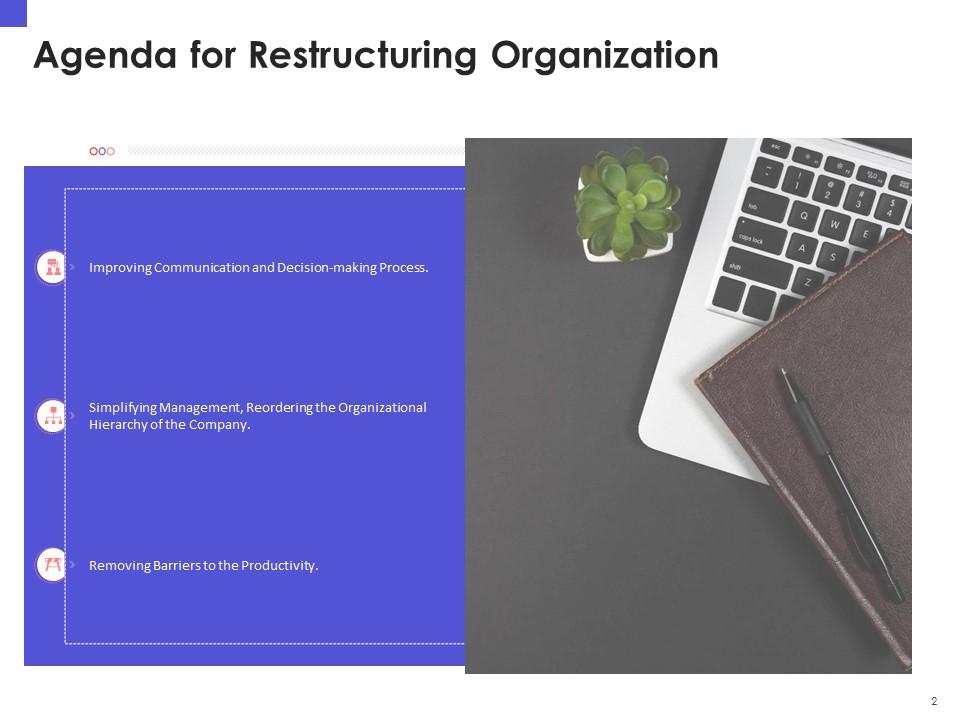
Slide 2: This slide presents agenda.
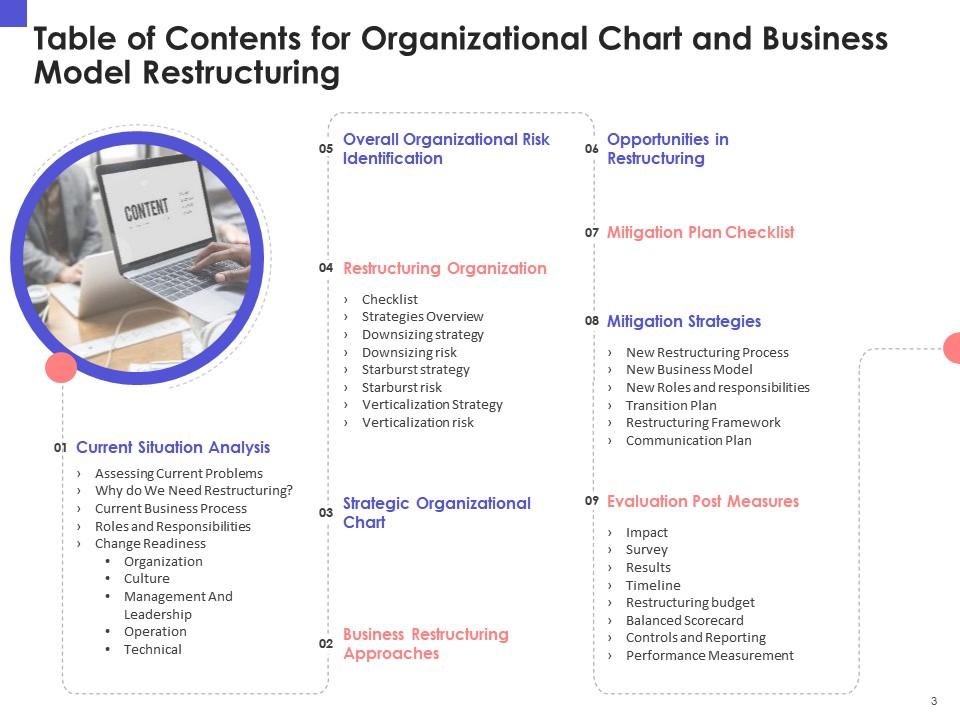
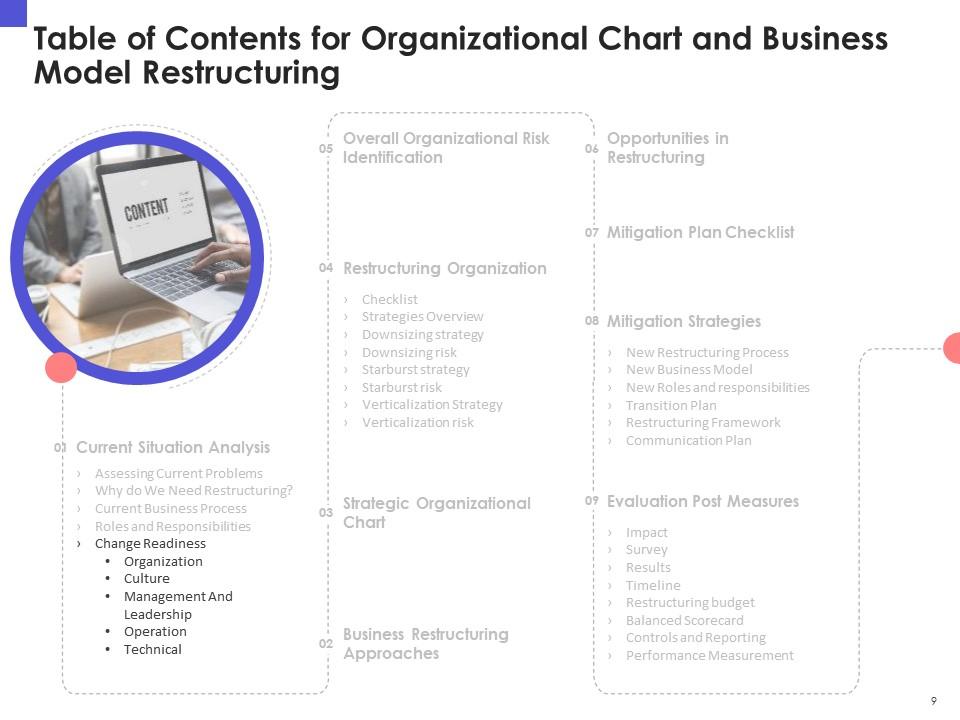
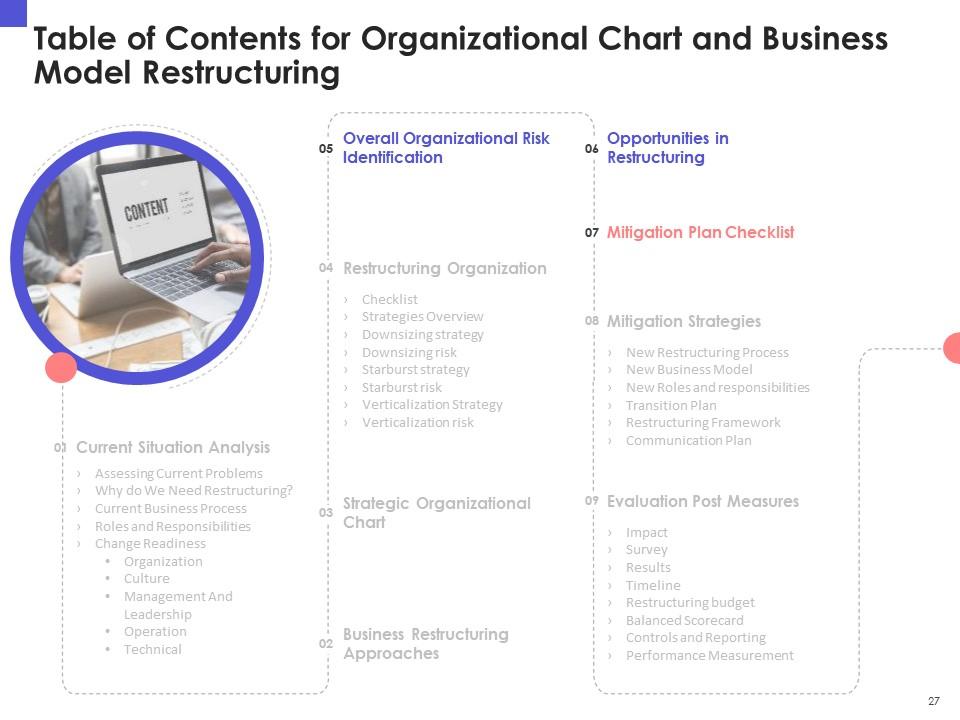
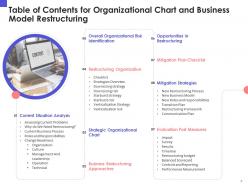
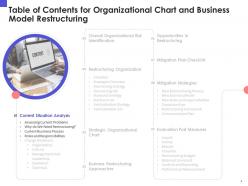
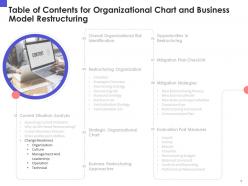
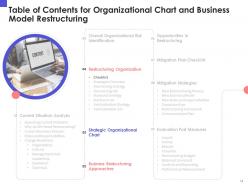
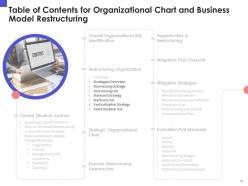
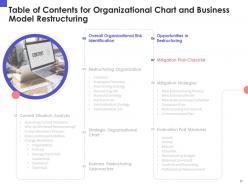
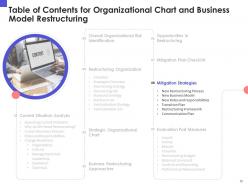
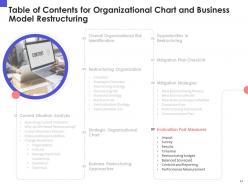
Slide 3: This slide exhibits table of contents.
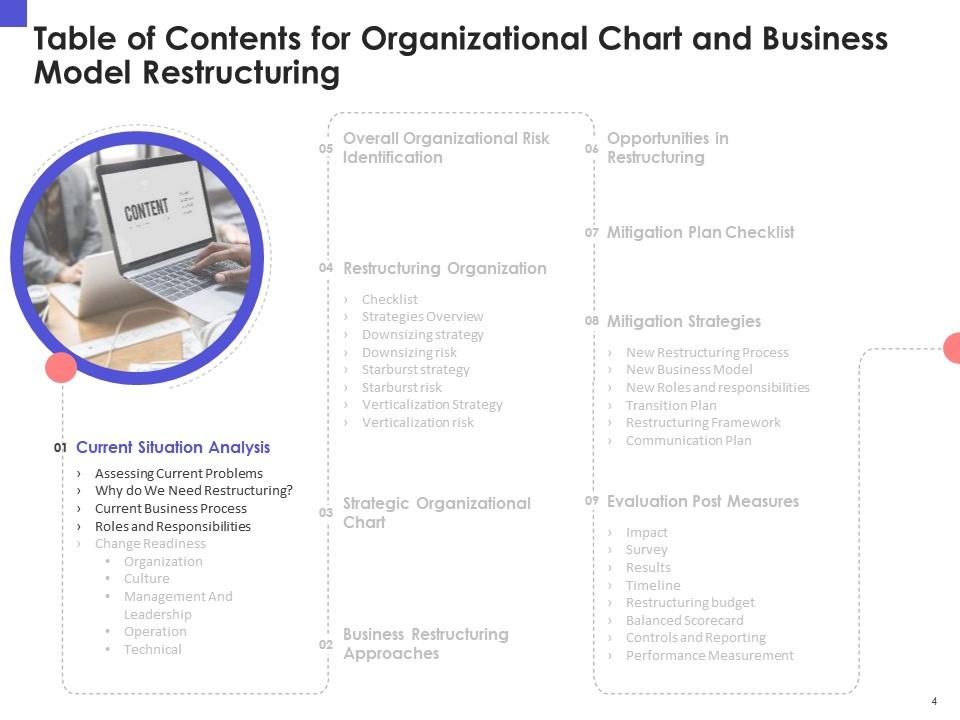
Slide 4: This slide shows title for 'Current situation analysis'.
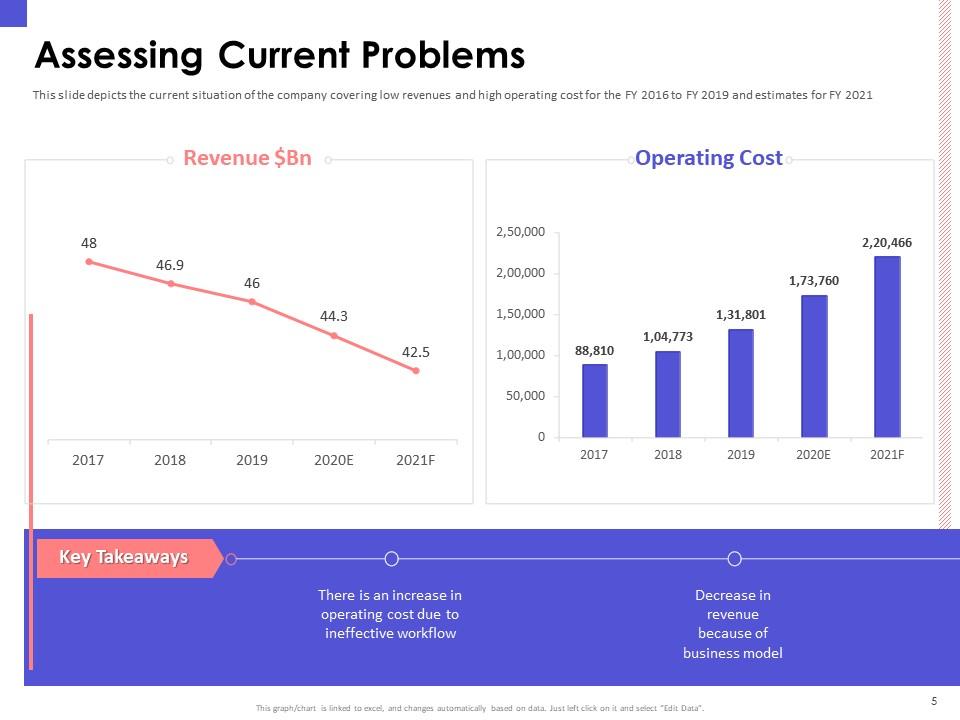
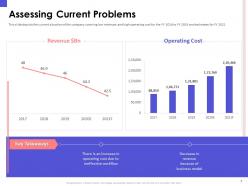
Slide 5: This slide depicts the current situation of the company covering low revenues and high operating cost for the FY 2016 to FY 2019.
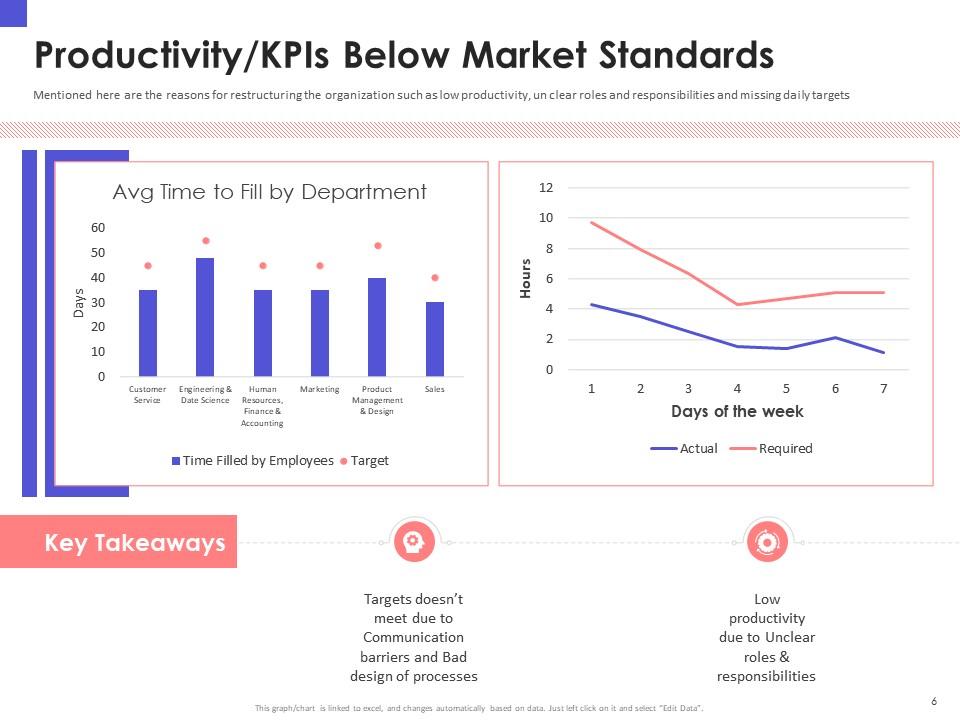
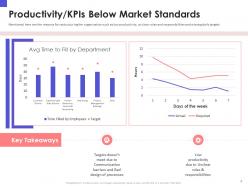
Slide 6: This slide highlights 'Productivity/KPIs Below Market Standards'.
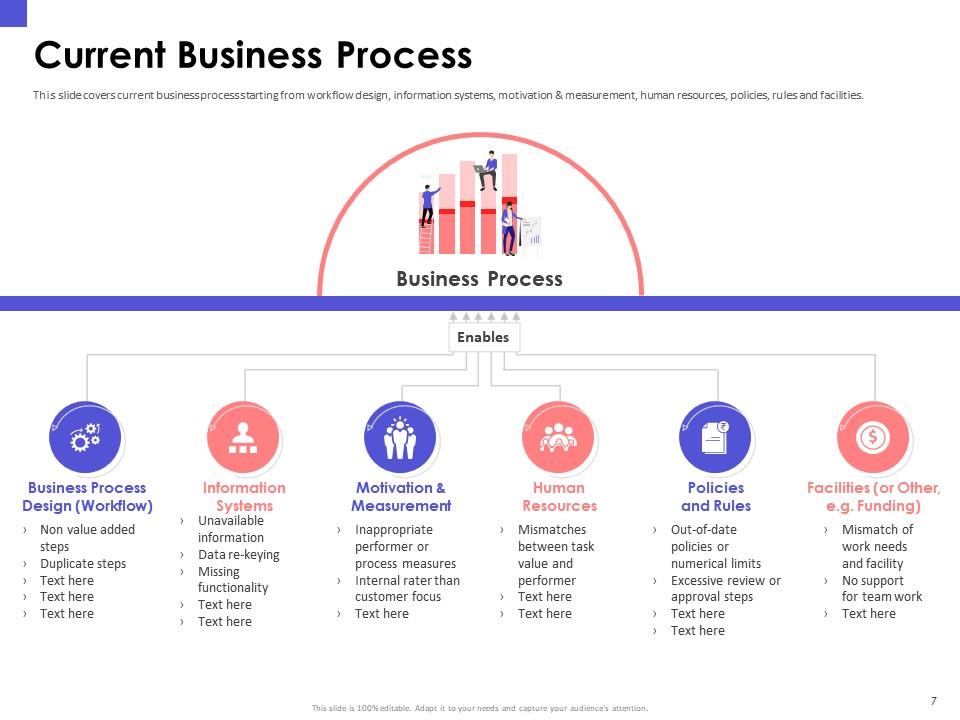
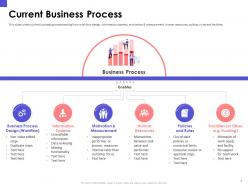
Slide 7: This slide covers current business process starting from workflow design, information systems, etc.
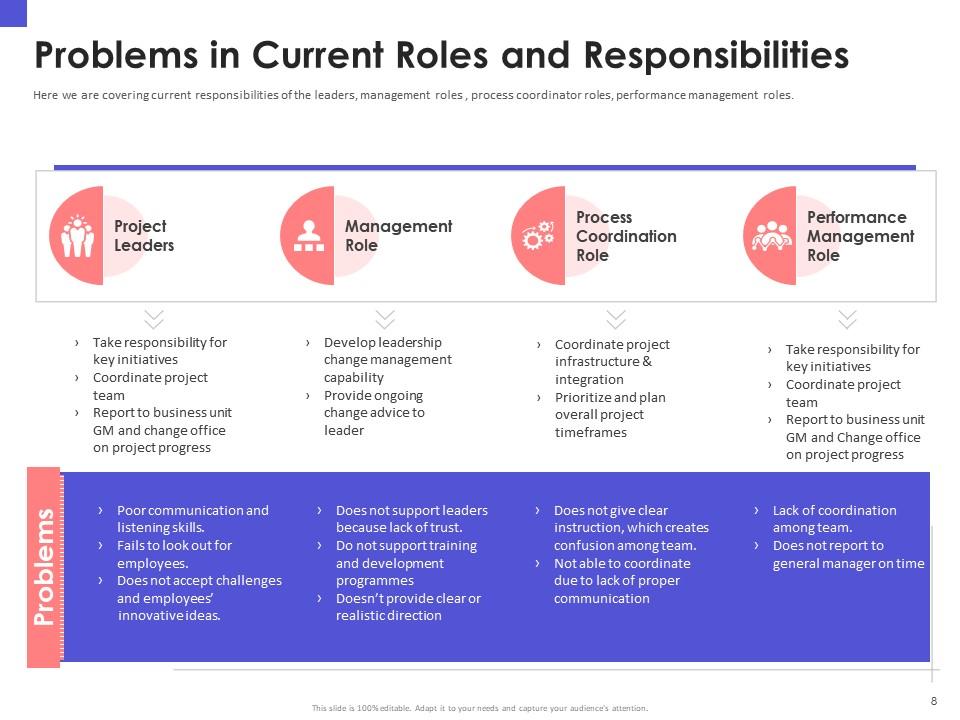
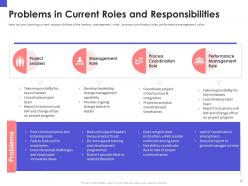
Slide 8: This slide displays Problems in Current Roles and Responsibilities.
Slide 9: This slide presents title for 'Change readiness'.
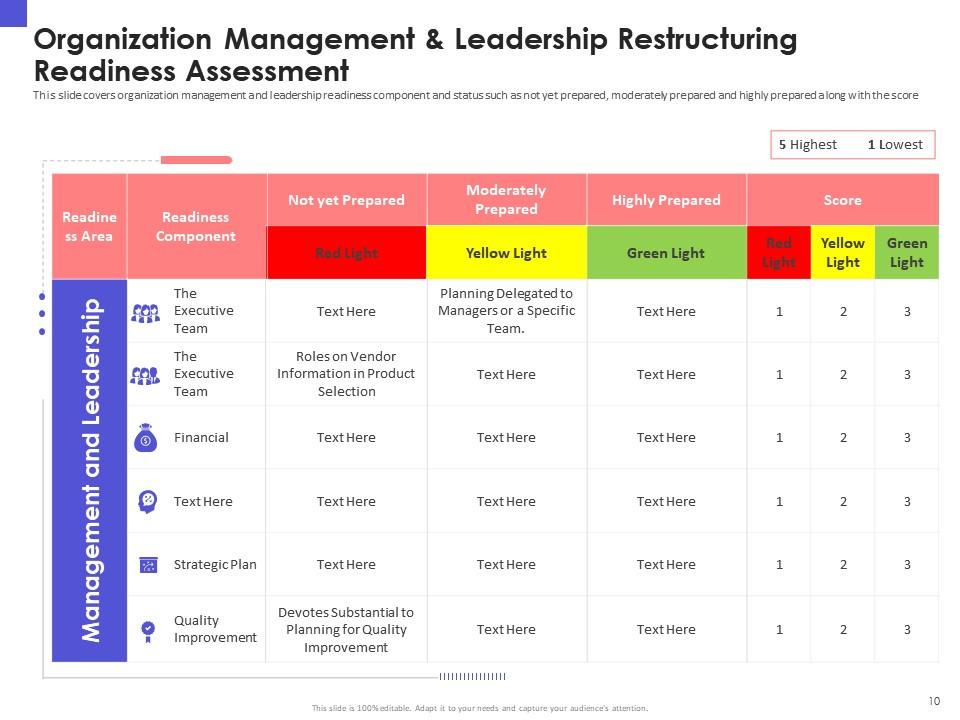
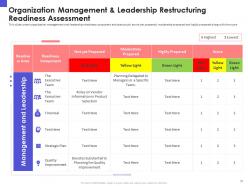
Slide 10: This slide covers organization management and leadership readiness component and status.
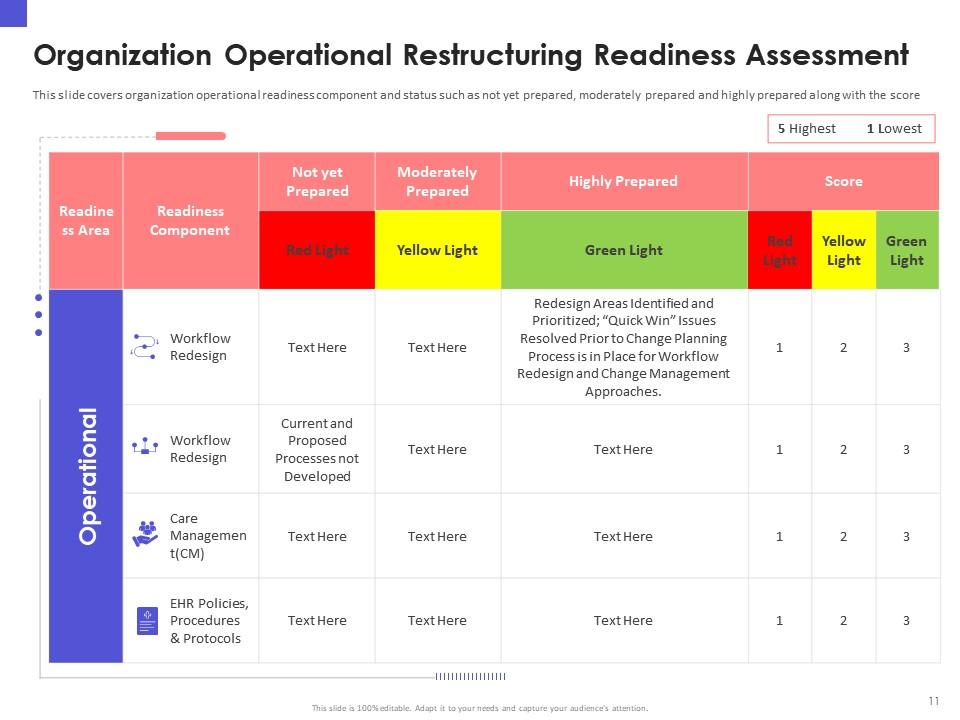
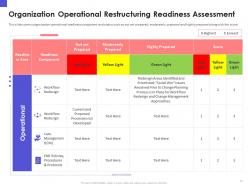
Slide 11: This slide covers organization operational readiness component and status such as not yet prepared, etc.
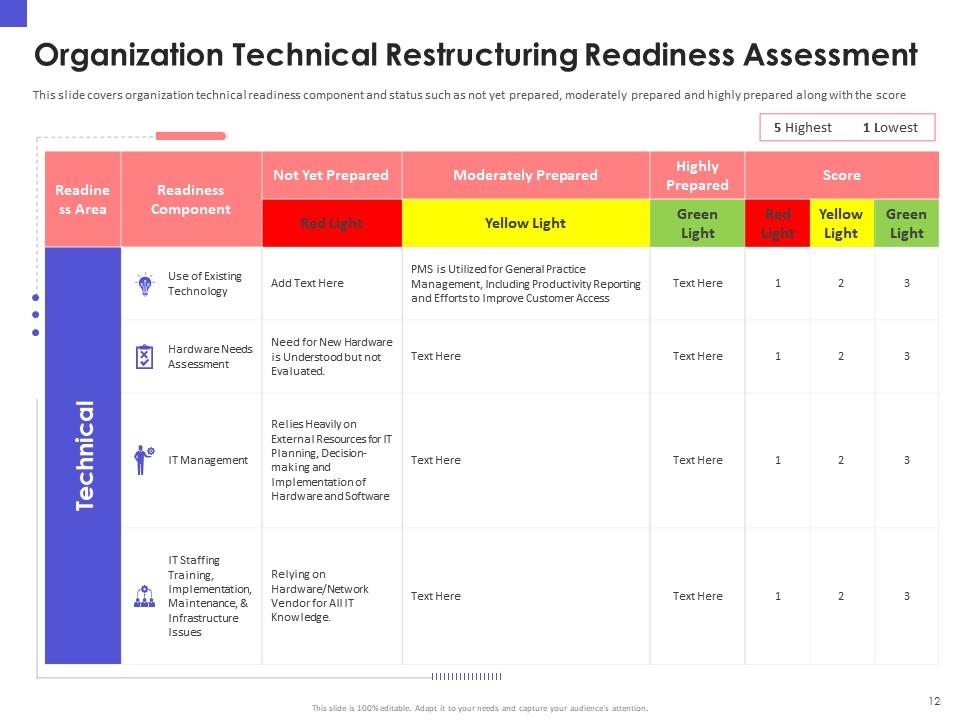
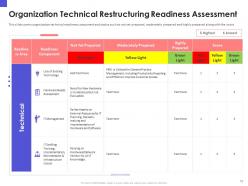
Slide 12: This slide covers organization technical readiness component and status such as moderately prepared, etc.
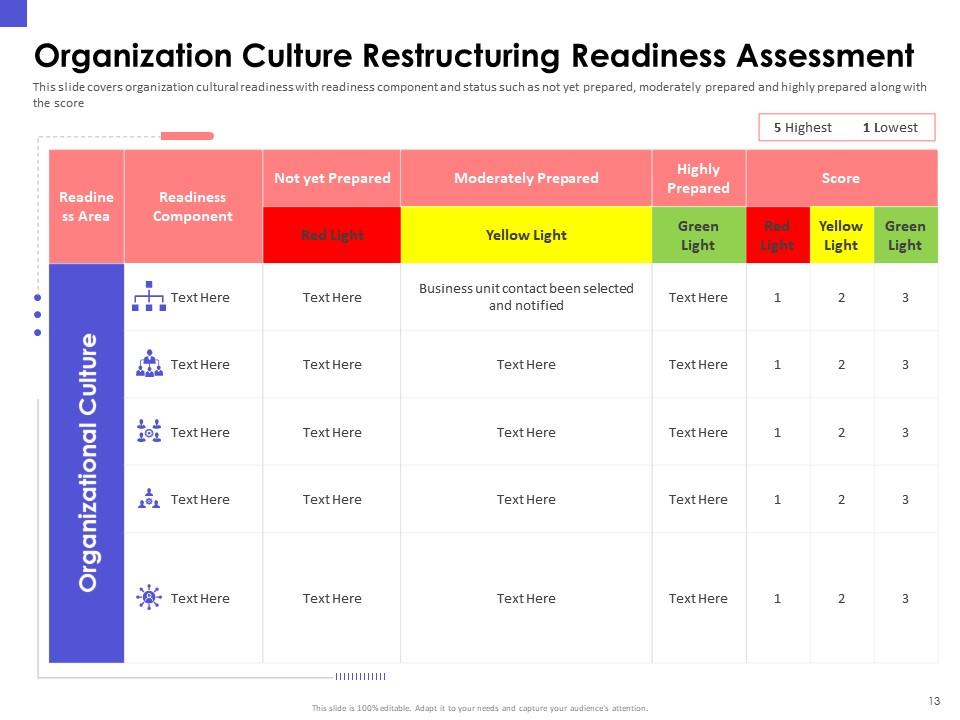
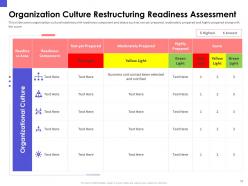
Slide 13: This slide covers organization cultural readiness with readiness component and status.
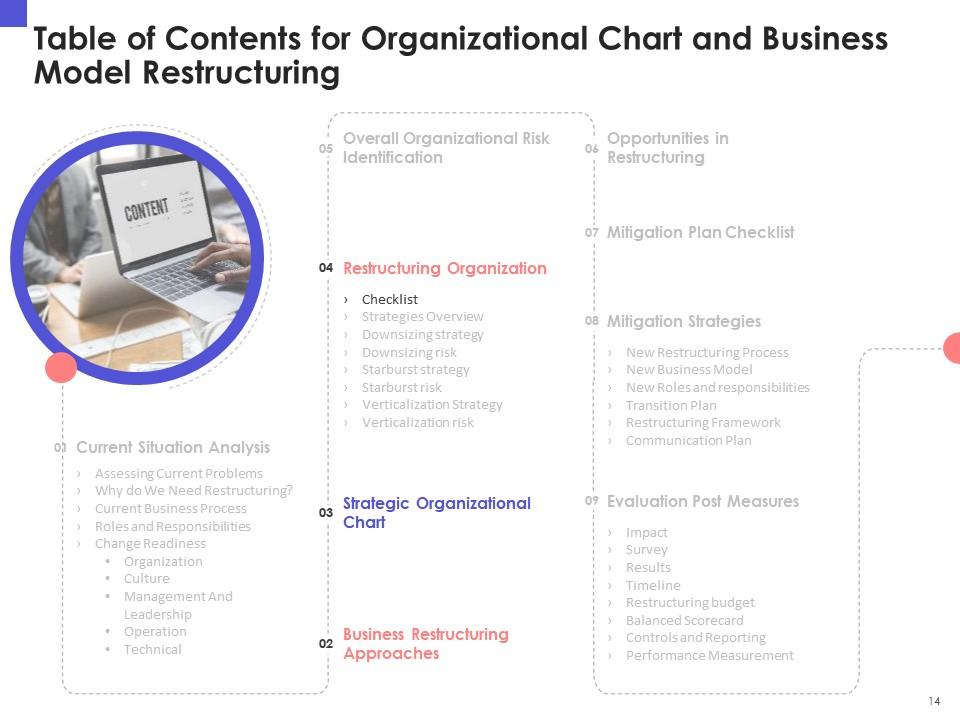
Slide 14: This slide exhibits title for three topics that will be covered next in the template.
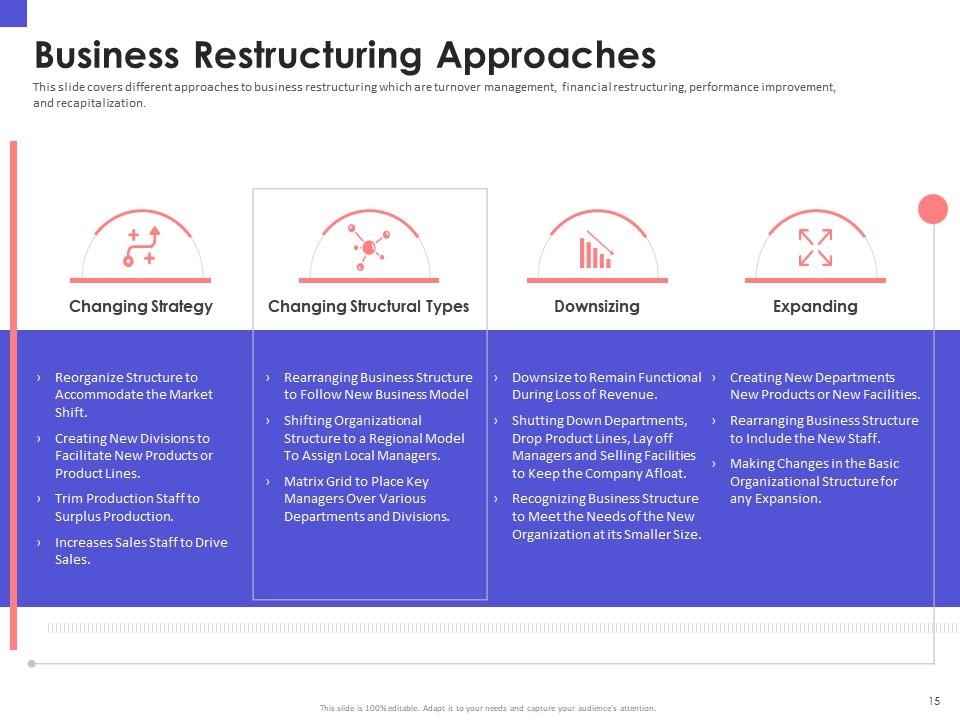
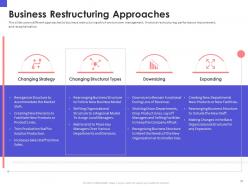
Slide 15: This slide covers different approaches to business restructuring which are turnover management, financial restructuring, etc.
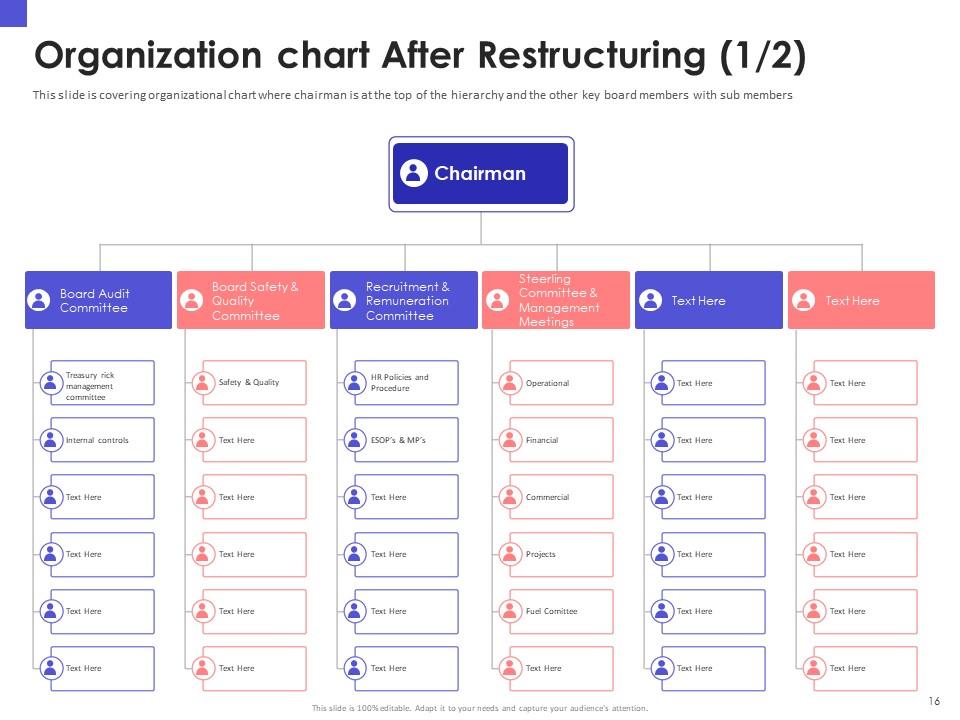
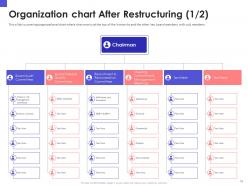
Slide 16: This slide covers organizational chart where chairman is at the top of the hierarchy and the other key board members with sub members.
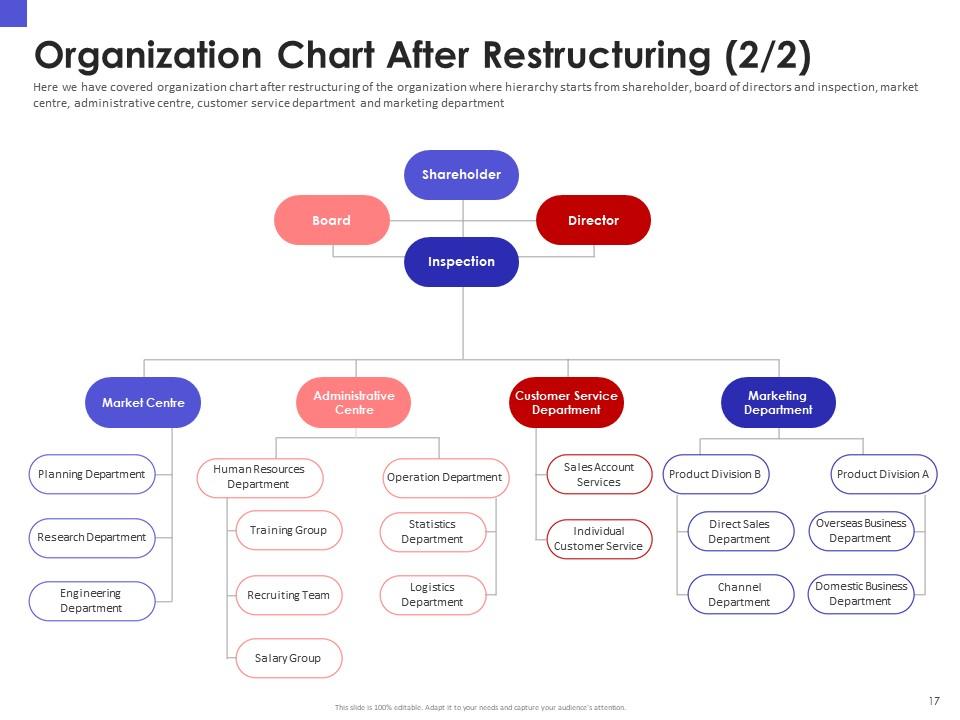
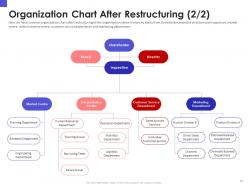
Slide 17: This slide depicts continued content.
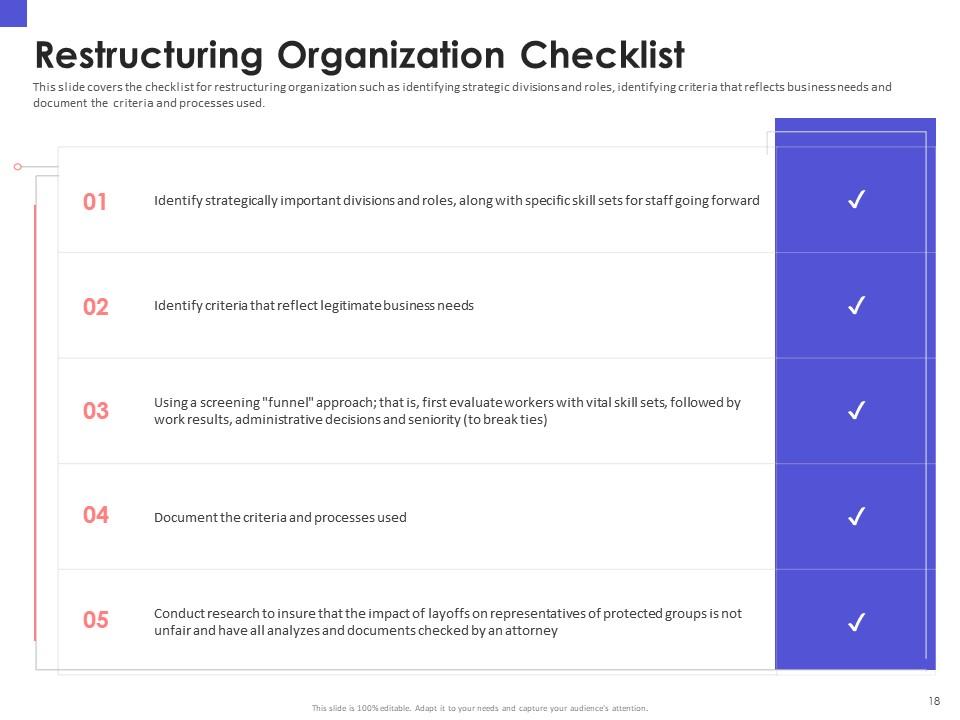
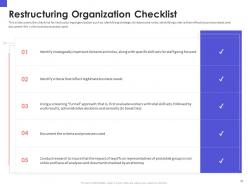
Slide 18: This slide covers the checklist for restructuring organization such as identifying strategic divisions and roles, etc.
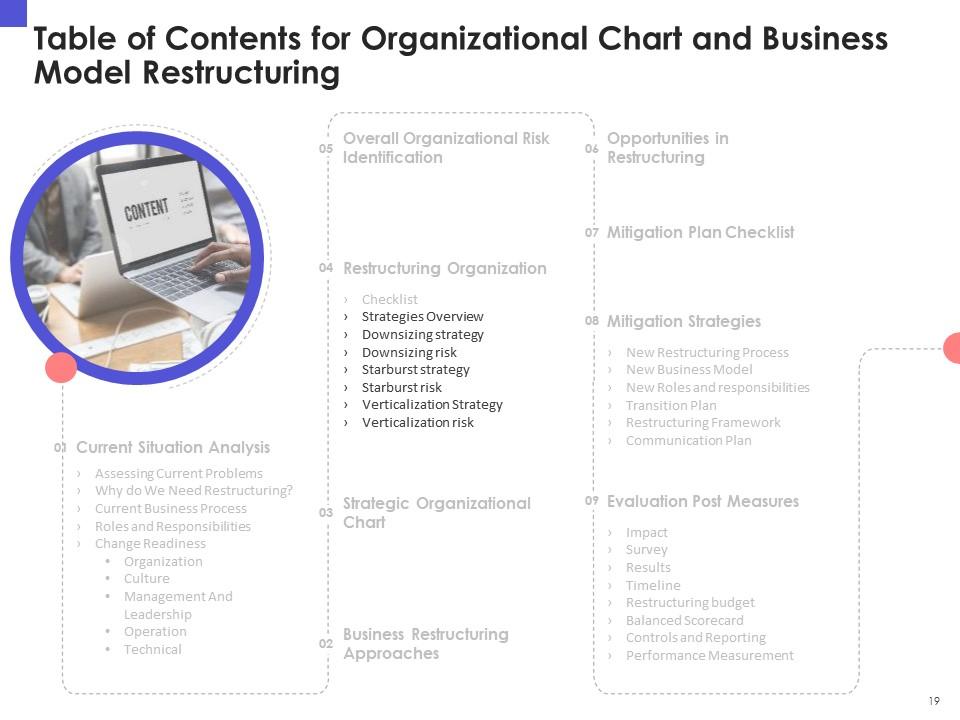
Slide 19: This slide highlights title for elemets of 'Restructuring organization'.
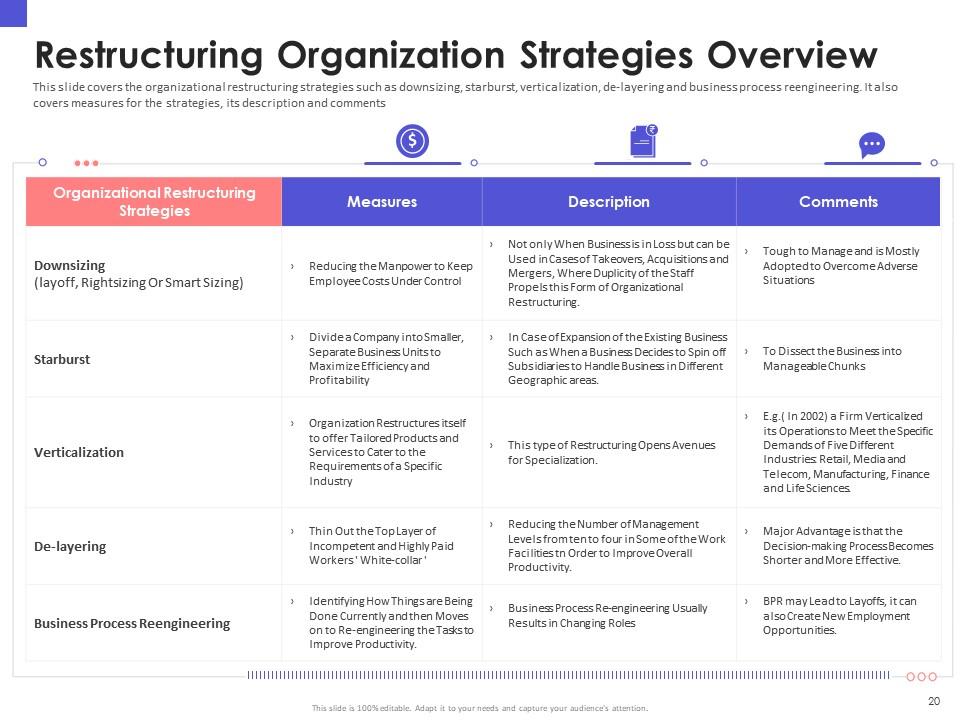
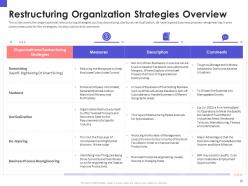
Slide 20: This slide covers the organizational restructuring strategies such as downsizing, starburst, verticalization, etc.
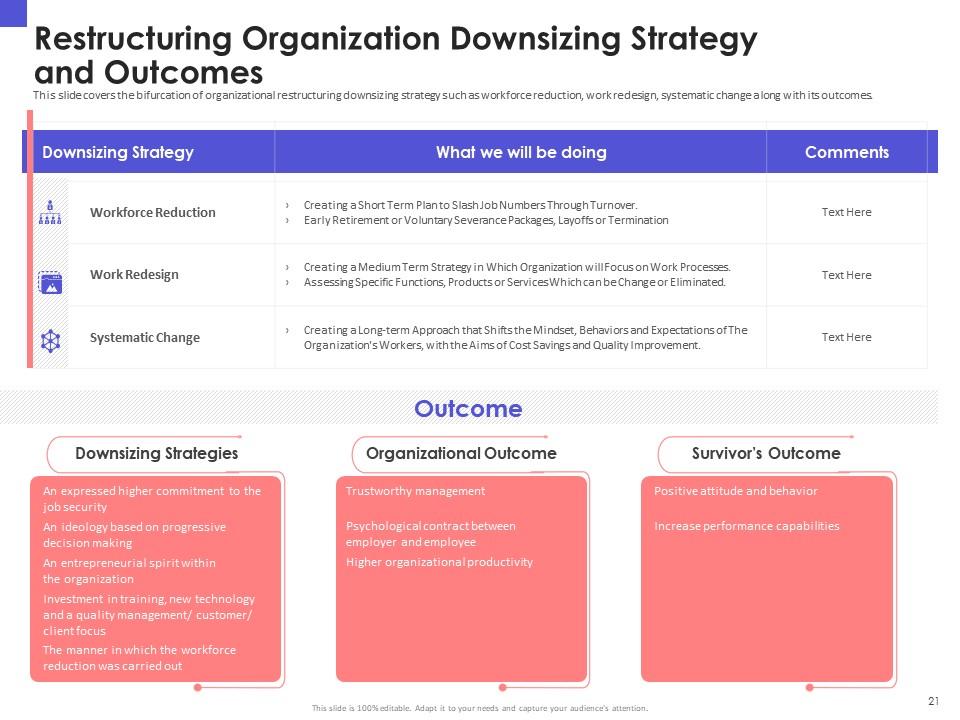
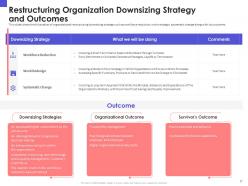
Slide 21: This slide covers the bifurcation of organizational restructuring downsizing strategy such as workforce reduction, work redesign, etc.
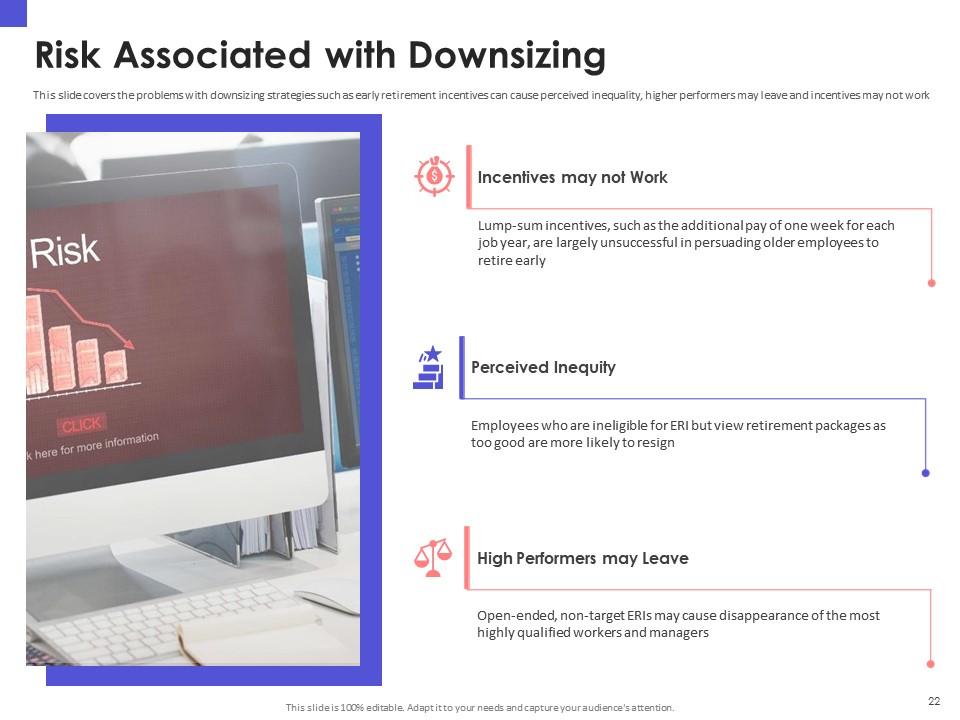
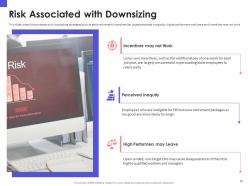
Slide 22: This slide covers the problems with downsizing strategies such as early retirement incentives, etc.
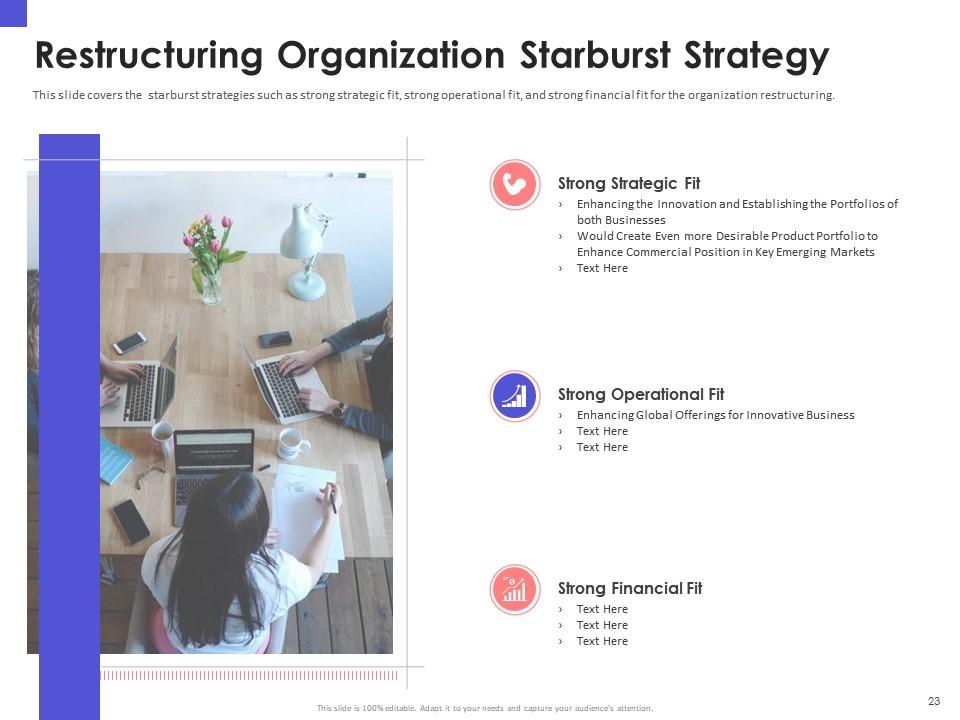
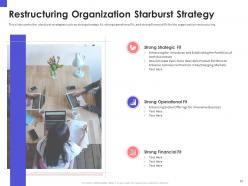
Slide 23: This slide covers the starburst strategies such as strong strategic fit, strong operational fit, etc.
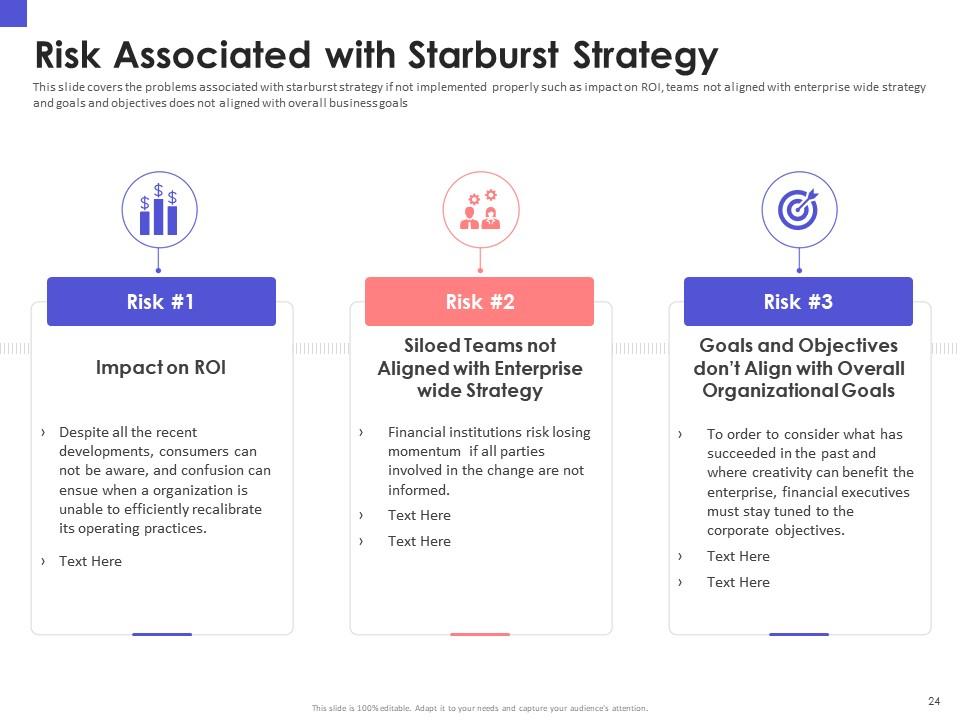
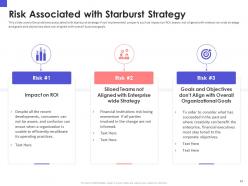
Slide 24: This slide covers the problems associated with starburst strategy if not implemented properly such as impact on ROI, etc.
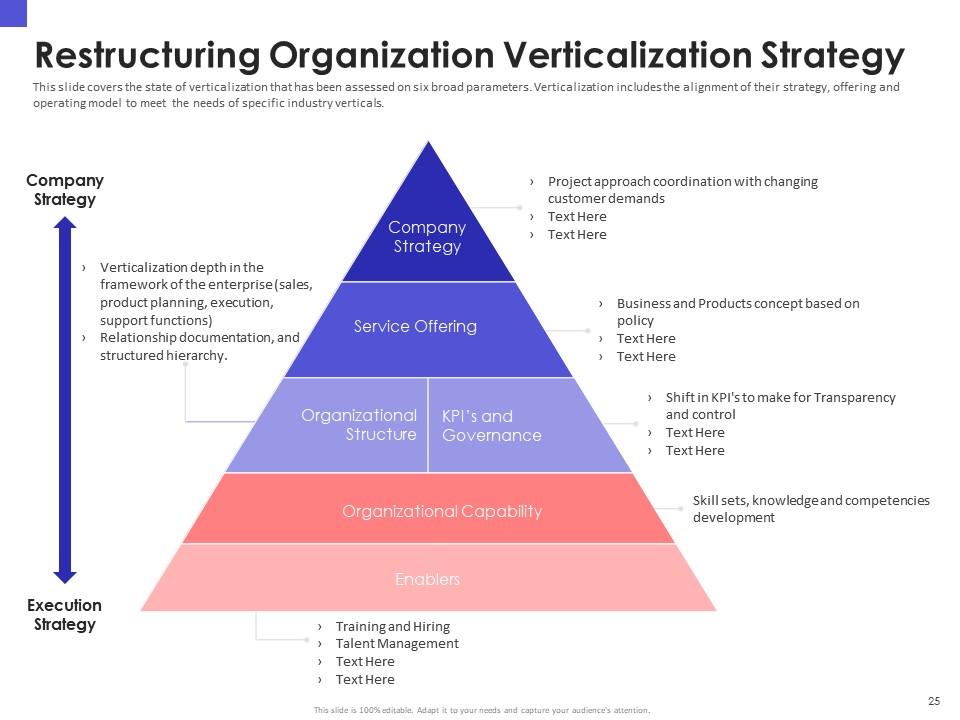
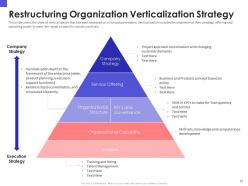
Slide 25: This slide covers the state of verticalization that has been assessed on six broad parameters.
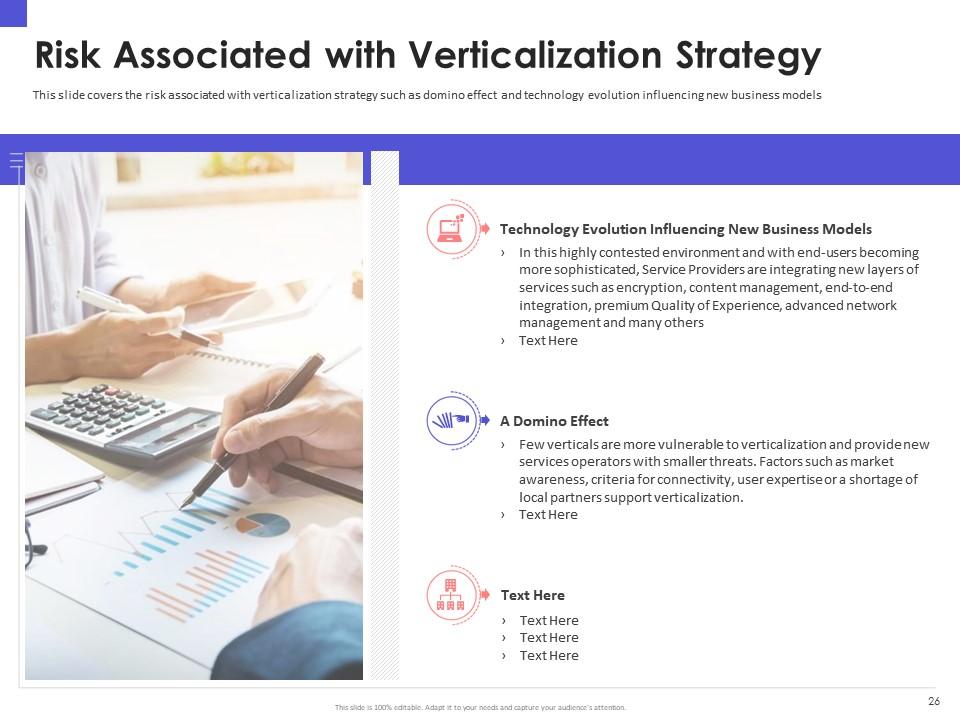
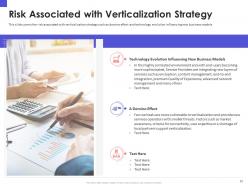
Slide 26: This slide covers the risk associated with verticalization strategy such as domino effect and technology evolution.
Slide 27: This slide displays title for three topics to be covered next in the template.
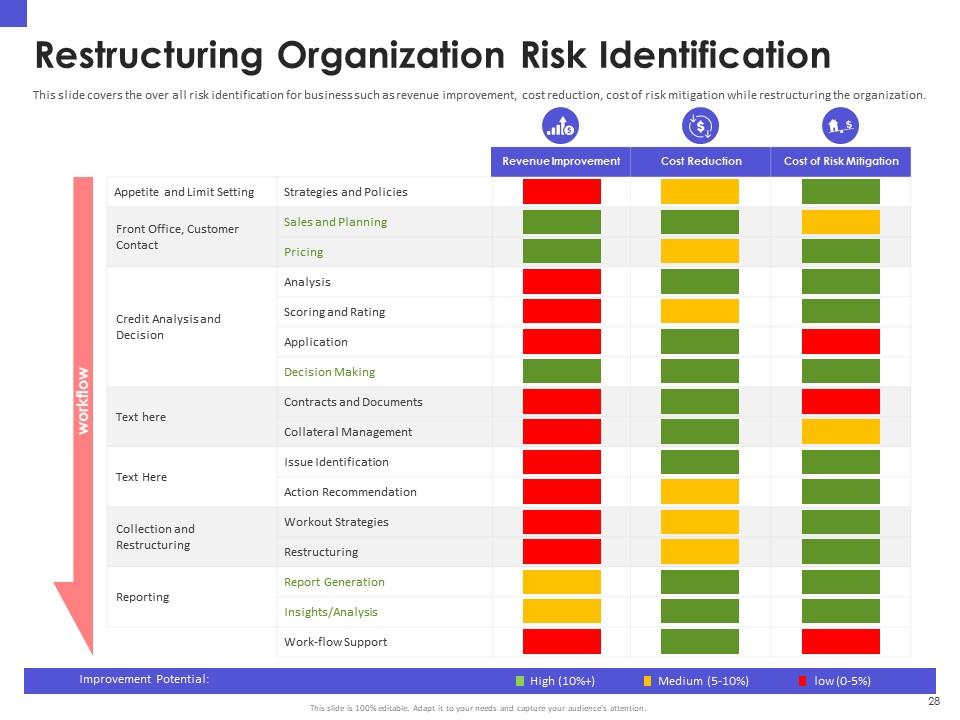
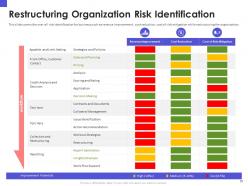
Slide 28: This slide covers the over all risk identification for business such as revenue improvement, cost reduction, etc.
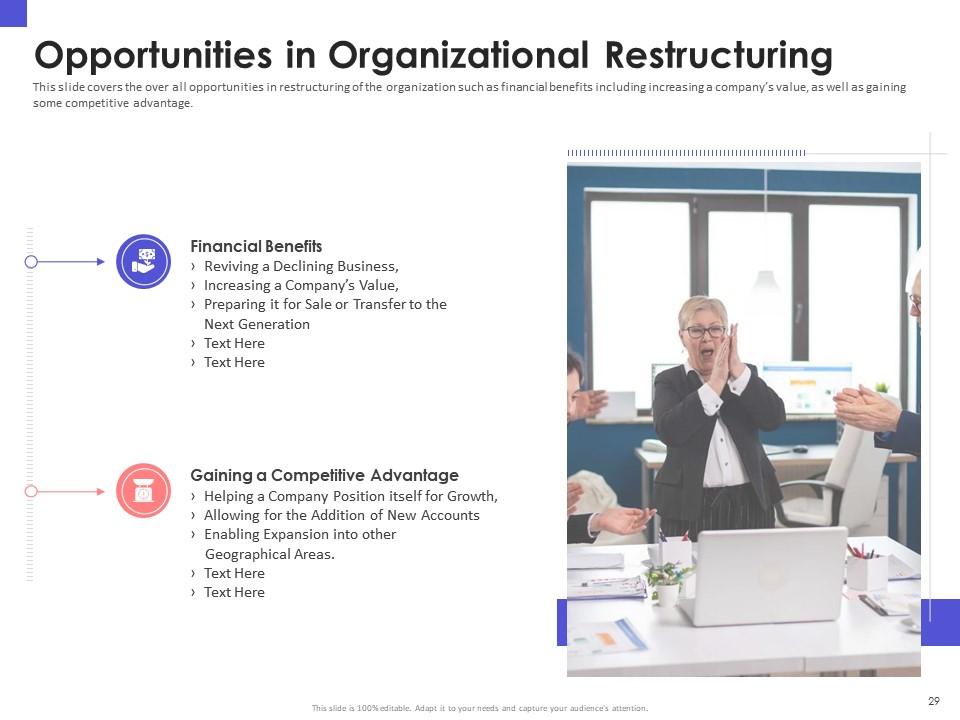
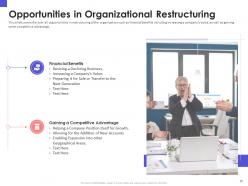
Slide 29: This slide covers the over all opportunities in restructuring of the organization such as financial benefits, etc.
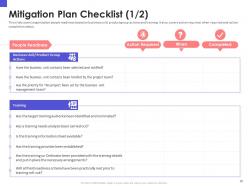
Slide 30: This slide covers organization people readiness based on business unit/ product group actions and training.
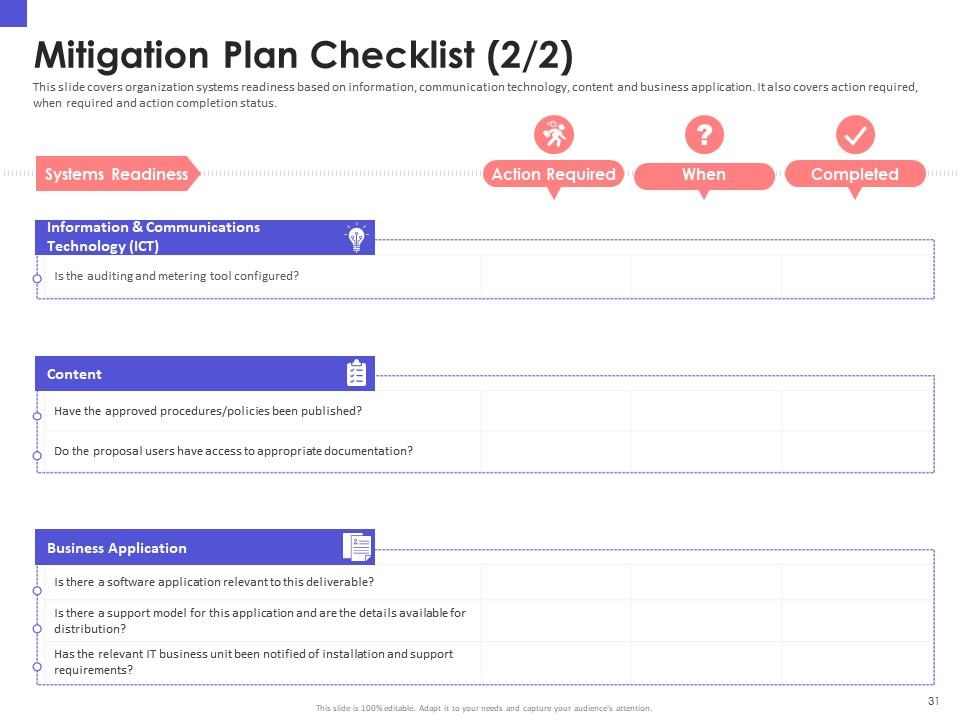
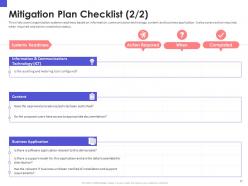
Slide 31: This slide covers organization systems readiness based on information, communication technology, content and business application.
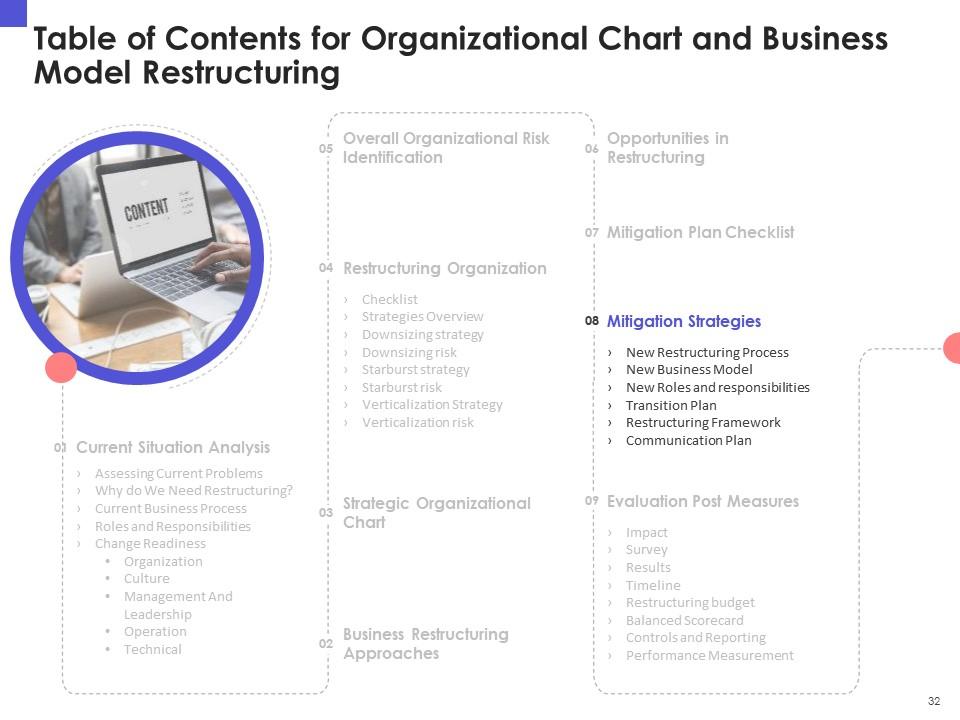
Slide 32: This slide presents title for 'Mitigation strategies'.
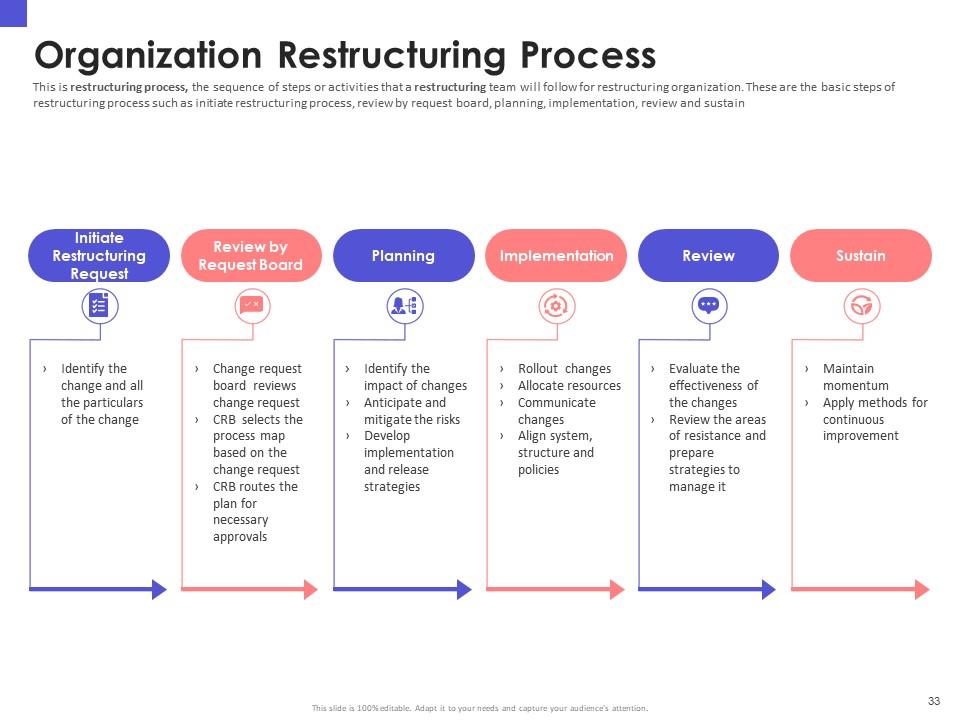
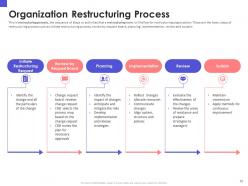
Slide 33: This slide exhibits organization restructuring process.
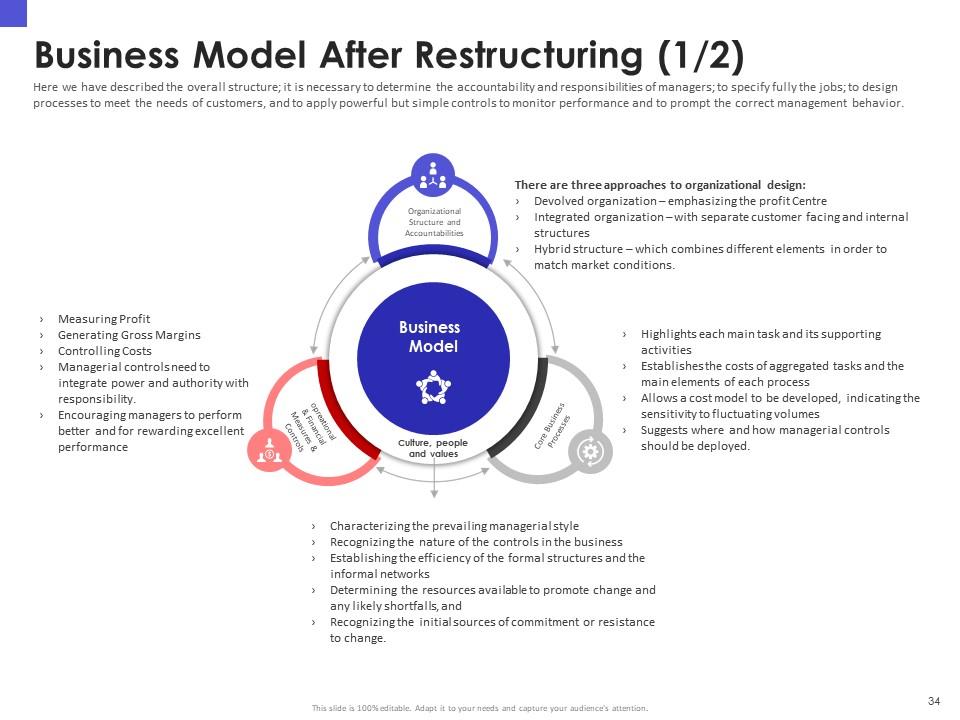
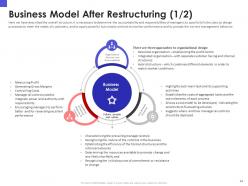
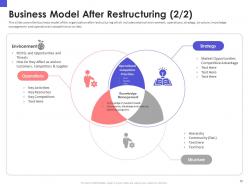
Slide 34: This slide shows business model after restructuring.
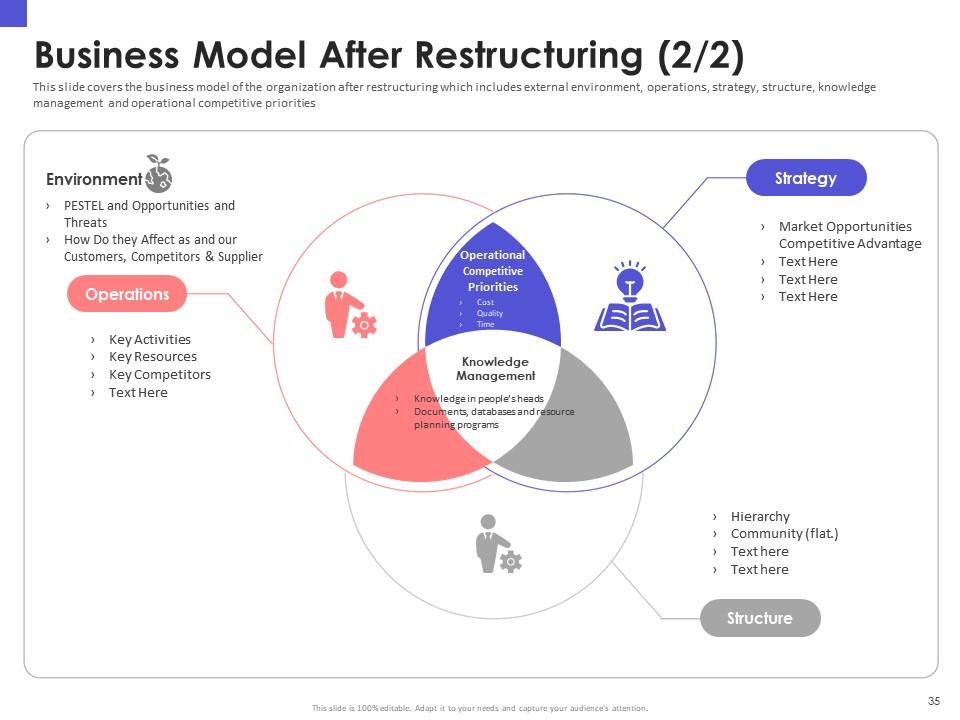
Slide 35: This slide covers continued content.
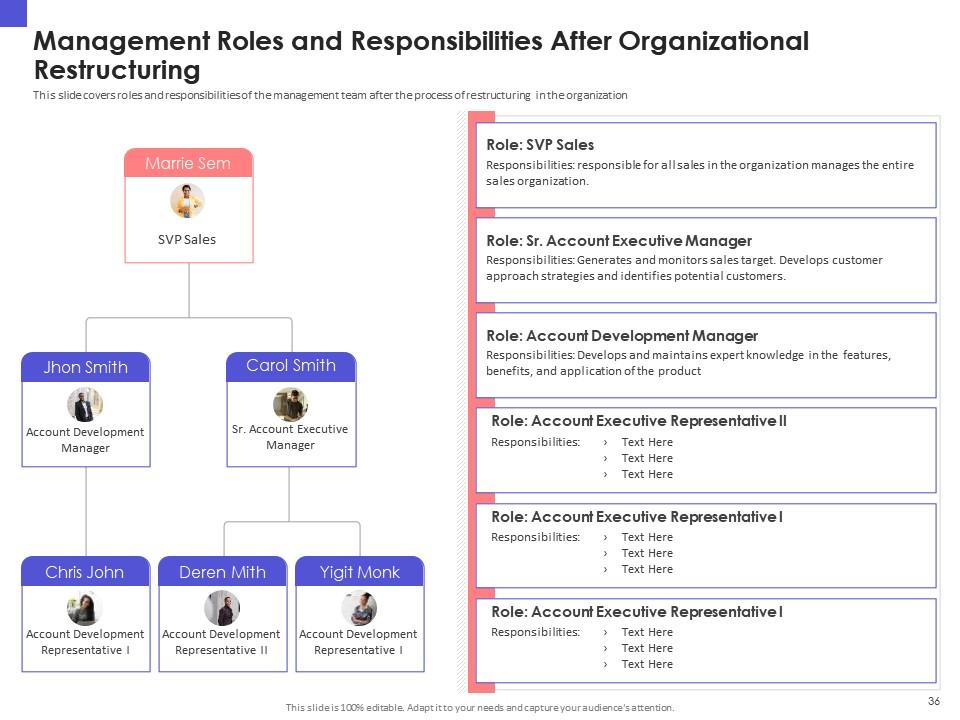
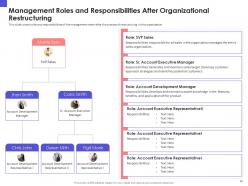
Slide 36: This slide covers roles and responsibilities of the management team after the process of restructuring in the organization.
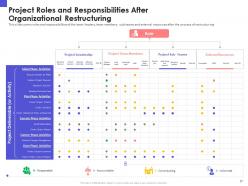
Slide 37: This slide covers roles and responsibilities of the team leaders, team members, sub-teams, etc.
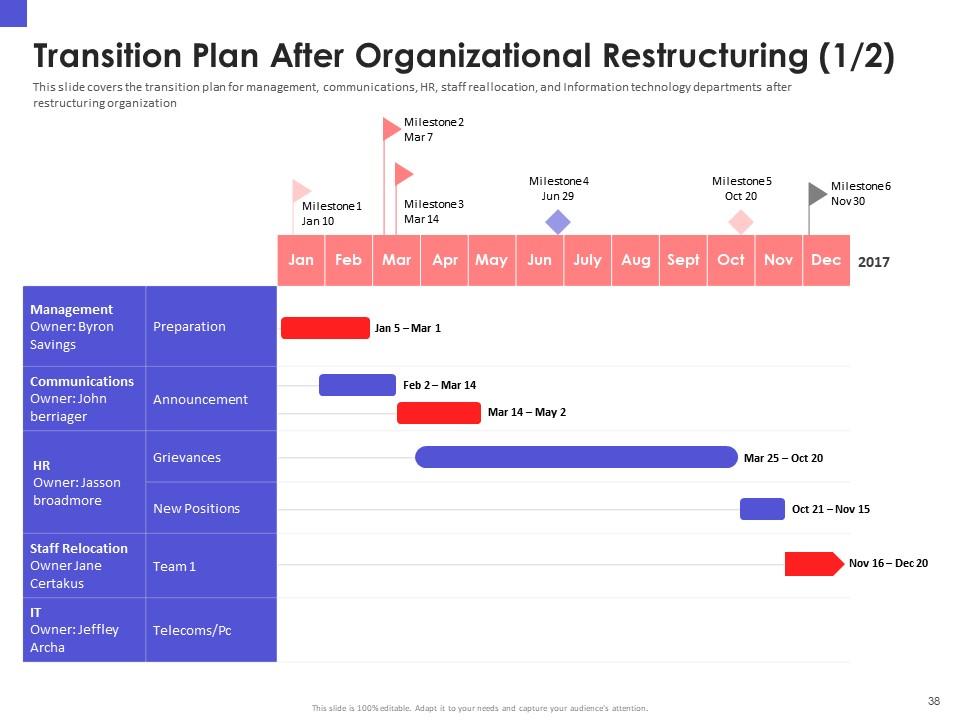
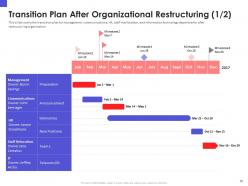
Slide 38: This slide covers the transition plan for management, communications, HR, staff reallocation, etc.
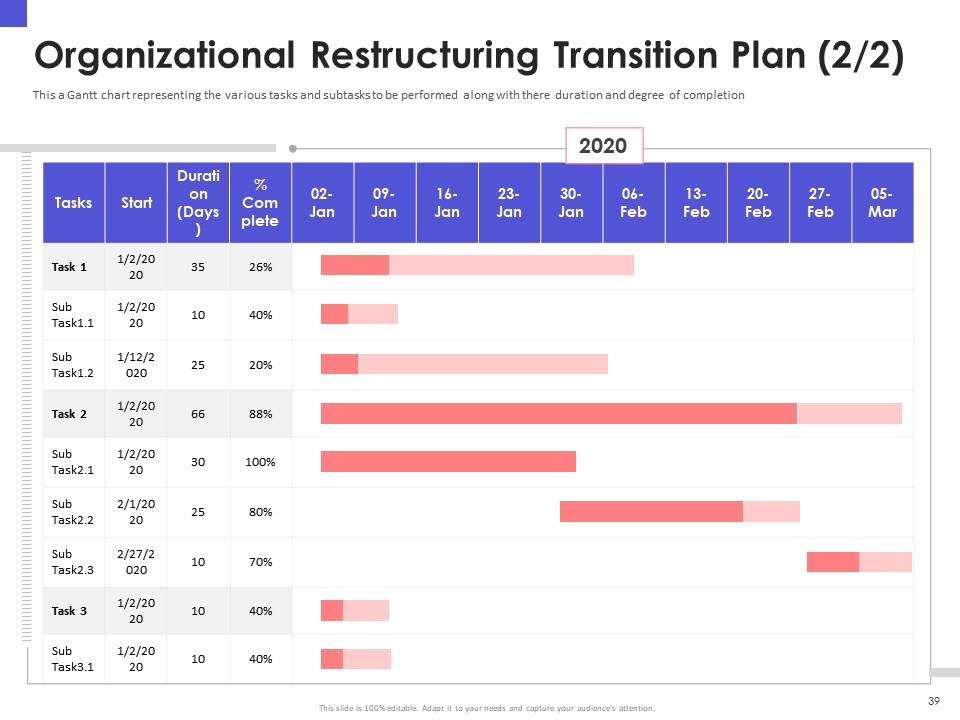
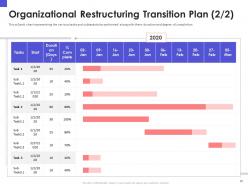
Slide 39: This slide displays Gantt chart representing the various tasks and subtasks to be performed.
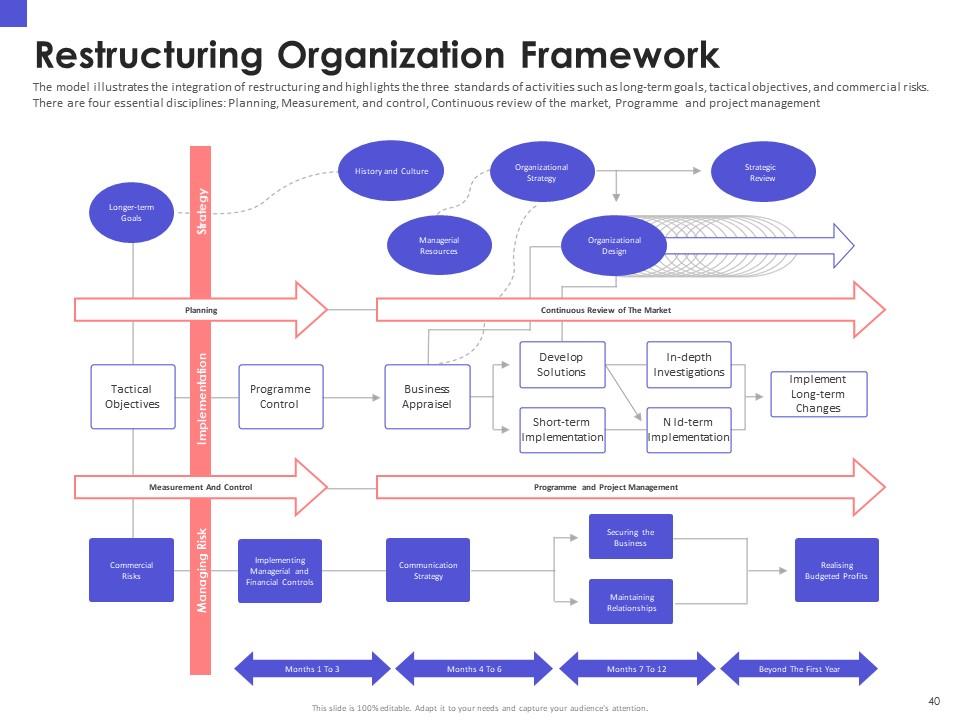
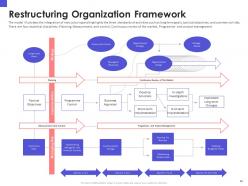
Slide 40: This slide highlights 'Restructuring Organization Framework'.
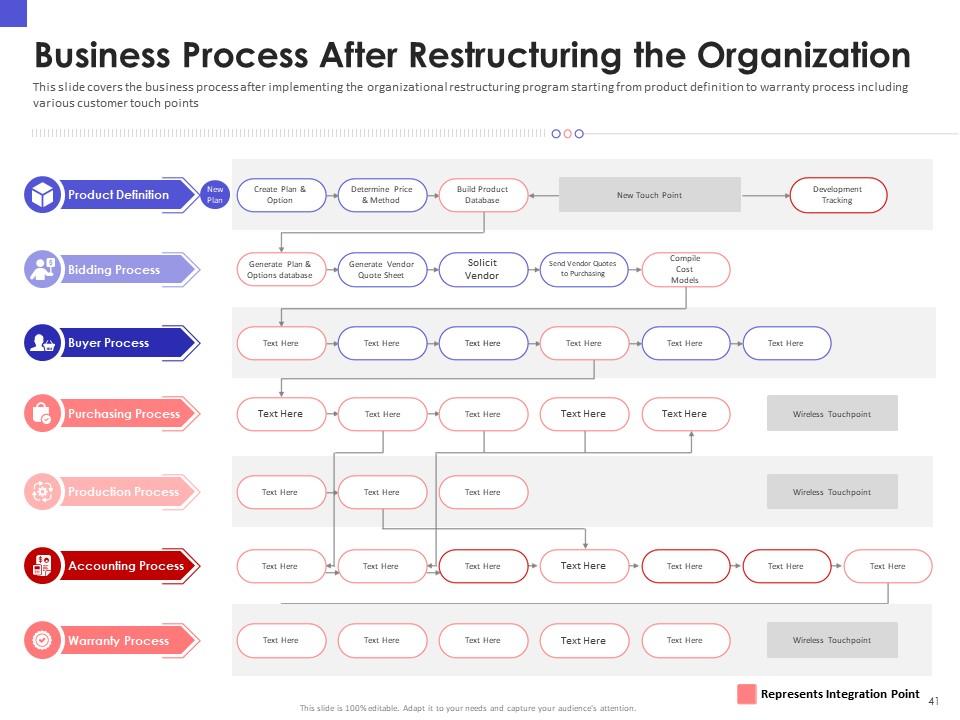
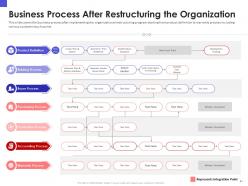
Slide 41: This slide covers the business process after implementing the organizational restructuring program.
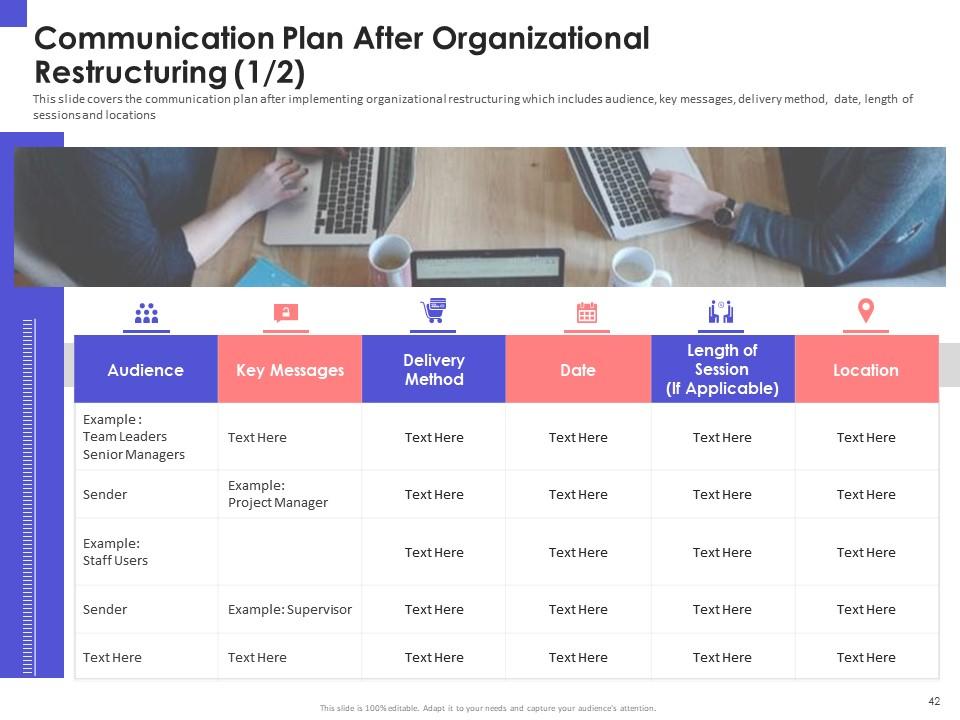
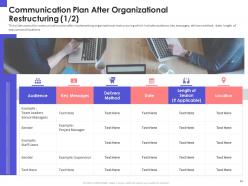
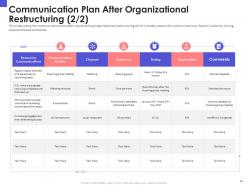
Slide 42: This slide covers the communication plan after implementing organizational restructuring which includes audience, etc.
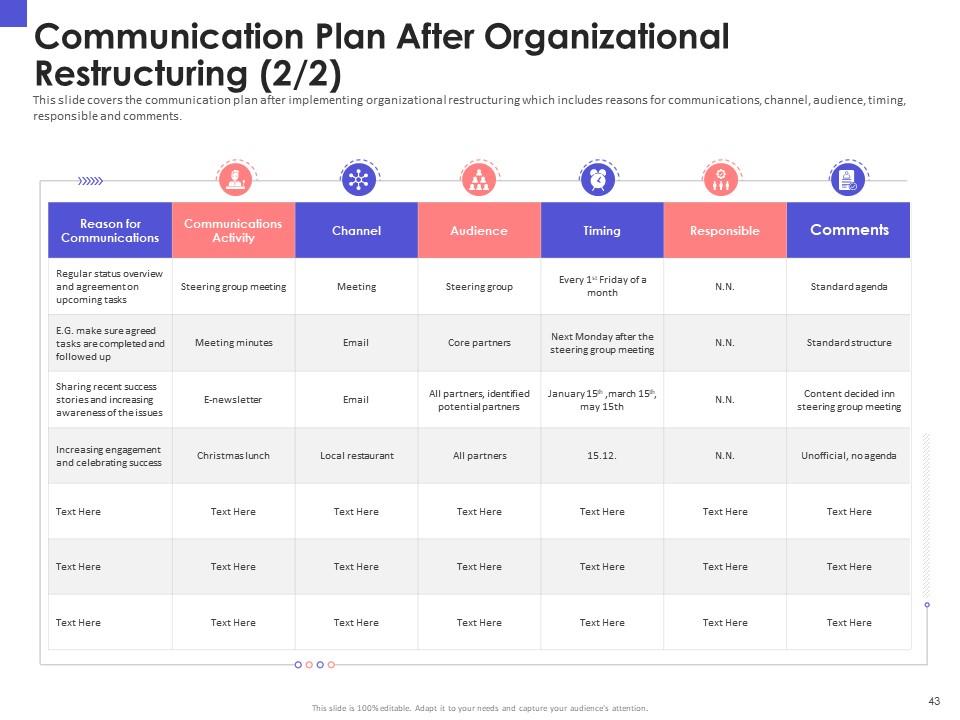
Slide 43: This slide presents continued content.
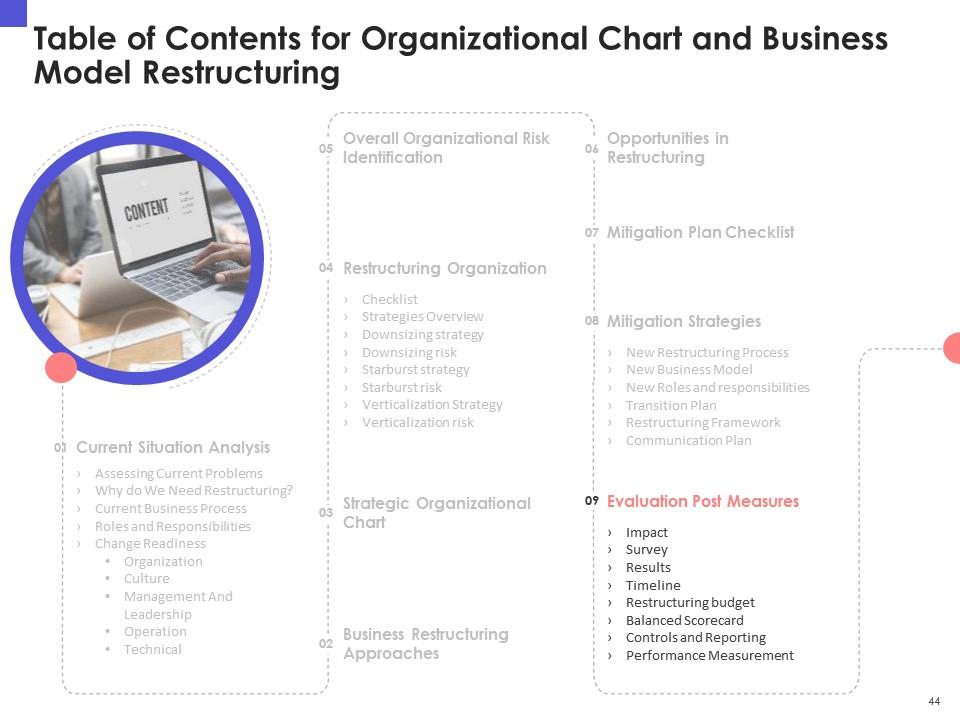
Slide 44: This slide exhibits title for 'Evaluation post measures'.
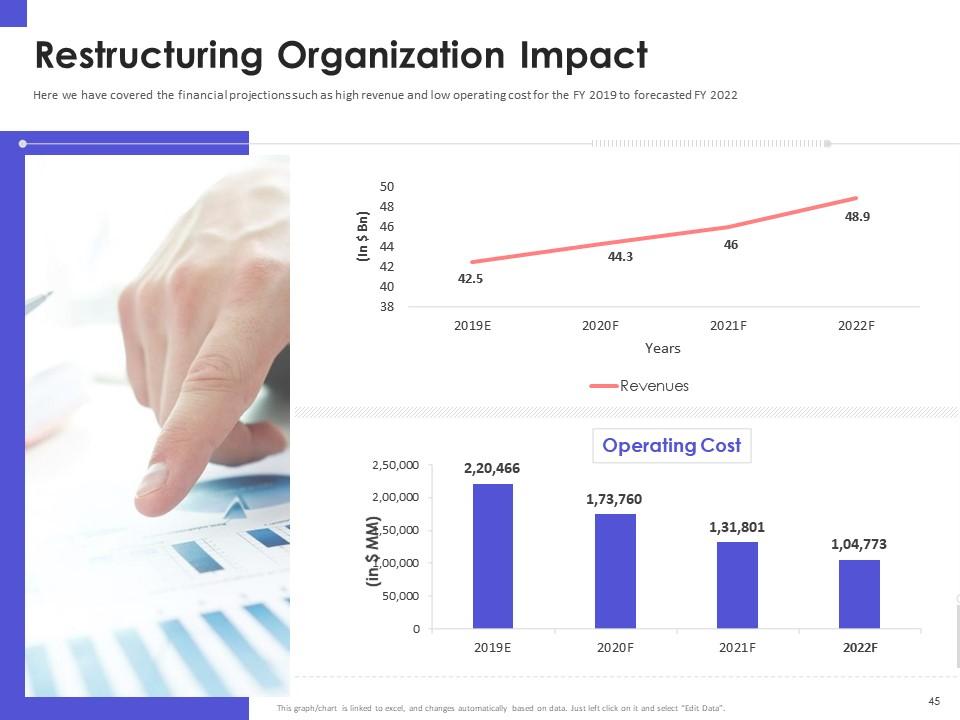
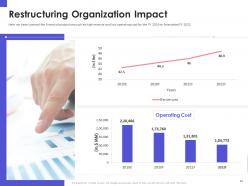
Slide 45: This slide shows 'Restructuring Organization Impact'.
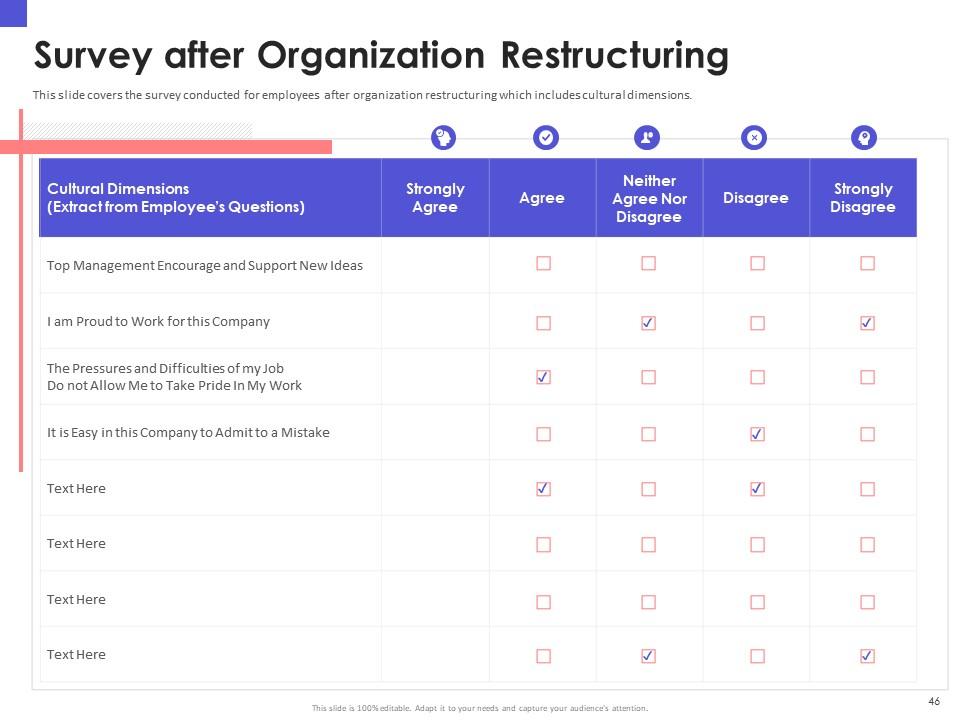
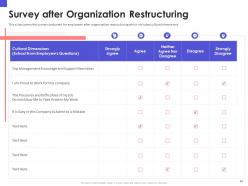
Slide 46: This slide covers the survey conducted for employees after organization restructuring which includes cultural dimensions.
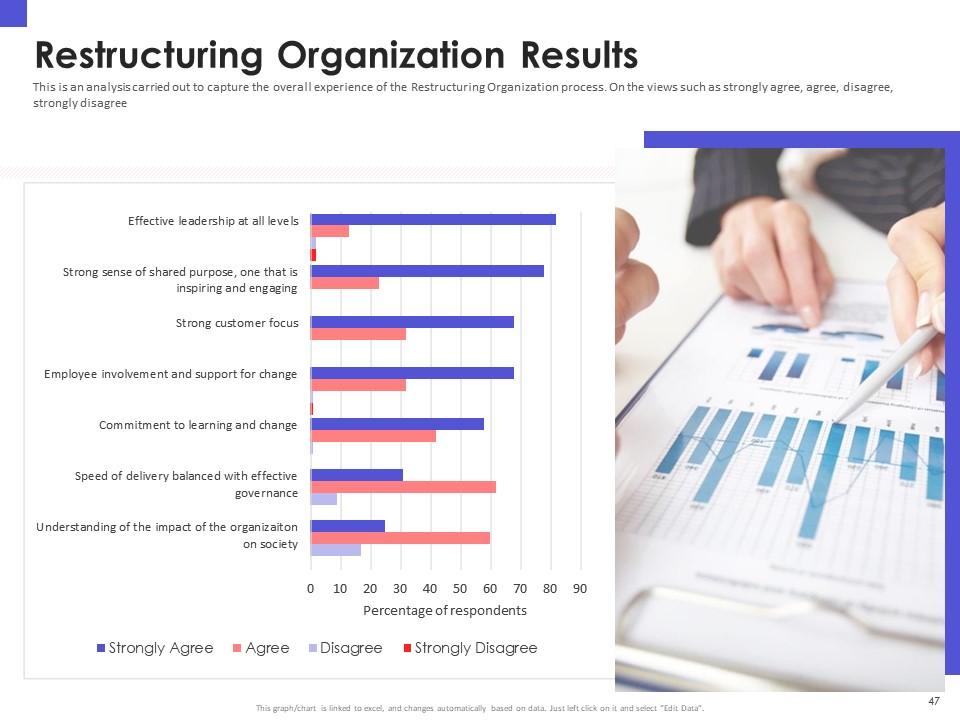
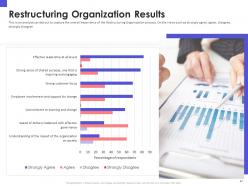
Slide 47: This slide depicts 'Restructuring Organization Results'.
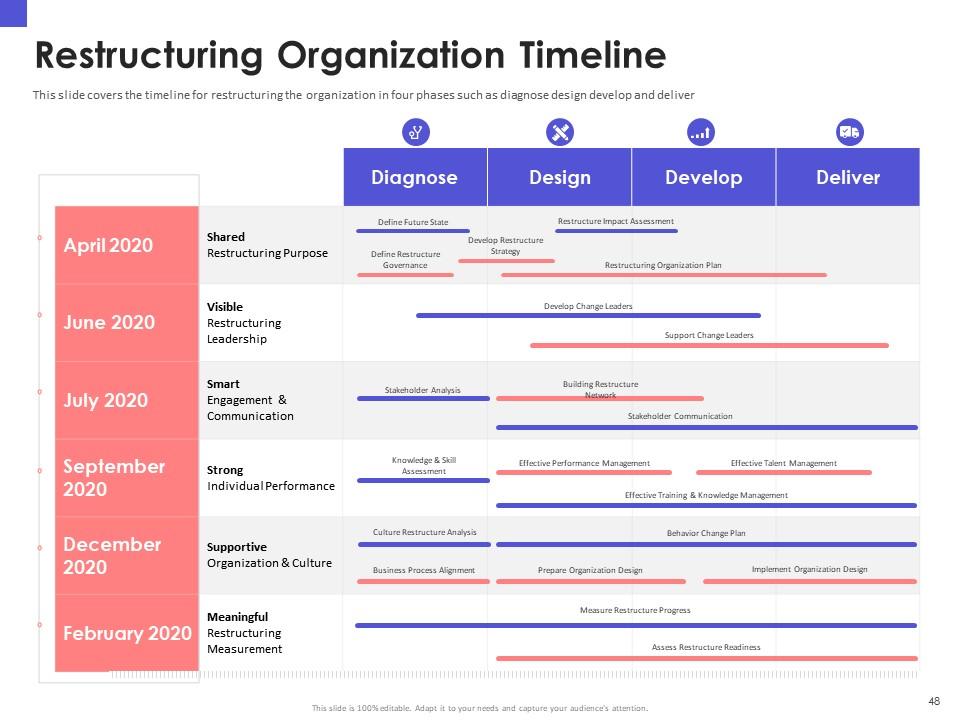
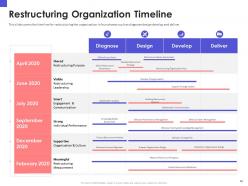
Slide 48: This slide covers the timeline for restructuring the organization in four phases.
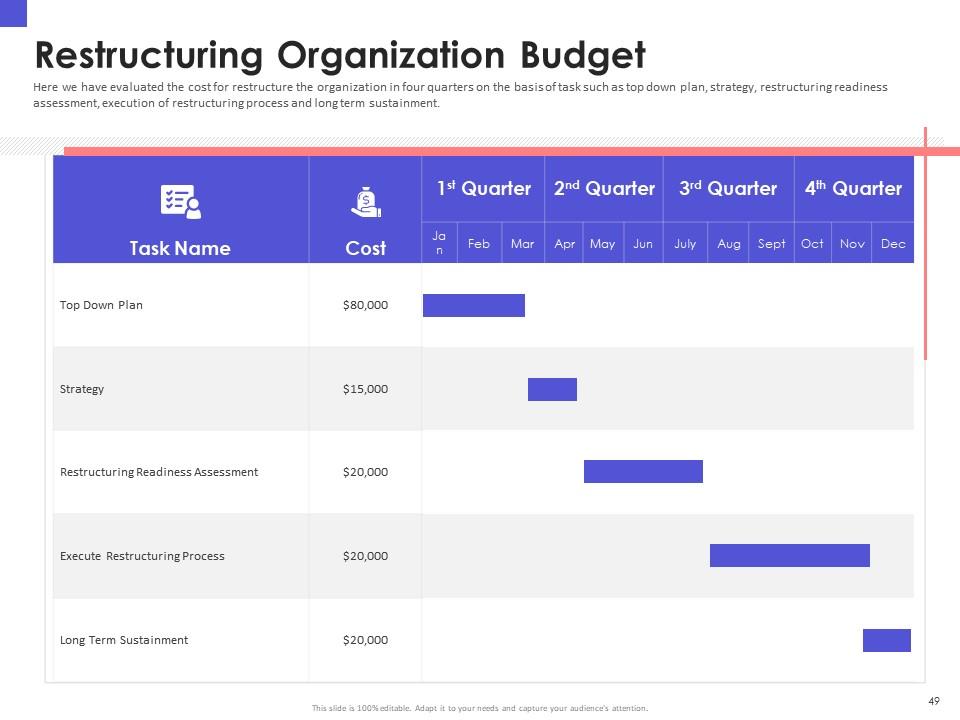
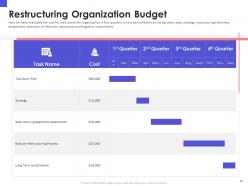
Slide 49: This slide illustrates 'Restructuring Organization Budget'.
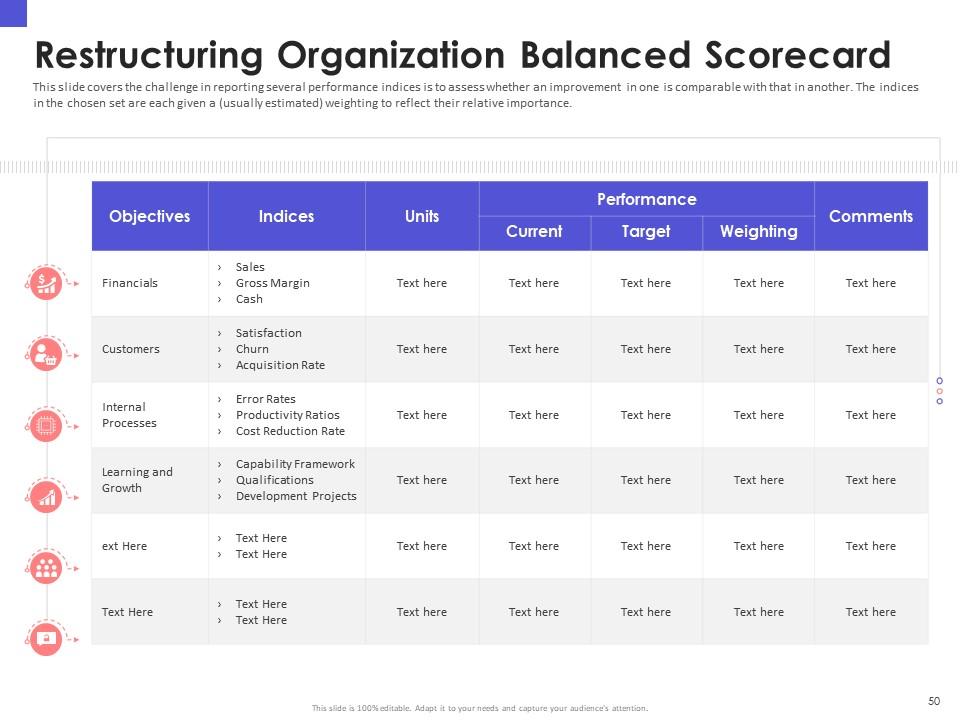
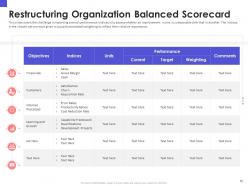
Slide 50: This slide covers the challenge in reporting several performance indices.
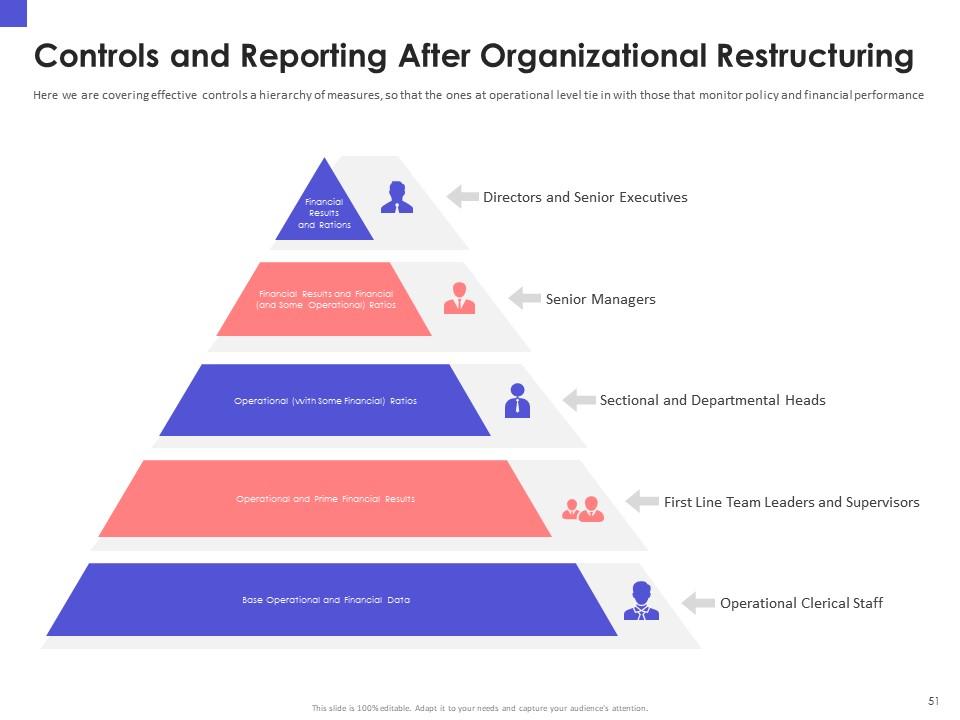
Slide 51: This slide exhibits 'Controls and Reporting After Organizational Restructuring'.
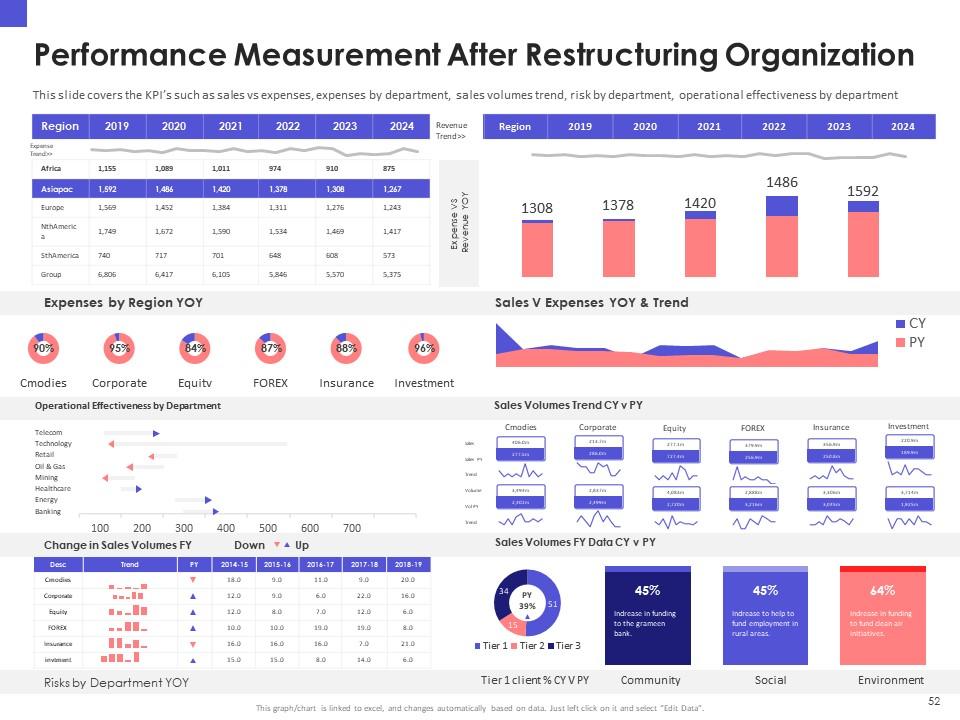
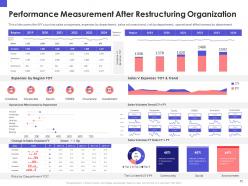
Slide 52: This slide covers the KPI’s such as sales vs expenses, expenses by department, sales volumes trend, etc.
Slide 53: This is the icons slide.
Slide 54: This slide presents title for additional slides.
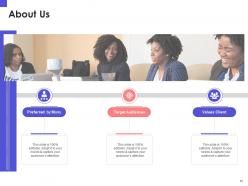
Slide 55: This slide shows about your company, target audience and its client's values.
Slide 56: This slide exhibits goals.
Slide 57: This slide shows roadmap.
Slide 58: This slide shows details of team members like name, designation, etc.
Slide 59: This slide exhibits yearly timeline.
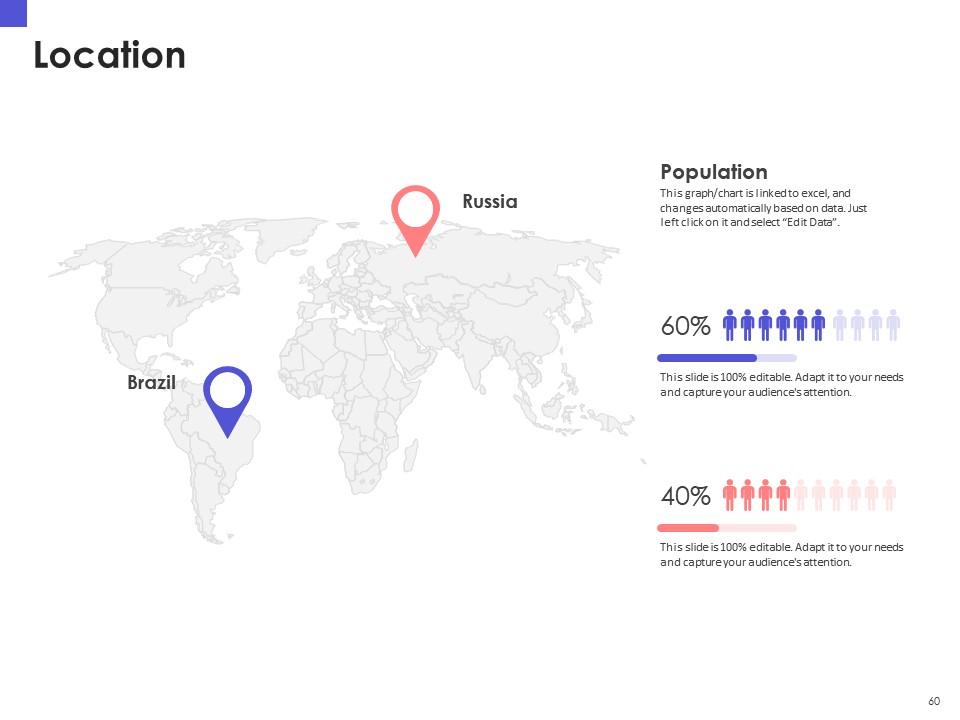
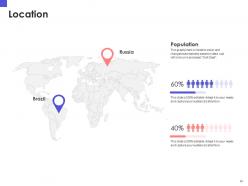
Slide 60: This slide shows location of company in world map.
Slide 61: This slide displays puzzle.
Slide 62: This slide depicts posts for past experiences of clients.
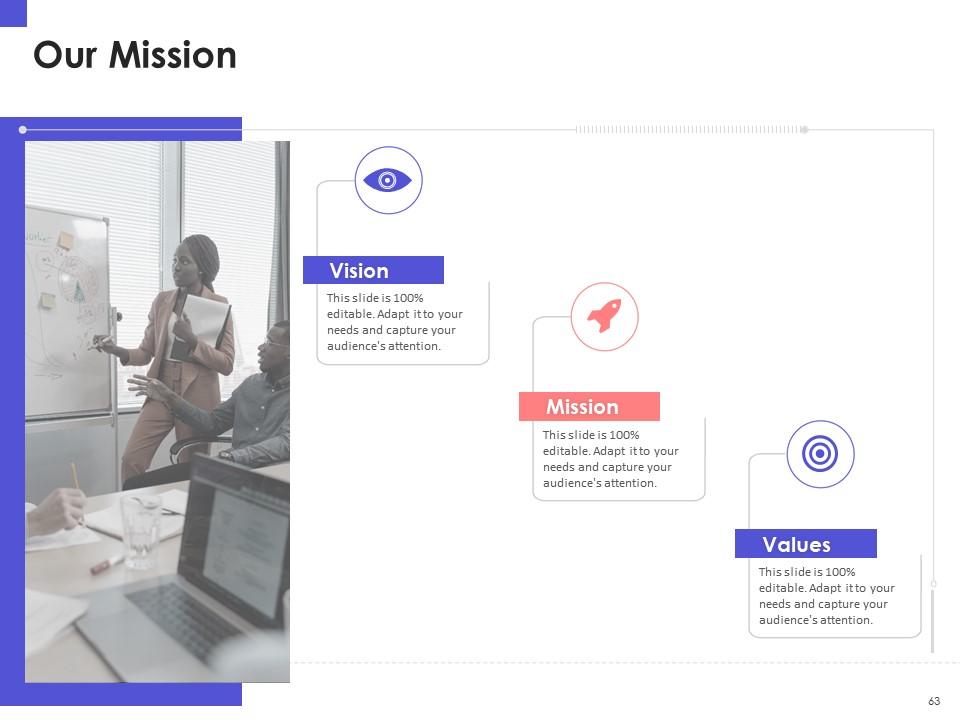
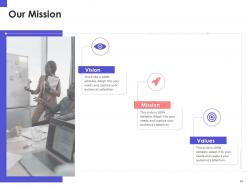
Slide 63: This slide presents your company's vision, mission and goals.
Slide 64: This is thank you slide & contains contact details of company like office address, phone no., etc.
Organizational chart and business model restructuring powerpoint presentation slides with all 64 slides:
Use our Organizational Chart And Business Model Restructuring Powerpoint Presentation Slides to effectively help you save your valuable time. They are readymade to fit into any presentation structure.
-
Great quality product.
-
Perfect template with attractive color combination.
-
Thanks for all your great templates they have saved me lots of time and accelerate my presentations. Great product, keep them up!
