


Organizational planning powerpoint presentation slides




Try Before you Buy Download Free Sample Product
 Impress Your
 Audience
 100%
100% Editable
 Save Hours
 of Time


Determine the organizational structure and design with the help of Organizational Planning PowerPoint Presentation Slides. Showcase various levels of company leadership hierarchy which assist in setting goals, monitoring results, and building a strong company. Utilize our content-ready organization management PPT slide deck and depict the current situation to analyze problem areas and company performance indicators. Effectively discuss the objectives of the management with the present level and target level task responsibilities. You can present an organizational development action plan based on themes like values and culture, people, structure, and system. This business planning PPT slideshow covers processes for the development of organizations with directions and tools to be used. We have also listed management styles with their features and their impact on organization and success rate. Also, management skills training with employees name, goals of training, need for training, and estimated cost. Furthermore, these organizational framework PPT visuals cover topics like leadership and control, communication at the workplace, work culture improvement plan, etc. Also depict the role of HR consulting in redesigning organizational structure, the role of team members, etc. by downloading ready-to-use organization structure PowerPoint infographics.
People who downloaded this PowerPoint presentation also viewed the following :
Content of this Powerpoint Presentation
Slide 1: This slide introduces Organizational Planning. State your Company name and begin.
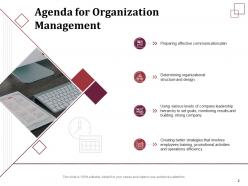
Slide 2: This slide displays Agenda for Organization Management
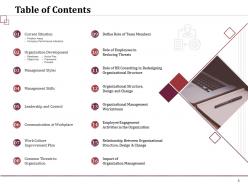
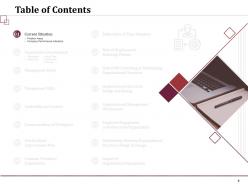
Slide 3: This slide displays Table of Contents.
Slide 4: This slide displays Table of Contents.
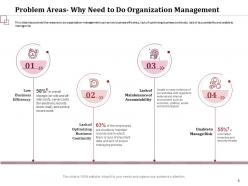
Slide 5: This slide has covered the reasons to do organization management such as low business efficiency, lack of optimizing business continuity, lack of accountability and unable to manage risk
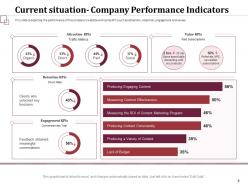
Slide 6: This slide is depicting the performance of the company's website with some KPI’s such as attraction, retention, engagement and values
Slide 7: This slide depicts Table of Contents.
Slide 8: In this slide we have covered the organization readiness criteria for development process and marked on the scale of 1 which is disagree to 5 agree
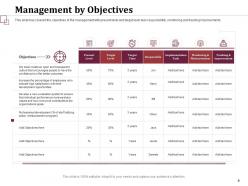
Slide 9: This slide has covered the objectives of the management with present level and target level task responsibility, monitoring and tracking improvements
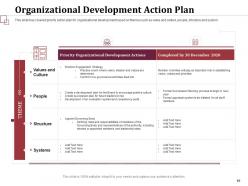
Slide 10: This slide has covered priority action plan for organizational development based on themes such as value and culture, people, structure and system
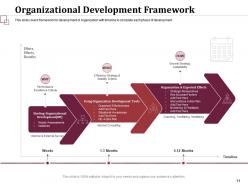
Slide 11: This slide covers framework for development of organization with timeline to complete each phase of development
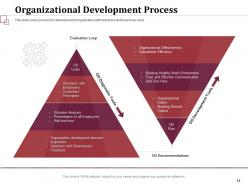
Slide 12: This slide covers process for development of organization with directions and tools to be used
Slide 13: This slide displays Table of Contents.
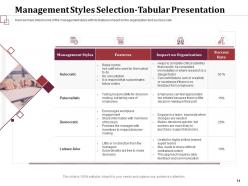
Slide 14: This slide shows some of the management styles with its features impact on the organization and success rate
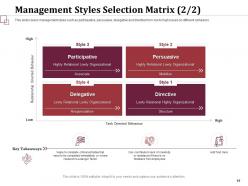
Slide 15: This slide covers management styles such as participative, persuasive, delegative and directive from low to high based on different behaviors
Slide 16: This slide covers management styles such as participative, persuasive, delegative and directive from low to high based on different behaviors
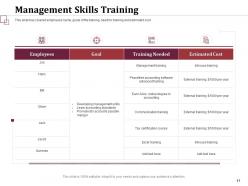
Slide 17: This slide has covered employees name, goals of the training, need for training and estimated cost
Slide 18: This slide displays Table of Contents.
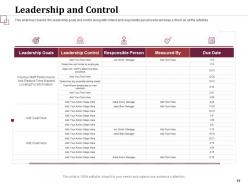
Slide 19: This slide has covered the leadership goals and control along with criteria and responsible persons who will keep a check on all the activities
Slide 20: Here we have covered the organization communication plan which includes reasons for communication, activity, channels, timing’s, audience and responsible person
Slide 21: This slide has covered the organization’s cultural improvement plan for the employees such as supportive management, growth opportunity and trust in leadership
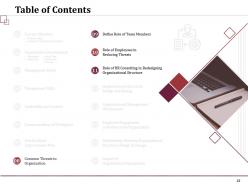
Slide 22: This slide displays Table of Contents.
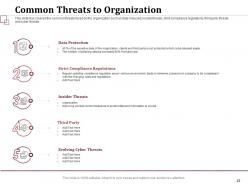
Slide 23: This slide has covered the common threats faced by the organization such as data misused, insider threats, strict compliance regulations, third party threats and cyber threats
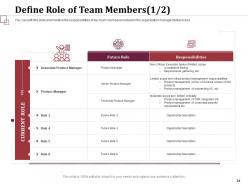
Slide 24: This slide mentions the responsibilities of key team members involved in the organization management process
Slide 25: This slide depicts the responsibilities of key team members involved in the change management process
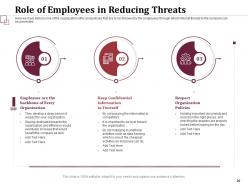
Slide 26: This slide shows organization ethic and policies that are to be followed by the employees through which internal threats to the company can be prevented
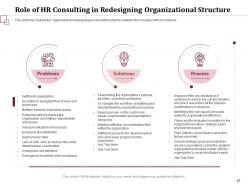
Slide 27: This slide has covered the organizational redesigning process with problems related to the company with its solutions
Slide 28: This slide displays Table of Contents.
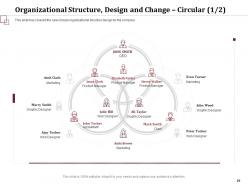
Slide 29: This slide has covered the new circular organizational structure design for the company.
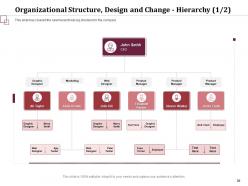
Slide 30: This slide has covered the new hierarchical org structure for the company.
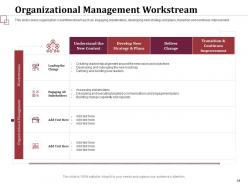
Slide 31: This slide covers organization’s workflow stream such as engaging stakeholders, developing new strategy and plans, transition and continues improvement
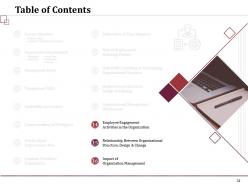
Slide 32: This slide displays Table of Contents.
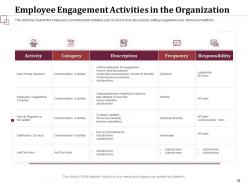
Slide 33: This slide has covered the employee’s communication activities such as face to face discussions, inviting suggestions and internal competitions
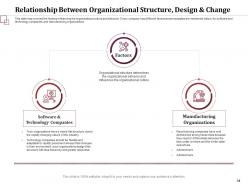
Slide 34: This slide has covered the factors influencing the organizational culture and behavior. Every company has different factors some examples are mentioned below for software and technology companies and manufacturing organizations
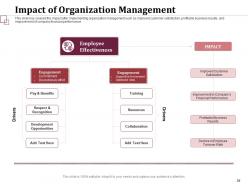
Slide 35: This slide has covered the impact after implementing organization management such as improved customer satisfaction, profitable business results, and improvement of company financial performance
Slide 36: This slide is titled as Additional Slides for moving forward.
Slide 37: This is Icons Slide for Organizational Planning.
Slide 38: This is About us slide to showcase Company specifications.
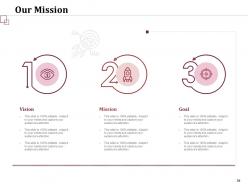
Slide 39: This is Our Mission slide with Vision and Goals.
Slide 40: This slide displays Target
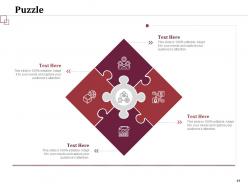
Slide 41: This slide displays Puzzle to represent entities.
Slide 42: This slide is titled as Post It Notes. Post your important notes here.
Slide 43: This is Thank you slide with Contact deatils.
Organizational planning powerpoint presentation slides with all 43 slides:
Use our Organizational Planning Powerpoint Presentation Slides to effectively help you save your valuable time. They are readymade to fit into any presentation structure.









FAQs for Organizational planning
OK so there's basically five things you need to nail down. Start with a clear vision - like, specific enough that your whole team actually gets it. Then do a real analysis of where you're at right now. Resource planning comes next, and honestly be brutally realistic about what you actually have to work with. Timeline stuff is huge too, but build in buffer time because things always take longer than you think they will. Oh and here's what most people mess up - you need regular review processes baked in from the start. Everything has to connect together though, it's not just separate boxes to check. Get your leadership on the same page first before you go crazy with detailed planning.
Your company culture totally dictates how you plan stuff. Like, some places are all about getting everyone's input and brainstorming together. Others? The boss decides everything from the top. Risk-averse cultures create these super detailed plans (honestly sometimes that's smart though). But if you're at an innovative place, you'll probably leave room for experimenting and changing direction. Short-term vs long-term focus depends on your culture too. The trick is figuring out if your culture's planning style actually works for what you're trying to do. Sometimes you need to fight against it a little.
SWOT analysis? Think of it as a business health check - you're mapping out Strengths, Weaknesses, Opportunities, and Threats before making any big moves. Honestly, it's one of those things that sounds boring but actually works. You'll probably find some uncomfortable truths about your weak spots (we all have them). The real trick is using what you discover to figure out which goals are realistic given your actual resources and market situation. Don't just make the four boxes and call it done though. Use it to decide which initiatives will actually make a difference instead of chasing every shiny opportunity.
Get them involved super early - like, before you've figured everything out. Map who's actually impacted (the loud ones AND the quiet ones who usually get ignored). Coffee chats work better than formal meetings, honestly. I've watched so many projects crash because people just assumed they knew what others wanted. Surveys are fine too, whatever gets people talking. Check in regularly so you catch problems while they're still fixable. Oh, and make it feel like a real conversation where their input actually matters. Way better results when people feel heard from the start.
Honestly, most people mess up by being way too vague with their goals. Like, "improve customer service" isn't a plan - it's wishful thinking. Also, don't plan alone in your office! Get the right people involved early or you'll miss obvious roadblocks. Unrealistic timelines are brutal too. I swear some managers think everything can happen overnight. And here's the thing - you can spend forever tweaking the "perfect" plan while your competitors actually do stuff. Build in regular check-ins so you can pivot when needed. Start specific, work backwards, and just... start somewhere.
Honestly, tech can handle so much of the tedious planning stuff for you. Project management tools show you what's happening in real-time instead of guessing. Those collaboration platforms cut down on meetings too - thank god. Data analytics will catch patterns you'd totally miss otherwise. AI forecasting is getting scary good at predicting resource needs. But here's the thing - don't pick tools that don't talk to each other or you'll go insane switching between dashboards. Map out what's driving you crazy first, then find specific solutions for those problems.
Honestly, you need both types of metrics or you're flying blind. Leading stuff like engagement scores and training completion rates will give you early warning signs. Revenue growth, customer satisfaction, retention - those lagging indicators show what actually happened. Here's the thing though - don't go crazy tracking everything. I've seen people drown in spreadsheets and miss the forest for the trees. Pick maybe 5-7 metrics that actually matter for your goals. Review monthly. Make sure someone owns each one so there's accountability. Otherwise you're just collecting data instead of fixing problems.
Honestly? Twice a year minimum. I know that sounds like a lot, but things move crazy fast now. Big market shifts or team changes mean you gotta pull those plans out early anyway. Can't tell you how many companies I've watched stick to some strategy they made 8 months ago that's already irrelevant. Your customers aren't the same, your team probably isn't either - why would your plans be? Just throw it on your calendar every 6 months like it's any other important meeting. Trust me on this one.
So instead of putting all your eggs in one basket, scenarios let you plan for different outcomes. Map out your best case, worst case, and what'll probably happen. Honestly, I think most people skip the worst-case planning and regret it later. It's like checking three routes before a road trip - you're not locked into one path. This way you catch warning signs early when things start going sideways. Your plans stay flexible instead of falling apart at the first surprise. Just figure out what you're most uncertain about and build your scenarios around those big question marks.
Dude, this is actually super important. When your team knows how their work connects to company goals, everything just clicks better. I've watched companies where people had zero clue why they were doing certain tasks - total mess. Your employees get way more motivated when they see the bigger picture. Performance reviews become less weird too since everyone's on the same page about what matters. Short version: map out how each person's main responsibilities tie back to your strategic goals. Makes such a difference, honestly. Oh and it stops people from wasting time on random stuff that doesn't actually help the business.
Don't wait until something breaks to think about what could go wrong. Build risk planning right into your regular project phases from day one. During brainstorming sessions, spend time identifying what might derail things, then actually budget time and money for those scenarios. I swear, the number of teams I've watched panic over risks they totally saw coming but never planned for... it's wild. Assign someone to own each risk and create backup plans alongside your normal milestones. Make it a standard topic in every planning meeting. A basic risk matrix helps keep everyone on the same page too.
Honestly, start with Miro or Mural for the visual stuff - their sticky note features are addictive once you get going. You'll need something for timelines too, so Microsoft Project or Asana work great for tracking who's doing what when. Notion's my personal favorite for the actual planning docs since you can throw everything in there - databases, notes, templates, whatever. Oh and Lucidchart makes really clean org charts if that's your thing. Don't go crazy buying everything at once though. Pick one visual tool and one project tracker first, then see what else you actually need.
Look, external stuff will mess with your plans no matter what - that's just reality. Market shifts change where you put your money and what becomes urgent. Regulations can tank entire projects overnight (honestly the worst). AI's a perfect example - companies are losing their minds trying to catch up right now. You can't just make some rigid 5-year plan and pray it works. Build in wiggle room from day one. Set up regular check-ins and think through different "what if" scenarios. That way when things inevitably go sideways, you're not completely screwed.
Okay so first thing - get everyone on the same shared docs and communication tools. Those regular cross-team check-ins during planning? They feel totally unnecessary until they save your butt from major miscommunications later. Each team needs to see what others are doing and when stuff's due. Pick specific people who can make decisions fast without going up some ridiculous approval chain. Oh and create an environment where people actually feel safe calling out problems early - this is huge. Honestly, I'd kick off your next planning cycle with everyone in one room mapping everything out together. Way less painful than fixing it later.
Don't make D&I an add-on - weave it into your main strategy right away. I've watched companies try to tack it on later and honestly, it just falls flat every time. Start with an audit of where you're at now. Then set actual measurable goals like hiring targets or leadership programs for underrepresented folks. Budget for it properly too - can't do this stuff on goodwill alone. Give specific people ownership over these initiatives and hold them accountable for results. It's really the only way this works long-term.
-
Very unique and reliable designs.
-
Illustrative design with editable content. Exceptional value for money. Highly pleased with the product.
-
Perfect template with attractive color combination.