


Company Reorganization Process Powerpoint Presentation Slides





Try Before you Buy Download Free Sample Product
 Impress Your
 Audience
 100%
100% Editable
 Save Hours
 of Time


Reorganization of business models simplifies management reorders and removes barriers to output. Charts are prepared to improve decision-making, better organize present needs, and make the model more profitable. Check out our efficiently designed company reorganization process template to enhance communication and the decision-making process. It also gives a brief idea about simplifying management, reordering the companys organizational hierarchy, and removing barriers to productivity. This PPT can be helpful for change management officers in corporate restructuring. The outline of this template covers the organizations current situation analysis, including current business processes, roles and responsibilities, and change readiness assessment. Further, this deck includes Business Restructuring Approaches, a Strategic organizational chart, restructuring strategies, and risks associated with them. This template also covers risk identification, opportunities in reorganizing the company workflow, mitigation plans, and processes. This organizations restructuring deck includes post-implementation KPIs, surveys, timelines, and performance measurement reports. Download our 100 percent editable and customizable template by booking a free demo with our research or design team. Get access now.
People who downloaded this PowerPoint presentation also viewed the following :
Content of this Powerpoint Presentation
Slide 1: This slide display the title Company Reorganization Process.
Slide 2: This slide display Agenda of the company.
Slide 3: This slide exhibits Table of Contents.
Slide 4: This slide exhibits Table of Contents- Current Situation Analysis.
Slide 5: This slide depicts the current situation of the company covering low revenues and high operating cost.
Slide 6: This slide showcase Productivity/KPIs Below Market Standards.
Slide 7: This slide covers current business process.
Slide 8: This slide covers Problems in Current Roles and Responsibilities.
Slide 9: This slide exhibits Table of Contents- Current Situation Analysis.
Slide 10: This slide covers Organization Management & Leadership Restructuring Readiness Assessment.
Slide 11: This slide covers Organization Operational Restructuring Readiness Assessment.
Slide 12: This slide covers Organization Technical Restructuring Readiness Assessment.
Slide 13: This slide covers Organization Culture Restructuring Readiness Assessment.
Slide 14: This slide exhibits Table of Contents- Business Restructuring Approaches, Strategic Chart,Restructuring Organization.
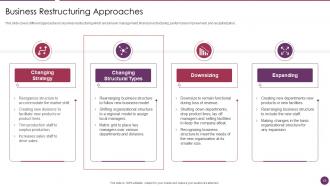
Slide 15: This slide covers different approaches to business restructuring.
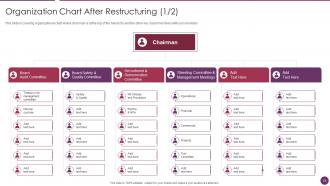
Slide 16: This slide is covering Organization Chart After Restructuring.
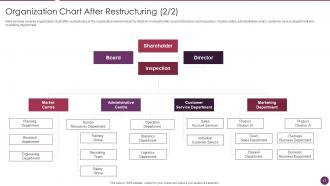
Slide 17: This slide is also covering Organization Chart After Restructuring.
Slide 18: This slide covers the checklist for restructuring organization.
Slide 19: This slide exhibits Table of Contents- Restructuring Organization.
Slide 20: This slide covers the organizational restructuring strategies.
Slide 21: This slide covers Restructuring Organization Downsizing Strategy and Outcomes.
Slide 22: This slide covers Risk Associated with Downsizing.
Slide 23: This slide covers Restructuring Organization Starburst Strategy.
Slide 24: This slide covers Risk Associated with Starburst Strategy.
Slide 25: This slide covers Restructuring Organization Verticalization Strategy.
Slide 26: This slide covers the risk associated with verticalization strategy.
Slide 27: This slide exhibits Table of Contents- Risk Identification, Opportunities in Restructuring, Mitigation Plan Checklist.
Slide 28: This slide covers Restructuring Organization Risk Identification.
Slide 29: This slide covers the over all opportunities in restructuring of the organization.
Slide 30: This slide covers Mitigation Plan Checklist.
Slide 31: This slide also covers Mitigation Plan Checklist.
Slide 32: This slide exhibits Table of Contents- Mitigation Strategies.
Slide 33: This slide covers Organization Restructuring Process.
Slide 34: This slide showcase Business Model After Restructuring.
Slide 35: This slide also covers business model of the organization.
Slide 36: This slide covers roles and responsibilities of the management team after restructuring in the organization.
Slide 37: This slide covers Project Roles and Responsibilities After Organizational Restructuring.
Slide 38: This slide covers Transition Plan After Organizational Restructuring.
Slide 39: This slide covers Organizational Restructuring Transition Plan.
Slide 40: This slide covers Restructuring Organization Framework.
Slide 41: This slide covers the business process after implementing the organizational restructuring program.
Slide 42: This slide covers the communication plan after implementing organizational restructuring.
Slide 43: This slide also covers the communication plan after implementing organizational restructuring.
Slide 44: This slide exhibits Table of Contents- Evaluation Post Measures.
Slide 45: This slide covers Restructuring Organization Impact.
Slide 46: This slide covers the survey conducted for employees after organization restructuring.
Slide 47: This is an analysis carried out to capture the overall experience of the Restructuring Organization process.
Slide 48: This slide covers the timeline for restructuring the organization.
Slide 49: This slide covers Restructuring Organization Budget.
Slide 50: This slide showcase Restructuring Organization Balanced Scorecard.
Slide 51: This slide covers Controls and Reporting After Organizational Restructuring.
Slide 52: This slide showcase Performance Measurement After Restructuring Organization.
Slide 53: This is the icons slide.
Slide 54: This slide presents title for additional slides.
Slide 55: This slide shows about your company, target audience and its client's values.
Slide 56: This slide presents your company's vision, mission and goals.
Slide 57: This slide displays Venn.
Slide 58: This slide exhibits yearly timeline of company.
Slide 59: This slide depicts 30-60-90 days plan for projects.
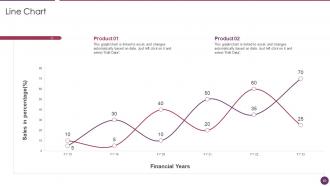
Slide 60: This slide exhibits yearly sales stacked line charts for different products.
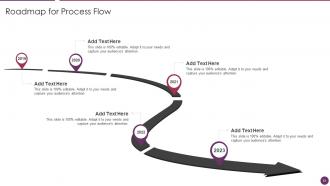
Slide 61: This slide shows roadmap of company.
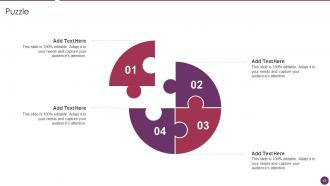
Slide 62: This slide shows puzzle for displaying elements of company.
Slide 63: This slide display Post it Notes.
Slide 64: This is thank you slide & contains contact details of company like office address, phone no., etc.
Company Reorganization Process Powerpoint Presentation Slides with all 69 slides:
Use our Company Reorganization Process Powerpoint Presentation Slides to effectively help you save your valuable time. They are readymade to fit into any presentation structure.
-

Company Reorganization Process
-
Company Reorganization Process Agenda Slide
-
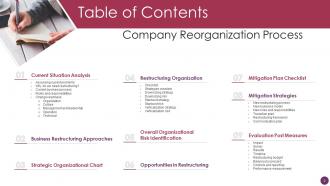
Company Reorganization Process
-
Table of Contents for Company Reorganization Process
-
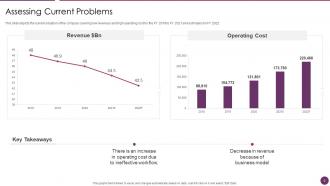
Assessing Current Problems
-
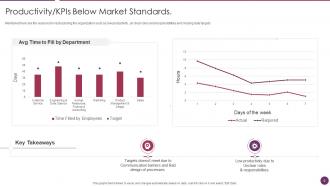
Productivity KPIs Below Market Standards
-
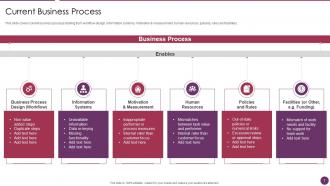
Current Business Process
-
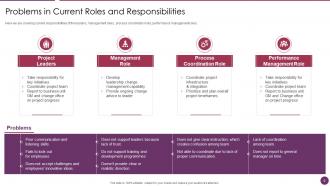
Problems in Current Roles and Responsibilities
-
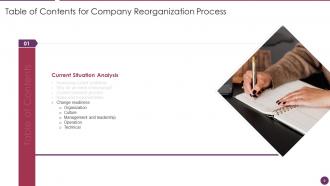
Table of Contents for Company Reorganization Process
-
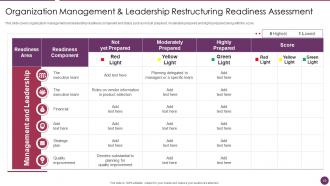
Organization Management Leadership Restructuring Readiness Assessment
-
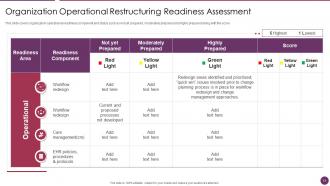
Organization Operational Restructuring Readiness Assessment
-
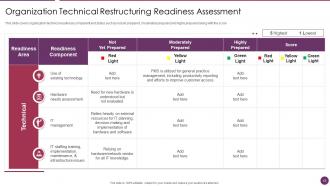
Organization Technical Restructuring Readiness Assessment
-
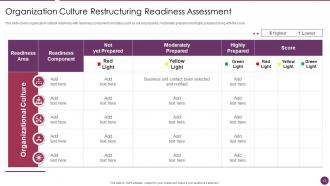
Organization Culture Restructuring Readiness Assessment
-
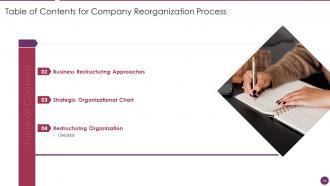
Table of Contents for Company Reorganization Process
-
Business Restructuring Approaches
-
Organization Chart After Restructuring 1 2
-
Organization Chart After Restructuring 2 2
-
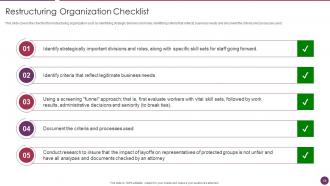
Restructuring Organization Checklist
-
Table of Contents for Company Reorganization Process
-
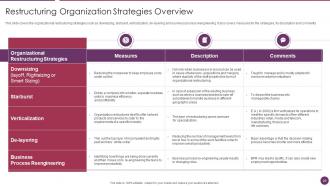
Restructuring Organization Strategies Overview
-
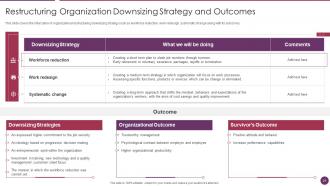
Restructuring Organization Downsizing Strategy and Outcomes
-
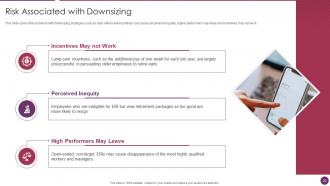
Risk Associated with Downsizing
-
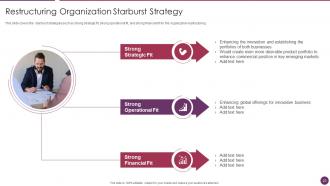
Restructuring Organization Starburst Strategy
-
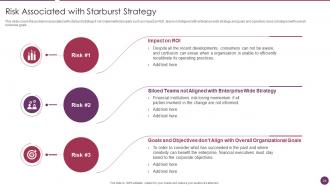
Risk Associated with Starburst Strategy
-
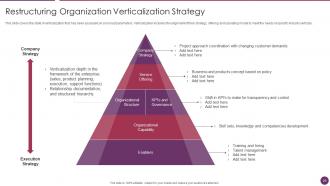
Restructuring Organization Verticalization Strategy
-
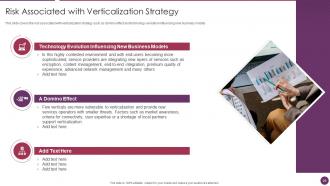
Risk Associated with Verticalization Strategy
-
Table of Contents for Company Reorganization Process
-
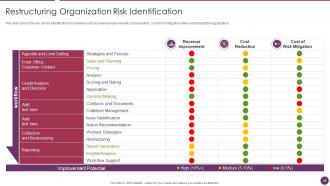
Restructuring Organization Risk Identification
-
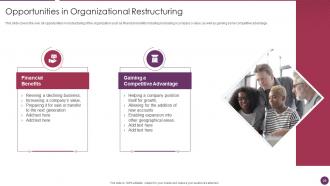
Opportunities in Organizational Restructuring
-
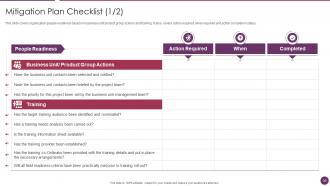
Mitigation Plan Checklist 1 2
-
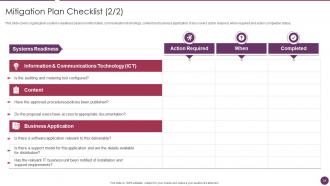
Mitigation Plan Checklist 2 2
-
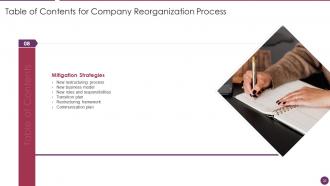
Table of Contents for Company Reorganization Process
-
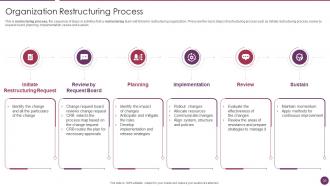
Organization Restructuring Process
-
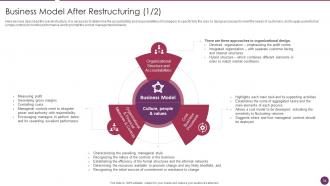
Business Model After Restructuring 1 2
-
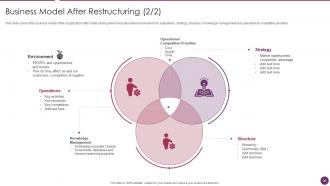
Business Model After Restructuring 2 2
-
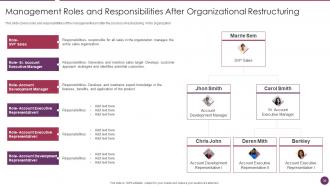
Management Roles and Responsibilities After Organizational Restructuring
-
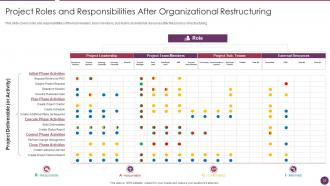
Project Roles and Responsibilities After Organizational Restructuring
-
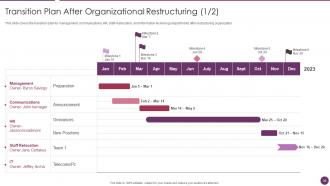
Transition Plan After Organizational Restructuring 1 2
-
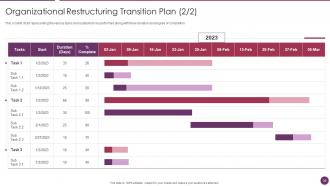
Organizational Restructuring Transition Plan 2 2
-
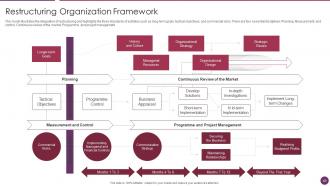
Restructuring Organization Framework
-
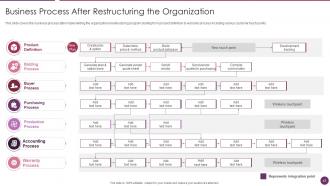
Business Process After Restructuring the Organization
-
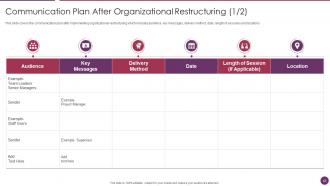
Communication Plan After Organizational Restructuring 1 2
-
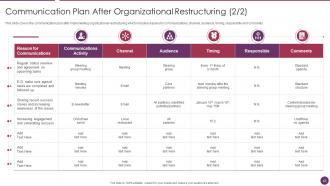
Communication Plan After Organizational Restructuring 2 2
-
Table of Contents for Company Reorganization Process
-
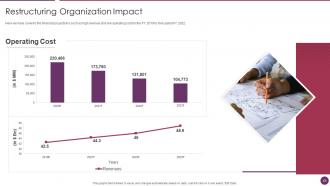
Restructuring Organization Impact
-
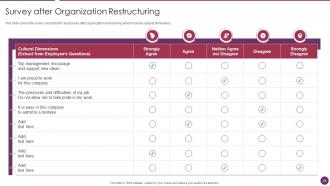
Survey after Organization Restructuring
-
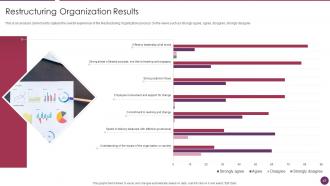
Restructuring Organization Results
-
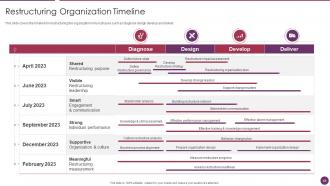
Restructuring Organization Timeline
-
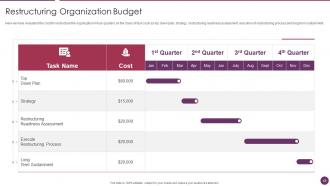
Restructuring Organization Budget
-
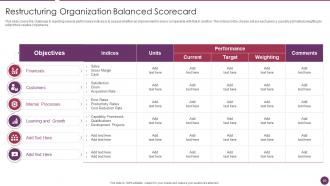
Restructuring Organization Balanced Scorecard
-
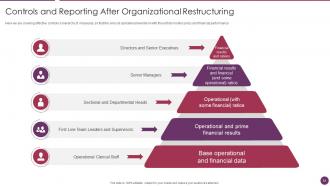
Controls and Reporting After Organizational Restructuring
-
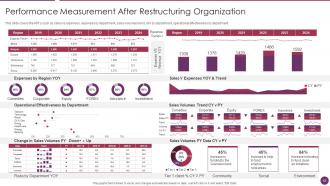
Performance Measurement After Restructuring Organization
-
Icons Slide for Company Reorganization Process
-

Additional Slides
-
About Us
-
Our Mission
-
Venn
-
Timeline
-
Company Reorganization Process
-
Line Chart
-
Roadmap for Process Flow
-
Puzzle
-
Post it Notes
-

Thank You Slide
-

-

-

-

-

FAQs for Company Reorganization Process
Ugh, there are some pretty obvious signs your company structure is broken. Decision-making takes forever? That's a big one. When departments stop communicating or people constantly say "not my job," you've got problems. Performance starts tanking, good employees bail, or honestly sometimes you just feel like everything's a mess - trust that instinct. Growth becomes impossible when your structure can't keep up. I've seen companies wait way too long to fix this stuff. Don't be one of them. Better to reorganize before things completely fall apart and everyone's miserable.
Just be brutally honest about why you're doing this - show them the real numbers, market stuff, whatever's actually driving it. People hate corporate BS and they'll call it out anyway. Run a few town halls where they can grill you with hard questions. Your managers need the same talking points too or the message gets all scrambled. Here's the thing though - you've got to show how this mess actually helps them down the road. Better job security, more chances to grow, whatever it is. Give them space to freak out a bit, then follow up with smaller team chats.
Dude, culture totally makes or breaks these things. When your team already rolls with change and trusts leadership, they'll bounce back from new structures super quick. Rigid cultures though? Good luck - even perfect reorg plans crash and burn. I swear I've watched this happen like five times now. People need to feel safe when everything's chaos, and that comes from having solid cultural foundations already built. Oh, and here's what actually works: figure out your culture situation first, then spend real time getting everyone's head in the right space before you flip everything upside down.
Honestly, employee pushback is gonna be your biggest nightmare. People freak out about change and start imagining the worst when they don't know what's happening. You'll probably see productivity tank during the switch too. Communication gaps are brutal - fill people in constantly or they'll create their own stories. Budget-wise, expect surprises, especially with system integration or if you need consultants longer than expected. Oh, and some good employees might bail if they get too anxious. The people drama usually beats technical problems hands down. Get some change champions in each team and over-explain everything, even stuff that seems obvious to you.
Look at the obvious stuff first - revenue, costs, productivity, retention rates vs before the reorg. But honestly? The real story's in employee engagement and how fast decisions get made now. Customer satisfaction matters too since that usually tanks during transitions. Survey people about role clarity and communication - if those are still a mess after a few months, you've got problems. Oh and don't wait a whole year to check how things are going. Quarterly reviews work way better for catching issues early.
Honestly, just be super upfront about everything - share what you know right away and admit when you can't talk about certain stuff yet. Those all-hands meetings are clutch because otherwise people just make up their own stories, which is never good. Try to get employees involved somehow, like asking what they think about new team setups or whatever. People hate feeling like victims of change. Oh, and don't dismiss their concerns with corporate BS - actually listen. Yeah, change sucks and they need time to wrap their heads around it. That's totally normal. Let them ask questions without rushing them through it.
Honestly, I'd map out the new structure first, then figure out who does what. Look for all the overlap that's been driving everyone crazy - there's definitely more than you realize. Fresh job descriptions are key here, don't just recycle the old ones and move people around like chess pieces. Each person needs to own actual outcomes, not just random tasks. The people actually doing the work will have way better insights than management thinks, so definitely ask them. Oh and make sure the role definitions actually match where you're headed, not where you've been.
Honestly, just talk to people early - like, way earlier than you think you need to. Get them involved through surveys or focus groups where they can actually change stuff, not just rubber-stamp your decisions. Town halls are solid but make them interactive or people zone out. The real trick? Make employees feel heard, not just "informed." I'd create mixed teams to help plan everything out - turns potential complainers into allies. Let them weigh in on how changes hit their actual day-to-day work. They know those details better than any exec does anyway.
Honestly, it all comes down to getting your leadership team on the same page first - like, obsessively aligned before you do anything else. Over-communicate during the transition. Weekly all-hands, constant messaging updates, whatever it takes. Your middle managers need to know this vision inside and out since they're the ones actually dealing with people every day. Write everything down so the message doesn't get twisted as it goes down the chain. Here's the thing though - every reorg decision has to clearly connect back to that vision. Can't explain how it fits? You're probably screwing up.
Start by mapping out what you've got now - messy as it might be. McKinsey's 7S model is actually pretty solid for this stuff, or check out Galbraith's Star Model if you want something different. RACI matrices will save your sanity when people start fighting over who decides what. For visualization, Lucidchart works great but honestly Miro does the job too and it's more fun to use. Oh, and don't forget the people side - Kotter's 8-step thing keeps you grounded there. Design your future state once you really understand where you're starting from.
Set up regular cross-department meetings and shared project channels - basically create natural ways for teams to actually talk to each other. Digital workspaces help too, where people can easily communicate and track stuff together. Here's what I'd do: start small with just one or two pilot projects instead of changing everything at once. You can always expand what actually works. Also try rotating people through short cross-department projects - builds relationships and they'll finally understand what the other teams deal with daily. Honestly, the trick is making it feel organic, not like some corporate "synergy" BS that everyone rolls their eyes at.
Honestly, the worst thing is when companies just start moving people around without explaining anything. Workers freak out because they have no clue what's happening to their jobs - makes total sense. Most places get obsessed with redrawing the org chart but totally forget about culture and how teams actually function together. Such a rookie mistake. Don't skip involving your key people in the planning either. Oh, and everything takes way longer than you think it will. Set some success metrics early so you're not just winging it. Bottom line: tell people WHY changes are happening and give them rough timelines, even if you're mostly guessing.
Honestly, you've gotta way overcommunicate right now. Uncertainty's what kills people, not the actual changes. Tell them what's happening, when, and why - even if you're still figuring stuff out. Trust me, people would rather hear bad news than sit in the dark wondering if they're getting fired. Do regular all-hands meetings and keep the updates coming. Make sure your managers can actually answer questions too. Oh, and don't wait to talk to your top performers - have those retention convos now before they start acting weird or updating their LinkedIn profiles.
Hey! Three big things to watch during reorg. Employment law stuff is huge - layoffs, transfers, WARN Act if you're cutting lots of people. Contract review comes next since restructuring can trigger those annoying change-of-control clauses or need creditor notifications. Corporate governance is the third piece - board approvals, shareholder votes, all that documentation. Honestly, I'd get legal involved yesterday and make a checklist. Way better than scrambling later when something goes sideways. Oh, and double-check if any contracts have weird restructuring triggers - found that out the hard way once.
Honestly, tech can save your butt during a reorg if you use it right. Grab something like Asana or Monday to track all the chaos - trust me, you'll lose your mind without it. Communication platforms stop that annoying game of telephone where messages get totally twisted. Your HR system can automatically update org charts and handle role changes, which is huge because doing that manually takes forever. Oh, and don't forget about digital asset management so files don't just vanish when people switch teams. Pick maybe 2-3 tools max though. Train everyone beforehand or you're screwed.
-
“One of the best experiences with SlideTeam for my presentation.Everything on time, communication is efficient and price is reasonable. All good in one place.”
-
I want to thank SlideTeam for the work that they do, especially their customer service.