

Organigramm und Umstrukturierung von Geschäftsmodellen Powerpoint-Präsentationsfolien





Try Before you Buy Download Free Sample Product
 Impress Your
Audience
 100%
Editable
 Save Hours
of Time


Die Umstrukturierung von Geschäftsmodellen vereinfacht die Neuordnung des Managements und beseitigt Hindernisse für die Ausgabe. Diagramme werden erstellt, um die Entscheidungsfindung zu verbessern, den aktuellen Bedarf besser zu organisieren und das Modell profitabler zu machen. Sehen Sie sich unsere effizient gestalteten Organigramme und die Vorlage für die Umstrukturierung von Geschäftsmodellen an, um die Kommunikation und den Entscheidungsprozess zu verbessern. Es gibt auch einen kurzen Überblick über die Vereinfachung des Managements, die Neuordnung der Organisationshierarchie des Unternehmens und die Beseitigung von Produktivitätshindernissen. Dieser Vorschlag kann für Change Management Officers bei der Unternehmensrestrukturierung hilfreich sein. Die Gliederung dieser Vorlage umfasst die aktuelle Situationsanalyse des Unternehmens, einschließlich aktueller Geschäftsprozesse, Rollen und Verantwortlichkeiten sowie die Bewertung der Bereitschaft zur Änderung. Darüber hinaus enthält dieser Vorschlag Ansätze zur Unternehmensrestrukturierung, ein strategisches Organigramm, eine Checkliste für die Bereitschaft zur Restrukturierung, Restrukturierungsstrategien und damit verbundene Risiken. Diese Vorlage umfasst auch die Identifizierung von Unternehmensrisiken, Möglichkeiten bei der Umstrukturierung des Unternehmensworkflows, Minderungspläne und Prozesse. Darüber hinaus umfasst es Schulungspläne für Mitarbeiter und neue Kommunikationspläne. Dieses Umstrukturierungsdeck für Unternehmen umfasst KPIs nach der Implementierung, Umfragen, Zeitpläne und Berichte zur Leistungsmessung. Laden Sie unsere zu 100 Prozent bearbeitbare und anpassbare Vorlage herunter, indem Sie eine kostenlose Demo bei unserem Forschungs- oder Designteam buchen. Holen Sie sich jetzt Zugang.
People who downloaded this PowerPoint presentation also viewed the following :
Inhalt dieser Powerpoint-Präsentation
Folie 1 : Diese Folie zeigt den Titel „Organisationsdiagramm und Umstrukturierung des Geschäftsmodells“ an.
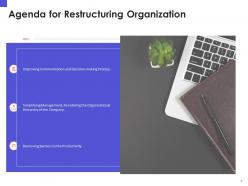
Folie 2 : Diese Folie stellt die Tagesordnung vor.
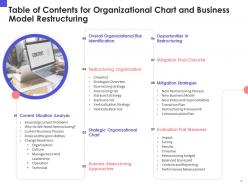
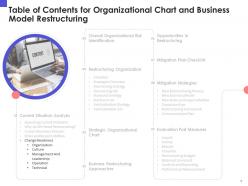
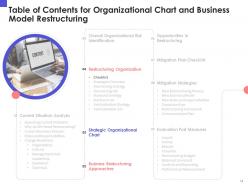
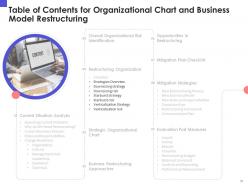
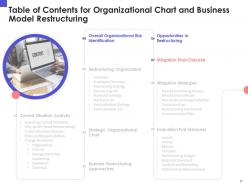
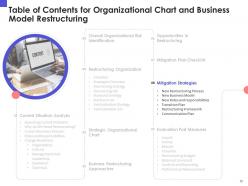
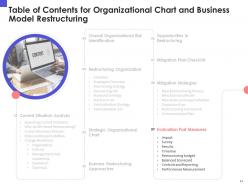
Folie 3 : Diese Folie zeigt das Inhaltsverzeichnis.
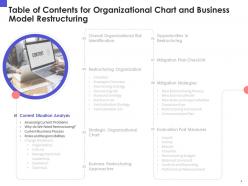
Folie 4 : Diese Folie zeigt den Titel für 'Aktuelle Situationsanalyse'.
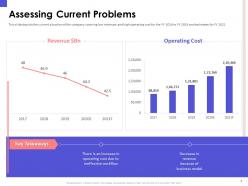
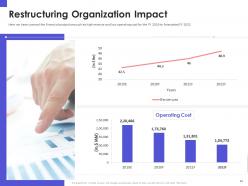
Folie 5 : Diese Folie zeigt die aktuelle Situation des Unternehmens mit niedrigen Umsätzen und hohen Betriebskosten für die GJ 2016 bis GJ 2019.
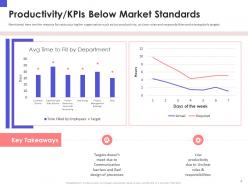
Folie 6 : Diese Folie hebt „Produktivität/KPIs unterhalb der Marktstandards“ hervor.
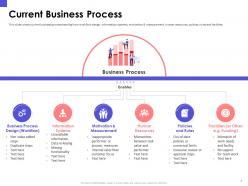
Folie 7 : Diese Folie behandelt aktuelle Geschäftsprozesse, beginnend mit Workflow-Design, Informationssystemen usw.
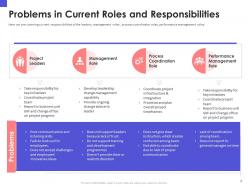
Folie 8 : Diese Folie zeigt Probleme in aktuellen Rollen und Zuständigkeiten.
Folie 9 : Diese Folie enthält den Titel „Änderungsbereitschaft“.
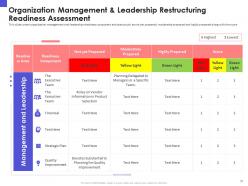
Folie 10 : Diese Folie behandelt die Komponenten und den Status des Organisationsmanagements und der Führungsbereitschaft.
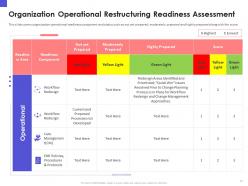
Folie 11 : Diese Folie behandelt die Betriebsbereitschaftskomponente und den Status der Organisation, z. B. noch nicht vorbereitet usw.
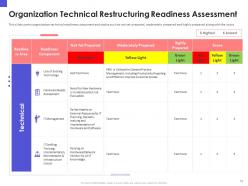
Folie 12 : Diese Folie behandelt die Komponente der technischen Bereitschaft der Organisation und den Status wie mäßig vorbereitet usw.
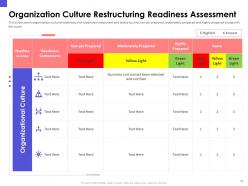
Folie 13 : Diese Folie behandelt die kulturelle Bereitschaft der Organisation mit Bereitschaftskomponente und Status.
Folie 14 : Diese Folie enthält Titel für drei Themen, die als nächstes in der Vorlage behandelt werden.
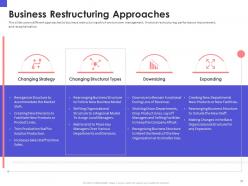
Folie 15 : Diese Folie behandelt verschiedene Ansätze zur Unternehmensumstrukturierung, wie Umsatzmanagement, Finanzrestrukturierung usw.
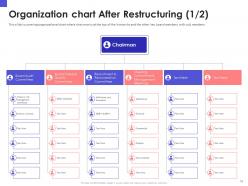
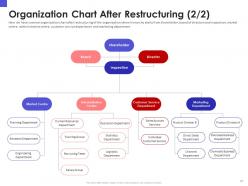
Folie 16 : Diese Folie behandelt ein Organigramm, bei dem der Vorsitzende an der Spitze der Hierarchie steht und die anderen wichtigen Vorstandsmitglieder mit Untermitgliedern.
Folie 17 : Diese Folie zeigt fortgesetzten Inhalt.
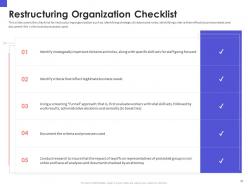
Folie 18 : Diese Folie behandelt die Checkliste für die Umstrukturierung der Organisation, wie z. B. die Identifizierung strategischer Abteilungen und Rollen usw.
Folie 19 : Diese Folie hebt den Titel für Elemente von „Organisation restrukturieren“ hervor.
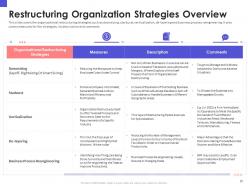
Folie 20 : Diese Folie behandelt die organisatorischen Umstrukturierungsstrategien wie Downsizing, Starburst, Vertikalisierung usw.
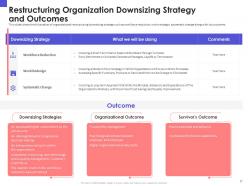
Folie 21 : Diese Folie behandelt die Verzweigung der Strategie zur Reduzierung der organisatorischen Umstrukturierung, wie z. B. Personalabbau, Neugestaltung der Arbeit usw.
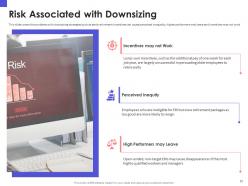
Folie 22 : Diese Folie behandelt die Probleme mit Abbaustrategien wie Anreize für den vorzeitigen Ruhestand usw.
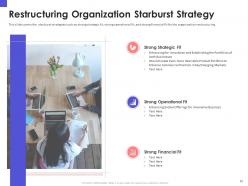
Folie 23 : Diese Folie behandelt die Starburst-Strategien wie starke strategische Anpassung, starke operative Anpassung usw.
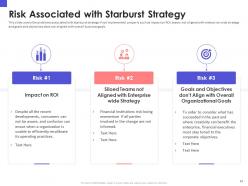
Folie 24 : Diese Folie behandelt die Probleme, die mit der Starburst-Strategie verbunden sind, wenn sie nicht richtig umgesetzt wird, wie z. B. Auswirkungen auf den ROI usw.
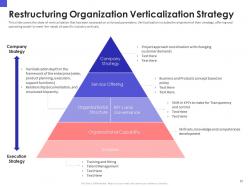
Folie 25 : Diese Folie behandelt den Stand der Vertikalisierung, der anhand von sechs allgemeinen Parametern bewertet wurde.
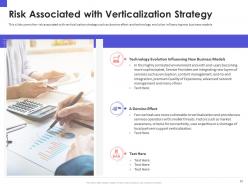
Folie 26 : Diese Folie behandelt das mit der Vertikalisierungsstrategie verbundene Risiko wie Dominoeffekt und Technologieentwicklung.
Folie 27 : Diese Folie zeigt den Titel für drei Themen an, die als nächstes in der Vorlage behandelt werden sollen.
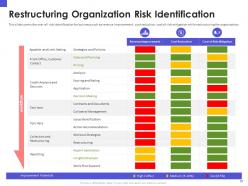
Folie 28 : Diese Folie behandelt die allgemeine Risikoidentifikation für Unternehmen wie Umsatzsteigerung, Kostensenkung usw.
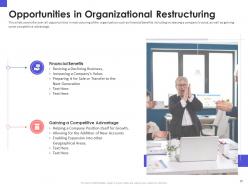
Folie 29 : Diese Folie behandelt alle Möglichkeiten der Umstrukturierung der Organisation wie finanzielle Vorteile usw.
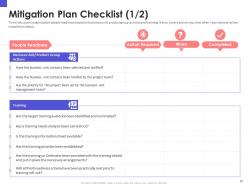
Folie 30 : Diese Folie behandelt die Bereitschaft der Mitarbeiter von Organisationen basierend auf Maßnahmen und Schulungen von Geschäftsbereichen/Produktgruppen.
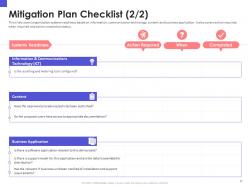
Folie 31 : Diese Folie behandelt die Bereitschaft von Organisationssystemen basierend auf Informations-, Kommunikationstechnologie, Inhalten und Geschäftsanwendungen.
Folie 32 : Diese Folie enthält den Titel für „Mitigation-Strategien“.
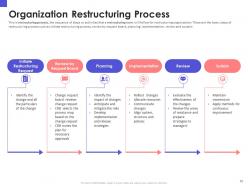
Folie 33 : Diese Folie zeigt den Umstrukturierungsprozess der Organisation.
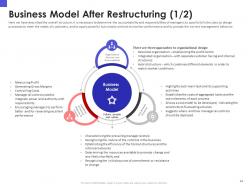
Folie 34 : Diese Folie zeigt das Geschäftsmodell nach der Umstrukturierung.
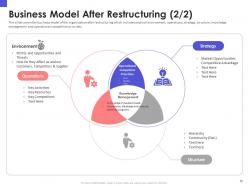
Folie 35 : Diese Folie behandelt den fortlaufenden Inhalt.
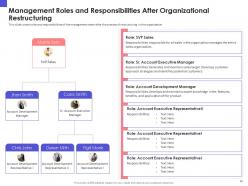
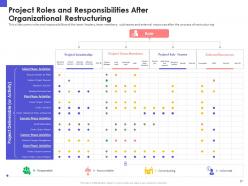
Folie 36 : Diese Folie behandelt die Rollen und Verantwortlichkeiten des Managementteams nach dem Umstrukturierungsprozess in der Organisation.
Folie 37 : Diese Folie behandelt die Rollen und Verantwortlichkeiten der Teamleiter, Teammitglieder, Unterteams usw.
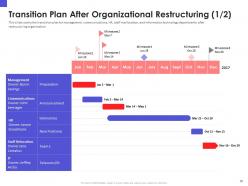
Folie 38 : Diese Folie behandelt den Übergangsplan für Management, Kommunikation, Personalwesen, Personalumverteilung usw.
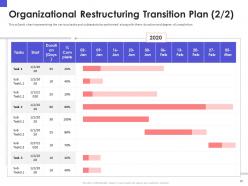
Folie 39 : Diese Folie zeigt ein Gantt-Diagramm, das die verschiedenen auszuführenden Aufgaben und Teilaufgaben darstellt.
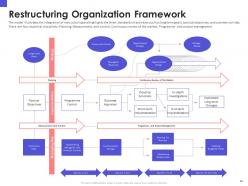
Folie 40 : Diese Folie hebt den „Rahmen für die Umstrukturierung der Organisation“ hervor.
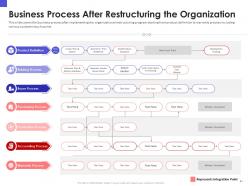
Folie 41 : Diese Folie behandelt den Geschäftsprozess nach der Umsetzung des organisatorischen Restrukturierungsprogramms.
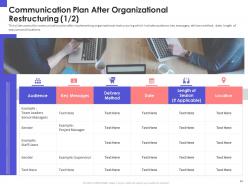
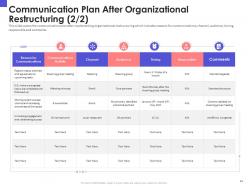
Folie 42 : Diese Folie behandelt den Kommunikationsplan nach der Umsetzung der organisatorischen Umstrukturierung, die das Publikum usw. umfasst.
Folie 43 : Diese Folie präsentiert weiterführende Inhalte.
Folie 44 : Diese Folie enthält den Titel „Bewertung nach Maßnahmen“.
Folie 45 : Diese Folie zeigt „Auswirkungen der Umstrukturierung der Organisation“.
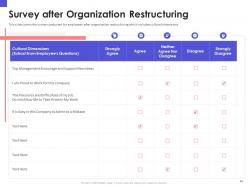
Folie 46 : Diese Folie behandelt die Befragung von Arbeitnehmern nach einer Umstrukturierung der Organisation, die kulturelle Dimensionen einschließt.
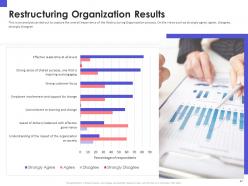
Folie 47 : Diese Folie zeigt „Ergebnisse der Umstrukturierung der Organisation“.
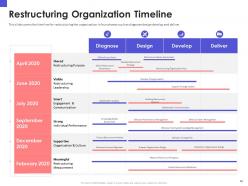
Folie 48 : Diese Folie behandelt den Zeitplan für die Umstrukturierung der Organisation in vier Phasen.
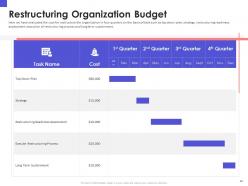
Folie 49 : Diese Folie illustriert „Restrukturierung des Organisationsbudgets“.
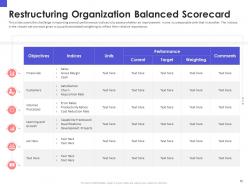
Folie 50 : Diese Folie behandelt die Herausforderung, mehrere Leistungsindizes zu melden.
Folie 51 : Diese Folie zeigt „Kontrollen und Berichterstattung nach organisatorischer Umstrukturierung“.
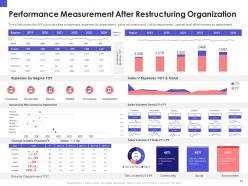
Folie 52 : Diese Folie behandelt die KPIs wie Umsatz vs. Ausgaben, Ausgaben nach Abteilung, Absatztrends usw.
Folie 53 : Dies ist die Symbolfolie.
Folie 54 : Diese Folie enthält den Titel für zusätzliche Folien.
Folie 55 : Diese Folie zeigt Ihr Unternehmen, Ihre Zielgruppe und die Werte ihrer Kunden.
Folie 56 : Diese Folie zeigt Ziele.
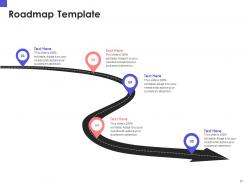
Folie 57 : Diese Folie zeigt die Roadmap.
Folie 58 : Diese Folie zeigt Details zu Teammitgliedern wie Name, Bezeichnung usw.
Folie 59 : Diese Folie zeigt die jährliche Zeitleiste.
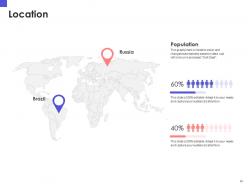
Folie 60 : Diese Folie zeigt den Standort des Unternehmens auf der Weltkarte.
Folie 61 : Diese Folie zeigt ein Puzzle.
Folie 62 : Diese Folie zeigt Beiträge zu früheren Erfahrungen von Kunden.
Folie 63 : Diese Folie stellt die Vision, Mission und Ziele Ihres Unternehmens vor.
Folie 64 : Dies ist eine Dankesfolie und enthält Kontaktdaten des Unternehmens wie Büroadresse, Telefonnummer usw.
Organizational Chart and Business Model Restructuring Powerpoint Präsentationsfolien mit allen 64 Folien:
Nutzen Sie unsere Powerpoint-Präsentationsfolien zu Organigrammen und Geschäftsmodellrestrukturierung, um Ihre wertvolle Zeit effektiv zu sparen. Sie sind vorgefertigt, um in jede Präsentationsstruktur zu passen.

FAQs for Organizational chart and business model restructuring
Honestly, watch for stuff that just won't get better no matter what you try - like revenue keeps dropping or you're missing targets constantly. Communication between teams falls apart. People start doing the same work twice because nobody knows who's supposed to handle what. Good employees bail and complain about "the way things work here" - that's huge. Your competition keeps beating you even though you have similar budgets and talent? Yeah, that stings but it's telling you something. The trick is figuring out if it's just temporary chaos or deeper problems. I'd start writing down patterns instead of just remembering random incidents.
Honestly, just talk to people constantly - like way more than feels normal. People's imaginations run wild when they don't know what's happening, and trust me, they'll come up with scenarios way worse than reality. Hit them from all angles - emails, meetings, those awkward all-hands things. Tell them what you know AND what you're still figuring out. That part's huge. Make sure your managers aren't all saying different things because that's how rumors start. Even if nothing's changed, still check in weekly. Radio silence kills morale faster than bad news does.
Oh man, restructuring is brutal but good leadership makes or breaks it. You've got to be the calm one while everyone's panicking - which honestly sucks but someone has to do it. Communication is huge. Tell people WHY things are changing and what the end goal actually looks like. Don't hide in your office having back-to-back meetings either. Stay visible and keep your messaging consistent. People will stress out no matter what, but if you're transparent about what's happening, they'll trust you more. Quick decisions help too. Better to over-communicate than leave everyone guessing what's next.
Oh man, communication breakdowns are the absolute worst. Teams get blindsided by changes nobody told them about, then morale just tanks. Leadership always thinks stuff will happen way faster than it actually does - I swear they live in some fantasy timeline lol. Then they freak out when everything takes longer. Also? Don't plan major restructures without talking to people who actually do the work. Looks amazing on paper, total disaster in real life. Honestly, just tell everyone everything twice and assume it'll take 50% longer than you think.
Honestly, you can't communicate enough during changes - like way more than feels normal. Map out who matters and what keeps them up at night, then actually speak to those worries instead of sending boring company-wide emails. I swear, generic updates just make people panic more. Host Q&As regularly. Send updates even when nothing's happening - silence freaks people out. Be real about delays and what you don't know yet. Oh, and don't just talk AT people. Set up ways for them to talk back, like surveys or whatever. People need to feel heard, not just lectured at.
Tell them what's happening before they hear it through the grapevine - trust me, office gossip spreads ridiculously fast. Be upfront about the "why" behind everything and get people involved in planning when you can. Nobody likes being kept in the dark, so share realistic timelines even if they're not pretty. Offer whatever support you can - training, counseling, help with transitions. Most people freak out because they don't know what's coming next. Keep talking to them throughout the whole mess, not just at the beginning. Honestly, having these conversations early beats scrambling to control the narrative later.
Honestly, data analytics is a game-changer here. It'll show you exactly where things are breaking down - like which teams are drowning while others barely have work, or where communication just dies. Way better than those endless meetings where people just say "but we've always done it this way." You can actually see the workflow patterns and spot all the weird role overlaps that make zero sense. The cool part? You can test different restructuring ideas on paper first, see how they'd affect costs and productivity before you blow everything up. I'd start by mapping out your current mess (I mean processes lol) and go from there.
Start by mapping out your current mess - workflows, who talks to who, where things get stuck. Most companies are structured around "we've always done it this way" which is honestly pretty useless. Look at whether your setup actually helps you hit your goals or just creates more hoops to jump through. Who makes decisions? How does info travel up and down the ladder? Oh, and don't underestimate how much people hate change - that's half the battle right there. Figure out what's broken before you try fixing it.
Ugh, yeah restructuring is rough at first. People get anxious about their jobs and productivity tanks while everyone's figuring out new processes. But honestly? How you communicate makes all the difference. Be transparent about why it's happening and actually involve people in planning the transition - I've seen cultures come out stronger that way. The worst thing you can do is stay quiet and let rumors spread. Give clear timelines, acknowledge it sucks, and don't leave information gaps. Communication is literally everything here.
Look at your financials and operational stuff first - are you actually hitting those goals you set? But honestly, the soft stuff matters just as much. Employee surveys, retention rates, how fast decisions happen now. Customer satisfaction too, since that shows if you're actually delivering better service. I'd probably set up maybe 3-4 key things to track monthly for the first year. The numbers don't lie, but they're not everything either. Oh and retention is huge - if good people are bailing after the restructure, that tells you something's off.
Honestly, joint meetings are your lifeline here - get everyone in a room to hash out concerns and new goals first. I learned this the hard way once. Rotate project leads so teams actually work together instead of staying in their bubbles. Quick collaborative wins help too. Be super upfront about role changes and who reports to whom now. People would rather know bad news than sit in limbo wondering. Set up check-ins for the first three months to catch problems early. Oh, and don't forget new communication rhythms - maybe weekly syncs or whatever works for your culture.
Dude, restructuring can totally tank customer relationships if you're not paying attention. Customers get confused about who their contact is now, their usual rep disappears, and service gets wonky during transitions. I've watched companies blow major deals just because nobody communicated during the chaos. You've got to tell customers what's happening upfront and when. Set up clear handoff processes so accounts don't get dropped. Maybe assign temp relationship managers while you figure out the internal mess? Also - and this might sound obvious - but having dedicated communication channels actually saves your ass. Trust me on that one.
So restructuring is basically the catch-all term for any big organizational shake-up - could be new reporting structures, department mergers, whatever. Downsizing is just the lovely euphemism for layoffs to cut costs. Reengineering though? That's when they blow up your entire workflow and rebuild it from zero. Honestly, the scope is what matters most. You really want to figure out which one you're dealing with first because your game plan changes completely. Timeline's different, how they'll communicate it is different - the whole thing. Makes sense?
Dude, training programs literally save companies during restructuring. Your people need actual skills for their new roles - workshops on processes, cross-training between departments, stress management stuff. I've watched teams completely implode without this support, it's brutal. Don't just focus on technical skills either, the emotional side matters too. Oh and timing is huge - start planning now, don't wait until everything's already changed. Survey your employees first to see what they actually need most. Trust me, getting ahead of this makes all the difference.
Honestly, employment law stuff will bite you if you're not careful - proper notice periods, severance, all that. Contract reviews are critical because restructuring can mess with change-of-control clauses. Also data protection gets tricky when you're moving employee records around between entities. Union stuff? That's a whole nightmare if they're in the picture. Oh, and definitely loop in your lawyers from day one - way better than trying to clean up the mess after you've already told everyone what's happening.
-
Great quality product.
-
Perfect template with attractive color combination.
-
Thanks for all your great templates they have saved me lots of time and accelerate my presentations. Great product, keep them up!