

Partner relationship management powerpoint presentation slides




Try Before you Buy Download Free Sample Product
 Impress Your
 Audience
 100%
100% Editable
 Save Hours
 of Time


Partner relationship management PRM provides tremendous benefits to the organizations, such as business reputation, business expansion, and many more. Here is a competently designed Partner Relationship Management template that will assist the organizations in improving their business performance by establishing new revenue streams, sales framework, etc. This presentation begins with a business performance overview section. companies can use the section to highlight revenue generation details, sales performance, customer churn rate, etc. Slides such as the need for more robust partner management, shareholders expectations, how we will meet, building new revenue streams will help the companies address the target audience about partner management importance, expectations of shareholders, ways to meet them, etc. Companies can use sections to develop healthier relations with partners, namely partner selection segmentation and relationship management, management plans, roadmaps, and improving sales performance. Slides such as support structure, communication plan, the checklist will assist the companies in maintaining effective communication, channel management, and identifying the right partner for their business. At last, the dashboard and scorecard section will assist organizations in measuring partner performance, capabilities, sales performance, and customer satisfaction level. Get access now.
People who downloaded this PowerPoint presentation also viewed the following :
Content of this Powerpoint Presentation
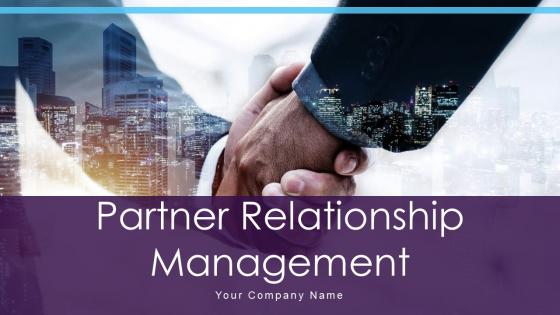
Slide 1: This slide introduces Partner Relationship Management. State Your Company Name and begin.
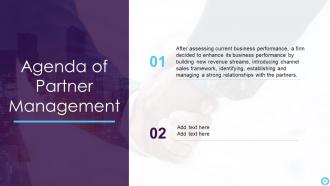
Slide 2: This is an Agenda slide. State your agendas here.
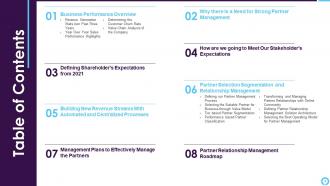
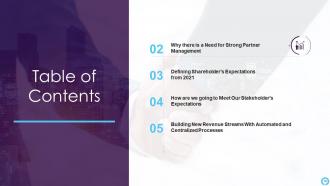
Slide 3: This slide presents Table of Content for the presentation.
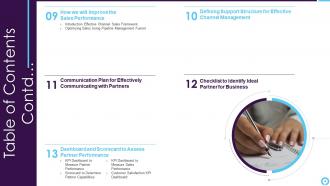
Slide 4: This is another slide continuing Table of Content for the presentation.
Slide 5: This slide shows title for topics that are to be covered next in the template.
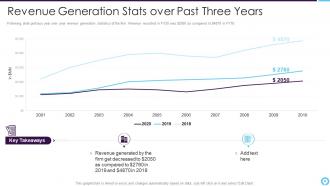
Slide 6: This slide presents Revenue Generation Stats over Past Three Years.
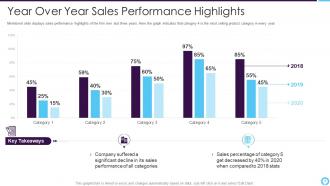
Slide 7: This slide displays Year Over Year Sales Performance Highlights.
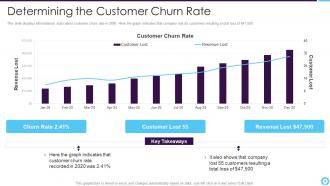
Slide 8: This slide represents stats about customer churn rate in 2020.
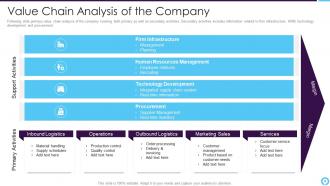
Slide 9: This slide portrays value chain analysis of the company covering both primary as well as secondary activities.
Slide 10: This slide shows title for topics that are to be covered next in the template.
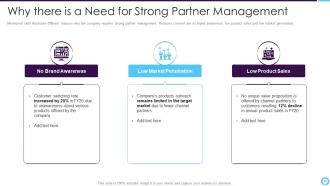
Slide 11: This slide presents Why there is a Need for Strong Partner Management.
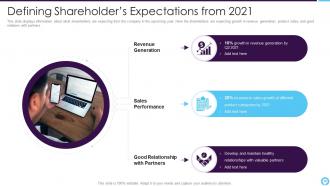
Slide 12: This slide displays information about what shareholders are expecting from the company in the upcoming year.
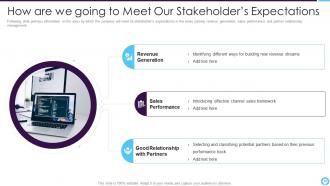
Slide 13: This slide represents How are we going to Meet Our Stakeholder’s Expectations.
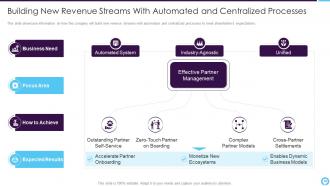
Slide 14: This slide showcases Building New Revenue Streams With Automated and Centralized Processes.
Slide 15: This slide shows title for topics that are to be covered next in the template.
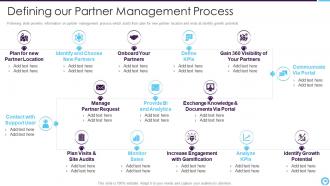
Slide 16: This slide presents Defining our Partner Management Process.
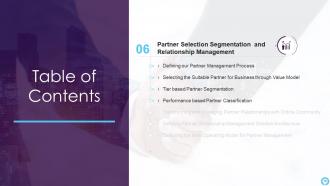
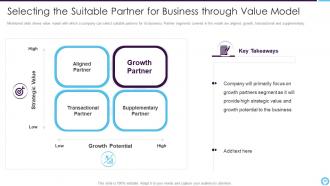
Slide 17: This slide displays Selecting the Suitable Partner for Business through Value Model.
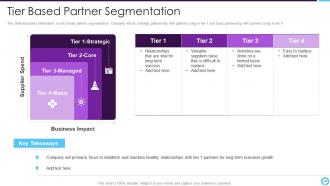
Slide 18: This slide illustrates information on tier based partner segmentation.
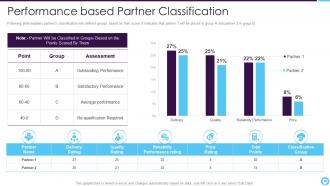
Slide 19: This slide represents partner’s classification into defined groups based on their score.
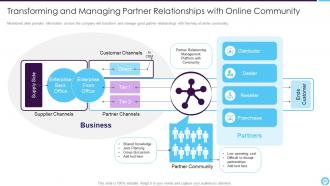
Slide 21: This slide showcases Transforming and Managing Partner Relationships with Online Community.
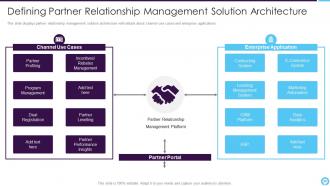
Slide 22: This slide shows Defining Partner Relationship Management Solution Architecture.
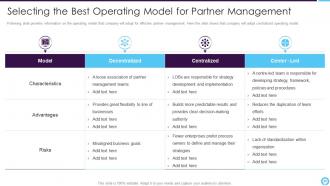
Slide 23: This slide presents Selecting the Best Operating Model for Partner Management.
Slide 24: This slide shows title for topics that are to be covered next in the template.
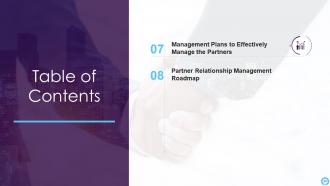
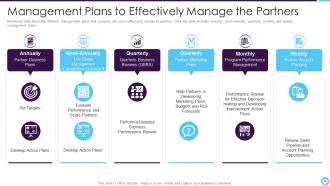
Slide 25: This slide displays Management Plans to Effectively Manage the Partners.
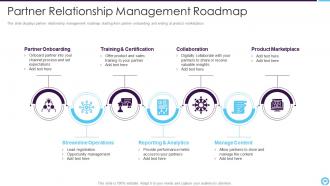
Slide 26: This slide represents partner relationship management roadmap starting from partner onboarding and ending at product marketplace.
Slide 27: This slide shows title for topics that are to be covered next in the template.
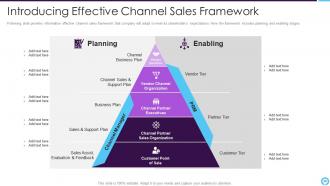
Slide 28: This slide presents information effective channel sales framework that company will adopt to meet its shareholder’s expectations.
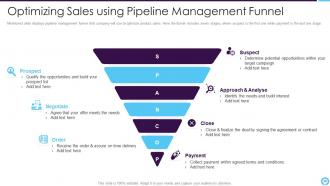
Slide 29: This slide displays Optimizing Sales using Pipeline Management Funnel.
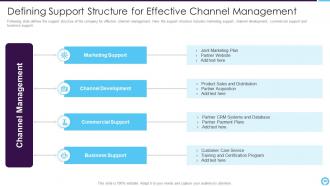
Slide 30: This slide represents Defining Support Structure for Effective Channel Management.
Slide 31: This slide shows title for topics that are to be covered next in the template.
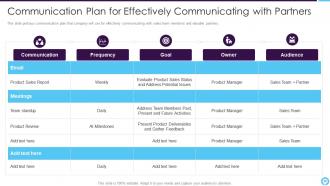
Slide 32: This slide showcases Communication Plan for Effectively Communicating with Partners.
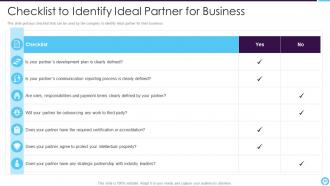
Slide 33: This slide presents Checklist to Identify Ideal Partner for Business.
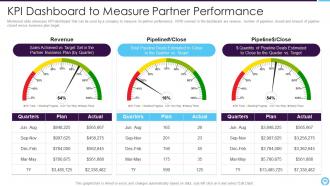
Slide 35: This slide displays Sales Achieved vs Target Set in the Partner Business Plan (by Quarter).
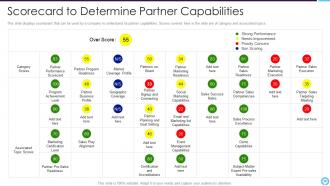
Slide 36: This slide represents scoreboard that can be used by a company to understand its partner capabilities.
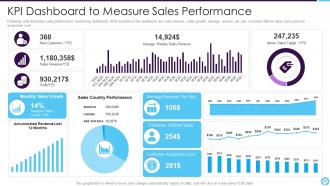
Slide 37: This slide showcases KPI Dashboard to Measure Sales Performance.
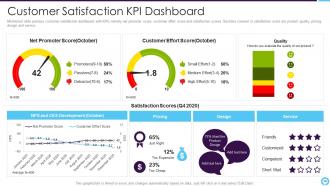
Slide 38: This slide presents customer satisfaction dashboard with KPIs namely net promoter score, customer effort score and satisfaction scores.
Slide 39: This slide is titled as Additional Slides for moving forward.
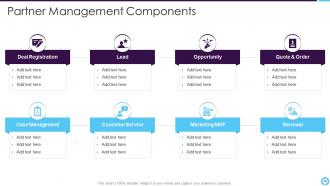
Slide 40: This slide presents Partner Management Components.
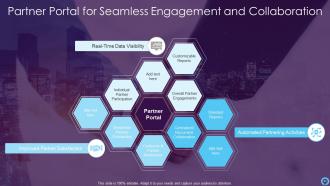
Slide 41: This slide displays Partner Portal for Seamless Engagement and Collaboration.
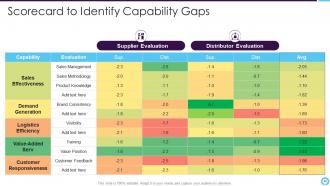
Slide 42: This slide represents Scorecard to Identify Capability Gaps.
Slide 43: This slide shows Icons for Partner Relationship Management.
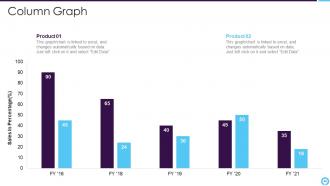
Slide 44: This slide displays Column chart with two products comparison.
Slide 45: This is About Us slide to show company specifications etc.
Slide 46: This slide provides 30 60 90 Days Plan with text boxes.
Slide 47: This slide depicts Venn diagram with text boxes.
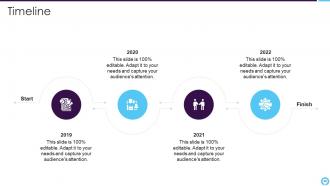
Slide 48: This is a Timeline slide. Show data related to time intervals here.
Slide 49: This slide shows Post It Notes. Post your important notes here.
Slide 50: This is a Thank You slide with address, contact numbers and email address.
Partner relationship management powerpoint presentation slides with all 55 slides:
Use our Partner Relationship Management Powerpoint Presentation Slides to effectively help you save your valuable time. They are readymade to fit into any presentation structure.








FAQs for Partner relationship management
Honestly, it's all about expectations and communication. Set clear goals from day one - what success looks like for both sides. Regular check-ins are non-negotiable. Someone has to own these relationships or they just die (learned that the hard way). Joint planning sessions work really well too. When shit hits the fan, you need escalation paths ready. Both parties have to benefit - if it's one-sided, it won't last. Oh, and create a simple scorecard tracking engagement and revenue. Sounds boring but you'll quickly see which partnerships are actually worth your time versus just taking up calendar space.
Honestly, tech has been a game-changer for managing partners. CRM systems let you track everything in one spot - performance metrics, onboarding workflows, the whole deal. Set up self-service portals so partners can grab resources whenever they need them (saves you from answering the same questions constantly). The analytics dashboards are where it gets interesting though - you'll actually see which partnerships are worth your time and which ones are just... there. Automated reporting cuts down on so much busy work too. My advice? Pick whatever tool fixes your biggest headache first, then expand from there.
Honestly, track both the money stuff and how well your partnerships are actually working. Revenue's the obvious one - what partners are selling, deal sizes, conversion rates. But the relationship side matters too. How engaged are they? Are they finishing training? Actually using your materials? Here's the thing though - don't get caught up measuring everything. Quality beats quantity every time. A partner closing two big deals is way better than one spamming tiny ones, even if the numbers look flashy. Start simple with maybe 4 metrics you can realistically track. Partner satisfaction scores are underrated btw. Time-to-productivity for new ones too. You can always add more later once you've got the basics down.
Honestly, good communication tools are a total game-changer for working with partners. No more endless email chains that go nowhere. You'll get real-time updates, shared dashboards, and direct lines to your partners instead of that back-and-forth nonsense. Having everything centralized means you can actually track progress, share stuff easily, and catch problems before they blow up. Slack or Teams work great - though I've seen some companies go overboard with partner portals that nobody uses. Pick one platform and get your main partners using it consistently. That matters way more than finding the "perfect" solution.
Honestly, the worst part is when everyone thinks they want the same thing but they totally don't. Partners show up with completely different goals and then act shocked when things get messy. Communication falls apart fast too - like, people just assume everyone knows what's happening. Some partners will be super engaged while others ghost you for weeks. Plus nobody ever has enough budget or time to actually do this right, which is frustrating as hell. My biggest tip? Nail down expectations from day one and schedule regular check-ins. Sounds boring but it'll save you so many headaches later.
Honestly, just start by asking your top 3 partners what's bugging them most right now. Set up quarterly surveys and regular one-on-ones - maybe throw in a partner advisory board if you're feeling fancy. Here's the thing though: actually DO something with what they tell you. I've watched so many companies collect feedback and then... nothing. Sort their comments by common themes, tackle the biggest pain points first, then circle back to show what you changed. Partners notice when you listen. Oh, and catch problems early before they become disasters. Simple feedback loop, but it works.
Honestly, training makes or breaks your partner program. Without it, you're basically handing over your brand to people who don't know what they're doing - which is terrifying when you think about it. Your partners need to understand your products, how to sell them, and what your brand actually stands for. Otherwise they'll just wing it and probably screw something up along the way. Good training helps them close more deals and saves you from constantly putting out fires later. I'd start by figuring out where your partners are struggling most, then build training around those specific pain points first.
Honestly, most people just assume they know what their partners want - big mistake. Have regular meetings where you actually map out everyone's goals and find where they overlap. I've watched so many partnerships crash because they skipped this! Set up shared KPIs that work for both sides, like joint revenue or customer satisfaction stuff. Track the same metrics and check in quarterly. Be super transparent about your priorities and ask direct questions about theirs. Oh, and create some kind of shared dashboard so you can all see the progress happening. Makes everything way clearer.
Honestly, you need someone dedicated to walk them through everything - like an actual person they can bug with questions, not just some email address. Build out a step-by-step portal thing, but make it interactive training instead of those awful PDF dumps everyone ignores. I'd set super clear expectations right away about timelines and what "success" actually means. Oh, and those first 90 days are crucial - check in regularly or problems pile up fast. Track their progress through specific milestones so you know when they're actually ready to do real business with you.
Build everything modular from day one - seriously, this saved my butt when we had to pivot last year. Skip the rigid framework trap most people fall into. Get partner feedback quarterly (not annually like everyone else does). Make onboarding super lightweight so you can tweak training without rebuilding everything. When markets shift, you'll want to move fast. Treat the whole thing like it's evolving constantly. Don't set anything in stone because... well, nothing really is these days. Those feedback sessions? Start them now before you think you need them.
Definitely focus on IP ownership and liability limits upfront - that stuff will come back to haunt you otherwise. Termination clauses are huge too, especially the notice periods and what happens to deals already in progress. Most partnerships blow up there, honestly. Don't forget confidentiality agreements and data handling rules since everything's digital now. Revenue sharing has to be super clear, including dispute resolution. Oh, and even if the contract looks simple, run it by your legal team first. I learned that one the hard way on a previous deal.
Dude, you absolutely need to understand the cultural stuff - I've watched deals totally fall apart over this. Like, someone thought they were giving "helpful feedback" but came across as completely rude instead. Each culture handles communication differently. Some want relationship-building first, others jump straight to business. The timelines for building trust? Totally different everywhere. Decision-making processes vary too - what feels normal to you might seem weird to them. Get some cultural training before you start onboarding partners. Trust me, a little homework upfront beats those cringe moments later when you realize you've been doing everything wrong.
Talk to them directly - don't let stuff fester into bigger drama. Create space where you can both vent without getting all defensive about it. Listen properly (I know, easier said than done). Sometimes you gotta swallow your pride tbh. Keep it focused on how work's getting affected, not personal beef. Always bring solutions when you bring problems - nobody wants to hear just complaints. Write down whatever you agree on so there's no "wait, I thought we said..." later. The whole thing works better when you're solving it together instead of trying to "win" against each other.
So I'd start by figuring out where your partners are already hanging out online, then meet them there. LinkedIn groups are solid for B2B stuff. Slack or Teams work better for day-to-day chatter though - keeps things moving. Here's what really works: celebrate their wins publicly. Partners eat that up, makes them feel like actual valued members instead of just another contact in your CRM. Co-create some content together, give them sneak peeks of announcements before everyone else. Oh and dedicated channels help too - but honestly the real magic happens when it feels less corporate and more like an actual community where people want to participate.
Look, your partners are basically your brand out there in the world. Train them well, keep communication smooth, and they'll make your customers happy. Simple as that. But here's the thing - most companies totally drop the ball here. Bad partner relationships mean confused customers, mixed messages, and stuff falling through the cracks. Treat your partners like they're actually on your team. Give them what they need to win. I'd start by figuring out where customers interact with partners and spot the messy gaps. It's one of those obvious things that somehow gets ignored constantly.
-
Much better than the original! Thanks for the quick turnaround.
-
Illustrative design with editable content. Exceptional value for money. Highly pleased with the product.
-
Innovative and Colorful designs.
-
Very well designed and informative templates.