


Business partnership proposal powerpoint presentation slides






Try Before you Buy Download Free Sample Product
 Impress Your
 Audience
 100%
100% Editable
 Save Hours
 of Time


Introduce your clients with the solutions you propose to emerge as a leader in the competitive information technology industry by utilizing this Business Partnership Proposal PowerPoint Presentation Slides. Present the outline of your business venture proposal in a professional manner with the help of this partnership agreement PPT visuals. In this business venture bid PowerPoint theme, you can clearly state the requirement of collaboration. The services a reliable and trustworthy IT enterprise offers can be illustrated with the help of our company alliance contract PPT template. Specialized in the development and consulting services, you can state your objectives such as high-level security structures to protect the consumers, and user-focused tools and training, etc with this business alliance contract PowerPoint theme. Showcase your expertise in advertising websites, and software like shopping, banking, financial, healthcare, auto dealership, restaurant and merchandising. Highlight the two ways of partnership namely a one-time contract and permanent representative in a specific region by utilizing our enterprise collaboration proposal PowerPoint template. You can elucidate the global dominance of your company by incorporating this firm association bid PPT theme. You can also discuss the benefits of an alliance with your organization. Elaborate on your firm’s mission and certifications to build trust with the target company. Additionally, you can include the slides of your esteemed clients, customer testimonials, and past work highlights to prove your excellence in the IT industry. To avoid any legal confusion, state the terms & conditions inclusive of payments, confidentiality, etc. The sign off slide included here can be beneficial in getting signatures of the user assigned company name and client name along with the address. Download this company venture proposal PowerPoint template.
People who downloaded this PowerPoint presentation also viewed the following :
Content of this Powerpoint Presentation
Innovation, opportunities, growth,and revenue. These are some of the perks a business partnership can bring you.
Nike and Apple first partnered to bring music from Apple to Nike’s customer workouts. Today, they offer the innovative Nike Run Club, an app that tracks workouts and connects Apple Watch users to coaching and community.
GoPro and Red Bull have different product lines but are famous in the sports and adventure segment. They partnered in 2016. This resulted in an increase in their share prices, collaboration on events, and the breaking of three world records with their ‘Stratos’ campaign.
In terms of revenue, Microsoft earns 95% of its commercial revenue through its partners.
Every benefit we mentioned is backed by data, and these benefits apply to businesses of any size. The first step to a successful partnership is to prepare a compelling business partnership proposal, complete with your IT company's strengths.
If you are in the food industry, you can get creative with your business proposals. Here is a one pager restaurant business proposal you can explore for inspiration.
Business Partnership Proposal Templates
A business proposal typically includes details about your business, mission, services, goals, clients, and benefits of working with you. Using our pre-designed slides, you can create personalized proposals for prospective business partners.
Having a strong business branding proposal ready with details like market landscape, competitive analysis, brand strategy, and identity can strengthen your partnership proposal.
Let us explore some PowerPoint Slides that must make into your business proposal.
Template 1: Cover Letter
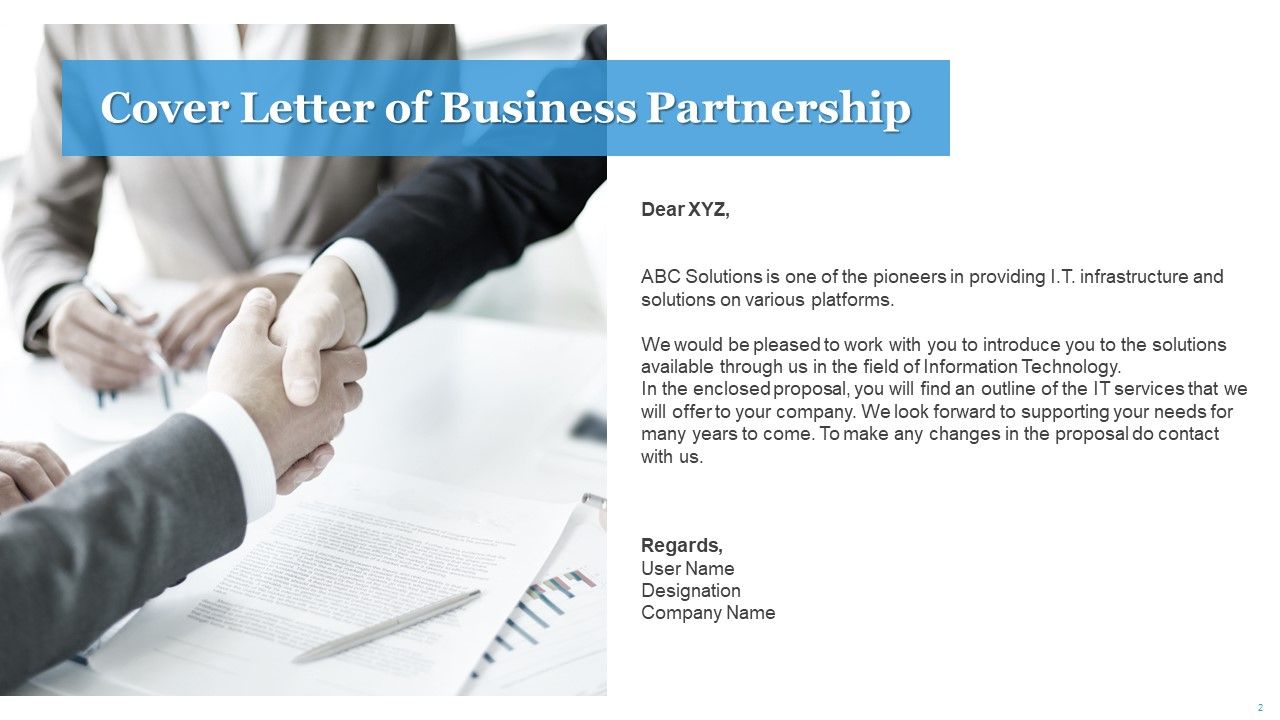
In a business proposal, an ideal cover letter should include a greeting, a high-level summary of your business, and how you can uniquely solve your client’s problem. You can add visuals that best describe your services. Our cover letter slide design is minimalistic; this is an intentional design choice. It is content that should shine through the cover letter. So, you have enough real estate on the PPT Slide to make your case. You can add your brand logo or tagline in the image section to make a strong first impression.
Template 2: Project Context for Business Partnership
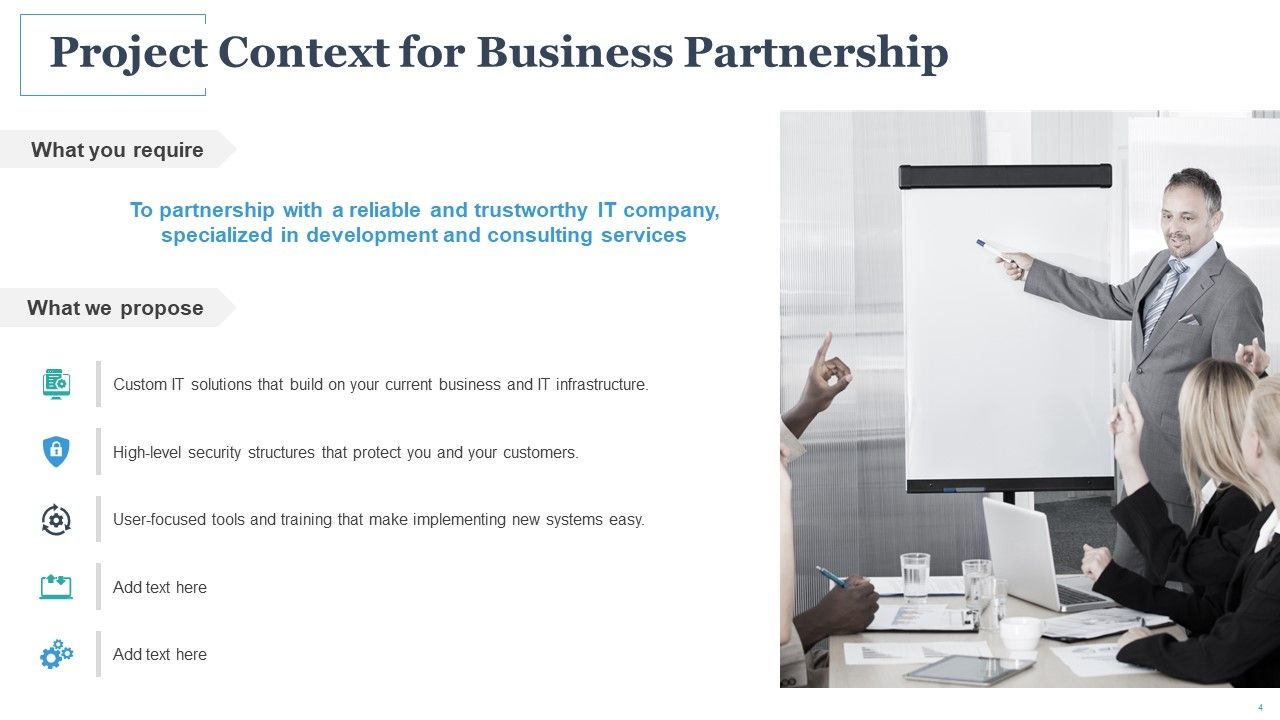
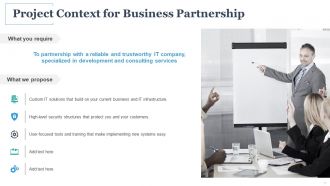
Our Project context slide is where you state the client’s problem and how your business will resolve it. Or how the partnership could be an opportunity for growth and innovation. You could list your services or strategy; it is basically what you bring to the table. This presentation slide is divided into two sections - requirement and proposal. This design works best because it highlights the gap between where you are and where you want to be. The proposal PPT Template, with its bulleted list design, gives the client practical steps on how to reach their goal. So overall, it is an effective means of communicating why they should choose you.
Template 3: Services and Expertise for Business Partnership
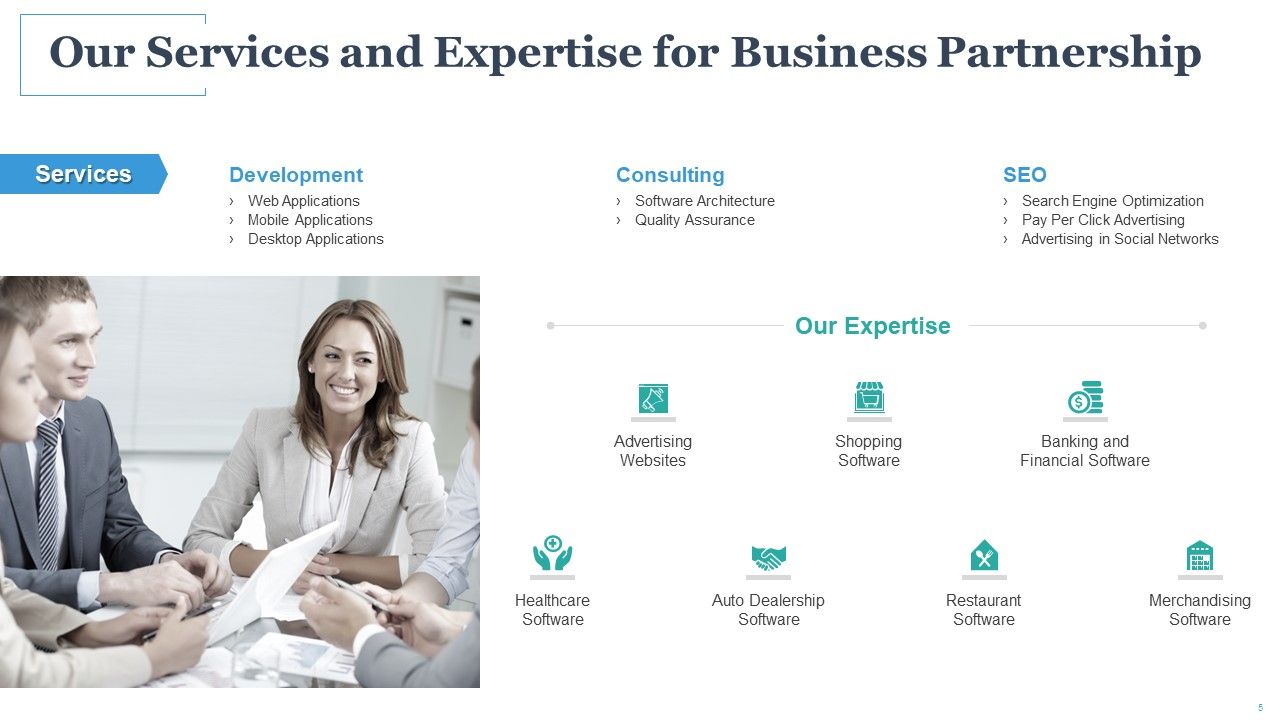
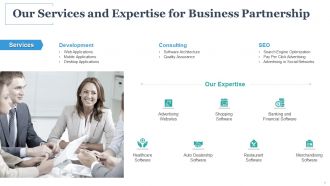
This PPT Design focuses on the services you offer and your expertise. The above section is dedicated to services. There are categories defined under which you can list services. The category and list design makes it easier to absorb information. The section below is for your area of expertise. For easier understanding, it uses flat icons for segments like shopping, restaurants, and healthcare. Our aim was to present a presentation slide with a balance of graphics and content.
Template 4: Business Partnership Model
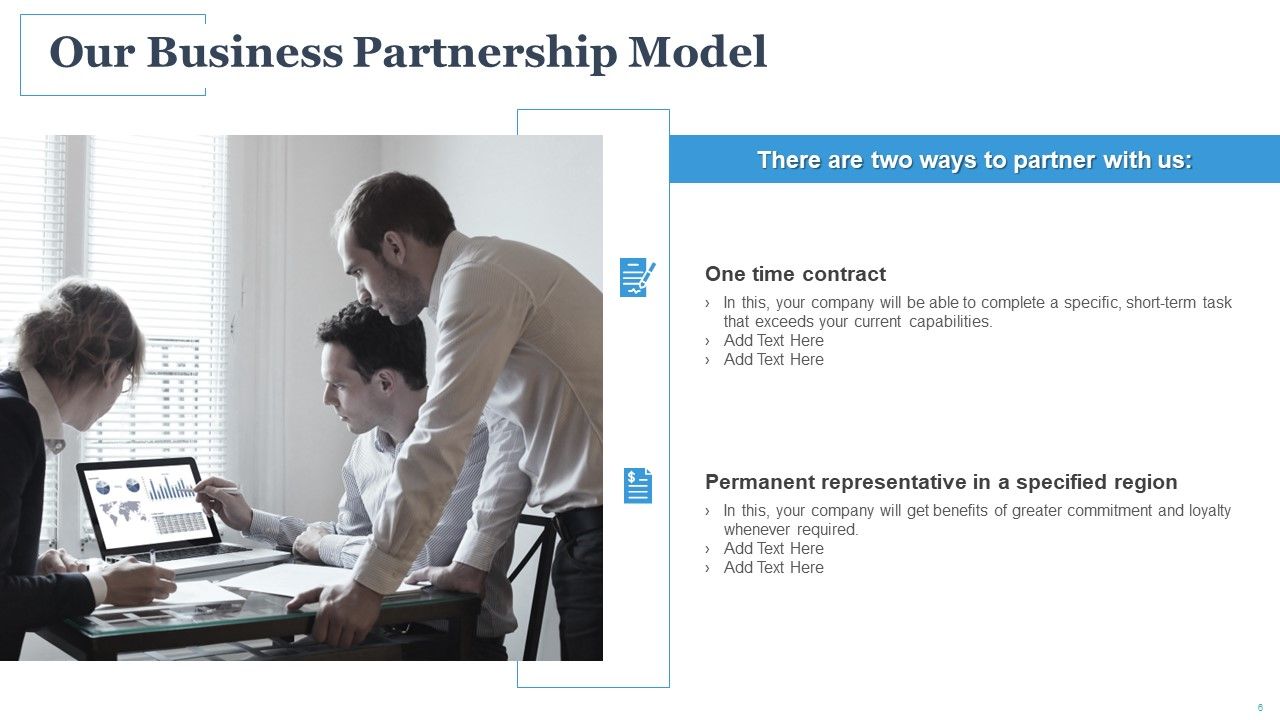
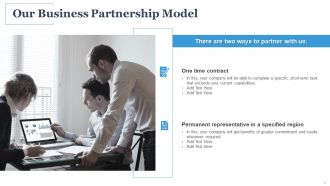
The business partnership slide tells the client what kinds of relationships they can have with your company. The PPT Layout elaborates on two types of partnerships: one-time contract and permanent representative. For example, in a one-time contract, you could provide the client with software, but they would be the ones managing it. Or, as a permanent representative, your IT business would handle management and also offer upgrades and design changes. Again, you can convey these details through bulleted lists for clarity.
Template 5: Benefits
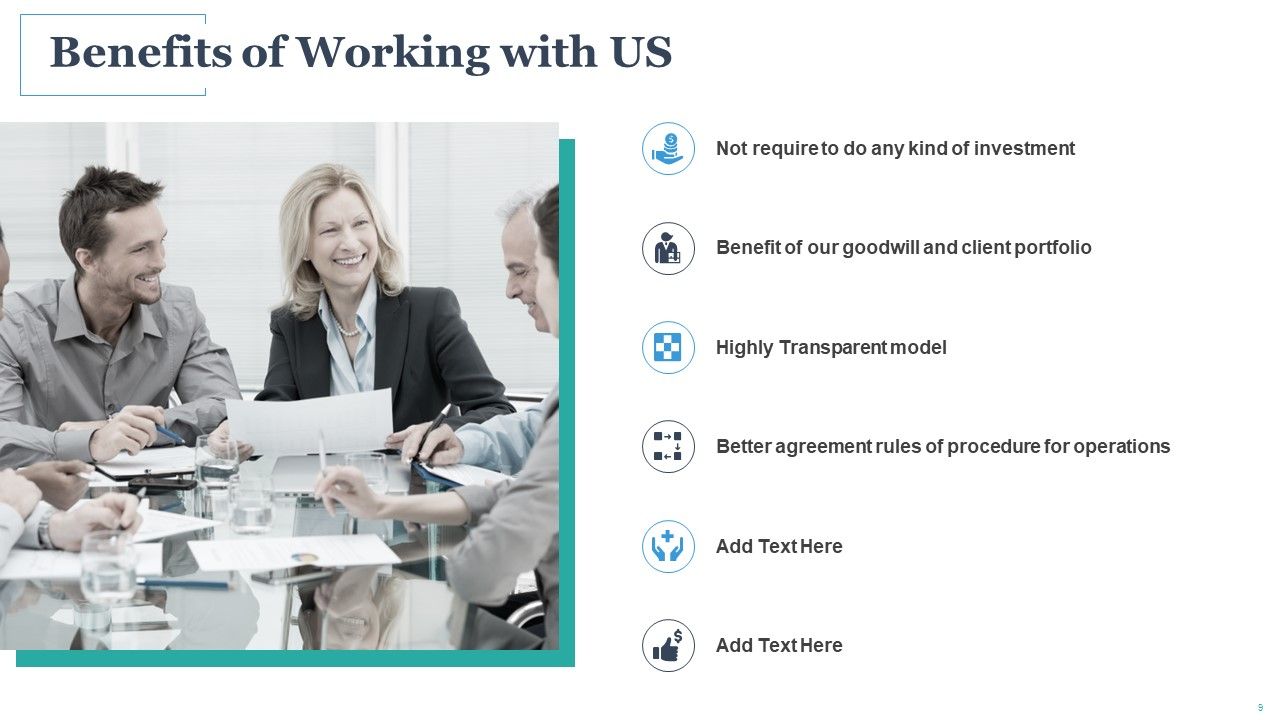
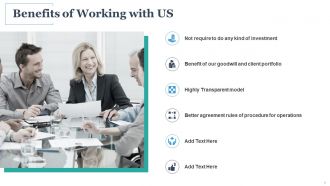
This presentation design is the answer to partner questions like - Why should we work with you? What is in it for us? The Benefits slide is your opportunity to make a compelling case for your business. You can list reasons why your business triumphs over other IT solutions providers. There is existing content like no investment, a highly transparent model, and goodwill of client portfolio to get you started. You can play around with icons and images on the PPT Slide. The overall design is clutter-free, helping draw the viewer’s attention to the benefits.
Template 6: About Us
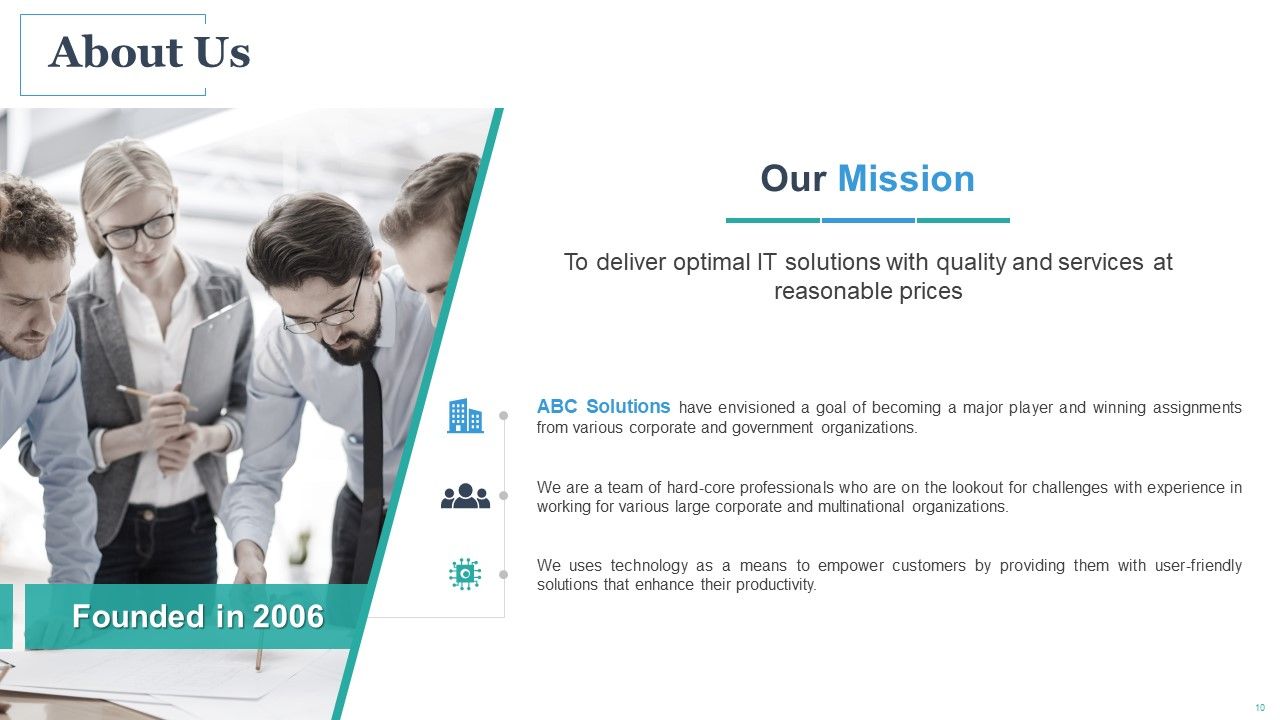
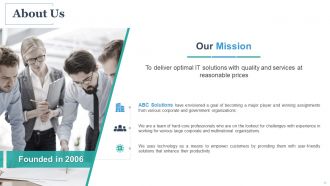
The About Us section in a business proposal should be to the point. These proposals tend to be content-heavy. So, use simple one-liners to keep the viewer engaged. Mention your mission or vision statement - this in itself tells a lot about your company. Then, you can list details about your company's size, its people, strategy, and uniqueness. On the left-hand side, you will notice an image with the banner ‘Founded in XXXX.’ It is a creative way to mention your company’s history without giving up space on the content part of the PPT Preset.
Template 7: Certifications
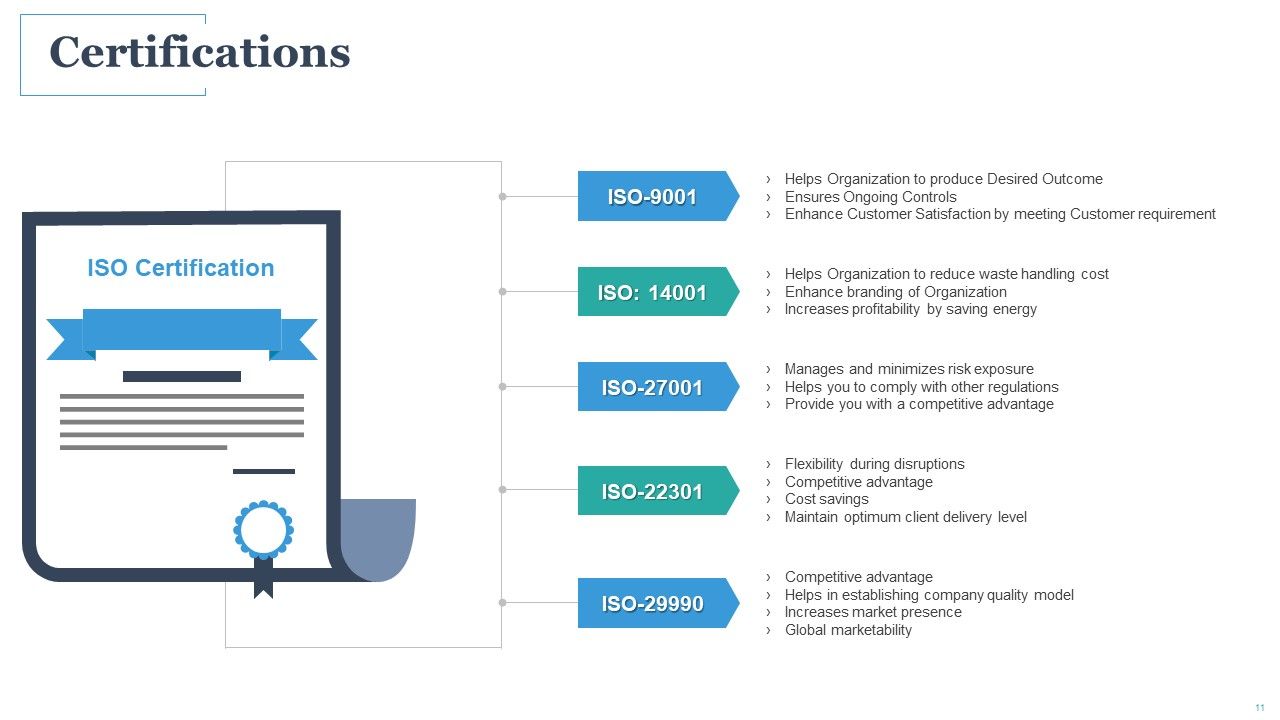
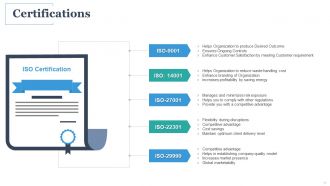
Certifications add credibility to your services and expertise. It can help build trust with your business partners. For example, ISO evaluates if companies meet the global standards of business and quality. An IT company with ISO 9001 certification indicates it has a quality control process in place and effectively resolves complaints. The PPT Design has a flowchart-like design, with certification imagery as the starting point. It branches out to different certifications, which you can further explain in a list format. Pre-written content is available for popular certifications like ISO 9001 and ISO 27001.
Template 8: Terms and Conditions
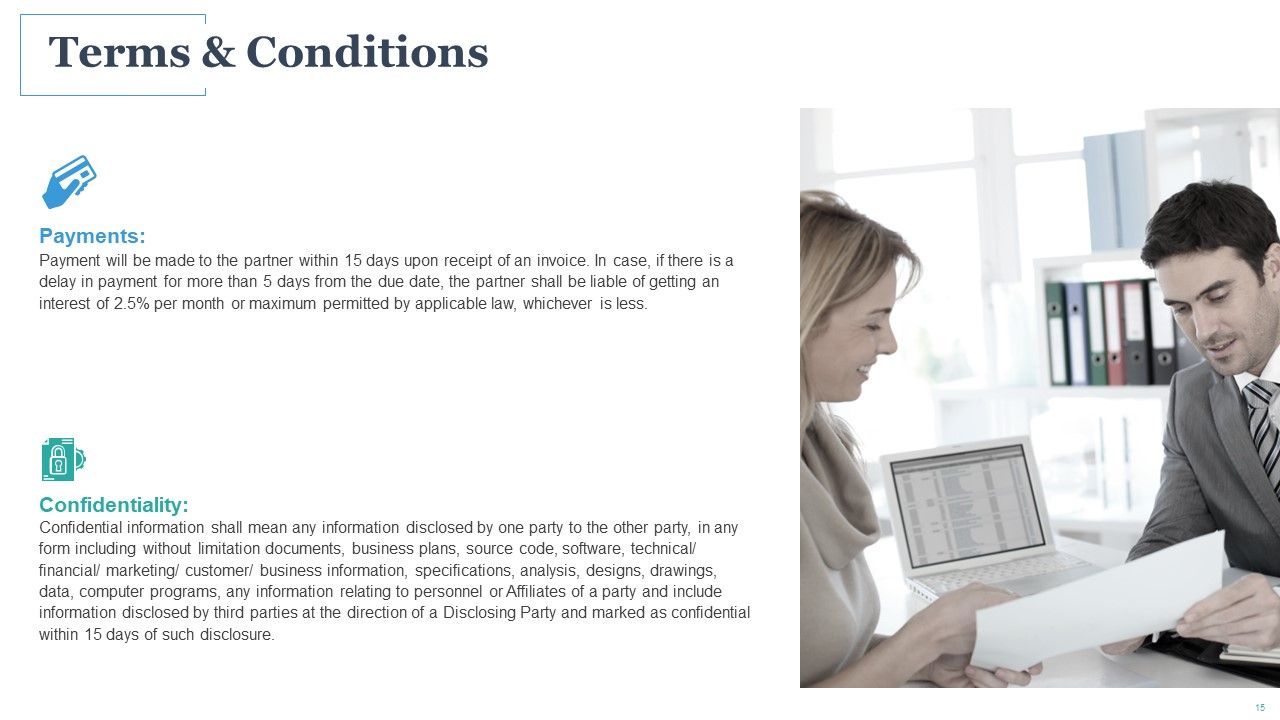
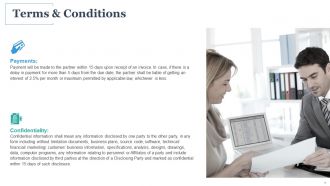
Terms and conditions are safeguards for both parties involved in the partnership. They clearly describe who is responsible for what, project scope, contract length, payment structure, and liabilities. The presentation layout does not leave room for any ambiguity. You can include the detailed terms and conditions in the contract, but use this presentation design template to set the expectation right at the beginning. We have added examples of payments and confidentiality to help you understand the type of content you can mention here.
Template 9: Sign-Off
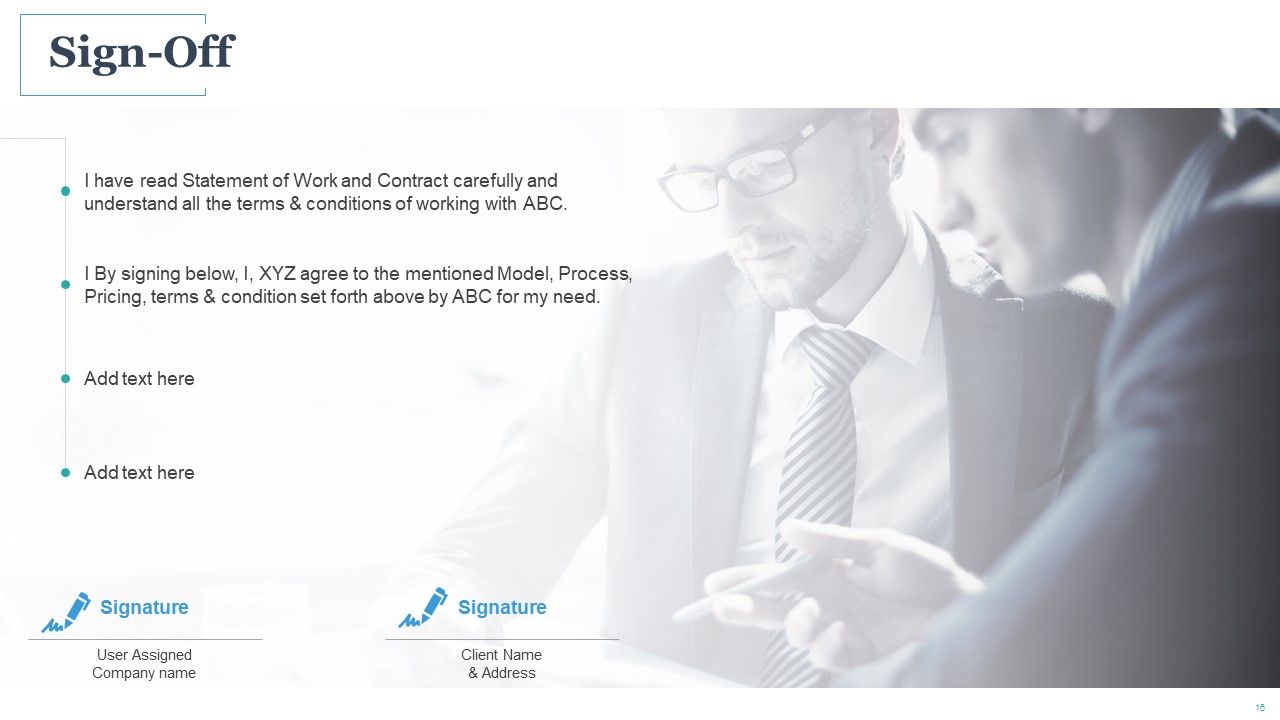
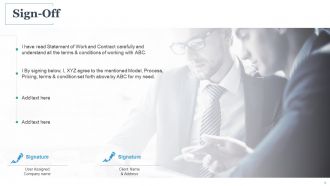
The sign-off page is the formal agreement on the partnership. It is documentation that both parties have understood the partnership’s scope and deliverables. Similar to the terms and conditions, the sign-off slide is also important for the safety of the parties involved. This presentation template has a faded background image. It has content available that states the client agrees to the terms mentioned in the proposal. At the end, it has signature sections for your company and the client, along with their name and address.
Summary
If you are a business, small or multinational, you only grow with the help of your partners and clients. Business partnership proposals are how you reach out and build your community. Our business proposal templates are designed for effective communication. We have used a balance of text, lists, icons and images to present a magnitude of data in an easy to absorb manner. There is also content available on most slides that you can use as is or customize as per your needs.
If you are looking to grow your client portfolio, our business consulting PowerPoint Presentation would be more suitable for your needs.
Business partnership proposal powerpoint presentation slides with all 24 slides:
Use our Business Partnership Proposal Powerpoint Presentation Slides to effectively help you save your valuable time. They are readymade to fit into any presentation structure.


FAQs for Business partnership proposal
Dude, you need five main things sorted out. First, spell out what each person brings - money, skills, whatever. Then get super clear on who does what and how you're splitting profits. Nobody wants to have that fight later, trust me. Decision-making is huge too - who gets final say on big stuff? Also figure out how someone can bail if things go south. The legal boring stuff matters - who owns what IP, liability protection, all that. I know a guy who got totally screwed because they just did a handshake deal. Don't be that guy.
Figure out what you actually need first - money, expertise, connections, whatever. LinkedIn's obviously great for stalking potential partners in your space. Industry events work too, though they can be hit or miss. Don't sleep on just asking people you already know - half the time they know someone perfect. Go for companies that complement yours instead of competing. I'd definitely check their rep through mutual contacts before getting serious. When you reach out, lead with what they get out of it. Nobody cares what you need until they know what's in it for them.
Definitely dig into their financials and recent performance first. Check out their customer base and see how they stack up against competitors. Their leadership team matters too - seriously, mismatched company cultures will screw you over down the road. Look at what partnerships they already have and whether those mesh with your idea or create conflicts. You'll want to understand their decision-making process since some companies take forever to close deals. Start with LinkedIn and public info, then try reaching out to industry contacts. Someone's bound to have the inside scoop on how they actually operate.
Okay so definitely make a "Roles & Responsibilities" section that breaks down who's doing what. List out the main areas first - operations, finances, marketing, whatever applies to your business. Then get super specific about the daily stuff and who can make decisions in each area. Like don't just write "Sarah handles sales" - does that mean she sets prices too? Can she sign contracts? Or is she just doing lead gen? I learned this the hard way with my last partnership lol. Also figure out who gets final say on the big decisions and what happens when your responsibilities overlap.
Revenue growth, profit margins, and cash flow projections - start there. Those are what they'll look at first. Customer acquisition costs and lifetime value are huge too since they show your business actually works long-term. Obviously include ROI projections because nobody's investing without solid returns. If you're still burning cash while scaling, be upfront about that burn rate. Industry-specific ratios matter depending on your space - partners know what good looks like in their wheelhouse. Honestly, the key is showing you're both stable now and have real growth potential. Lead with numbers that tell that story.
Honestly, skip all that generic "synergies" bullshit - nobody buys it anymore. Get super specific about what problem you're solving for them and use actual numbers. Like, don't say "we'll help you grow" - say "we helped Company X cut costs by 30% in 6 months." Case studies are everything. Show them measurable results they can expect and what makes you different from everyone else pitching them. I learned this the hard way after bombing a few proposals with vague partnership speak. Make it crystal clear what's in it for them and they can't really say no.
Dude, first things first - lock down who owns what percentage and how you're splitting profits. Decision-making power too, that's huge. Figure out everyone's actual job responsibilities so there's no confusion later. Oh, and definitely hash out exit strategies, like what happens if someone bails or... well, dies (dark but real). I'd go LLC over partnership for liability reasons personally. Don't skip the boring stuff either - capital contributions, how you'll handle disputes, non-compete agreements. Seriously though, pay a lawyer to look this over. Trust me, it's way cheaper than dealing with partnership drama later when everything's falling apart.
Okay so here's the thing - make it about *their* win, not yours. Lead with the actual problem you're fixing and why it's urgent right now. Paint them a realistic success picture (honestly, those "next Amazon" pitches are so cringe). Get specific about their role and what unique value they'd add. Oh and definitely bring solid data on market size and customer demand - that stuff matters way more than flashy slides. End by asking what worries them or what questions they have. It turns into an actual conversation instead of you just talking at them the whole time.
Look for ways both sides can win instead of just pushing what you want. Before going in, figure out your must-haves vs nice-to-haves so you know where you can bend. Listen way more than you talk - I swear this is where people screw up because they get obsessed with their own brilliant ideas. Ask them about their priorities and what's bugging them. Hit a wall? Try looking at it differently or throw out some creative options rather than just digging in. Oh, and write stuff down as you go. Trust me, memories get fuzzy real quick about who agreed to what.
Don't bury the risks - put them right up front in a dedicated section. I made this mistake once and it totally backfired when obvious problems hit that we never discussed. List the big stuff you're both worried about: market shifts, budget constraints, operational headaches. For each one, explain how you'd handle it and track progress. Here's the key part though - ask them what risks you missed. Makes it feel like you're actually partnering instead of just pitching. Way better approach than hoping they won't think of the downsides themselves.
Look, you absolutely need an exit strategy spelled out from day one. Partnerships can implode for crazy reasons - someone's kid gets sick, market tanks, or you just start hating each other's guts. Without clear terms, you'll end up in court spending more on lawyers than your business was worth. Cover the basics: how buyouts work, how you'll value the company, and what timeline everyone's working with. It's basically a prenup for business partners. I know it feels awkward discussing breakups before you've even started, but future you will thank present you for handling this upfront.
Dude, visuals are a game-changer for partnership proposals. Charts showing market data hit way harder than just telling someone the numbers. Infographics make your value prop crystal clear, and mockups help them picture the actual collaboration. Most people's eyes glaze over with walls of text anyway - I know mine do. Don't go overboard though, too much flashy stuff looks amateur. Pick 2-3 solid visuals that back up your main points. I'd start with one killer graphic for your strongest argument and work from there. Way more effective than rambling paragraphs.
Look, it's all about proving you're not just winging it. When you show up with solid market research, partners immediately see you've actually studied the space - market size, who you're competing against, where things are headed. Nobody wants to back someone running on pure gut instinct, you know? Data makes you look strategic instead of just another dreamer. Honestly, the more specific you get with numbers and competitor breakdowns, the better. Partners get excited when they spot opportunities you've mapped out that they can help you go after. It's like showing them the treasure map instead of just saying "trust me, there's gold somewhere."
Dude, cultural stuff can totally make or break these deals. Some cultures want to build relationships first before any business talk - others think that's a waste of time and want to jump straight into terms. Decision-making speed varies like crazy too. Plus there's the whole hierarchy thing, how formal contracts need to be, whether being direct is respectful or rude... it's a minefield honestly. I'd definitely research their business norms first. Maybe find someone who's worked with that culture before? Trust me, winging it rarely works out well in these situations.
Hit them up within a week - just a quick email asking if they got your proposal and need anything clarified. After that? Wait like 2-3 weeks before reaching out again. Maybe send over an industry article or case study that backs up your pitch. The waiting part sucks, I won't lie, but coming on too strong is deal poison. Set monthly reminders after that initial follow-up sequence. Keep messages short and actually useful instead of those annoying "just touching base" emails nobody wants. Oh, and throw everything in a spreadsheet so you don't forget what they told you about their dog or whatever.
-
Graphics are very appealing to eyes.
-
I discovered this website through a google search, the services matched my needs perfectly and the pricing was very reasonable. I was thrilled with the product and the customer service. I will definitely use their slides again for my presentations and recommend them to other colleagues.
-
Excellent products for quick understanding.
-
Great experience, I would definitely use your services further.
-
Excellent design and quick turnaround.
-
thank you