


Patterson Job Grading Structure Process




Try Before you Buy Download Free Sample Product
 Impress Your
 Audience
 100%
100% Editable
 Save Hours
 of Time


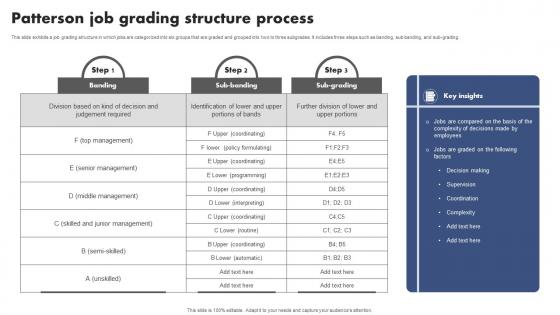
This slide exhibits a job grading structure in which jobs are categorized into six groups that are graded and grouped into two to three subgrades. It includes three steps such as banding, sub banding, and sub grading.
People who downloaded this PowerPoint presentation also viewed the following :
Patterson Job Grading Structure Process with all 6 slides:
Use our Patterson Job Grading Structure Process to effectively help you save your valuable time. They are readymade to fit into any presentation structure.





FAQs for Patterson Job
So Patterson basically ranks jobs by how much decision-making power they have, not just skills or whatever. You've got six factors to look at - knowledge, mental skills, accountability, freedom to act, how big their decisions are, and working relationships. Each one gets weighted differently based on what matters to your company. Honestly, the whole thing clicks once you realize you're measuring autonomy and impact. Like, does someone just follow procedures or do they make calls that affect everyone? The key thing - and this is where people mess up - is documenting the actual decisions people make in their day-to-day work, not their resume stuff.
So Patterson Job Grading is way more detailed than those old ranking systems. You're scoring jobs on specific stuff like decision-making and organizational impact, not just winging it with "eh, this feels like a Grade 7." Each factor gets points, which honestly beats going off gut feelings. The scores end up being pretty objective. Big win is you can actually defend your decisions with real data - super helpful when people appeal their job grades or you need to justify pay bands. Way better than the traditional approach where you're just comparing jobs against each other without much structure.
So Patterson basically looks at four things when grading jobs. First up - what skills and qualifications you actually need for the role. Then there's problem-solving stuff, like how much independent thinking is involved (some jobs are pretty paint-by-numbers, others aren't). Accountability comes next - are you managing budgets, people, big outcomes? Last bit covers relationships - who you're dealing with inside and outside the company. Honestly way more thorough than I expected. You can compare different roles using these same criteria, which keeps things fair across teams.
First thing - map what you've got now to Patterson's three factors (decision-making, impact, knowledge) so you have a starting point. Your HR team and managers need training on this because honestly? It feels super subjective until everyone gets the hang of it. Don't try to regrade everything at once - that's a nightmare. Roll it out in phases. Be upfront with employees about how you're evaluating roles and what each grade actually means for moving up. The biggest thing though is staying consistent. You need solid guidelines so one manager isn't scoring way different than another for similar jobs.
Honestly, Patterson Job Grading works pretty well for motivation if you do it right. People get way more engaged when they can see exactly what they need to do to get promoted - like, here's the skills you need, here's the pay bump you'll get. The whole thing cuts down on those awkward "wait, why does Tom make more than me?" conversations too. Well, mostly anyway - some people will always find something to gripe about lol. Your managers just need to actually explain how it works and stick to it during reviews. Makes such a difference when everyone's on the same page.
So Patterson Job Grading basically takes the guesswork out of pay decisions. It evaluates roles using concrete stuff like knowledge needed, problem-solving complexity, accountability - you know, actual measurable factors instead of whoever's the manager's favorite. Each job gets point values that create clear levels, so people doing similar work get paid similarly across departments. Honestly, it cuts through a lot of the bias that usually sneaks into compensation decisions. Traditional hierarchies can be such a mess anyway. Start by running your current roles through Patterson's framework - you'll probably spot some pay gaps that need fixing pretty quickly.
Honestly, Patterson Job Grading is pretty solid for getting your talent management organized. It gives you standard job levels so you can actually compare roles fairly and figure out compensation without the drama. You know those awkward conversations where someone's like "wait, why does Jake earn more?" This cuts down on that stuff big time. Career paths become way clearer too. The whole thing maps out systematically, which helps you spot skill gaps and plan who's next in line for promotions. Performance reviews get less subjective - always a win. I'd probably test it out with just one department first though, see how it fits your company's vibe before rolling it out everywhere.
Honestly, Patterson Job Grading is a game-changer for writing better job descriptions. You have to get super specific about what each role actually does instead of throwing around meaningless stuff like "strong communication skills." What does that even mean, right? The framework makes you define exactly what level of problem-solving or relationship management someone needs. I was shocked how blurry our role boundaries were before we started using it. Your team gets clear benchmarks too, so they can see what skills they need for promotions. Try it with one tricky role first - maybe that position nobody can quite explain.
So Patterson Job Grading basically maps out exactly what you need for each level - like what skills and responsibilities come with Grade 3 vs Grade 4. Way better than those awkward "we'll see how it goes" talks with your boss, honestly. You can actually have real conversations about where you want to go and what you're missing to get there. The whole thing keeps promotions fair since everyone's using the same criteria. Oh, and one thing I forgot - it works across the whole company, so no weird inconsistencies between departments. Just look at your current grade, figure out the gaps, then make a plan with your manager.
Honestly, it's gonna be a bit of a nightmare at first - your HR team will need tons of training on that 16-factor system. Managers hate change, so expect pushback there. Plus employees will freak out about how this affects their paychecks. The whole thing takes forever too since you're analyzing every single role in detail. Oh, and resistance to change is probably your biggest headache. People get comfortable with what they know, you know? I'd definitely start small - maybe pilot it in just one department first. Work out all the messy stuff before rolling it out everywhere else.
Honestly, don't try to do this internally from scratch - you'll just create a mess. Get certified Patterson consultants to run training workshops first. Your HR team needs to practice on actual job examples from your company, not generic stuff. Have them evaluate the same roles together and hash out any differences they find. Regular calibration meetings are clutch for keeping everyone on the same page. The framework has specific decision factors they need to nail down. Oh, and make sure they're documenting why they made each decision - that consistency piece is huge. Practice with real examples is what actually makes it stick.
External benchmarking is basically your reality check for Patterson grades - you're comparing your roles with what the market actually pays. Trust me, you'll find some surprises in there! Market data helps you adjust salary bands and catch any outliers where your internal grading might be way off. The cool thing is you can spot when a role that seems junior internally is actually paying senior-level money elsewhere. Don't just do this during annual reviews though. Run it regularly so you catch market shifts early and stay competitive. Otherwise you're flying blind on compensation.
Honestly, job evaluation software is a lifesaver for Patterson grading - it does all the math and factor weighting automatically. Digital platforms are great because you input job descriptions once, then compare roles side-by-side without digging through old files. Those standardized templates keep everyone consistent when they're evaluating factors. Workflow tools that handle approval chains save tons of time too. Start with digitizing your factor definitions first - that's usually the easiest part. Then move everything online gradually. Way better than drowning in spreadsheets, trust me.
Honestly, most people think Patterson just matches job descriptions to grades, but it's way more about measuring total role impact. HR teams assume it's completely objective - nah, there's definitely interpretation when you're scoring knowledge requirements and problem-solving stuff. Also, don't expect it to work identically across industries because it won't. The biggest mistake? Thinking you can dump in data and get perfect results without considering what makes your company different. Oh, and always check results against current market data - that part's crucial. Really dive into the methodology first though, or you'll regret it later.
Yeah, totally doable! Focus on the stuff that actually matters - decision-making power, how complex their work is, organizational impact. That doesn't change if they're working from their couch or a cubicle. Update job descriptions to include remote skills like digital collaboration and managing yourself without a boss breathing down your neck. I'd start by looking at your current grades and figuring out what needs adjusting. The tricky part is probably weeding out any location-based criteria you didn't realize you had. Makes sense though - outcomes over office politics, you know?
-
I'm happy to discover your PowerPoint presentations and templates. They met my expectations precisely. Very innovative!
-
Great designs, really helpful.