


PDSA Quality Improvement Framework In Nursing




Try Before you Buy Download Free Sample Product
 Impress Your
 Audience
 100%
100% Editable
 Save Hours
 of Time


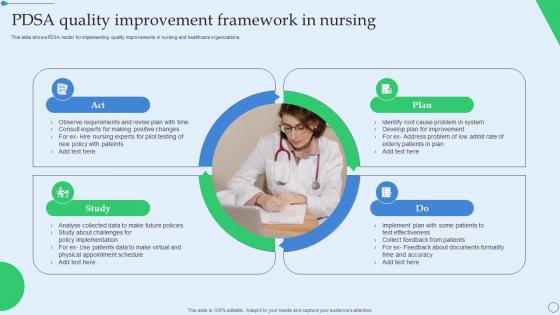
This slide shows PDSA model for implementing quality improvements in nursing and healthcare organizations.
People who downloaded this PowerPoint presentation also viewed the following :
PDSA Quality Improvement Framework In Nursing with all 6 slides:
Use our PDSA Quality Improvement Framework In Nursing to effectively help you save your valuable time. They are readymade to fit into any presentation structure.





FAQs for PDSA Quality Improvement
PDSA lets you test stuff small before going big - think of it as your "let's not screw this up" approach. Plan your test, Do it with like 5 people or whatever, Study if it actually worked, then Act on what you found out. Cycling through this quickly means you're not stuck with some massive failed rollout that everyone hates. I've seen way too many companies skip this step and regret it later. You can iterate fast and cheap instead of gambling everything on one huge change. Try one cycle on your next project - you'll get the hang of it pretty quick.
Pick something small that's actually annoying your team instead of going crazy with a massive overhaul. Get the frontline people involved early - honestly, they know way more about what's broken than anyone thinks. Keep your cycles short, like 1-2 weeks tops, and track real numbers instead of just "it feels better." The whole thing should flow naturally, not feel like more paperwork hell. Oh, and definitely share any wins with the higher-ups. That's how you build momentum for tackling bigger stuff later.
Honestly, it comes down to speed. PDSA is super lightweight - you can run cycles in just days or weeks. DMAIC? That's a whole different beast with five rigid phases that'll eat up months. Don't get me wrong, DMAIC rocks when you've got messy, complex problems that need serious data crunching. But sometimes it feels like bringing a bazooka to a pillow fight, you know? PDSA's more about quick experiments and learning on the fly. Got a straightforward process? Start with PDSA for fast feedback. You can always level up to DMAIC if things get complicated later.
Set up your metrics before you even start - super important. Numbers like cycle time and defect rates are good, but honestly? Team feedback usually tells you way more. I always track at every stage: did the plan work, what did we actually learn, and are the changes sticking around. Short wins are nice but you want to see improvement trends across multiple cycles - that's where the real magic happens. Oh and definitely make a simple dashboard or you'll lose track of everything. The qualitative stuff ends up being gold most of the time.
You really can't do PDSA without getting stakeholders involved early - like, from day one. When you're planning, bring them in to help figure out what's actually broken and how to test fixes. They're usually the ones doing the work or dealing with the changes anyway. The study part is where you'll get the best insights from them - they catch stuff you totally missed. I learned this the hard way once. Without their feedback in the act phase, you're basically flying blind on what actually worked. Don't just ask for their thoughts at the end though. Keep them in the loop throughout everything.
Yeah totally! Toyota basically built their whole lean thing around constantly testing tiny changes and seeing what stuck. Amazon's obsessed with this too - they'll test different button colors or checkout stuff with just a few users first. Hospitals do it for wait times and medication mistakes. The trick is starting super small though, which sounds obvious but most people skip that part. Like, test one small tweak with maybe 10 customers instead of rolling out some massive change. Then you just build on whatever actually works.
Honestly, the biggest mistake is going way too big on your first cycle - you'll just burn out. Most teams completely skip analyzing what happened and jump straight to making more changes, which is backwards. You need to predict what you think will happen first, otherwise how do you know if it worked? Oh, and don't run these things in silos. Each cycle should build on what you learned before. I'd say start ridiculously small and actually write down what you discover each time. Seems obvious but everyone skips that part.
Honestly, you'll be living in PDSA cycles once you get going. Most teams do 1-2 weeks per cycle, but it really depends on your goals and how fast you can gather decent data. I've watched people get way too hung up on perfect timing - don't be those people. The real trick is keeping momentum while actually learning something from each round. Start sketching your next cycle before wrapping up the current one. If you're not getting a little tired from the pace, you're probably moving too slow. Short cycles beat perfect execution every time.
Honestly, don't overthink this one. Google Sheets or Excel are perfect for basic PDSA tracking - just make columns for each phase and document your predictions, results, and what you learned. Project management tools like Trello or Asana work too if you want something fancier. You can create boards and move stuff through the PDSA stages. But here's the thing - I've watched so many teams get obsessed with elaborate dashboards when a simple spreadsheet would've been fine. Pick whatever your team will actually stick with consistently. That matters way more than having the coolest setup.
Honestly, just make PDSA cycles feel normal - not some extra thing people dread. Start small with 1-2 week experiments on actual problems your team's already dealing with. The tinier and more specific, the better at first. Here's the thing though - you've got to celebrate the "failed" tests just as much as wins, because that's where you actually learn stuff. Stick everything on a shared board so people can see progress happening. Oh, and consistency beats perfection every time. Pick whatever cadence works and don't overthink it. People need to feel safe experimenting without getting blamed.
Lead with the big stuff first - what worked, what bombed, and your next moves. Visuals are clutch here. Before/after charts, simple dashboards, whatever gets the point across fast. Honestly, I've seen people's eyes glaze over with too many numbers, so tell it like a story instead. Walk them through what actually happened during the cycle. What caught you off guard? Focus on why they should care - how does this mess with their priorities or the company's direction? Oh, and always wrap up with concrete next steps and when you'll do them. Shows you're not just reporting, you're actually planning ahead.
Honestly, the biggest thing is nailing down your data collection from day one. Use the same tools, same timing, same people if you can swing it. I've watched so many projects completely fall apart because people got sloppy with their measurements - it's frustrating as hell! Keep your sample sizes realistic too. Document everything, especially if you change how you're collecting between cycles. Get your team to double-check the numbers with you before moving forward. Oh, and don't try to measure absolutely everything perfectly right off the bat. Start small with stuff you know you can track reliably.
Honestly, PDSA is perfect for education because you can test stuff before committing fully. Try a new teaching method with just a few students first. Measure what works, then expand from there. Most training programs bomb because we guess what learners need instead of actually testing it - which is kinda backwards when you think about it. The cool part? You're always tweaking based on real feedback and performance data. Don't overthink it though. Just pick one small thing in your next program to experiment with before you launch everything.
Document what you actually learned after each cycle, not just what you planned. Both wins and failures need to go in a simple shared doc your team can check later. Honestly, most teams I've worked with just jump straight into the next cycle - terrible idea. Capture the real insights, weird results that surprised you, and what you'll try differently next time. Before starting a new PDSA, quickly scan through your previous notes. You'll stop repeating the same mistakes and actually build on stuff that's working instead of just running in circles.
Honestly, you can't skip having clear objectives - it's the difference between actually learning something and just spinning your wheels. Without them, how do you even know if your test worked? You'll just end up in pointless debates about whether it was successful. Make them specific and measurable so everyone's on the same page about what you're testing. I learned this the hard way - always write yours down before jumping into planning. Oh, and get your team aligned first by asking "what exactly are we trying to achieve?" Sounds obvious but you'd be surprised how often people skip this step.
-
Illustrative design with editable content. Exceptional value for money. Highly pleased with the product.
-
Enough space for editing and adding your own content.