

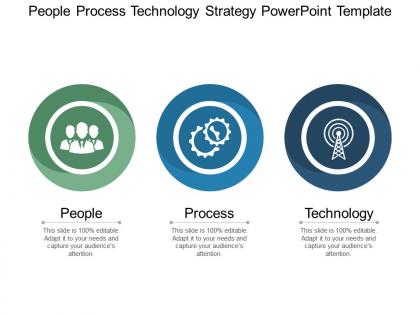
People process technology strategy powerpoint template





Try Before you Buy Download Free Sample Product
 Impress Your
 Audience
 100%
100% Editable
 Save Hours
 of Time


Be deserving of the appreciation with our People Process Technology Strategy Powerpoint Template. You will enjoy being at the forefront.
People who downloaded this PowerPoint presentation also viewed the following :
People process technology strategy powerpoint template with all 5 slides:
Use our People Process Technology Strategy Powerpoint Template as a guinea pig. Check out all the available approaches.




FAQs for People process technology
Honestly, it comes down to three big things. Customers expect everything to work like Amazon now - smooth, fast, no headaches. Competition is brutal too; while you're dragging your feet, someone else is already building the better digital experience. COVID just made remote work mandatory overnight, so that sped things up like crazy. Data analytics is where the real magic happens though - you can actually see what's working instead of throwing money at random stuff and hoping it sticks. My advice? Figure out what's causing you the biggest headaches first. That's probably where you'll see the most improvement for your effort.
Pick 3-5 metrics that actually matter to your original goals and check them quarterly. ROI and cost savings are obvious ones - numbers don't lie there. But honestly? Employee adoption rates tell you way more than most people realize. If your team isn't using the new systems, you're screwed regardless of what the spreadsheets say. Customer satisfaction scores matter too, plus operational stuff like how fast processes run now and error rates. Oh, and system uptime - learned that one the hard way at my last job. Don't get obsessive checking daily though.
Your leadership team basically makes or breaks the whole thing. They've gotta actually walk the walk - not just preach innovation while secretly loving their ancient spreadsheets (trust me, I've watched that trainwreck). Good leaders will throw real money and people at digital projects. They create space where your team can mess up without getting fired. The magic happens when they paint a clear picture of where you're headed and bulldoze through all that corporate red tape. Oh, and they celebrate when experiments flop because that's how you learn. Get everyone on the same page about WHY you're doing this first.
First, figure out what's driving everyone crazy right now - those processes where people are constantly complaining or things drag on forever. Manual, repetitive stuff is usually your best bet since it frees up actual time. Focus on anything that touches customers or brings in money, obviously that's where you'll see real results. Also factor in whether your team can actually handle the tech side (learned that one the hard way). Here's what I'd do: write down your 5 biggest headaches, then rank them by how much impact you'll get vs how hard they'll be to fix.
AI and machine learning are definitely the big disruptors right now. Cloud computing too - companies can scale so much faster than they used to. IoT sensors are everywhere now, pulling data from basically everything to make operations smoother. Automation tools are streamlining customer service and decision-making processes like crazy. Oh, and APIs are super important for connecting all these different systems - probably boring but necessary stuff. Every week there's some new AI tool trending, honestly gets overwhelming sometimes. For your projects, just look at whatever manual tasks are eating up most of your time first.
Look, CX is honestly what makes or breaks digital transformation. Focus on that first and everything else falls into place - your team gets pumped seeing real results, leadership actually buys in, and you'll know exactly which tech is worth spending money on. The companies that mess this up? They get obsessed with internal stuff and end up with these expensive systems that everyone hates using. I swear, half the "successful" digital projects I've seen are total flops with actual users. Map out your customer journey first, then figure out your tech roadmap from there.
Honestly, most companies mess up by not having a real plan first. They get excited about fancy new tech but never think through how it actually helps their business - I've totally seen this happen. People hate change though, so if your team isn't bought in, you're screwed. Budget always spirals too when projects get way too big. Start with something small instead. Talk to everyone about WHY you're doing this (like, constantly). And make sure your leadership actually cares long-term, not just this quarter. Oh, and pilot projects are your friend - way better than going all-in immediately.
Think of data analytics as your GPS for digital transformation. Instead of wandering around blind, you're suddenly seeing exactly what your customers actually do (not what you think they do), which processes are total disasters, and where spending money on tech will actually move the needle. Honestly, most companies just hoard data without asking the right questions first - huge mistake. Start with what you need to know, then work backwards to find those insights. The patterns you'll discover will blow your mind and make those transformation decisions way less scary.
Honestly, adaptability is everything right now - you gotta be cool with learning new tools constantly. Data stuff is weirdly important too, even for non-data jobs. Like, everyone's expected to read charts and make decisions from numbers now. Communication platforms like Slack are pretty much unavoidable at this point. Critical thinking matters more since AI handles the boring tasks, but someone still needs to solve the messy problems. Oh, and don't sleep on digital communication skills - half of work happens in chat apps anyway. Pick one skill you're weak at and just take a course this month.
Honestly, small businesses have a huge edge over big companies with digital stuff. Those corporate giants are stuck with ancient systems that take forever to change - meanwhile you can try new things in like a week. Cloud tools are perfect for this since you don't need crazy budgets upfront. Think automation, social media management, basic CRM systems. Big companies need 47 meetings just to update their email signatures (okay maybe not 47, but you get it). Your superpower? Speed. Pick one or two tools that'll actually solve your biggest headaches first. Master those, then add more. Don't try to do everything at once.
Honestly, digital transformation changes everything about how teams work together. Most of it's good though. Remote work becomes way more common, decisions happen faster with all the digital tools, and yeah - some jobs will change or just disappear while new ones pop up. Your team ends up scattered but connected through Slack, Zoom, all that stuff. People have to get comfortable with tech pretty quickly. Oh, and definitely train everyone on the new tools early. I learned that the hard way - the learning curve sucks but it's so worth it once everyone's up to speed.
Honestly, don't treat security like something you'll deal with later - that's how companies get burned. Do risk assessments before rolling out new tech, and get your team proper cybersecurity training from day one. Multi-factor authentication is non-negotiable at this point. Encrypt your sensitive stuff and stay on top of system updates. The whole thing works better when everyone actually understands why they need to protect company data, not just because IT said so. Oh, and run security audits every quarter - I know it's a pain but catching problems early beats dealing with a breach later.
Ugh, honestly the ethics stuff is what keeps me up at night with these projects. Data privacy is obviously huge - like, how are you collecting customer info and what're you doing with it? Then there's algorithmic bias, which can get messy fast if your AI starts making unfair decisions. Job displacement is another big one. What happens to people when automation takes their roles? Also think about digital divides - you might accidentally exclude folks who can't afford or access your fancy new services. My take? Don't leave ethics until the end. Build those reviews right into your roadmap from the start.
So digital transformation lets you see everything happening in your supply chain as it's actually happening - no more guessing with those nightmare spreadsheets we all love to hate. You can track inventory, predict what customers will want, catch problems before they explode. AI helps optimize delivery routes and automate ordering. Honestly, the best part is getting all your systems talking to each other so everyone's looking at the same numbers. My advice? Map out what's driving you crazy right now, then tackle those areas first. Don't try to fix everything at once.
Honestly, digital stuff and being green work together way better than most people realize. You're already cutting paper waste when you digitize things. Remote work means less commuting (which I love anyway). Smart systems help you use way less energy too. Data analytics are pretty cool - they show you exactly where you're wasting resources. It's like suddenly seeing all the inefficiencies you missed before. Cloud computing shrinks your hardware needs big time. Just be purposeful about it. Check what your current tech is already doing for sustainability, then find spots where you could go greener.
-
Excellent products for quick understanding.
-
Very unique and reliable designs.