

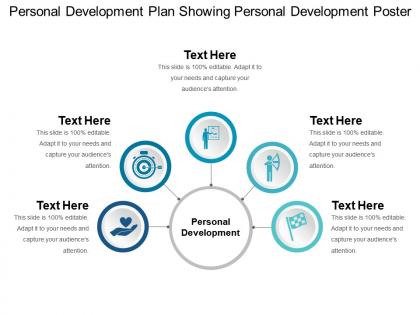
Personal development plan showing personal development poster




Try Before you Buy Download Free Sample Product
 Impress Your
 Audience
 100%
100% Editable
 Save Hours
 of Time


Tread out anywhere with our Personal Development Plan Showing Personal Development Poster. Your thoughts will have a sure grip.
People who downloaded this PowerPoint presentation also viewed the following :
Personal development plan showing personal development poster with all 5 slides:
Establish the cause of injury with our Personal Development Plan Showing Personal Development Poster. Figure out how the incident happened.

FAQs for Personal development plan showing
Honestly, just pick ONE thing first - trying to fix everything at once never works. You need super specific goals, like "give one presentation without saying 'um' every sentence" instead of vague stuff like "be a better speaker." Figure out where you actually suck right now (brutal honesty required), then map out concrete steps with real deadlines. Track your progress somehow - I'm terrible at this part but it matters. Oh, and find actual resources that'll help, whether that's a course or just pestering someone who's good at what you want to learn. Make it specific enough that you can't BS your way out later.
Honestly, goal-setting is what separates actual progress from just daydreaming about getting better. SMART goals force you to get specific instead of being like "I'll work on myself someday." You get real deadlines and can actually measure if you're improving. Here's the thing - big changes feel overwhelming, but goals break them into bite-sized pieces you can handle. Without them, your development plan is basically just good intentions that go nowhere. Start with 2-3 concrete goals with actual deadlines. Check in weekly (I use Sunday evenings, works pretty well). Makes a huge difference.
Think of self-assessment as your reality check - you gotta know where you actually stand before planning where to go. Honestly, most people skip this part and wonder why their development plans suck. It's literally like trying to use GPS without knowing your starting point. Get some real feedback first - maybe ask your boss, coworkers, even that one brutally honest friend we all have. Then look at your actual skills versus what you need. Once you've got that clear picture, you can build goals that actually matter instead of just picking random stuff to work on.
Honestly, just start by figuring out what actually energizes you vs. what makes you want to hide under your desk. Ask people you work with for real feedback - I know it's awkward but they'll see stuff you're blind to. Look back at your performance reviews too, or think about compliments that keep popping up. There's probably a pattern there. If you want something more official, try CliftonStrengths or whatever. Write it all down and see what themes emerge. That's where the good stuff is. Don't just rely on your own perspective though - we're all terrible at seeing ourselves clearly.
Honestly, break that massive goal into tiny wins you can actually celebrate. I'm talking weekly mini-goals instead of staring at some huge finish line forever away. Those little victories? They're lifesavers when you're feeling blah about everything. Get yourself an accountability buddy - someone who'll bug you about progress (in a good way). Visual tracking helps too, like a simple chart where you can see you're not just spinning your wheels. Life's messy, so don't make your timeline super rigid or you'll just stress yourself out. What's one tiny thing you could do this week?
Honestly, quarterly works best for me - gives you enough time to actually see progress without letting things get stale. Do a bigger deep-dive once a year when you're thinking about major goals. I used to be terrible at this and would completely forget for like 6 months, then panic about why nothing was happening lol. Monthly might work if you're laser-focused on something specific right now. Just put it in your calendar or you'll definitely forget. Your life changes constantly anyway, so the plan should too. Start quarterly and see how it feels - you can always adjust from there.
Honestly, start with "Atomic Habits" by James Clear - that book actually changed how I think about building routines. Carol Dweck's "Mindset" is great too if you're into the psychology side of things. I use Notion to track everything, though Todoist works if you want something simpler. Coursera's solid for learning specific skills, but honestly I learn more from podcasts these days. Tim Ferriss interviews some crazy successful people and you'll pick up random tips. Don't try to do everything at once though - grab one book and pick a tracking app. That's it.
Honestly, accountability partners are total game-changers. When your motivation tanks (which it will), they're there checking in and calling you out when you're making excuses. I've watched friends crush goals they'd normally give up on just because someone else was tracking their progress. The trick is finding someone who won't coddle you but also celebrates your wins. My buddy and I do weekly check-ins - super specific about what we're tracking though, not just vague "how's it going" stuff. Way better than trying to do everything alone, trust me.
Honestly, time management makes or breaks your whole personal development thing. Without it, you're just daydreaming about goals that'll never happen. I used to pull the "I'll work on it when I have time" excuse - spoiler: that magical free time doesn't exist. What actually works? Treat your growth stuff like real appointments. Block out 15-30 minutes daily for whatever you're focusing on. Reading, practicing skills, whatever. Short bursts beat those crazy 3-hour sessions you'll never stick to. Oh, and defend that time slot like your life depends on it - because honestly, your future self will thank you.
Look, I learned this the hard way - your priorities shift way more than you think they will. Like in your twenties you're all about building skills and trying everything, then suddenly you hit your thirties and you're more focused on leadership or actually having a life outside work. I swear I used to think one career plan would last forever... so naive! By your forties you might want to mentor people or completely switch paths. Do a yearly check-in with yourself. What's actually working? What feels outdated now? Then figure out what you need to grow into next and adjust from there.
Track it two ways - the hard stuff and the gut-check stuff. Hard metrics are things like course completion, feedback scores, actual KPIs tied to your goals. But honestly? The soft indicators matter just as much. How confident do you feel tackling new challenges? Are your work relationships getting better? Do you actually use the skills you're learning or just... know them in theory? Monthly check-ins work well. Just throw it in a simple spreadsheet - nothing fancy. The key is being brutally honest about what's really changing versus what you want to be changing.
Honestly, being more mindful is like having a cheat code for personal growth. You start noticing your actual thoughts and reactions instead of just going through the motions. That awareness helps you figure out what you really need to work on - not just random stuff you think sounds good. It keeps you focused too, which is huge because there's always some new productivity hack or whatever trying to grab your attention. The emotional regulation part is probably the biggest game-changer though. When setbacks hit (and they will), you bounce back faster. Just try reflecting on your goals for like 10 minutes daily. Nothing fancy.
Ugh, perfectionism is the worst - you mess up once and suddenly you're like "welp, guess I'm done forever." Week 3-4 is when motivation usually crashes too. Plus everyone tries to overhaul their entire life on day one, which is just setting yourself up to flame out. Start with ONE thing instead of ten. Make your goals super specific, not like "eat better" but "have fruit with lunch." I keep a little chart because seeing progress helps when I feel like nothing's working. Bad days happen - plan for them instead of pretending they won't. When you inevitably slip up, just think "okay, what can I learn from this" instead of spiraling.
Apps like Notion and Todoist are game-changers for tracking goals and breaking them down into smaller chunks. I'm totally hooked on habit trackers right now - they make everything feel like a game which honestly tricks your brain into wanting to keep going. Calendar blocking works too, just set aside time for learning or whatever. Oh and Coursera tracks your progress automatically which is nice because I always forget to update things manually. LinkedIn Learning does the same thing. Start small though - pick one habit tracker first and see how it goes before adding more stuff.
Honestly, figure out your top values first - that's the secret sauce. Your development plan should actually connect to what YOU care about, not just random skills everyone says you need. I've watched people grind away at stuff that doesn't fit them and they just... burn out hard. Why climb a mountain you don't even want to be on, you know? When your goals match who you really are, motivation isn't this constant struggle. Build around those 3-5 core values. Every skill becomes way more meaningful when it's serving your bigger picture instead of just checking boxes.
-
Excellent products for quick understanding.
-
Understandable and informative presentation.