


Pestel analysis ppt powerpoint presentation gallery example file




Try Before you Buy Download Free Sample Product
 Impress Your
 Audience
 100%
100% Editable
 Save Hours
 of Time


Our Pestel Analysis Ppt Powerpoint Presentation Gallery Example File are like a basic christmas tree. Decorate it with your beautiful thoughts and spread joy and happiness.
People who downloaded this PowerPoint presentation also viewed the following :
Content of this Powerpoint Presentation
Description:
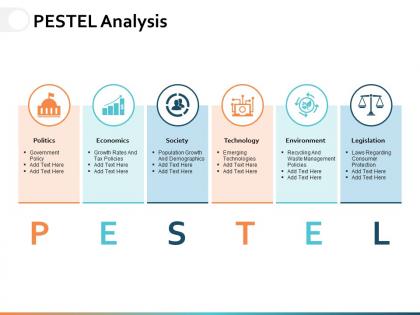
The image features a PowerPoint slide presenting a PESTEL Analysis, a strategic framework used to assess external factors influencing an organization or project. It includes six key areas:
1. Politics
Government Policy: This section evaluates the impact of government decisions and policies on the business's strategic direction.
2. Economics
Growth Rates And Tax Policies: It assesses economic factors such as market growth and fiscal policies affecting operational costs and profitability.
3. Society
Population Growth And Demographics: This part examines social trends, population shifts, and demographic changes influencing market size and consumer preferences.
4. Technology
Emerging Technologies: Highlighting the need to consider technological advancements and innovations that may disrupt or create opportunities for the business.
5. Environment
Recycling And Waste Management Policies: This includes ecological considerations like sustainability practices and regulations affecting the company.
6. Legislation
Laws Regarding Consumer Protection: Focusing on legal constraints, including consumer rights and product standards that the business must adhere to.
Use Cases:
Industries where this presentation could be particularly useful include:
1. Consulting:
Use: Strategic planning and market analysis.
Presenter: Strategy consultant.
Audience: Corporate executives.
2. Marketing and Advertising:
Use: Developing market strategies aligned with external factors.
Presenter: Marketing Director.
Audience: Marketing team.
3. Financial Services:
Use: Assessing risks related to investments and market entry.
Presenter: Financial analyst.
Audience: Investors and company stakeholders.
4. Manufacturing:
Use: Aligning operations with environmental regulations and economic conditions.
Presenter: Operations Manager.
Audience: Plant managers and operational staff.
5. Education:
Use: Understanding the impact of societal changes on education demand.
Presenter: Academic Researcher.
Audience: Educational policymakers and administrators.
6. Health Care:
Use: Strategic planning in response to changes in healthcare legislation and technology.
Presenter: Healthcare Administrator.
Audience: Healthcare management and board members.
7. Technology:
Use: Guiding product development considering emerging tech trends.
Presenter: CTO or Product Manager.
Audience: R&D Team and tech stakeholders.
Pestel analysis ppt powerpoint presentation gallery example file with all 5 slides:
Be the boss of their dreams with our Pestel Analysis Ppt Powerpoint Presentation Gallery Example File. Give clear and concise directions to follow.


FAQs for Pestel analysis ppt powerpoint presentation
PESTEL is this framework that breaks down external stuff into six buckets: Political (gov policies, regulations), Economic (inflation, unemployment rates), Social (demographics, cultural shifts), Technological (innovation, automation), Environmental (climate stuff, sustainability), and Legal (compliance, new laws). Honestly, it sounds more complicated than it is. You're just making sure you don't overlook something obvious that could bite you later. Each category can either help or hurt your business - that's why you go through all six when you're planning strategy or analyzing markets. Pretty straightforward once you get the hang of it.
PESTEL is like a scanning system for business threats. It covers six areas - Political stuff (regulations, trade issues), Economic changes (recessions, inflation), Social shifts (how customers behave), Tech disruptions, Environmental policies, and Legal updates. Honestly, most companies skip this and get caught off guard later. Check each category regularly so you can see problems coming. Maybe that new regulation will mess with your suppliers, or demographic changes might kill your customer base. I'd do these reviews quarterly - keeps you from getting blindsided by obvious stuff you should've seen coming.
Look, political stability basically makes or breaks your business planning. Stable governments mean you can actually count on consistent policies and tax rates - which is huge for long-term strategy. But when things get messy politically? You're dealing with currency swings, random policy shifts, and supply chain headaches that'll crush your profits. I've seen companies get completely blindsided by civil unrest shutting down operations overnight. It's honestly wild how fast things can change. For your PESTEL analysis, just map out the political risks in each market you're in. Build backup plans because you'll need them when (not if) things go sideways.
So pricing and targeting totally depend on what's happening economically. High inflation? You'll probably need to shift your messaging toward value since people get way more picky about spending. Unemployment rates are a big tell for how much extra cash your customers actually have. When unemployment's bad, I'd definitely pivot to budget options or stick with essentials instead of luxury stuff. The trick is figuring out which economic indicators matter most for your specific industry - then you can actually plan for different scenarios instead of just winging it when things change.
So tech advancement is the "T" in PESTEL - probably the most fun part to dig into tbh. Look at how new tech either creates whole new markets or completely wrecks old ones. Smartphones destroyed cameras but gave us the entire app world, right? Changes happen crazy fast these days. You'll want to track what could hurt your business AND what might give you an edge. Oh, and definitely start with the top 3-5 tech trends hitting your industry right now. That's your best starting point.
Yeah, definitely dig into the "E" part of PESTEL - that's your environmental tracking. Keep tabs on what's coming down the pipeline with new regulations, carbon stuff, waste rules, all that. Honestly, most companies are terrible at this and just panic when new rules drop. But if you're scanning regularly (quarterly maybe?), you can actually get ahead of it. Tweak your operations or supply chain before everyone else is scrambling. Sometimes you can even beat competitors to compliance and look like the good guy. It's basically turning regulatory headaches into your advantage.
Honestly, focus on the big demographic stuff first - aging populations, people moving to cities, that kind of thing. Social media trends are massive too and can totally flip a brand's reputation overnight. I'd also watch how people's values are shifting around health, sustainability, work-life balance. Oh, and don't sleep on education levels in your market. The diversity and inclusion stuff matters more than it used to. But here's the thing - don't try tracking everything or you'll go crazy. Pick maybe 3-4 trends that actually affect your industry and check in on them regularly. Way more manageable that way.
PESTEL basically shows you what's really driving your customers' choices. Political stuff affects their spending power, economic conditions change how much they'll spend, and social trends reveal what they actually care about now. Tech factors are huge - probably the most telling part honestly, since everyone's digital habits shifted so fast. Environmental issues push people toward sustainable brands (even my mom asks about packaging now), while legal changes dictate what's even available to buy. Think of it as your radar for understanding the bigger forces behind why people buy what they do. Then you can tweak your approach accordingly.
Dude, legal stuff will make or break your international expansion - seriously. Each country has totally different rules for everything. Labor laws, taxes, IP protection, compliance requirements... it's wild how much changes border to border. I've seen companies get completely blindsided by this. Map out the legal landscape before you do anything else, and honestly? Get local lawyers involved early. Way easier than trying to fix legal disasters later. The regulatory differences between markets can totally derail your entry strategy if you're not careful about it.
So PESTEL focuses purely on external stuff - you know, all those Political, Economic, Social, Technological, Environmental, and Legal factors happening outside your business that you can't really control. SWOT's more like a full picture thing. It covers your internal strengths and weaknesses AND the external opportunities/threats. Honestly, I usually think of PESTEL as the homework you do first to understand what's going on in the world around you. Then SWOT is where you mix that external research with what you're actually good (or bad) at internally to figure out your next moves.
Honestly, social media is where you'll find the best insights into shifting cultural attitudes - way better than traditional surveys. Watch how different generations spend money and what they actually care about. Sustainability matters more now, work-life balance has totally changed, family structures aren't what they used to be. The tricky part? Figuring out what's just a trend versus something that'll stick around long-term. Demographics tell part of the story, but you really need to dig into those evolving values and lifestyle changes. Then decide if these shifts help or hurt your business.
Honestly, I'd say once a year minimum, but it really depends on your industry. Tech and healthcare? You'll probably want to check quarterly since things change so fast. Manufacturing and other stable sectors can usually get away with annual reviews. But here's the thing - you've gotta stay alert for big shifts regardless. Like when COVID happened, all bets were off. Set up some Google alerts or whatever for the stuff that actually affects your business. I always tell people to start yearly and see how it goes - you can always do it more often if needed.
Oh yeah, tons of big companies nail this. Netflix did massive PESTEL analysis before going international - checking regulations, economic stuff, cultural differences in each market. McDonald's is constantly doing it too, which is why they don't serve beef in India. Tesla used it when picking factory locations, looking at environmental rules and government incentives. Honestly, even smaller companies do well with it - saw a local retailer use PESTEL before expanding to new cities. The trick is you can't just do the analysis and forget about it (which happens way too often). You've gotta actually use what you learn.
So PESTEL is basically your external radar for CSR stuff. Political trends show you new sustainability regs coming down the pipe. Social expectations tell you what stakeholders actually care about. Technology helps with better reporting (though honestly, some of these platforms are still clunky). Economic factors obviously hit your CSR budget. Environmental concerns are the no-brainer CSR drivers, and legal requirements set your minimum bar. It's perfect for spotting which initiatives actually matter vs. just looking good on paper. I'd start by running your current programs through each factor - you'll probably find some gaps you hadn't noticed.
PESTEL's biggest problem? It's way too static for how fast things actually move. Markets are messy and everything connects to everything else. Sure, you'll spot that new regulations are coming, but it won't show you how political drama intersects with tech changes or social movements - that's where things get interesting. The framework treats all factors equally too, which is kinda dumb when you think about it. You end up analyzing minor social trends with the same energy as massive economic shifts. It's decent for getting started and scanning what's out there, but honestly pair it with scenario planning or you'll miss how everything actually influences each other.
No Reviews