


Swot analysis threat ppt powerpoint presentation icon mockup





Try Before you Buy Download Free Sample Product
 Impress Your
 Audience
 100%
100% Editable
 Save Hours
 of Time


Cut down the intervals with our Swot Analysis Threat Ppt Powerpoint Presentation Icon Mockup. Be able to ensure fewer gaps.
People who downloaded this PowerPoint presentation also viewed the following :
Content of this Powerpoint Presentation
Top painters, world-class writers, brilliant sculptors, and inspirational sportspersons all exhibit an aura of being at peace. They know their strengths and weaknesses clearly and understand how to handle threats and use opportunities at the right time.
Apart from the humongous amount of money they make due to their talent, what sets them apart is the perfect coordination they have established between their strengths (hand-eye coordination, fit body) and the opportunities (playing golf, understanding tennis or soccer) it opened up for them. In terms of weakness and threats, sportspersons know they have a short career ahead in their chosen vocation (akin to the market for businesses) and, thus, need to watch out for the threat of injuries to prolong their professional earnings and success.
Information Technology business SWOT Analysis can be challenging. Have it easy with this template from SlideTeam.
The example above is an apt illustration of what it means to be able to conduct a SWOT Analysis. For a business, such clarity as the sportsperson above is an absolute must to ensure that their strengths are optimally used, the threats are adequately neutralized, the weaknesses are not exploited by competition, and opportunities are fully capitalized. For instance, a wall paint business moving into decorative paints is an opportunity, but whether raw material suppliers will come to the new entrant is a threat.
All said and done, conducting SWOT analysis well is a key skill to possess and one that businesses get better at with practice. SWOT Analysis becomes easy with templates that already lay out the ground rules and provide hands-on tips and tricks. The end-user also derives better value and productivity from the SWOT.
SWOT Analysis needs to be related to business needs. We do it best here with templates referenced to threats related to your company.
Businesses, however, face the pain point of not knowing where to start, the proverbial first step, when faced with the SWOT analysis. At SlideTeam, we have curated world-class templates with content-ready formats to help CEOs and other top management participants ask the right questions in each quadrant of the SWOT.
SlideTeam also offers relevant answers and guides to the right responses, though the actual course of action depends on the specifics of the company and the business environment. Each of these templates is also 100% editable and customizable, providing you the starting point, the required structure and the capability to alter each template to the audience profile you address.
Let’s explore!
Template 1 SWOT Analysis Threat PPT Presentation
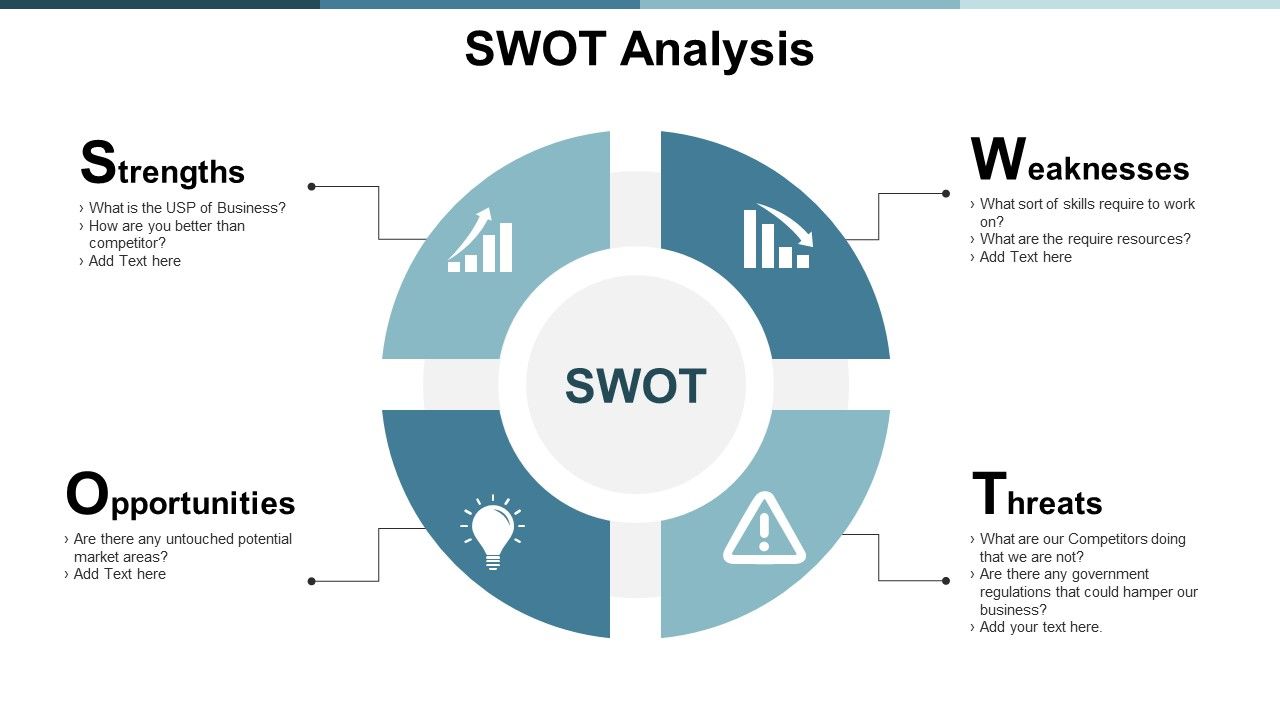
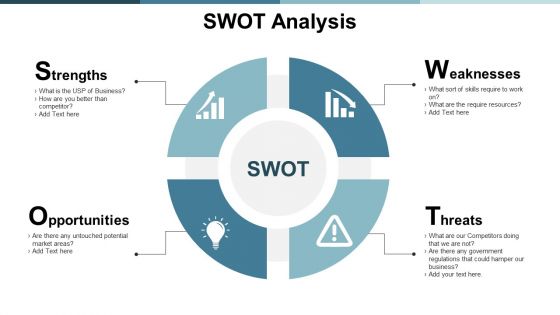
Use this PPT Template to understand the relationship between the questions asked in each segment of the SWOT Analysis and how the responses decide a company’s future direction. The first question that goes into the strengths bucket is, how are you better than the competitor? Answer this in detail, and you will be set for the hurly-burly of the business world and capture it to your advantage. The second strength question asks what the USP of your business is, something that you do better than everybody else. The icon of a rising symbol above the bar graph illustrates how the strength increases with its use.
In Weaknesses, the slide starts a discussion on the skills you need to work on and the resources required. In the Threats segment, the business finds out whether government regulations could impact the business and retakes a critical look at competition. In the Opportunities section that a flashing bulb represents, the business must question whether there are untouched potential market areas that it could explore. Download the template now to understand the importance of a well-executed SWOT Analysis and never look back. Remember, though, that a periodic SWOT Analysis is a valuable tool to generate new ideas and reset priorities, irrespective of the past success you may have had.
PS SWOT Analysis for the HR Department acts as the base on which the entire organization can always improve and enhance its talent compensation ability to handle change through its employees across industries. Find best-in-class templates here.
Swot analysis threat ppt powerpoint presentation icon mockup with all 5 slides:
Our Swot Analysis Threat Ppt Powerpoint Presentation Icon Mockup ensure fewer gaps. It will cut down the intervals.
FAQs for Swot analysis threat ppt powerpoint
So SWOT is basically four buckets - Strengths and Weaknesses are your internal stuff (what you're good/bad at), while Opportunities and Threats come from outside forces like competitors or market changes. Don't do this alone, trust me. Get your team together because you'll definitely miss important things. Look inward first for strengths/weaknesses - your operations, resources, how you're actually performing. Then scan outward for opportunities and threats by checking what competitors are doing, new trends, regulations, whatever. Oh and here's the thing - you've gotta be brutally honest about your weak spots. Otherwise what's the point? The magic happens when you actually turn all this into real action items afterward.
Okay so here's what I'd do - first figure out what you're actually better at than everyone else. Tech? Customer service? Whatever it is, find the market opportunities that play perfectly into those strengths. Don't try to reinvent the wheel, you know? Use what you've already got going for you to tackle new stuff. I always think it's way smarter to build on your advantages than start fresh. Map out maybe 2-3 solid ways your best skills match up with what's happening in the market right now, then just pick the one with biggest upside that you can actually pull off quickly.
Honestly, most companies are blind to their own dysfunction. Poor communication between teams is huge - like when marketing and sales basically hate each other but nobody talks about it. Resistance to change is another killer. You'll also find outdated tech that "works fine" but is secretly dragging everything down. Oh, and over-relying on that one person who knows all the passwords? Recipe for disaster when they quit. Cash flow issues get swept under the rug too because leadership hates admitting money problems. Best move is getting real feedback from everyone, not just the executives who think everything's peachy.
Honestly, just make it part of your regular routine instead of some big quarterly thing. Set up Google alerts for competitors (yeah, feels stalky but whatever). Keep tabs on industry trends and economic stuff that might mess with your business. The real trick? Don't just spot threats - actually have backup plans ready. I'd assign someone to watch for early warning signs because this stuff happens fast. Build some flexibility into your strategy so you can switch gears quickly. Sounds paranoid but being caught off guard sucks way more than over-preparing.
So SWOT's actually way more useful than most people realize - you can plug it into pretty much any part of your planning process. Start with it when you're scanning what's happening around you, then use it again when you're weighing different strategic options. Here's the thing: your strengths + opportunities = where you want to play. Use weaknesses and threats to build backup plans. Don't just do it once though - check back quarterly to see how things are shifting. I've seen too many companies do a SWOT workshop and then never touch it again, which is honestly a waste.
Market trends are basically your roadmap for the opportunities and threats sections. When something's hot in your industry - like AI right now - that's an obvious opportunity to jump on. Declining trends? Those become your threats. You'll want to track consumer behavior changes, new tech, regulations, economic stuff. All the external forces you can't control but have to deal with anyway. Honestly, most people just guess at trends instead of actually researching them. The trick is keeping your analysis current so your SWOT reflects real market conditions, not outdated assumptions.
Oh man, stakeholder perception totally changes your whole SWOT game. Like, you might think your customer service rocks, but if your clients are actually annoyed with slow response times? That's a weakness, not a strength. The reverse happens too - sometimes you're underselling stuff that people actually love about you. I'd definitely survey different groups during the process. Quick polls for customers work great, and honestly those casual coffee chats with partners often give you the most honest feedback. It's wild how different the outside view can be from what you see internally.
So basically, startups are good at being nimble and coming up with cool ideas, but you're broke and nobody knows who you are yet. Big companies have the opposite problem - tons of money and everyone recognizes them, but they move like molasses and hate change. If you're a startup, obsess over opportunities since that's literally how you'll grow. Established companies should worry more about what might kill their business (which honestly keeps most CEOs up at night anyway). Oh, and don't plan the same timeframes. Startups can barely see past next year, while big corps map out half a decade.
Honestly, the key is mixing up who's in the room - grab people from different teams and experience levels. I always do 5-10 minutes of silent brainstorming first because people clam up otherwise. Sticky notes or digital boards work way better than going around the table (trust me on this one). Set ground rules upfront: no stupid ideas, build on what others say, stay constructive. You'll need a timekeeper or it drags on forever. Oh, and make sure someone captures everything and sends notes within 24 hours - can't tell you how many good ideas I've seen vanish because nobody wrote them down.
Honestly, digital tools make SWOT analysis way less painful. Miro's great for remote brainstorming - your team actually stays engaged instead of zoning out on calls. I always use data analytics to back up the strengths/weaknesses sections because gut feelings don't convince anyone anymore. Survey tools are clutch for getting customer input on opportunities you'd never think of internally. Oh, and templates in Lucidchart keep everything organized (I'm terrible at staying structured otherwise). Just grab a simple digital whiteboard next time. You'll be surprised how much smoother it goes.
Check your SWOT every 3-6 months, or when big stuff changes in your market. Most teams do one and forget it exists for like two years - such a waste. Fast-moving industries? Go quarterly. More stable ones work fine with twice yearly. The whole idea is keeping up with new competitors and opportunities as they pop up. Your internal strengths shift too, obviously. Just set a calendar reminder and actually stick to it. Treat it like your other strategy reviews, not some random document collecting digital dust. Oh, and don't make it one of those painful all-day workshops - nobody has time for that.
The biggest problem with SWOT? It's way too subjective and people rarely back up their points with actual data. You'll end up with lists that sound convincing but are basically fiction. Get different people involved so you're not stuck in an echo chamber. Always validate your points with real evidence - I can't tell you how many SWOTs I've seen that were pure fantasy. Don't treat every item equally either. Rank them by importance. Oh, and actually DO something with the results instead of shoving them in a drawer somewhere.
SWOT analysis is basically a reality check for your product idea. Map out what you're good at internally, what you suck at, then look at market opportunities and threats. Like if your team rocks at AI development but the market's already flooded with similar tools - that's a red flag you need to pivot or find something unique. Honestly, it's one of the few frameworks that actually makes you face your limitations head-on. Plus you might spot gaps your competitors totally missed. Do this before you build anything or you'll end up with something nobody wants.
SWOT absolutely crushes it in tech, retail, healthcare, and hospitality. These industries get hit with constant changes and competition, so having that framework to check your position makes sense. Manufacturing companies dig it for operational stuff, and consulting firms use it all the time for client work. I mean, you could probably use it anywhere, but those sectors really need it because there's just so much chaos happening. Oh, and if you're in one of these fields - definitely run them quarterly. You'll catch trends way earlier than your competitors.
Don't just dump bullet points on them - tell the actual story your SWOT revealed. What's the big picture here? Then get specific about what each group needs to hear. Finance wants to know about costs, ops teams care about execution headaches. Honestly, most SWOT presentations are just boring lists that go nowhere. Connect the dots for people! Turn your findings into real next steps with owners and deadlines. Otherwise you'll have this great analysis sitting there while everyone goes "okay... so now what?" Give them a clear follow-up plan.
No Reviews