

Pharmaceutical Development Powerpoint Ppt Template Bundles




Try Before you Buy Download Free Sample Product
 Impress Your
 Audience
 100%
100% Editable
 Save Hours
 of Time


Our Pharmaceutical Development Powerpoint Ppt Template Bundles are topically designed to provide an attractive backdrop to any subject. Use them to look like a presentation pro.
People who downloaded this PowerPoint presentation also viewed the following :
Pharmaceutical Development Powerpoint Ppt Template Bundles with all 18 slides:
Use our Pharmaceutical Development Powerpoint Ppt Template Bundles to effectively help you save your valuable time. They are readymade to fit into any presentation structure.





FAQs for Pharmaceutical Development Powerpoint
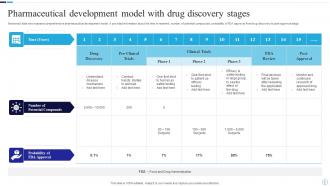
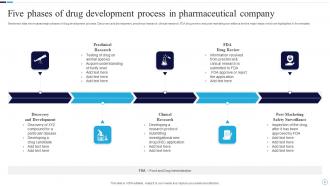
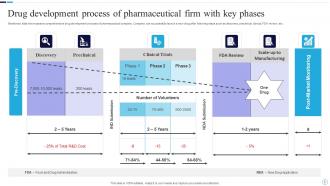
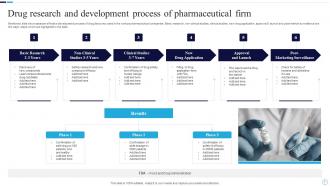
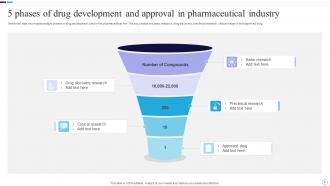
So basically you've got discovery, preclinical testing, then clinical trials (Phase I-III), regulatory approval, and post-market surveillance. First you find promising compounds and test them in labs and on animals. Clinical trials are where it gets brutal honestly - most drugs die here even though you've already spent tons of money. But you need them to prove safety and efficacy. Then comes FDA approval and all that. The whole thing? We're talking 10-15 years and hundreds of millions. Oh and definitely pad your timelines because literally everything gets delayed. I learned that the hard way on my last project.
Oh yeah, regulatory compliance absolutely adds years to drug development. The whole process is brutal - you're submitting protocols, waiting for approvals after each phase, documenting every tiny detail. FDA and EMA reviews can drag on for months even when your application is spotless, which honestly feels excessive sometimes. But here's the thing: if you engage with regulators early through pre-submission meetings, you'll actually save time later. Getting their scientific advice upfront prevents you from going down the wrong path. It's counterintuitive but works.
Okay so clinical trials are basically how you prove your drug won't kill people AND actually works. Phase I tests safety on small groups, Phase II checks if it's effective, then Phase III does big comparisons against current treatments. The amount of data collection is honestly insane - my cousin worked on one and said it's like documenting every sneeze. Without trials you're just guessing at dosing and side effects. They're expensive as hell and take forever, but there's literally no way around them if you want regulatory approval.
Tech is completely changing drug discovery right now. AI can predict how molecules will behave, and machine learning spots promising compounds way faster than old-school methods. Labs are running thousands of experiments at once with automated systems - saves literal years in screening. The coolest part? You can simulate entire clinical trials digitally before recruiting actual patients. Wild stuff, honestly. My advice would be to ease into these tools slowly rather than doing some massive overhaul. Nobody's got time for that headache.
Safety issues will kill your compound before you even blink. Then there's bioavailability - your drug just won't absorb right no matter what you do. Toxicology studies? That's honestly where most good candidates go to die. Animal models are super frustrating too since mice aren't humans, obviously. Formulation is a total headache - getting stable dosing is harder than it sounds. Oh, and regulators will definitely ask for way more data than you planned for. I'd budget extra time and cash for at least two major pivots honestly.
So pharmacogenomics is totally changing drug development - we're moving away from that outdated one-size-fits-all thing. Now doctors can actually predict how your body will process specific meds based on your genes. Pretty wild, right? They can figure out the right dosage for you personally and spot which drugs might mess you up before you even take them. Drug companies are using this to design way more targeted treatments. Clinical trials are getting smarter too - they're grouping patients by genetics now. Honestly think genetic testing should be routine at this point. Better results, fewer nasty side effects.
Ok so basically small molecules are the simple ones - aspirin, Lipitor, stuff like that. You can make them in regular chemical plants, pretty straightforward. Biologics though? Total pain. They're these massive proteins that you have to grow in living cells using fancy bioreactors. Way more complex manufacturing process, which is why they cost so much. The FDA is super picky about biologics too since even tiny changes during production can mess up the whole batch. Honestly, if you're thinking about developing one, just plan on it taking 2-3x longer than small molecules. Maybe more if things go sideways.
Dude, pharma is getting crazy with data analytics right now. AI models can actually predict which compounds will work way earlier in the process. Saves them from those expensive failed trials that used to burn through millions. Machine learning handles clinical trial design and patient recruitment too - even spots potential side effects before human testing. The coolest part? They're analyzing real patient data to see how drugs perform in the actual world, not just sterile lab conditions. You should definitely look into partnering with some data science teams if you haven't yet.
So the main things to focus on: informed consent, risk-benefit analysis, and protecting vulnerable groups. Participants need to genuinely understand what they're getting into - not just check a box. Fair selection matters a ton, and you can't take advantage of people who might feel they have to participate. Data integrity is absolutely critical since people's lives are on the line. Honestly, the worst mistake I see is people trying to add ethics stuff afterward. Build it into your protocol from the start or you'll hate yourself later. Also make sure your review process actually makes sense for your specific study.
Look, pharma companies just chase the money and biggest medical gaps - that's reality. Cancer, rare diseases, stuff for aging populations? That's where the cash is. Regulatory perks help too, like orphan drug status giving you market exclusivity. Patient groups are getting louder about wanting treatments that actually work, not just me-too drugs (which honestly, good for them). Also payers are pickier now about what they'll cover. When you're mapping out development, start with treatment gaps and market size. Oh and don't forget aging boomers - huge opportunity there.
Honestly, spread your bets across different drug types and trial phases - don't go all-in on one thing. Partner up with other companies for those insanely expensive late-stage studies. Adaptive trials are clutch because you can change course fast when stuff isn't panning out. Biomarkers are huge upfront - figure out exactly which patients will respond before you waste tons of money. Get the FDA involved early too, like way earlier than you think. I learned this the hard way watching companies get blindsided later. Build all this risk stuff into your plan from the start, not as an afterthought.
Look, getting patients involved early totally changes the game. They'll spot real problems your team missed and help design trials that actually matter to them. Regulators eat this stuff up too - they want genuine patient voices now. The trick is bringing them into protocol design from day one, not slapping them on at the end. Honestly, their lived experience catches so many blind spots. Plus they become your biggest advocates for recruitment later. I've seen it prevent some really expensive failures when companies thought they knew what patients wanted but... yeah, they didn't.
Yeah, pharma partnerships are huge now - nobody can handle drug development solo anymore. Way too expensive and complicated. Even Pfizer teams up constantly because the expertise needed is insane. Companies partner with universities for early research, then CROs for trials, plus they're always doing licensing deals. You'll see risk-sharing agreements everywhere. Actually, I think a company's partnership portfolio tells you more about their future than whatever's in their current pipeline. The whole industry basically runs on collaboration at this point. When you're looking at pharma stocks, that's what I'd focus on first.
Dude, AI is completely changing how fast we can discover drugs. What used to take like 10-15 years? Now we're looking at maybe 3-5 years for some stuff. You can actually predict if a compound will work before even making it in the lab - saves so much cash on experiments that would've flopped anyway. The pattern recognition thing is honestly crazy when you see it working. Plus it'll dig through massive datasets to find new drug targets way faster than your team could manually. I mean, that alone would take months otherwise. Start small though - maybe try it for target identification first or compound screening. Don't go all-in right away.
Oh man, health crises totally flip pharma timelines upside down. Emergency funding floods in, regulators start fast-tracking everything, and companies that usually hate each other suddenly collaborate. Look at COVID - those vaccines normally take a decade but we got them in under a year, which honestly still blows my mind. The downside? We miss out on long-term safety data and costs go through the roof. Companies basically throw money at the problem until it's solved. So yeah, expect this same pattern for future crises, but definitely budget extra for those emergency development premiums.
-
Superb! The innovative and inspiring template designs provide an edge to the presentation.
-
SlideTeam’s pool of 2Million+ PPTs has really benefited my team, everyone from the IT department to HR. We are lucky to have crossed ways with them.