


Product Roadmap Timeline Graphical Illustration Of Upcoming Years 2013 To 2016 Powerpoint Templates Slides





Try Before you Buy Download Free Sample Product
 Impress Your
 Audience
 100%
100% Editable
 Save Hours
 of Time


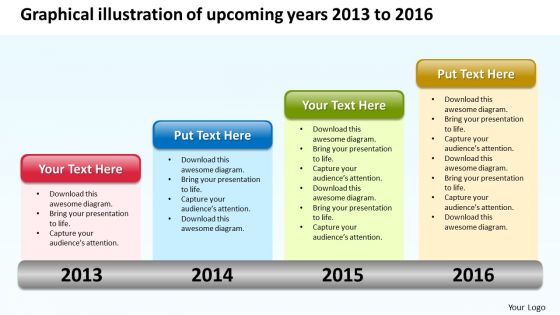
We present to you our Product Roadmap Timeline Graphical Illustration Of Upcoming Years 2013 to 2016 PowerPoint Templates Slides. Use this five high resolution professionally designed slides to impress your clients. You can show various processes by using this step-by-step diagram to illustrate social impacts. This future model template is very recommendable if you want to show the progress report of your products or show some kind of future planning. This deck of slides can also be used to show the goals that have been set out by an organization that it needs to achieve in the coming years. This graphical roadmap template is basically related to the future aspects, since it covers the future years also. This template can be used to show process management, business plan development, strategic planning and many more. If there are milestones that a unit wants to focus on achieving, this is the best PPT design for you. So simply download this template and effortlessly use it to grab all the attention. Take the pressure out of preparing presentation presentations. Our Product Roadmap Timeline Graphical Illustration Of Upcoming Years 2013 to 2016 Powerpoint Templates Slides will do the hard parts for you.
People who downloaded this PowerPoint presentation also viewed the following :
Product Roadmap Timeline Graphical Illustration Of Upcoming Years 2013 To 2016 Powerpoint Templates Slides with all 5 slides:
Never be left in the lurch again. Product Roadmap Timeline Graphical Illustration Of Upcoming Years 2013 to 2016 Powerpoint Templates Slides design are on hand now to make your presntations boardroom ready.

FAQs for Product Roadmap Timeline Graphical Illustration Of Upcoming Years 2013 To 2016
You need clear objectives and realistic timelines first. Prioritize your features and show why each one matters to users. Visual roadmaps work best - way easier to update when things inevitably change. Map out your current quarter in detail, but honestly? Keep future quarters broader since you'll probably pivot anyway. Don't forget buffer time because everything takes longer than you think. Dependencies between features are crucial to track. Oh, and get stakeholder buy-in early - saves you from those awkward "wait, what happened to X feature?" conversations later. Success metrics help too so you know if it's actually working.
Think of user feedback as your GPS for product decisions - it tells you what's actually broken vs what you assume is broken. I collect it through surveys, support tickets, interviews, and analytics. Then hunt for patterns in complaints and requests. The annoying part? Balancing loud complainers with quiet users who never speak up. Sometimes the person emailing you daily isn't representing your actual user base, you know? But when you start seeing the same issues pop up consistently across different channels, that's gold. Those patterns should definitely shape your sprint planning and bigger roadmap goals.
So strategic roadmaps are your big picture stuff - thinking quarters or years ahead with major themes like "boost user retention" or "break into new markets." That's your what and why. Tactical roadmaps? Total opposite. You're down in the details with specific features, actual release dates, next few sprints. The how and when basically. Most teams I've seen try to mix them together and it gets messy fast. Start strategic first, then use that to drive your tactical calls. Both are needed but keeping them separate is honestly harder than it sounds!
Honestly, quarterly updates are the bare minimum - I'd do it monthly or even every couple weeks when crazy stuff happens. Markets change constantly, customer feedback keeps coming, and let's be real, priorities shift way more than we want them to. Monthly review meetings work well for most teams I know. You can look at actual data and figure out what needs to change. The tricky part is balancing stability (so your team doesn't go insane) with staying flexible enough to adapt. I've watched too many teams stick with outdated roadmaps way too long - don't be those guys.
Look, market research is basically your safety net against building stuff nobody wants. I've watched so many teams (myself included, honestly) get burned by assuming we knew what users needed. The data shows you real pain points and buying patterns - way more reliable than hunches. Use it to figure out which features actually matter and when to build them. Oh, and don't just do research once at the start. Build in regular check-ins throughout your roadmap process. Otherwise you're flying blind and probably heading toward a competitor who did their homework.
Honestly, roadmaps are game-changers because they stop everyone from working in silos. Your engineering team finally knows what marketing is planning, design can see upcoming deadlines, and nobody's scrambling last-minute when features drop. Think of it like... everyone's finally reading from the same playbook instead of making stuff up as they go. Dependencies become way more obvious, which saves you from those "wait, we needed WHAT by when?" panic moments. The key is actually keeping it updated though - I've seen too many teams create these beautiful roadmaps then forget they exist. Make it visible and current, otherwise you're back to square one.
So for roadmaps - Productboard and Aha! are pretty solid if you want something built specifically for product stuff. Roadmunk's decent too, really user-friendly. But honestly? I've seen teams crush it with way simpler tools. Notion and Airtable work great if you like customizing everything (probably overkill but whatever). Miro's cool for the visual people on your team. Don't get sucked into paying for a bunch of features you'll never touch though. Just pick something that plays nice with whatever you're already using and see if people actually look at the damn thing.
Start with scoring features against what actually matters for your business - revenue, user value, strategic fit. Build a simple matrix weighing customer demand vs development effort vs your current goals. User feedback and market research are obviously critical here. But honestly, technical feasibility gets overlooked way too often. Quick wins are tempting, but you need some longer-term bets too. Here's the thing though - be absolutely ruthless saying no to nice-to-haves. Always connect your priorities to something you can actually measure and track later.
Dude, biggest mistake is getting way too granular upfront - you'll lose your mind trying to estimate stuff that's months away. Feature creep is brutal too. Everyone's gonna push their random ideas on you, but stick to what actually matters. Talk to real users instead of building whatever sounds neat to your team (learned this one the hard way). Buffer time is absolutely critical because literally everything takes twice as long as you think. Oh, and don't treat it like some sacred document. Keep tweaking it as you figure out what works and what doesn't.
Quarterly reviews are your best friend here - show stakeholders real progress against what you promised them. Communication is key, but don't just tell people *what* you're prioritizing. Explain the why behind it. People get way less cranky about roadmap changes (and trust me, they'll happen constantly) when they feel like someone actually listened to their concerns. Document everything so there's no "wait, I thought we agreed on X" drama later. Oh, and pick one place where the roadmap lives - having it scattered across different tools is a nightmare. I'd start with monthly check-ins with your main stakeholders and go from there.
Honestly, you'll want to track both outcomes and process stuff. Hit your release dates? Check. Customer satisfaction scores going up? Also check. Revenue and user engagement are the big ones though - those actually matter to the business. Feature adoption is critical too. I've seen teams build entire features that just... sit there unused. It's brutal. Don't forget stakeholder check-ins and surveys to make sure everyone's still aligned. Pick maybe 3-4 metrics max - tracking everything just creates noise. Figure out what success looks like first, then work backwards from there.
Honestly, I'd go with a 70/30 split to start. Most of your roadmap - like 70% - should focus on stuff you can ship in the next quarter or two. That keeps everyone happy and shows real progress. The other 30%? That's your longer-term bets. I made the mistake once of getting way too excited about big future projects and neglecting the day-to-day wins. Don't do that! Your long-term work should still connect to what you're doing now, just with longer timelines. Be upfront about when things will actually happen, and tweak that balance as you learn more. Quick tip: audit your current roadmap against this 70/30 thing right now.
Okay so three things matter most when pitching investors your roadmap. First, tie everything to actual numbers - show how each feature drives revenue or user growth. Second, be realistic about timing because missing deadlines pisses off investors way more than being conservative upfront. I've watched so many startups torpedo themselves on this one thing alone, it's crazy. Third, prove you're solving real problems and staying ahead of competitors. Oh and always have backup plans for your biggest risks. Honestly, just keep it honest and metrics-focused - investors want to see clear business outcomes they can actually evaluate.
Honestly, don't try to map out a whole year - that plan's gonna be dead within weeks. Go for quarterly chunks instead, maybe monthly if things are really moving fast. I learned this the hard way when our "perfect" roadmap got blown up by one user interview. Keep your themes loose so you can actually pivot when feedback comes in. The whole thing needs to be a living doc that you're constantly tweaking after sprint reviews. Oh, and set up regular check-ins with stakeholders - they'll help you spot when priorities need shuffling around based on what users are actually telling you.
Honestly, the worst thing you can do is let people hear about changes through office gossip. Hit them with updates the second you know something's shifting. Explain why it's happening - people hate being left in the dark about the reasoning. Email works for the paper trail, but get on a call for big changes so they can actually ask questions. I've watched teams completely blow up their credibility when surprises drop out of nowhere. Oh, and don't forget they probably built their own plans around your original timeline. Help them figure out how to adjust, or you'll just create more chaos down the line.
-
Very unique and reliable designs.
-
Innovative and attractive designs.