


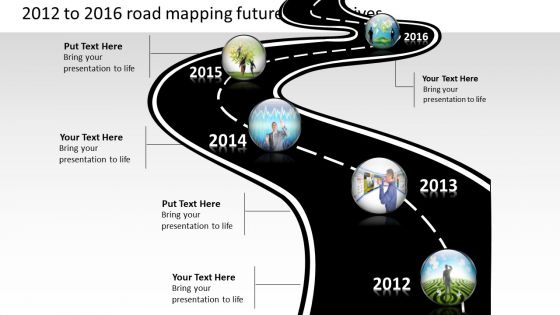
Product roadmap timeline 2012 to 2016 road mapping future perspectives powerpoint templates slides





Try Before you Buy Download Free Sample Product
 Impress Your
 Audience
 100%
100% Editable
 Save Hours
 of Time


Download this product roadmap timeline 2012 to 2016 road mapping the future perspectives PowerPoint template slides. This product roadmap timeline template is specially designed to plan your project, manage the actions and eventually be clear with your upcoming missions and the goals. Since professionally designed roadmap timelines clearly demonstrate the future perspectives, with the use of effective diagrams and the models, it becomes easy for the organizations to make the employees understand the goals and be clear in their vision. What else can be so effective than this strategic roadmap PowerPoint template to visualize the business objectives, set the strategies and innovation? We find nothing more effective than this Strategic Communication Presentation, to talk about your business vision and the initiatives to get there with your team and the other stakeholders. So, download this professional future strategy roadmap PPT slide template, present it to your audience and start climbing the stair to success. Get onto the gravy train of life. Our Product Roadmap Timeline 2012 to 2016 Road Mapping Future Perspectives Powerpoint Templates Slides will give you the ticket to ride.
People who downloaded this PowerPoint presentation also viewed the following :
Product roadmap timeline 2012 to 2016 road mapping future perspectives powerpoint templates slides with all 6 slides:
Even in a hurry you always give your best. These Product Roadmap Timeline 2012 to 2016 Road Mapping Future Perspectives Powerpoint Templates Slides are ready to have your next presentation looking great in record time.

FAQs for Product roadmap timeline 2012 to 2016 road mapping future perspectives
Hey! So definitely map out your big features and releases first, plus realistic timelines for everything. Dependencies are huge - seriously, I've seen projects crash because people ignored those connections between features. Quarter-based planning works way better than exact dates since priorities always change anyway. Buffer time is your friend because literally nothing ever ships on time lol. Oh and make sure you're super clear about what's actually committed vs just wishful thinking. Don't forget to factor in your team's bandwidth and any big marketing pushes or events that could mess with your schedule.
Honestly, roadmap timelines are a lifesaver - they stop everyone from constantly asking "wait, what are we working on again?" Your team can actually see how different projects connect and where things might get messy before they do. It's way better than hunting through old Slack messages to figure out priorities. The visual part is clutch too. Just don't let it get stale or people will stop checking it (learned that one the hard way). Dependencies become super obvious when you map everything out, and you'll avoid those awkward moments where two teams are basically doing the same work.
Dude, always pad your estimates by like 25-30% minimum. Trust me on this - stuff WILL go sideways. Get your engineers involved in the guessing game instead of just winging it from the product side (yeah, I've bombed that before). Break everything down into bite-sized pieces so you can actually see if you're on track. Don't forget about dependencies and random stuff like holidays eating up time. Oh, and when things start looking sketchy? Tell people immediately. Nobody likes getting blindsided at the last second, but they'll usually work with you if you're upfront about it early.
Quarterly at minimum, but monthly is way better if you're in a crazy-fast industry. I learned this the hard way lol - things shift constantly. Customer wants change, competitors drop new stuff, tech issues come up out of nowhere. Monthly check-ins let you adjust priorities without going insane. Don't pivot every week though or your team will hate you. Do the deep strategic stuff quarterly. Oh and actually put these reviews on your calendar right now, otherwise you'll forget and suddenly it's been six months since you looked at the damn thing.
Honestly, Productboard or Aha! are your best bets - they're built specifically for product teams and handle all the messy dependency stuff really well. Roadmunk's decent too but Tempo just bought them, so who knows what'll happen there. If you're watching budget, don't sleep on Notion or Airtable with custom templates. They work way better than you'd think. Monday.com's roadmap views are pretty solid, and Figma's great if your team's more visual. But here's the thing - pick whatever your team will actually open. I've seen so many fancy tools just collect digital dust because stakeholders couldn't be bothered to log in.
Honestly, I just weigh impact vs effort for everything. Critical bugs and security stuff come first - that's non-negotiable. Then I look at what actually moves the needle for users or hits our main goals. Customer feedback matters tons, but you can't just follow whoever screams loudest (learned that the hard way). I score features on a simple impact vs complexity grid, though dependencies between stuff can mess up your whole plan. The real trick? Stay flexible because priorities will change constantly. Oh and keep it simple - complex scoring systems just slow you down when you need to pivot fast.
So basically, high-level roadmaps are the big picture stuff - like "launch mobile app" or "expand to Europe" over quarters/years. That's what you show executives who don't want to get into the weeds. Detailed roadmaps? Those break everything down into actual features, user stories, sprint-level work. Way messier but your dev team can't do anything without it. I learned this the hard way when I tried skipping straight to detailed planning once - total disaster. Always start high-level first. Then only drill down into specifics for maybe the next quarter or two ahead, otherwise you'll drive yourself crazy.
Honestly, quarterly reviews work really well for this. Dig through support tickets, user interviews, feature requests - look for patterns in what people actually want. The hard part? Not chasing every random request that sounds cool. Reserve about 20-30% of your timeline as buffer space for these shifts. I always sort feedback by impact vs effort first - makes prioritizing way easier. High-impact stuff gets slotted into your next few sprints. Just don't let urgent customer complaints completely derail your long-term vision, you know?
Track delivery stuff first - are you hitting milestones, releasing on time, that basic stuff. But honestly that's kinda boring. The real question is whether features actually work once they're out there. Look at user adoption, customer happiness scores, whether you're moving the needle on business goals. Oh and survey stakeholders regularly because politics matter more than we'd like to admit. Start small though - maybe 3 metrics tops or you'll drive yourself crazy trying to track everything. You can always add more later once you get the hang of it.
Honestly, get everyone together ASAP - video calls work fine but in-person hits different. Interview each team first so you actually understand what they're dealing with, then run workshops where people can argue it out instead of those awful email threads. Write everything down and make sure you have a vision statement that doesn't suck. Sales, engineering, marketing, leadership - they all need to feel like their voices matter or this whole thing falls apart. Don't think it's a one-and-done situation though. Monthly roadmap reviews are your friend for catching drama before it blows up your timeline.
Timing's probably your biggest enemy here - everyone's way too optimistic about how long stuff actually takes. Add like 25-30% buffer to whatever you think it'll be. Honestly, planning more than 6 months out is just fancy guesswork anyway. Keep things flexible since priorities always change (and they will). Dependencies between teams will bite you if you're not careful about mapping those out first. Oh, and don't promise specific dates publicly until you're actually sure - learned that one the hard way. External stuff you can't control will mess with your timeline too.
Dude, trust me on this - color coding is your best friend for roadmaps. Use it to separate different product areas or show what's high priority vs low. Progress bars are clutch too, they instantly show how far along things are. Icons help people spot feature types super fast. Nobody wants to stare at a boring wall of text (learned that the hard way). Swimlanes keep everything organized by team, and timeline bars show duration plus dependencies. Oh, and stick to the same visual style throughout - otherwise people get confused trying to figure out what everything means.
Honestly, market research should be driving your whole roadmap strategy. You'll figure out what customers actually want instead of just guessing - trust me, I wasted months building features nobody cared about. The data helps you sequence releases better and gives you real confidence in your timelines. Plus you can spot competitive threats or market opportunities that might make you speed things up or pump the brakes. I'm probably obsessing over this because I got burned so badly before, but seriously - validate your roadmap decisions with actual user research, not just internal assumptions.
Okay so with Agile, you're basically planning in 2-4 week chunks instead of mapping everything out months in advance. Way more flexible. You focus on themes and outcomes rather than specific delivery dates - honestly took me forever to get comfortable with that ambiguity, but it's so much better. Quarterly planning works well for the big picture stuff, then you break things down as sprints get closer. The game changer is those regular review points where you can actually pivot based on user feedback. No more being stuck with a plan that made sense six months ago but doesn't anymore.
Honestly, start with buffers instead of hard deadlines - saves you so much stress later. When things go sideways (and they will), cut the fluff and focus on what actually matters. Your stakeholders hate surprises way more than they hate delays, so keep them in the loop constantly. I learned this the hard way watching teams crash trying to hit impossible dates. Do monthly check-ins to catch problems early. Oh, and always have backup plans ready because your original timeline is probably toast anyway. Your roadmap should change - that's not failure, it's smart.
-
It saves your time and decrease your efforts in half.
-
Design layout is very impressive.