


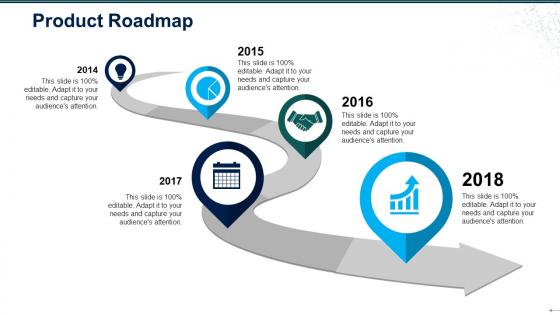
Product roadmap ppt ideas




Try Before you Buy Download Free Sample Product
 Impress Your
 Audience
 100%
100% Editable
 Save Hours
 of Time


Get a chance to indulge your inner desires with our Product Roadmap Ppt Ideas. It caters for your intuition.
People who downloaded this PowerPoint presentation also viewed the following :
Product roadmap ppt ideas with all 5 slides:
Gain from the intervals with our Product Roadmap Ppt Ideas. Give folks that extra bit of information.
FAQs for Product
You'll want clear goals and prioritized features first - those are non-negotiable. Realistic timelines matter too, plus success metrics so you actually know if things worked. Always explain the "why" behind what you're building, not just the what. Stakeholders eat that stuff up. Dependencies and risks? Yeah, include those or they'll definitely come back to haunt you later. Make it visual since you'll be showing this to everyone and their mom. Oh, and keep it flexible - priorities will shift whether you like it or not, so plan for updates.
Honestly, you need some kind of scoring system or you'll just keep going in circles forever. I usually score features on impact (like revenue potential), how much effort they'll take, and whether they actually fit our bigger goals. ICE method works too - Impact, Confidence, Ease. Way better than everyone just shouting about their pet features. Don't forget customer feedback volume and any urgent tech debt that's about to bite you. Throw it all in a spreadsheet, score each thing, then rank them. Oh and review quarterly since things change constantly. Main thing is getting your team to actually stick with whatever process you pick.
Honestly, user feedback is everything - it's your only way to know if you're actually building stuff people want. I've watched so many teams just guess at what users need and totally whiff it. You can't just sit around waiting for feedback though. Go hunt it down! Set up interviews, dig through support tickets, read those survey responses nobody ever looks at. Also validate your assumptions early - there's always a gap between what you think users struggle with and reality. Oh and super important: tell people how their feedback changed your plans. Users love seeing that.
Honestly, quarterly is the bare minimum but it really depends on your industry. Fast-moving markets? You might need monthly updates or you'll get left behind. I've watched teams crash and burn by clinging to old roadmaps way too long - stakeholders start losing faith when priorities randomly shift without warning. Pick a schedule that actually works for your team and don't bail on it. Could be monthly, quarterly, whatever. Just be consistent and don't leave people guessing about changes. Oh, and definitely communicate the "why" behind shifts - that part's huge.
So for roadmaps, Productboard and Roadmunk are pretty solid if you want something built specifically for this stuff. But honestly? Most teams just use whatever they already have lying around. Notion's flexible if your team's into that, Airtable works great too. Already using Jira? Their roadmap thing is decent enough. Oh and Figma's actually surprisingly good for visual ones - didn't expect that when I first tried it. The tool doesn't really matter though. What matters is actually keeping the damn thing updated and using it to make real decisions with your team.
Look, agile totally changes how you think about roadmaps. No more planning features a year ahead like waterfall does - you're constantly shifting priorities based on what users actually tell you and how sprints go. Your roadmap becomes this living thing that changes every few weeks. Honestly feels messy at first but it's way better once you get used to it. Focus on themes instead of super detailed specs, and keep your timeline shorter. Oh and build in those regular check-ins where you can totally change direction if needed. Game changer, trust me.
Don't get super specific with dates early on - you'll just disappoint everyone when stuff shifts around (which it always does). Skip turning it into a massive feature wishlist too. Nobody respects those. I'd go with "now, next, later" instead of exact quarters. Way less stressful. Focus on the big themes and why you're doing things, not every tiny technical detail. Oh, and make sure people know this isn't carved in stone. It's about direction and what matters most right now. Honestly, the "why" behind your choices is probably more important than the features themselves.
Your roadmap needs to actually connect to what the business wants to achieve. Map each big initiative to real objectives - revenue goals, new markets, keeping customers around. I've watched so many teams build roadmaps that are basically just random feature lists with zero strategy. Pretty painful to see, honestly. Review your priorities regularly and see if they're actually moving those important metrics. Don't treat it like it's carved in stone either - when your strategy shifts, the roadmap should shift too.
Okay so color coding will save your life - different colors for product areas, priorities, whatever makes sense. Timeline bars are clutch for showing when stuff happens. I swear some roadmaps look like Excel had a seizure on PowerPoint. Use icons and mix up your font sizes so people can actually scan it quickly. White space is your friend here, nobody wants to squint at a cramped mess. Oh and shapes should match - like all milestones get diamonds or whatever. Test it on someone fresh who wasn't in those planning sessions. If they're lost, you need to simplify.
Honestly, you need input from other teams or your roadmap becomes total fantasy. Engineering will tell you if your timeline is insane (and it probably is). Sales and support know which customer problems are actually urgent vs what you think matters. Marketing can help you sequence launches better too. I'd set up monthly review sessions with key people instead of just hoping you'll catch them in the hallway. Random conversations don't cut it. When you skip this step, you end up building stuff nobody wants or can't ship on time. Been there - it sucks.
Here's how I'd track if your roadmap is actually working: Start with feature adoption rates and customer satisfaction scores - those tell you if people actually want what you built. Time-to-market matters too, but honestly nobody hits their dates perfectly so don't stress too much about that one. Revenue impact from new features is obviously huge. I'd also watch user engagement and whether support tickets spike after releases (that's usually not great lol). Pick maybe 3-4 metrics max though - tracking everything just gets messy. Figure out what success looks like for YOUR product first, then find the numbers that'll prove it.
Market trends can totally flip your roadmap upside down - they're like early warning signals about where users are headed. You gotta figure out if a trend actually fits your product vision or if you're just chasing shiny objects. Honestly, some trends are complete garbage (QR codes "died" like three times before actually taking off). The tricky part? Separating real shifts from passing fads. I'd set up some kind of trend watching system and do quarterly roadmap check-ins. That way you're not scrambling when something big hits but also not pivoting every week.
So short-term roadmaps are like 3-6 months out - that's where you put the concrete stuff your team can actually deliver. Features, bug fixes, things users are asking for right now. Long-term is 6+ months and honestly gets pretty fuzzy (which is fine!). That's more your big picture vision and strategic direction. I always think of it like promising vs. pointing - short-term you're saying "we'll definitely build this," but long-term you're just pointing toward where you want to go. Your short-term roadmap needs real timelines and details. Long-term? Just communicate the general direction so stakeholders know what you're thinking. The further out, the vaguer it gets - totally normal.
So basically you gotta speak their language, right? Executives want the big picture stuff - business impact, quarterly goals, that kind of thing. Engineering teams are different though - they're gonna drill you on technical details and dependencies anyway, so just be ready for it. Sales and customer success care most about what features actually do and when they can promise stuff to clients. Oh and ditch the boring docs - use timelines or those now-next-later charts instead. Way easier to follow. Set up regular check-ins rather than just presenting once and disappearing.
Your roadmap's gonna change like crazy depending on where you are. Those early ones? Total joke - you'll be pivoting every week based on what users actually want. I've seen teams completely scrap their first three roadmaps. Once you hit your stride, changes get more thoughtful - maybe you're expanding into new markets or responding to competitors. Later it's all about maintenance and keeping the lights on. Build in flexibility from the start though. Stick with themes instead of hard dates, and always explain why you're shifting priorities. Stakeholders hate surprises but they'll roll with changes if they understand the reasoning.
-
good
-
Wonderful templates design to use in business meetings.
-
Easily Editable.