

Project business case benefits powerpoint presentation examples





Try Before you Buy Download Free Sample Product
 Impress Your
 Audience
 100%
100% Editable
 Save Hours
 of Time


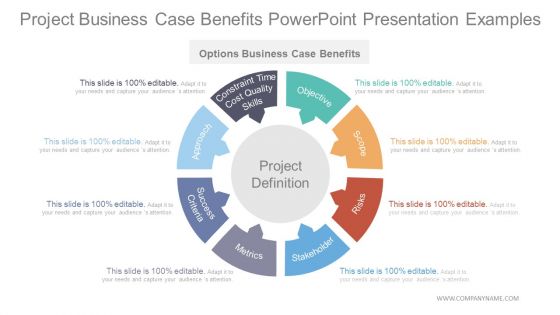
Presenting readymade project business case benefits PowerPoint presentation examples. It will set a platform for you to develop a business case for your project. The main purpose is to help you take the investment decisions about your project. The main points covered in this project scope PPT template are objective, scope, risks, stakeholders, metrics, success criteria, approach, cost quality, and constraint time. Through this design, you can define success and benefits of your project, as well as the way to measure it. This will help generate support and acceptance for your project. The diagram covers many related topics such as case study in project management, business case summary, project management case, and case study for project. Poor planning can adversely affect your business, so download project business case benefits presentation to ensure the success of your project. Create craftsmen with our Project Business Case Benefits Powerpoint Presentation Examples. They will acquire a bit of your expertise.
People who downloaded this PowerPoint presentation also viewed the following :
Project business case benefits powerpoint presentation examples with all 5 slides:
Handle external forces with our Project Business Case Benefits Powerpoint Presentation Examples. Establish control over the influence they have.
FAQs for Project business case benefits
So you need five main things for a solid business case. Problem statement first - what's actually broken? Then your solution plus a few backup options. Financial analysis is crucial (costs, benefits, ROI stuff) because honestly, executives will skip straight to those numbers anyway. Don't forget risk assessment and a realistic timeline. Oh, and success metrics are huge - you want everyone clear on what "good" looks like down the road. Document your assumptions too, they'll come back to bite you otherwise. Start with a killer one-page executive summary since some people won't read past that. Make it punchy.
Honestly, a good business case is like your project's backbone - keeps everyone on the same page about why you're even doing this thing. You'll catch potential problems and costs early instead of getting blindsided later (trust me on this one). When stakeholders can actually see the ROI numbers laid out, they won't bail when stuff gets messy. Studies show projects with solid business cases succeed about 30% more often. I know it's tempting to just dive in, but seriously - nail down your business case first. Future you will thank you when you're not dealing with random scope changes every week.
So here's the thing - you've gotta figure out who actually gives a damn about your project first. Map out everyone who's affected: sponsors, users, departments, the whole crew. Then talk to them directly about what they want out of this. Yeah it's annoying when they all want different stuff, but that's literally why you do this homework early. Your business case will be way more solid when you can spell out specific benefits for each group. Honestly, most people skip this step and wonder why their projects crash later. Start with a list, then just ask them what success looks like to them.
Look, a business case is basically your "here's why this matters" document. You want hard numbers - like "we'll save $200K per year" or "cut processing time by 40%." Decision-makers need something concrete, not just your hunch that it's smart. Show them you've mapped out the risks and costs too. Honestly, I've watched projects sail through approval when the case tied directly to what executives already cared about. Don't get fancy with the language - just hit their key metrics. Oh, and make sure it actually answers the money question upfront.
Dude, the worst thing you can do is get way too optimistic with your projected benefits - I've watched teams basically fantasize their way to getting approval. Also don't be vague about when stuff will happen or how you'll measure success. Oh, and loop in the important people early! Otherwise they'll fight you later when you actually need their support. Implementation costs always end up being worse than you think too. Honestly, just be conservative with everything and build in extra time. Way better to surprise people by doing well than promising the moon and failing.
Look, numbers are everything when you're trying to get buy-in. Decision-makers want concrete ROI percentages and cost savings they can actually defend to their higher-ups. Yeah, the touchy-feely stuff has its place, but executives live and breathe spreadsheets. Here's the thing though - don't just make up crazy percentages that sound good. Pick maybe 3-5 solid metrics you can realistically track once things get rolling. Honestly, I've seen so many pitches fail because people got too creative with their projections. Keep it real and measurable.
Look, a good business case basically stops your sponsors from making decisions based on whoever talked to them last or what sounds cool. You get all the ROI numbers, risks, and what you'll actually need laid out clearly so they can compare projects fairly. It forces everyone to think through their assumptions beforehand too - which honestly happens way less than it should. The trick is including real success metrics and timelines that aren't total fantasy. That way sponsors can see if things are actually working as the project moves along instead of just hoping for the best.
Look, you basically need this stuff to prove your project isn't just some pipe dream. Stakeholders want to see real demand exists - not just your gut feeling about it. Research helps you figure out realistic pricing and spot market gaps you can actually fill. Plus it makes your revenue numbers way more credible since they're backed by actual data instead of random guesses. Honestly, competitor analysis can be pretty eye-opening too. Start with customer feedback and what competitors are charging - that combo usually gets people's attention in meetings.
Okay so here's the thing - people need to *feel* something, not just understand the logic. Figure out what actually keeps each person awake at night. Is it budget cuts? Missed deadlines? Then connect your proposal directly to fixing their specific pain points. Don't write some boring corporate document that sounds like every other business case. Get them involved in building it with you! Seriously, when someone helps create the plan, they'll fight for it later. Make everything super concrete too - real numbers, actual timelines, outcomes they can picture happening. I've watched so many great ideas die because they felt too abstract. Generic benefits don't move anyone.
Build your risk assessment right into the benefits analysis - don't just tack it on later. I'd create three scenarios for each big benefit: best case, realistic, and worst case. Then slap probability percentages on them. Way better than just throwing out rosy numbers and crossing your fingers (honestly, we've all been burned by that approach). Don't forget to factor in mitigation costs too - that stuff adds up. List your top 5 risks and actually quantify how they'd hurt your projected benefits. You want to be honest about the uncertainty while still making your case sound solid.
Honestly, strategic alignment is what separates the approved projects from the ones that die in committee. You've got to show executives that your project hits their main priorities - otherwise you're just another "sounds good but maybe later" proposal. Map your benefits directly to whatever goals leadership keeps talking about in meetings. Use their exact words too, because they love hearing their own terminology back. Resources are always tight, so you're competing against other projects. The ones that scream "this moves our strategy forward" win every time. Also random tip - check their latest quarterly presentation for the buzzwords they're obsessed with right now.
Honestly, treat your business case like it's flexible instead of set in stone. Focus on the bare minimum outcomes you need first. Every 2-3 sprints, build in review points to see what's actually working. I've watched teams cling to assumptions from month one that made zero sense by month six - don't be those people! Track early success signals, not just end results. Set up quarterly check-ins where you can either pivot hard or go all-in based on real feedback. The whole thing should evolve as you figure out what users actually want.
Honestly, just track whatever you promised them in the first place - ROI, cost savings, revenue bumps, whatever it was. Skip the vanity metrics that make pretty charts but don't actually mean anything. If you said you'd cut processing time by 30% or boost sales by $2M, that's what matters now. Grab some early indicators too so you can pivot if things go sideways. I'd set up something simple - doesn't need to be fancy - and check it monthly for the first year. After that, quarterly reviews should do it. The last thing you want is leadership asking "so how's that project going?" and you're scrambling for real numbers.
Dude, don't treat legal stuff like an afterthought - it'll bite you. Document all compliance costs and regulatory timelines right in your business case. Environmental permits, data privacy rules, whatever applies to your project. I've literally watched proposals get crushed because someone "forgot" about a regulatory thing that would've pushed timelines back months. Stakeholders will grill you on this stuff anyway, so get ahead of it. Build those costs into your financials early. Trust me on this one - surprises suck.
Okay so first slide needs your bottom line - ROI, timeline, major risks. Don't build up to it because execs literally have no patience for that stuff. Visuals beat text every time, and honestly practice a 30-second version since meetings always get cut short. Pick 3-4 strong benefits instead of throwing everything at them. Your assumptions better have real data backing them up. Always include the "what if we do nothing" doom scenario - works every time. Have your timeline ready because someone will definitely ask if you can do it faster and cheaper. They always do.
-
Unique research projects to present in meeting.
-
Unique research projects to present in meeting.