

Project roles hierarchy chart sample of ppt presentation




Try Before you Buy Download Free Sample Product
 Impress Your
 Audience
 100%
100% Editable
 Save Hours
 of Time


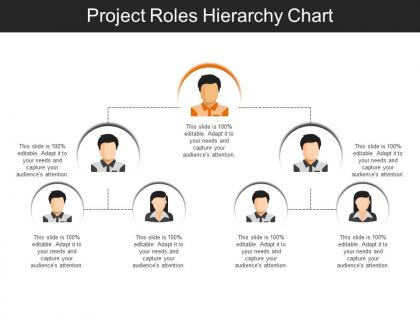
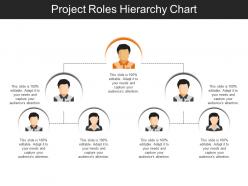
Let your team members aware of their roles in the project with our project roles hierarchy chart sample PowerPoint design. To meet the project deadlines and achieve success in it you must have creative and innovative professionals who understand their responsibilities. This presentation shape shows the different hierarchy levels in the corporate firm. Every individual should understand as what the organization is expecting in terms of his role in the project management and who should they report if they need any assistance or guidance. Our PPT graphic shows that if the things are systematized and every one gives their best then success can be achieved. Hierarchy chart can also be used to highlight the roles and responsibilities of other department such as IT, finance, medical, and technology etc. This presentation slide is not industry specific as anyone can use it after making amendments. Choose this splendid PowerPoint template to let this concept share among your audience. Your viewers will definitely value your effort as it has been professionally designed. Also, take a look at our other PowerPoint designs that you can choose for your presentation as per the industry requirement. All our designs are completely editable. Feel completely fulfilled with our Project Roles Hierarchy Chart Sample Of Ppt Presentation. You will experience a deep satisfaction.
People who downloaded this PowerPoint presentation also viewed the following :
Project roles hierarchy chart sample of ppt presentation with all 5 slides:
Our Project Roles Hierarchy Chart Sample Of Ppt Presentation allow for adequate thought. They discourage hasty action.


FAQs for Project roles hierarchy chart sample
So you've got your Project Manager who basically herds cats all day, then the Project Sponsor - that's your exec with the wallet who calls the big shots. Team Members do the grunt work (obviously). Most places also have a Steering Committee for oversight and Subject Matter Experts you can pull in when things get technical. Oh, and depending on what methodology they're using, maybe Business Analysts or Scrum Masters too. Every company's a little different though. Honestly, just figure out who approves what early on - saves you tons of headaches later when you're waiting around for signatures.
Honestly, being a PM is like wearing different hats depending on where you are. Early on you're basically selling the vision and nailing down what you're actually building. Planning phase? That's when you become the master scheduler - timelines, resources, all that fun stuff. But execution is where things get real. You're putting out fires, tracking everything, making sure people aren't going rogue. I always tell people that's the make-or-break phase. Then closing is more chill - just documenting what worked (and what didn't). Throughout it all though, you're the person everyone comes to with questions.
So basically the project sponsor is the big boss who actually owns whether this thing succeeds or fails from a business angle. They're the ones securing funding and making those high-level calls your PM can't touch. Need executive buy-in or more resources? That's your person. Here's the thing though - they couldn't care less about technical details. When you're presenting to them, skip all that stuff and focus on ROI and how it impacts the bigger strategy. They're literally the only person who can say "yes" when everyone else is running around asking for approval. Pretty powerful role honestly.
Honestly, the magic happens when hierarchy doesn't feel so rigid - more like different experience levels just working together. Daily standups and weekly check-ins help info flow both ways. Junior folks share what's actually happening on the ground, seniors give context and remove roadblocks. Your PM tools should make this easy too, but that's kinda obvious. What really works is scheduling cross-level meetings where everyone can jump in regardless of title. The best teams I've seen treat it like expertise sharing rather than top-down orders.
Dude, role clarity is seriously a game-changer for projects. Everyone knows their exact responsibilities and who to bug when stuff goes sideways. No more stepping on each other's toes or doing the same work twice - which honestly drives me nuts on projects. Conflicts drop way down since there's zero confusion about decision-making. Your stakeholders get that warm fuzzy feeling too because they know who's actually accountable. Just document each person's key duties and authority levels, then make sure the whole team sees it. Trust me on this one.
Dude, you're gonna be juggling like 10 things at once, so organization is everything. Communication skills matter big time - always updating people and making sure stuff doesn't slip through cracks. Detail-oriented people survive way longer in this job because they spot problems early. Oh, and learn some basic project management software now, trust me. You'll be making schedules constantly. Time management is obvious but actually harder than it sounds. Start writing everything down today - sounds boring but when everything's on fire later, you'll thank yourself. Documentation becomes automatic after a while.
Set up regular touchpoints - one-on-ones with your directs, weekly team meetings, monthly all-hands. People need to know who they report to and when to escalate stuff. Most problems happen when someone skips their manager or thinks someone else will pass along critical info (they definitely won't). Slack channels by team help a ton. Document big decisions somewhere everyone can find them - I learned this the hard way when our team kept rehashing the same discussions. The trick is creating natural rhythms where info flows up and decisions come back down without you having to micromanage it.
Oh man, overlapping roles are the worst! You get people doing the same work twice or stuff just gets completely dropped because everyone thinks someone else is on it. The finger-pointing when things blow up? Nightmare fuel. Plus decisions take forever since three different people think they're in charge. I swear, half my old job was figuring out whose problem something actually was. Your sanity depends on getting crystal clear about who does what from day one - maybe do one of those RACI things? And yeah, you'll need some uncomfortable boundary talks, but trust me, it beats the chaos later.
Look, hierarchy basically determines who gets to call the shots and how quickly stuff happens. Senior people have to sign off on the big decisions, but you can usually handle day-to-day stuff without asking permission. More layers = slower decisions, which sucks when you need to move fast. On the flip side, it stops everyone from going rogue and making random calls that could mess things up. Honestly, the key is just figuring out what you're actually allowed to decide on your own vs. when you need to bug your boss about it.
Look, different levels need totally different info. Executives just want the big picture - budget updates, major milestones, that stuff. Your actual team needs nitty-gritty details about what they're doing today. Middle managers? They're stuck dealing with both, poor them. Don't bore the C-suite with technical weeds. But also don't leave your team leads clueless about the bigger strategy - they'll make dumb decisions without context. Match your communication to who actually needs what info and how much power they have over your project.
Yeah so agile basically throws out those old school hierarchies where everything has to go through like 5 managers first. Your Scrum Master becomes more of a facilitator than a boss, and the Product Owner handles priorities while devs organize themselves around sprint goals. Honestly way better than waterfall - I used to hate waiting weeks for approvals on tiny changes. Cross-functional teams mean everyone wears different hats. Decision-making actually happens at the team level now. Just don't try forcing old command structures back in. That defeats the whole point and you'll hate it.
Different roles need different ways to measure success, obviously. Project managers should be judged on hitting deadlines, staying on budget, and keeping stakeholders happy. For team leads, look at team velocity and code quality - plus how well they're growing their people (that mentoring stuff actually matters more than people think). Individual contributors? Focus on task completion, technical work quality, and team collaboration. Senior folks need metrics around strategic impact too - like process improvements they've driven. Just don't measure people on stuff they can't actually control.
Oh man, this is so real! Different cultures have totally different ideas about what your job title actually means. Like in Japan or Germany, they're super strict about who reports to who - clear hierarchies, no confusion. But then you've got more egalitarian cultures where "project manager" just means you're the person herding cats, not actually bossing anyone around. Power distance expectations are all over the map too. Honestly, I learned this the hard way on a project once. Just talk to your team upfront about what everyone thinks your role means - don't assume they get it.
Hey! So for mapping out project roles, I'd start with a whiteboard or digital canvas - just sketch who reports to whom first. RACI matrices work great too (shows who's responsible, accountable, consulted, informed for each task). Tools like Lucidchart or Visio are solid, but honestly? I've seen teams crush this with just PowerPoint when they're scrambling. Miro and Figma work well too. Project management stuff like Asana or Monday have role features built right in, which is pretty convenient. Don't overthink it though - start simple and upgrade later.
So IT teams are way more flat - developers, product owners, scrum masters all collaborate pretty equally. Construction though? Super hierarchical. Project managers at the top, then site supervisors, foremen, all the way down to trades workers. Has to be that way for safety reasons. Like, a senior dev can challenge anyone's call, but if you're doing manual labor you don't question the site supervisor. Period. IT's all about tech skills and agile stuff, construction needs certifications and strict safety protocols. Check PMI guidelines for construction projects, Scrum frameworks for IT. Totally different worlds honestly.
-
Use of icon with content is very relateable, informative and appealing.
-
Nice and innovative design.