


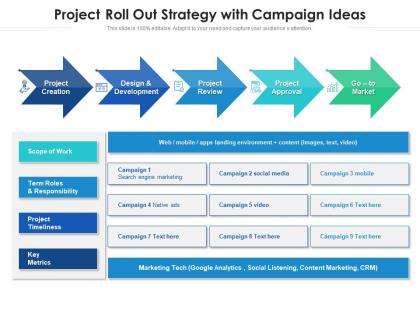
Project roll out strategy with 9 campaign ideas




Try Before you Buy Download Free Sample Product
 Impress Your
 Audience
 100%
100% Editable
 Save Hours
 of Time


Our Project Roll Out Strategy With 9 Campaign Ideas are topically designed to provide an attractive backdrop to any subject. Use them to look like a presentation pro.
People who downloaded this PowerPoint presentation also viewed the following :
Project roll out strategy with 9 campaign ideas with all 2 slides:
Use our Project Roll Out Strategy With 9 Campaign Ideas to effectively help you save your valuable time. They are readymade to fit into any presentation structure.
FAQs for Project roll out strategy with
Honestly, start with your timeline - when does this thing actually need to go live? Map out those key dates first. Then figure out your audience and rollout strategy. Going all at once vs. testing with a pilot group? (Pilots are clutch, trust me on this one.) Budget and staffing - do you have enough bodies to actually support this? Training plans, communication stuff, and yeah... things will break. Have your backup plans sketched out ahead of time. Oh, and definitely think through what could go wrong upfront. Saves you from scrambling later when everything's on fire.
Don't make stakeholder engagement an afterthought - bake it right into your timeline from day one. Figure out who needs what info and when, then hit them at every major milestone. Honestly, I've watched so many rollouts crash because people heard about changes through office gossip instead of proper channels. Regular check-ins are crucial. Set up feedback loops and clear paths for when people freak out (and they will). You want stakeholders feeling like they're part of the process, not just getting dumped on with updates. Create a communication matrix and actually follow it - sounds boring but it works.
Think of risk assessment as your "what if everything goes sideways" game plan. Start by brainstorming what could tank your project - tech failures, budget cuts, users who refuse to adopt it. Map these out by rollout phase so you're not scrambling later. I learned this the hard way on my last project (we definitely should've seen that integration issue coming). Write down your top 5 nightmare scenarios and figure out backup plans now. Trust me, assuming things will go smoothly is how projects die. Having those mitigation strategies ready will save your sanity when stuff inevitably breaks.
Break it down into chunks with real dates and deadlines. Map out your phases first - pilot, partial rollout, full launch. Then set milestones every 2-3 weeks (any longer and people forget what's happening). For communication, start with a stakeholder kickoff meeting. Follow up with visual timelines - honestly, a basic Gantt chart does the trick. Send regular updates through email or whatever project tool you're using. The big thing is staying consistent and flagging any delays right away. Nobody likes surprises, especially when timelines shift.
Honestly, skip the boring PowerPoint presentations - get people actually using the system hands-on. That's what actually works. Set up your initial training, then do follow-ups and maybe some drop-in office hours for questions. Most rollouts crash and burn because everyone disappears after the first week, which is so frustrating to watch. Pick some champions from each team who can help people in real time. Oh, and definitely write down the weird issues that pop up - you'll need that later. Check in regularly the first month or you'll miss problems brewing under the surface.
Set up feedback loops at different stages of your rollout - start with pilot groups, then add surveys and focus groups as you scale. Honestly, I've learned people are way more candid during random hallway chats than formal surveys. Track the numbers (adoption rates, bugs) but don't ignore the feelings stuff either - like what's actually frustrating users or messing up their workflows. Oh, and you need a system to actually DO something with the feedback you get. Weekly review meetings help you pivot quickly and keep teams in the loop about changes.
Pick one person to be the communication hub - trust me, without this everything turns into chaos. Get your department leads talking regularly, not just when fires start. Slack channels work great for quick updates between teams. Oh, and make a simple dashboard everyone can actually access (I've seen too many fancy ones that nobody checks). Create some basic templates so people aren't writing novels in their updates. Map this stuff out early - like, before you're scrambling with deadlines. The whole thing falls apart when people are just emailing random folks hoping someone responds.
Honestly, start with just one or two tools that fix your biggest headaches - don't go crazy with new tech all at once. Project management stuff like Asana keeps everyone on the same page with deadlines. Slack's great for quick updates without endless email chains. The automation thing is huge though - it handles the boring repetitive tasks so your team can actually think about important stuff. Dashboards are clutch for spotting problems early. Oh, and training platforms help people get up to speed way faster. I'd probably go with whatever solves your most annoying problem first.
Track the obvious stuff first - budget, timeline, how many people are actually using it. Support tickets tell you way more than adoption numbers though, honestly. Set up some kind of dashboard early because your boss will definitely ask for updates at the worst possible time. User satisfaction surveys are clutch too. Don't forget whatever business goals you promised to hit - revenue, efficiency, whatever. Oh and watch how fast people adopt new features, not just whether they logged in that one time. The qualitative feedback usually gives you the real story anyway.
Oh man, this is so important! Different countries handle change completely differently - like, what crushes it in the US might totally bomb in Japan or Germany. Communication styles are wild too. You've gotta rework your training stuff, timelines, even how you sell the change for each place. Honestly, hierarchy expectations alone will mess you up if you ignore them. I saw this go sideways on a project recently where we didn't loop in local teams early enough. Big mistake. Get those regional folks involved from day one so they can flag the cultural stuff before you're too far down the road.
Oh man, rollouts are brutal. People will fight you on every workflow change - seriously, the "we've always done it this way" crowd comes out in full force. Technical stuff breaks constantly, even when you test everything twice. Your training docs won't cover half the weird scenarios that pop up. Plus everyone suddenly becomes an expert and wants features added last minute. Communication falls apart too, which makes everything worse. Honestly? Plan for double the time you think you need and have your support team on speed dial. Buffer time saves your sanity.
Honestly, the communication piece is huge - people hate change when they don't get why it's happening. Find your team champions first, the ones who'll actually help you sell this thing to everyone else. That's like 70% of your battle right there. Train people before you flip the switch, obviously. Create ways for them to give feedback during the rollout so they feel involved. Oh, and celebrate the small stuff as you go - keeps people motivated when things get messy. The whole "why we're doing this" conversation needs to happen constantly, not just once.
Dude, get your rollback plan sorted first - trust me on this one. Budget at least 10-15% extra because stuff WILL go wrong. My last project? Main vendor literally ghosted us for three days straight, total nightmare. Have backup vendors ready to go and know exactly who to call when things hit the fan. Oh and document what to do for common screwups so your team isn't running around like headless chickens. Schedule regular check-ins during rollout too - you'll want those pause moments to course-correct instead of just barreling ahead hoping for the best.
Look, first thing - connect your rollout milestones straight to the business numbers that actually matter. Revenue, customer satisfaction, whatever keeps your leadership happy. Weekly check-ins are clutch here, but focus on how you're hitting business KPIs instead of just crossing off technical tasks. I've seen so many teams get lost in feature land and forget about real outcomes. Document everything that shows business impact - both wins and screw-ups. When priorities inevitably change (and they will), you can adjust your timeline without losing sight of what the business actually needs.
Honestly, your leaders will make or break this whole thing. If they're not bought in from day one, you're screwed - I've watched so many good projects die because management just went through the motions. They need to actually explain why this matters, not just send some generic email about "exciting changes ahead" (ugh). Get them modeling the behaviors you want to see. People watch what their boss does way more than what they say. Also, they've got to tackle pushback directly instead of hoping it goes away. Bottom line? Don't even think about starting until leadership is genuinely on board and ready to be vocal about it.
-
Excellent products for quick understanding.
-
Wonderful templates design to use in business meetings.
-
Amazing product with appealing content and design.
-
Informative presentations that are easily editable.