


Project Scope Framework Powerpoint Presentation Slides





Try Before you Buy Download Free Sample Product
 Impress Your
 Audience
 100%
100% Editable
 Save Hours
 of Time


Honour the judgement with our Project Scope Framework Powerpoint Presentation Slides. Give due credit to ethical analysis.
People who downloaded this PowerPoint presentation also viewed the following :
Content of this Powerpoint Presentation
Slide 1: This slide introduces Project Scope Framework. State your company name and proceed.
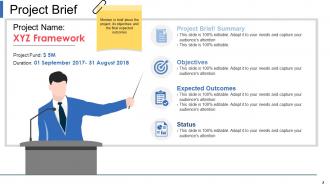
Slide 2: This is a Project Brief slide with imagery. Mention in brief about the project, its objectives and the final expected outcomes.
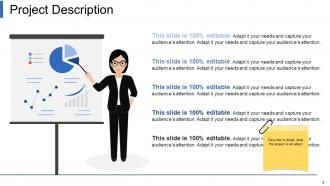
Slide 3: This is a Project Description slide with imagery and text boxes. Describe in detail, what the project is all about .
Slide 4: This slide shows Project Management Lifecycle in a graphical form. We have mentioned a framework of the project lifecycle, you can use it as per your requirements.
Slide 5: This slide shows The Project Process flow chart. We have captured an entire project process and the tasks associated with it, you can modify the steps basis your needs.
Slide 6: This is Project Scope Management slide with the following factors- Project Deliverables, Project Assumptions, Project Exclusions, Project Scope Description, Project Acceptance Criteria.
Slide 7: This is Risk Identification (1/2) slide in a tabular form. Use it to list all the possible types of risk their possible impact on the project here.
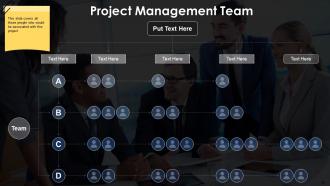
Slide 8: This slide shows Project Management Team. List all those people who would be associated with this project with name, designation etc. here.
Slide 9: This is a Coffee Break image slide to halt. You can alter/ modify the content as per need.
Slide 10: This is Project Scope Framework Icon Slide. Alter/ modify as per need.
Slide 11: This slide forwards to Graphs And Charts. Alter/ modify as per need.
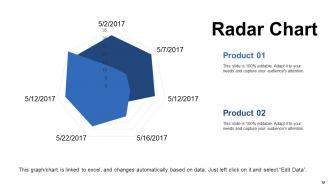
Slide 12: This slide presents a Radar Chart. Compare Product 01, Product 02 and use as per required.
Slide 13: This slide shows a 100% Stacked Line graph in terms of percentage for comparison of Product 01, Product 02, Product 03 etc.
Slide 14: This is a Bar Chart slide to show product/ entity growth, comparison, specifications etc.
Slide 15: This slide is titled Additional Slides to move forward. You can change the slide content as per need.
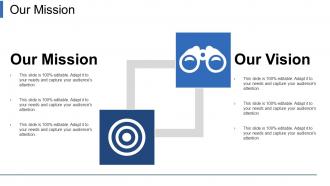
Slide 16: This slide showcases Our Mission. State your company mission and vision here.
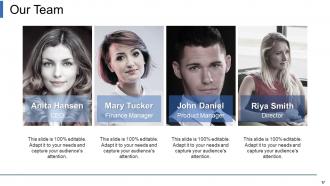
Slide 17: This slide helps depict Our Team with text boxes.
Slide 18: This is Our Goal slide showing- Awareness, Quality, Success.
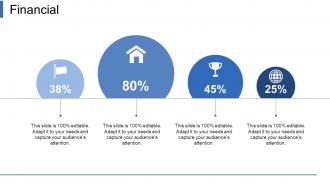
Slide 19: This is a Financial score slide. State financial aspects, information etc. here.
Slide 20: This is Dashboard slide to show information in percentage etc.
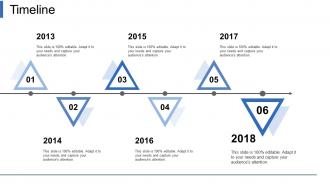
Slide 21: This slide presents a Timeline to show growth, milestones etc.
Slide 22: This is a Generate Idea slide with human head bulb imagery to show information, innovation specifications etc.
Slide 23: This is a Thank You slide with Address# street number, city, state, Contact Numbers, Email Address.
Project Scope Framework Powerpoint Presentation Slides with all 23 slides:
Get down, get going with our Project Scope Framework Powerpoint Presentation Slides. You will definitely find your fortune.
-
Project Scope Framework
-
Project Brief
-
Project Description
-
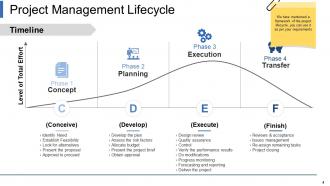
Project Management Lifecycle
-
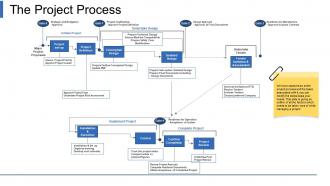
The Project Process
-
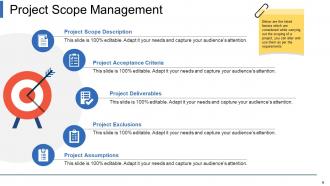
Project Scope Management
-
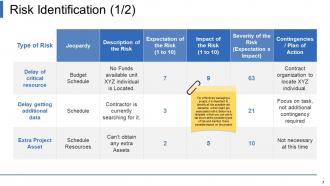
Risk Identification 1 2
-
Project Management Team
-

Let s have a Coffee Break
-
Project Scope Framework Icon Slide
-
Graphs And Charts
-
Radar Chart
-
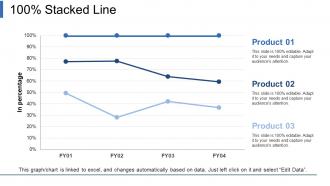
100 Stacked Line
-
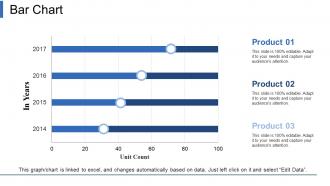
Bar Chart
-
Additional Slides
-
Our Mission Vision
-
Our Team
-
Our Goal
-
Financial
-

Dashboard
-
Timeline
-
Generate Idea
-
Thank You
FAQs for Project Scope Framework
You need project objectives first - like what you're actually trying to accomplish. Then nail down your deliverables and scope boundaries (seriously, don't keep this vague or you'll regret it later). Acceptance criteria matters too. Timeline and budget parameters are obvious ones. Oh, and figure out who your key stakeholders are - the people who can actually approve changes when things inevitably shift. I always screw up the boundaries part if I'm rushing. The whole thing becomes like a contract with everyone involved. Work through the assumptions and constraints last. Start systematic but don't overthink it.
Okay so project scope is basically your lifeline - it stops that annoying scope creep from killing your timeline. List out exactly what you're delivering and what's off-limits. Everyone knows their lane, no confusion. Makes budgeting way more realistic too. Honestly, the best part? Stakeholders can't just waltz in mid-project asking for random features because you've already set boundaries. Write down your deliverables, any constraints, maybe assumptions if you have them. Get signatures before starting anything - trust me on this one. It's like having a contract that actually protects your sanity.
Dude, you absolutely need stakeholder input for project scope - can't wing it without them. They know what the business actually wants and what constraints you're dealing with. I've watched so many projects crash because someone just assumed stuff instead of asking. Get their requirements and priorities upfront, otherwise you're basically guessing at what success looks like. Oh, and make sure you talk to ALL the key people, not just whoever yells loudest. Document everything too because people conveniently "forget" what they said later.
Oh man, scope creep is brutal if you don't catch it fast. Set up weekly reviews with your team to spot any drift happening. When someone says "just one more feature" or whatever, document it properly first - don't just wing it. Assess how it'll mess with your timeline and budget before saying yes. I got burned on a project that went from 3 months to 8 because of this exact thing! Always check new requests against your original goals. Get stakeholder approval too. Honestly, learning to say no is half the battle. Push stuff to phase two if you need to.
Honestly, mixing different approaches is your best bet here. I always start by looking at similar projects I've done before and tweaking based on what's different this time. Breaking everything down into smaller pieces helps a ton - forces you to actually think through all the moving parts. The three-point thing works pretty well too, where you estimate best case, worst case, and realistic scenarios. If you've got other experienced people around, get them to estimate separately first, then compare notes - sometimes the differences reveal stuff you missed. Oh, and if you have decent historical data, those parametric models can be surprisingly accurate. Just don't put all your eggs in one basket - use 2-3 methods and see where they converge.
Dude, having everyone work from the same playbook is huge. No more "wait, what are we actually doing?" confusion. Clear boundaries mean your team stays focused instead of wandering off into random tasks. Stakeholders can't just throw new stuff at you without going through proper channels either - honestly saved my butt so many times. Oh, and way fewer pointless meetings trying to figure out what's included or not. Just make sure everyone can actually find the thing - stick it somewhere obvious like your shared drive. Trust me, you'll wonder how you managed projects without one.
Your constraints are basically the walls you're building inside - budget, timeline, team size, all that stuff. I think of them as helpful guardrails more than annoying roadblocks, tbh. They force you to figure out what actually matters vs. what would just be cool to have. First thing I'd do is write down your biggest 3-4 constraints upfront. Money's usually
-
good
-
Nice and innovative design.
-
Thanks for all your great templates they have saved me lots of time and accelerate my presentations. Great product, keep them up!