

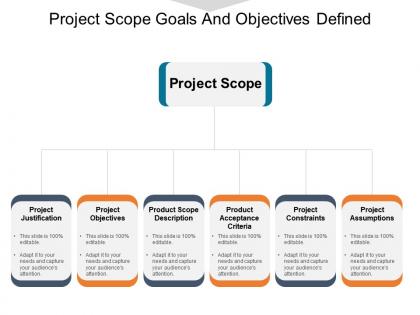
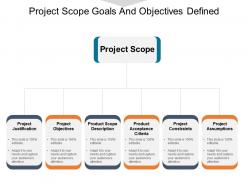
Project scope goals and objectives defined powerpoint slide




Try Before you Buy Download Free Sample Product
 Impress Your
 Audience
 100%
100% Editable
 Save Hours
 of Time


Identify insidious diseases with our Project Scope Goals And Objectives Defined Powerpoint Slide. Inform folks on how to detect them.
People who downloaded this PowerPoint presentation also viewed the following :
Project scope goals and objectives defined powerpoint slide with all 5 slides:
Draw buyers to your doorstep with our Project Scope Goals And Objectives Defined Powerpoint Slide. They excel at attractive advertisement.


FAQs for Project scope goals and objectives
So you'll want to hit five key things in that scope doc. Start with your objectives and what you're actually delivering - be super specific here or you'll regret it later. Boundaries are huge too (what's in, what's out). Timeline with milestones comes next, then budget and team stuff. Honestly, the assumptions section saved my butt on my last project - write down everything you're assuming because people have selective memory. Don't skip stakeholder roles either. I'd tackle objectives first since everything else builds off that. Make it tight enough that there's zero room for scope creep nonsense.
Get your stakeholders in the room early for structured sessions - trust me, it saves so much headache later. Ask them about needs, constraints, what success looks like to them. But here's the thing: don't just take their entire wishlist at face value. Help them figure out what's actually critical versus the "wouldn't it be cool if" stuff. Document everything and have them sign off before you move forward. Oh, and set up regular check-ins so nobody goes rogue halfway through. The upfront time investment is totally worth it.
Honestly, you've gotta get everything written down and signed off on before you start - it's like your armor against people adding random stuff later. Make a super detailed project charter that spells out exactly what you're doing (and what you're NOT doing). I can't tell you how many times I've watched projects crash because everyone thought they were building the same thing but weren't. When new requests pop up - and they will - have a formal process where someone has to approve changes and figure out what it'll cost. Oh, and regular check-ins with stakeholders are clutch for catching problems early. My favorite line: "Love that idea! Let's put it in phase two."
Okay so here's how I think about it - **product scope** is literally just what you're building and what it'll do when it's finished. **Project scope** covers all the actual work your team has to tackle to get there. **Work scope** breaks that down even further into specific tasks. I always start with the product question: what exactly are we making? Then figure out what work that requires. The work scope gets into the weedy details of how you'll actually pull it off. Honestly, defining the product first makes everything else way clearer. Otherwise you're just guessing at what needs to get done.
Look, your timeline is basically what keeps your scope from going completely off the rails. Start by drafting your scope, then map everything against actual time - you'll instantly see if you're being realistic or totally delusional about what's possible. This whole process forces you to sequence tasks and spot those annoying dependencies that always pop up. Plus you'll catch bottlenecks early instead of panicking later. Honestly, I've seen too many projects crash because people skipped this step. The timeline isn't just about hitting dates - it shows you what parts of your scope need to get cut. Trust me on this one.
Dude, first thing - figure out what they're *actually* trying to accomplish, not just what they think they want built. I swear, half these projects turn into feature bloat because nobody stops to ask "does this even matter?" Map everything back to real business goals. Like, how does X feature actually help them make money or whatever their thing is? Have those check-in meetings regularly so you don't go off the rails. Write this stuff down too because when scope creep hits (and it will), you'll need proof of what you originally agreed on. If something doesn't connect to a measurable outcome, honestly just cut it.
Honestly, stakeholder interviews are your best bet - that's where you get the real dirt on what people actually need. Workshops are clutch when you need everyone's input at once (and yeah, the snacks don't hurt). For bigger groups, surveys work well. Document analysis is pretty underrated tbh - shows you where the current stuff falls short. User story mapping helps visualize everything too. Just pick like 2-3 methods that actually work with your schedule and when people are free. No point planning something elaborate if half your stakeholders can't show up.
Honestly, visual aids are a game changer for project scope. When you can actually *see* what you're talking about, everything clicks. I've watched so many projects implode because everyone thought they were on the same page but weren't. Charts help people get the big picture fast. Complex stuff becomes way easier when you break it down visually instead of drowning people in documents. Work breakdown structures, timelines, scope boundaries - they all make more sense as diagrams. Seriously, try a simple flowchart next time you're doing scope review. The difference is night and day.
Dude, trust me on this - skipping the scope definition will absolutely wreck your project. I've seen it happen so many times. Your deadlines get blown, budget goes out the window, and everyone's pissed because they all thought you were building different things. The team ends up wasting weeks on random features nobody asked for while completely missing the stuff that actually matters. It's basically like... imagine trying to renovate without knowing which rooms you're even touching? Total nightmare. Yeah, it's boring work upfront, but nail down those details first or you'll regret it big time.
Honestly, I check project scope at every major milestone - like phase gates or whenever something big changes that could mess with your timeline or budget. Monthly reviews usually work pretty well, but it really depends on how crazy things get at your company. The trick is catching scope creep early instead of dealing with it later when everything's on fire. Regular stakeholder meetings are clutch here - just make sure you document changes properly. Trust me, you don't want to be arguing about what's actually in scope when deadlines are breathing down your neck. Been there, not fun.
Hit people with info in different ways - that's honestly the only thing that works. Create a solid project charter first (your bible for everything). Walk through it together in a kickoff meeting so you can handle questions on the spot. I'm obsessed with visual stuff too - flowcharts, diagrams, whatever clicks for your team. Check in regularly because scope creep is sneaky. People learn differently so you gotta repeat the same info across multiple formats. Oh, and put everything in writing because memories are terrible.
Honestly, just use whatever your team's already comfortable with. Microsoft Project and Asana are solid if you need detailed breakdowns and change tracking. Confluence or Notion work great for wiki-style docs - though I swear everyone's obsessed with Notion these days. Even Google Docs can work fine for simpler stuff. The main thing? Pick something everyone will actually use instead of complaining about. I've seen teams waste weeks debating tools when they could've just started documenting in whatever they already had. Don't overthink it.
Honestly, having a clear project scope is like having GPS for your resources. List out your major deliverables first, then figure out what people and tools you'll need for each one. Work backwards from there. You won't be stuck guessing or begging for emergency budget later - been there, done that! Plus you'll stop wasting resources on stuff that feels important but isn't actually moving the needle. Setting those boundaries upfront means you can map out exactly how many people you need and when. Makes the whole thing way less stressful.
Look, first thing - don't just fill in the blanks like it's a form. Actually customize that template for YOUR project. The scope section is where you'll save yourself later, trust me. Be super clear about what's included AND what's not, because that's honestly where most projects blow up. I've watched teams completely skip the "what we're NOT doing" part and then wonder why everything went to hell. Get your key people involved when you're writing it so everyone's on the same page from the start. Skip the fancy corporate language - just be specific and clear. Oh, and once it's done? Reference it during those "hey can we also add this tiny thing" meetings that always happen.
Dude, just dig into your old retrospectives and see what actually screwed you over before. Testing always takes longer than you think? User training gets forgotten every time? Those patterns are sitting right there in your project history. I swear, most scope disasters happen because we ignore the obvious stuff that bit us last time. Build those lessons into a quick doc - doesn't have to be fancy - and actually check it when you're planning new work. Oh, and don't forget to pad your estimates based on what went sideways before. Your past failures are basically a cheat sheet for better scoping.
-
Good research work and creative work done on every template.
-
Easily Editable.