

Quality Management Plan Dashboard For Construction Projects




Try Before you Buy Download Free Sample Product
 Impress Your
 Audience
 100%
100% Editable
 Save Hours
 of Time


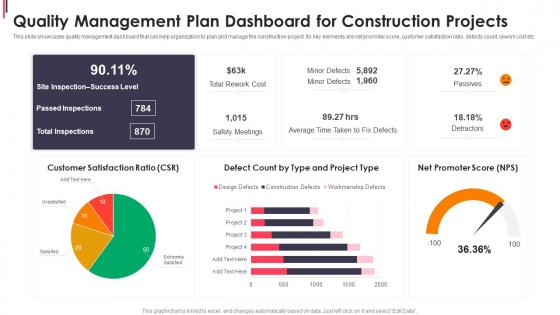
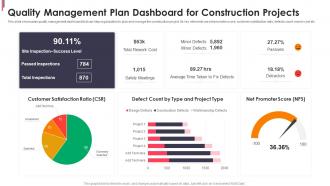
This slide showcases quality management dashboard that can help organization to plan and manage the construction project. Its key elements are net promoter score, customer satisfaction ratio, defects count, rework cost etc.
People who downloaded this PowerPoint presentation also viewed the following :
Quality Management Plan Dashboard For Construction Projects with all 7 slides:
Use our Quality Management Plan Dashboard For Construction Projects to effectively help you save your valuable time. They are readymade to fit into any presentation structure.





FAQs for Quality Management Plan Dashboard
Start by figuring out what "quality" actually means for your specific project - everything builds from there. You'll need clear objectives, who's doing what, and solid standards you can measure against. Quality control processes are obvious, but don't forget the assurance side too. Handle your non-conformances properly and plan for continuous improvement. Training requirements matter more than people think. Same with documentation standards - boring but necessary. Here's the thing though: most teams completely bomb the metrics part, which is honestly where you see the biggest wins. Can't fix what you're not tracking, right? Oh, and map out how you'll deal with problems when they pop up.
So basically, a Quality Management Plan is like your big picture strategy - covers standards, who does what, the whole nine yards. Quality Assurance Plan? Way more specific. Gets into the actual steps and procedures to catch problems before they happen. QMP = the "what and why," QAP = the "how and when." Though honestly, half the companies I've worked with just use whatever term they feel like that day. The management plan stays high-level and strategic. Your QA plan digs into audits, reviews, all those checkpoints. Definitely check what templates your company uses though - they probably have their own weird definitions.
Look, your stakeholders basically define what "quality" means for the whole project, so you really can't skip getting them involved. They'll tell you the acceptance criteria and standards you need to hit. Without their input up front, you're just guessing at what success looks like. Also - and this is key - they control your budget and resources for quality stuff. I've watched so many QMPs crash and burn because someone thought they knew what stakeholders wanted without actually asking. Document what they tell you and get sign-off. Trust me, it saves major drama later when you're trying to deliver.
Map your quality goals straight to what your company actually cares about - revenue, customer happiness, growth targets, whatever. Figure out what success looks like first, then build your quality metrics around that. Don't overthink it! Quality shouldn't be some separate thing floating around. Every standard you set needs to connect back to a real business goal. That way it's not just busywork - it actually moves the needle. I've seen too many teams get caught up in processes that don't matter. Review your plan when priorities change, which they always do.
You want metrics that actually show if quality standards are working. Defect rates, customer satisfaction, first-pass yield, rework percentages - stuff like that. Oh, and compliance audit results too. But seriously, don't go crazy with measurements. I've worked on projects where they tracked like 50 different things and half got ignored after week two. Stick to maybe 5-7 metrics that directly connect to whether your project succeeds or fails. Process stuff matters too - review completion rates, training adherence. Pick what you can realistically track and actually do something about when the numbers look bad.
Honestly, tech makes QM planning way less painful. Real-time tracking catches problems early instead of dealing with disasters later. Quality management software keeps everyone on the same page and creates automatic audit trails - no more digging through folders for compliance stuff. Field teams can log everything instantly on their phones (game changer). Dashboards show you patterns you'd miss otherwise. The trick is finding tools that actually work with what you're already doing. Don't overcomplicate it though - I've seen people add software that just creates more headaches.
Honestly, the toughest part is convincing leadership that quality isn't just "extra busywork" - they always think it slows things down. Resource constraints hit hard too. Then there's the nightmare of getting people to actually document stuff (seriously, why does everyone hate paperwork so much?). You'll spend forever trying to figure out metrics that actually mean something instead of just pretty numbers for reports. Oh, and good luck getting teams to stick to standardized processes. The whole thing becomes this weird balancing act - make it thorough enough to work but simple enough that people won't ignore it. My advice? Start by figuring out what's actually broken in your company first, then build around fixing those real issues.
Look, quarterly reviews are the bare minimum, but honestly? Check it whenever something big changes in your project. New regulations, major scope shifts, or when you learn from a quality screw-up - those are your real triggers. I've seen too many teams create these plans and then never touch them again. Mistake. Treat it like it's actually alive and needs updates. Set those calendar reminders (trust me, you'll forget otherwise) and build reviews into your change process. Otherwise you'll end up with some outdated document that nobody uses.
Honestly, skip the boring theory stuff and jump straight into role-specific training with real examples from your actual workplace. Generic scenarios are useless - nobody remembers them. Your supervisors need to know their stuff cold because they'll get bombarded with questions later. Quick reference sheets are clutch for the procedures people use most. Follow up in a few months because trust me, questions will pop up once they're actually doing it. Oh, and don't forget to explain WHY quality matters for your specific results. That's usually the lightbulb moment that makes everything click.
Think of a Quality Management Plan as your compliance cheat sheet - it maps out all your processes and controls before auditors come knocking. You're basically proving you have your act together instead of scrambling when they show up. The real win? You'll spot compliance gaps early, which saves you from nasty surprises later. Regulators eat this stuff up because they can see clear audit trails and metrics. Honestly, I'd start by comparing what you're doing now against the actual regulations, then build your plan around fixing whatever's missing. Way easier than doing it backwards.
Don't just throw the whole document at them - nobody reads those things anyway. Call a team meeting first and actually walk through the important stuff: quality standards, who does what, how it changes their day-to-day work. Then create a simple one-pager they can reference later without all the corporate jargon. People forget everything after meetings, so use whatever tools you already have - Slack, project boards, whatever - to remind them of key points. Oh, and make sure they know who to bug with questions about quality stuff later.
Dude, there's a million tools out there. Monday.com and Asana are solid for tracking metrics and assigning fixes. Confluence or SharePoint work well for storing all your procedures. For number crunching, Minitab's great but honestly Excel does the job too. My advice? Don't overcomplicate it at first. Just grab whatever project management tool your team already uses - nobody wants to learn new software when they're swamped. Same with documentation platforms. You can always add fancy analytics later once you've got the basics down. I made the mistake of trying to implement like five tools at once and it was a disaster.
So risk management is like your heads-up for quality planning. What I do is think about all the ways things could tank - equipment breaking down, not having enough people, or honestly just having team members who don't know what they're doing yet. It's kinda tedious but saves your butt later. Map out these problems early so you can build fixes right into your plan instead of freaking out when stuff hits the fan. Oh, and start small - just grab your worst 5 risks first and figure those out.
Look, customer feedback is everything when you're trying to fix your Quality Management Plan. You might think your processes are bulletproof, but if customers are still complaining, something's off. Their feedback shows you exactly where you're missing the mark - stuff you'd never catch looking at internal metrics alone. Honestly, I've seen companies waste months perfecting the wrong things because they weren't listening. Set up surveys, check reviews religiously, talk to customers directly. Then actually use what they tell you to update your standards. They're writing the checks, so their experience trumps your assumptions every time.
Build regular check-ins straight into your QMP - monthly reviews work well. Collect customer feedback, track your key metrics, and actually do something with the data (seriously, half the companies I know just hoard spreadsheets). Schedule audits too. The real trick is having clear processes for making changes when you spot issues. Otherwise you're just playing quality theater. Set up improvement actions as part of your normal routine, not some separate thing you'll "get to later." It sounds basic but consistent review cycles are what separate good quality programs from mediocre ones.
-
SlideTeam is my go-to resource for professional PPT templates. They have an exhaustive library, giving you the option to download the best slide!
-
The visual appeal of the templates is just unparalleled! I was so worried about the design of my presentation but SlideTeam made it all so easy.