

Quality Report With Product Inspection





Try Before you Buy Download Free Sample Product
 Impress Your
Audience
 100%
Editable
 Save Hours
of Time


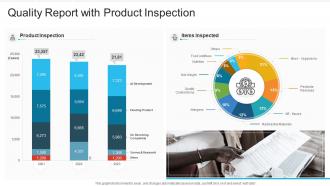
This graph or chart is linked to excel, and changes automatically based on data. Just left click on it and select Edit Data.
People who downloaded this PowerPoint presentation also viewed the following :
Quality Report With Product Inspection with all 7 slides:
Use our Quality Report With Product Inspection to effectively help you save your valuable time. They are readymade to fit into any presentation structure.






FAQs for Quality Report
Honestly, it's all about catching problems before they become disasters. Build quality in from day one instead of scrambling to fix stuff later - trust me, that gets expensive fast. Get everyone thinking about quality, not just your QA team. Test constantly, automate whatever makes sense, and always picture how users will actually interact with your product. Risk-based testing is huge too. Document everything because future you will have zero memory of those weird edge cases. Oh, and nail down what "good enough" means with your team upfront - saves so many headaches later when everyone's on the same page.
Ugh, Waterfall is brutal - you build everything first, THEN test at the very end. So if something's majorly broken, you're screwed. Agile flips that completely. You're testing bits constantly during each sprint, catching bugs while they're still small and fixable. Way less stressful honestly. The whole vibe is different too. Instead of formal test plans written upfront, you're collaborating with devs every day. Automated tests, user feedback, the works. It's messier but actually works better. Pro tip if you're switching: get those automated tests running early or you'll hate your life.
Honestly, automation is a total game changer for QA work. It handles all the boring repetitive stuff - regression tests, performance checks, basic functionality - so you can focus on the tricky problems that actually need human judgment. Your scripts will catch bugs faster and more reliably than doing everything manually. They don't get tired or accidentally skip steps like we do. The coverage you get is way better too. I'd say start with your most critical user flows first, then expand from there. Once you get the hang of it, you'll wonder how you ever did QA without it.
So basically, good QA stops problems before they hit your customers - and trust me, people *hate* buggy stuff. Happy customers don't bail for competitors, which is huge. You'll also spot trends in complaints and figure out what's actually breaking. Prevention beats scrambling to fix disasters later, obviously. The trick is weaving QA into everything you do instead of slapping it on afterward. Oh, and map out where things usually go wrong first - that's like your roadmap. Honestly, it's one of those things that seems boring but pays off big time.
Honestly, the biggest pain is just getting people to care. Leadership often won't buy in, and everyone else sees QA as busywork instead of something that actually helps. Resource constraints are brutal too - plus you're dealing with vague requirements and teams that barely talk to each other. Most places try to do everything at once, which is a disaster waiting to happen. My advice? Get executive support locked down first, then start super small. Pick one pilot project, get some quick wins, and build from there. Way better than going big and failing spectacularly. Once you show it works, asking for more resources gets much easier.
Look at your bug catch rate first - how many you find vs what escapes to production. Customer satisfaction scores matter way more than people think, honestly. Time to fix issues is huge too. I'd also check test coverage and build success rates on first attempts. The trick is setting baselines early so you can spot trends later. Don't go crazy with metrics right away though - pick maybe 3 or 4 that actually matter for your situation and track those consistently. You can always add more complexity once you've got the basics down. Support ticket volume is another good one to watch.
Most teams I've worked with use Selenium for web testing, Postman for APIs, and JIRA for tracking bugs. Jenkins handles CI/CD stuff pretty well. TestRail's popular for managing test cases, though some places use other tools. Performance testing? JMeter's your friend, or LoadRunner if you've got budget. Appium works for mobile testing. The whole landscape shifts constantly - honestly exhausting trying to keep up. My take: don't try learning everything at once. Pick whatever your team's already using and get decent at one tool per category first. Way less overwhelming that way.
So basically QA shifts left in DevOps - instead of testing at the end, you bake it into the whole pipeline. Your QA folks work directly with devs, writing automated tests that fire off with every commit. Way better than the old days of throwing stuff over the fence and hoping for the best! Bugs get caught early when they're not a total nightmare to fix. Honestly, I'd start with automating your most critical tests first - gives you the best return. The whole process becomes smoother and releases don't feel like rolling dice anymore.
Look, test case docs are basically your backup plan when everything goes sideways. Write down your exact steps, what should happen, and what data you're using - that way anyone can jump in and reproduce the same bug or verify your fix. Honestly, I can't tell you how many times I've saved myself by having this stuff written down when I completely forgot what I tested last week lol. It's also a lifesaver for regression testing and getting new people up to speed. Just start by documenting whatever you're already doing when you test, then make it prettier later.
Honestly, you gotta spread quality around to everyone - it can't just be QA's problem. When someone catches a bug early? Make a huge deal about it, like genuinely celebrate that stuff. Train your whole team on quality practices and give them decent tools to work with. We do retrospectives pretty regularly and people will actually tell you what's blocking them from doing good work. Oh, and don't be that manager who punishes honest mistakes - those are goldmines for learning. The real trick is showing them you'd rather have it done right than done fast.
Honestly, AI testing tools are finally living up to the hype - they're actually automating test creation without being a total pain. You'll want to get into shift-left testing too, where quality checks happen during development instead of after everything's built. Continuous testing is pretty much expected now if you're doing DevOps. The role's gotten way broader though - you're not just hunting bugs anymore, you're handling performance, security, UX, the whole thing from the start. Can be overwhelming tbh. Just pick one area and expand from there.
Think of QA as your project's smoke detector - catches problems before they turn into disasters. You're building these little checkpoints that spot defects and gaps way before launch. Honestly, it's not the glamorous part of the job, but you'll thank yourself later. Instead of just checking quality boxes, use QA to actually prevent risks from happening. The consistency alone cuts down on those random curveballs that derail everything. I've seen too many teams skip this stuff and regret it big time.
Get solid with testing methods and automation tools first - that's your foundation. Different development lifecycles too. You need sharp analytical skills since you're always breaking down complex stuff to find potential failures. Communication is just as important though - you'll explain bugs to devs and translate tech risks for non-tech people. Patience saves your sanity because trust me, you'll test the same thing multiple times. The best QA people I've worked with are super curious and detail-oriented. They're always asking "what happens if..." Start learning automation now if you haven't - it's becoming essential everywhere.
Honestly, you gotta shift left and automate early or you'll go crazy. I learned this the hard way lol. Build those quality checks right into your dev pipeline - automated testing, code reviews, CI stuff. Yeah it feels like more work at first but it saves you so much pain later. Don't dump everything on QA at the end either. Make quality everyone's job. Use risk-based testing for the manual stuff so you're focusing on what actually matters. The repetitive checks? Let automation handle those. Just start with one test suite and grow from there. Way less stressful.
Okay so first thing - prep like crazy. Define your scope, grab all the docs, make a solid checklist. When you're actually doing the audit, stick to what you can prove, not hunches. Seriously, take notes on everything (I learned this the hard way). Talk to the actual people involved, not just whoever's convenient. Document what you see, period - save the analysis for later. Oh and your final report? Make those recommendations super specific with real deadlines. Nobody wants vague suggestions that'll just collect dust.
-
Content of slide is easy to understand and edit.
-
Illustrative design with editable content. Exceptional value for money. Highly pleased with the product.