Quarterly digital marketing roadmap template
Try Before you Buy Download Free Sample Product
Audience
Editable
of Time
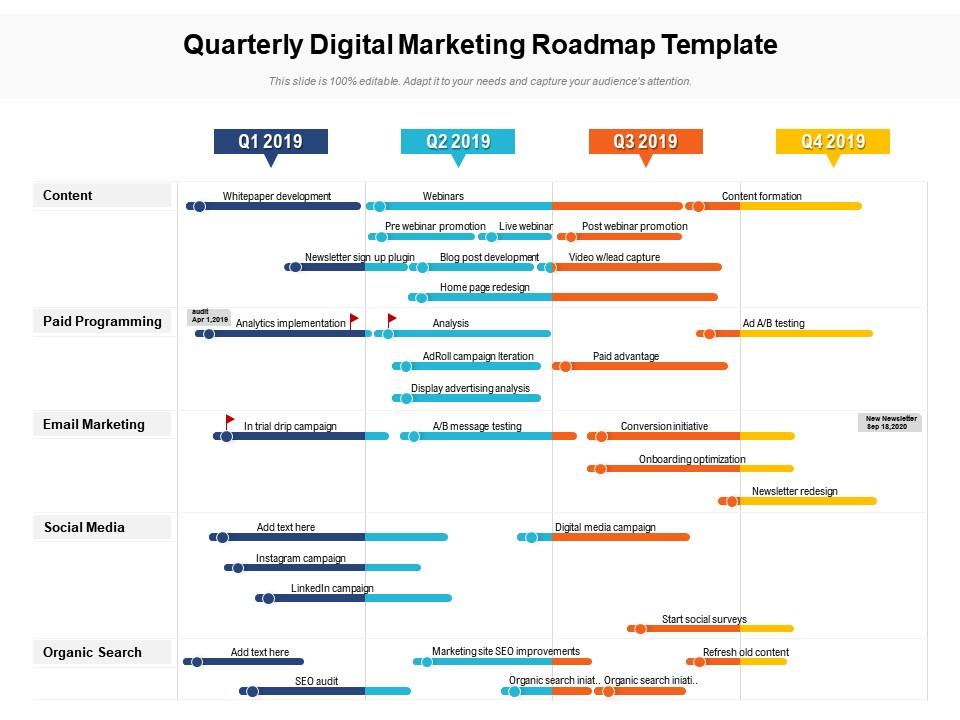
Visualize your work plan and communicate your ideas impactfully with our pre designed Quarterly Digital Marketing Roadmap Template. Showcase the detailed overview of the project, the key deliverables, and the milestones to be achieved with the help of our fully customizable PowerPoint layout. You can easily emphasize on the project goals and discuss all the activities involved in an easy to comprehend manner by utilizing our professionally designed PPT theme. This roadmap PowerPoint layout is a perfect strategic planning tool that can help in keeping the project on track. With our attractive PowerPoint theme, you can articulate the workflow, track the work progress, and have a clear vision of the goal to be achieved. Download this versatile Quarterly Digital Marketing Roadmap Template and save your hours of work.
People who downloaded this PowerPoint presentation also viewed the following :
Quarterly digital marketing roadmap template with all 2 slides:
Use our Quarterly Digital Marketing Roadmap Template to effectively help you save your valuable time. They are readymade to fit into any presentation structure.
FAQs for Quarterly digital
Okay so first thing - check what actually worked last quarter before planning anything new. Your roadmap needs clear goals with real numbers, plus who you're targeting and what content you'll make. Timeline and budget are obvious but honestly, competitive analysis is huge too because you can't just ignore what your competitors are doing. Map it all back to whether you want leads, awareness, or revenue. Oh and here's the thing - be specific enough to actually do the work but not so rigid that you can't change direction if something bombs.
Honestly, seasonal trends run the whole show when it comes to quarterly planning. People buy totally different stuff throughout the year, so you've got to time everything right. Like Q1 is perfect for content marketing when everyone's feeling motivated, but Q4? That's when you go all-out with promotions for holiday shoppers. I bombed a summer B2B campaign once - learned that lesson fast! What works is looking at your product cycles and matching them to when demand actually peaks. Then build your budget around those highs and lows. Dig into last year's quarterly data first though. You'll spot patterns you didn't even notice.
Honestly, just track what actually makes you money - conversion rates, cost per acquisition, and customer lifetime value. Those three will tell you if your campaigns are worth a damn. Don't get sucked into vanity metrics like total traffic (I've been there, it's painful when the boss asks about revenue). Monthly active users and retention rates matter too since they show the bigger picture. Oh, and engagement rates beat raw numbers every time. Set up a weekly dashboard so you're not panicking at quarter-end trying to figure out what went wrong.
So competitor analysis is basically your cheat sheet for spotting what you're missing. Check out their keywords, content that's actually performing, and where they're throwing ad money. Their social engagement tells you a lot too - honestly, some brands are just crushing it on TikTok right now while others are still stuck on Facebook. You can see gaps in your own strategy pretty quickly this way. Maybe they're ranking for stuff you never thought of, or testing channels you should be on. I try to peek at competitors monthly, but sometimes I get lazy and do it quarterly. Either way, it's like having insider info on what's working in your space.
Honestly, I'd say every quarter is about right for revisiting your segments. Look at who actually bought stuff vs just clicked around - the data can be pretty wild sometimes! I always check for seasonal trends and any new customer complaints that might signal shifts. Oh, and definitely test 1-2 totally new micro-segments each quarter. You might be missing some gold. Balance your tried-and-true money-makers with experimental ones that could blow up (in a good way). Block out the first week of each quarter to audit everything and plan what's next. Works way better than scrambling mid-quarter when things aren't hitting.
Start with Google Analytics for tracking your numbers - it's free and does the job. For social media, I'd go with Buffer or Hootsuite to schedule everything at once instead of posting manually like a crazy person. Mailchimp handles email campaigns pretty well, though HubSpot's fancier if you've got budget. Project management wise, Asana keeps everyone from missing deadlines. But honestly? Pick whatever tools your team will actually stick with. I've seen companies blow money on expensive software that just sits there unused. Begin simple, then add more specialized stuff later when you figure out what you really need.
Okay so here's what works for me - match your content themes to whatever big campaign you're pushing each quarter. Like if Q2 is product launch season, everything (blogs, social, emails) should hype that up. I always make my content calendar follow the campaign timeline because honestly it keeps me way less scattered. Monthly pillars work great, then break those into weekly topics. Oh and definitely start planning like 6 weeks early - I learned that the hard way. Each piece needs to either get people aware, warm up leads, or actually convert them. Makes the whole thing feel less random.
Honestly, I treat social media trends like my roadmap each quarter - they tell me where people's attention is going and what's actually working content-wise. I'll scan for new platforms, whatever's going viral, how users are behaving differently. TikTok is my guilty pleasure "research" time lol but I actually find good stuff there. The trick? Catch trends early enough to test them, but not so early that your audience hasn't caught on yet. I always build in 2-3 experimental trend tests per quarter. Oh, and keep some budget flexible for when something random blows up unexpectedly.
Honestly, most people mess this up by setting their budget once in January then forgetting about it. Start with last quarter's data - see what actually worked and put more money there. But don't go crazy, spread it around different channels too. I always save like 15-20% for testing random new stuff because you never know what might hit. Also factor in seasonal trends and whatever new priorities your team's obsessing over this quarter. Oh and set up some basic spreadsheet to track spending vs results - sounds boring but you'll thank me when you can actually see what's working. Review monthly and move money around based on real performance.
Look, A/B testing stops you from just winging it with your quarterly plans. Test different messages or audiences early on, then throw more money at what's actually working. Kill the stuff that isn't. I swear, so many teams get married to their original strategy even when the numbers are telling a completely different story! Build in checkpoints every few weeks where you'll actually review results and shift things around mid-quarter if needed. Oh, and decide on your success metrics upfront - makes it way easier to pivot quickly when data comes in.
Look, here's the thing - if your quarterly marketing plan isn't tied to actual business goals, you're just wasting money. I've seen this happen so many times. You need each campaign hitting specific targets like revenue or customer numbers, otherwise good luck getting budget approval next quarter. It makes prioritizing super easy too when everything's connected to real outcomes. Honestly, the ROI conversations become way less awkward when you can show direct impact. Just map each initiative to a business result before you lock anything in. Trust me on this one.
Check yours every 2-3 weeks officially, but I peek at mine weekly because I'm paranoid like that. Bi-weekly stakeholder reviews work fine though. Look at your KPIs and see what's actually moving the needle vs what's flopping. Digital marketing shifts so damn fast you can't just set it and forget it. Oh, and block time on your calendar RIGHT NOW for these reviews. Trust me on this one - without scheduled time you'll keep saying "next week" until suddenly three months have passed and you're wondering why nothing's working. Use real data, not gut feelings, when you're deciding what to tweak.
Honestly, kick things off with a solid meeting where you explain the quarterly goals and show people how their stuff connects to the big picture. People work so much better when they get the "why" - it's crazy how much that matters. Bi-weekly check-ins are your friend for catching problems early. Oh, and definitely use some kind of shared dashboard so everyone can see how their tasks fit the timeline. The whole thing works when your team feels like they own their piece, not just taking orders from above. Makes a huge difference in my experience.
Start collecting feedback now, like 6-8 weeks before planning season hits. Surveys, social listening, customer success team reviews - the usual stuff. Honestly, a simple dashboard saved my butt last quarter because spotting patterns manually is brutal. Track sentiment, feature requests, pain points. When planning actually starts, you'll have real data to back up campaign priorities instead of just guessing what customers want. Trust me, scrambling for insights during crunch time sucks. Get ahead of it.
Honestly, just make one big calendar where you can see everything at once. Map out all your channels against the same themes. I learned this the hard way - used to just post randomly and it was a mess! Stagger things so they work together, like tease on social first, then send the email, follow with blog posts. Set up quick weekly check-ins with your team so nobody's stepping on each other. Oh and pick one main channel per campaign phase - makes it way clearer who's leading. Start with a basic spreadsheet before you buy anything fancy.
-
Amazing product with appealing content and design.