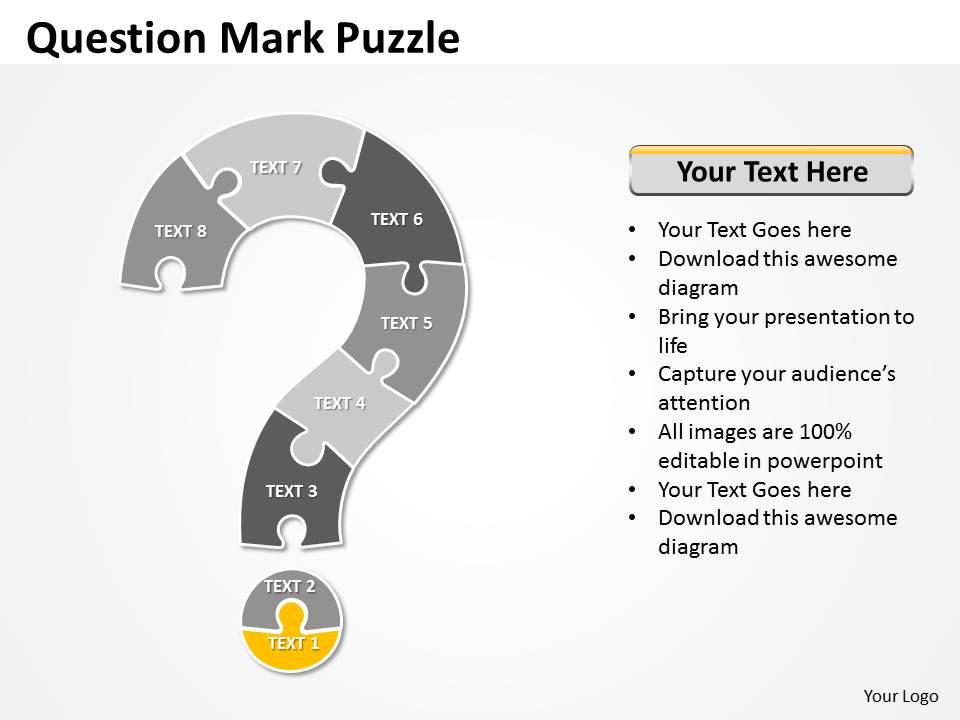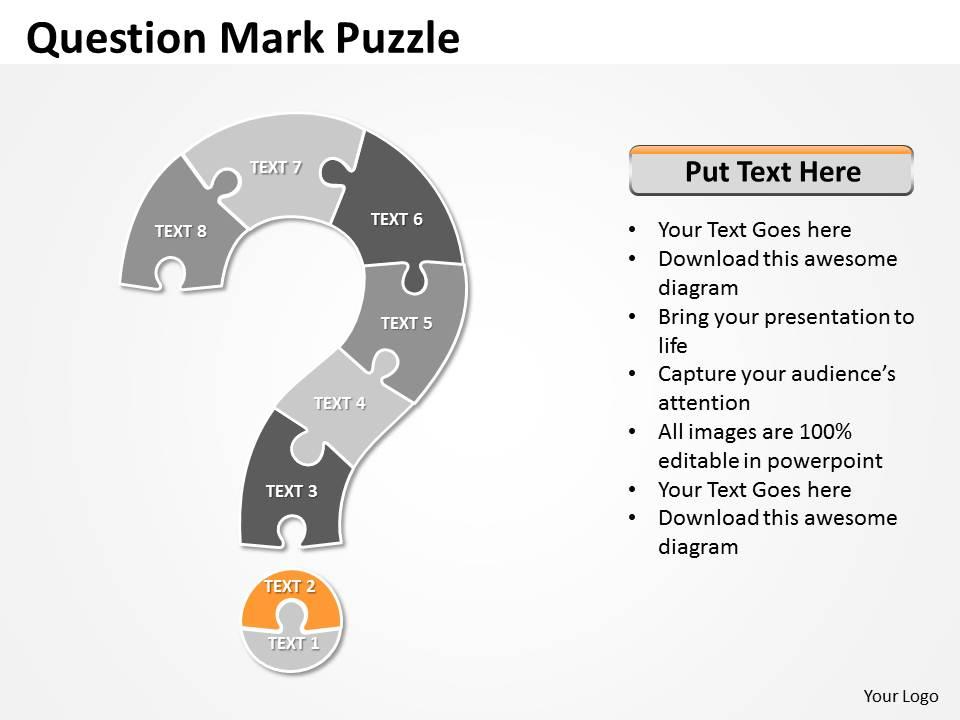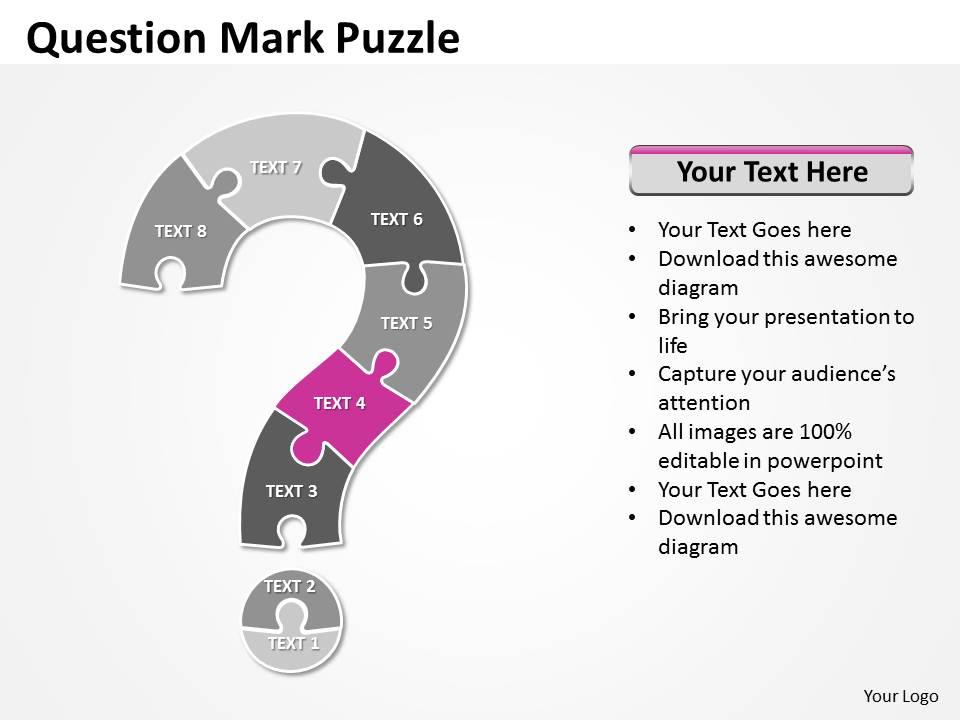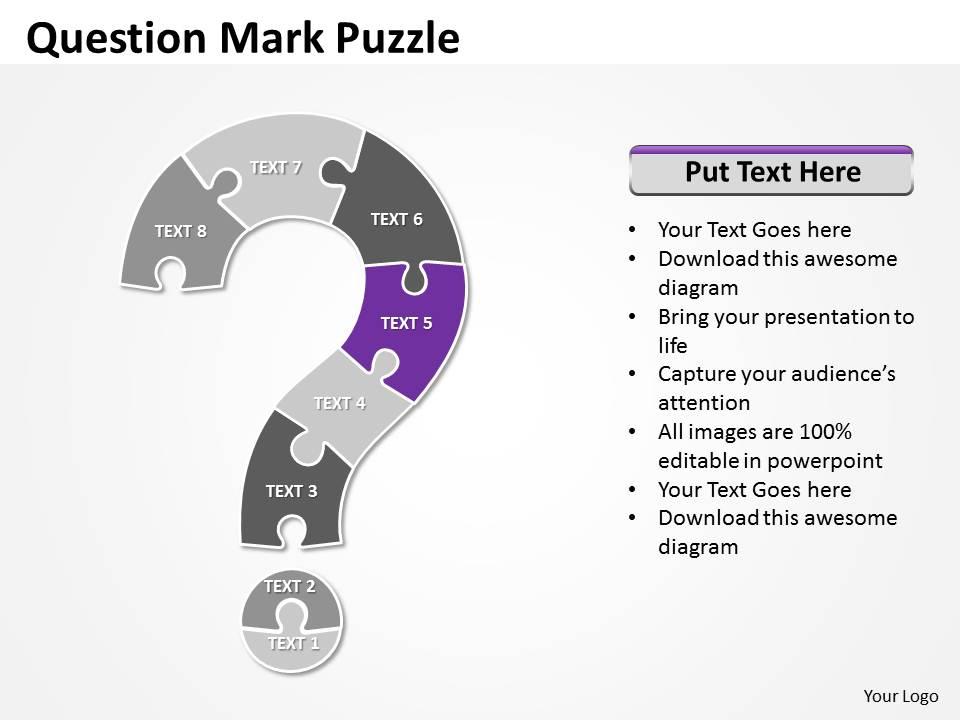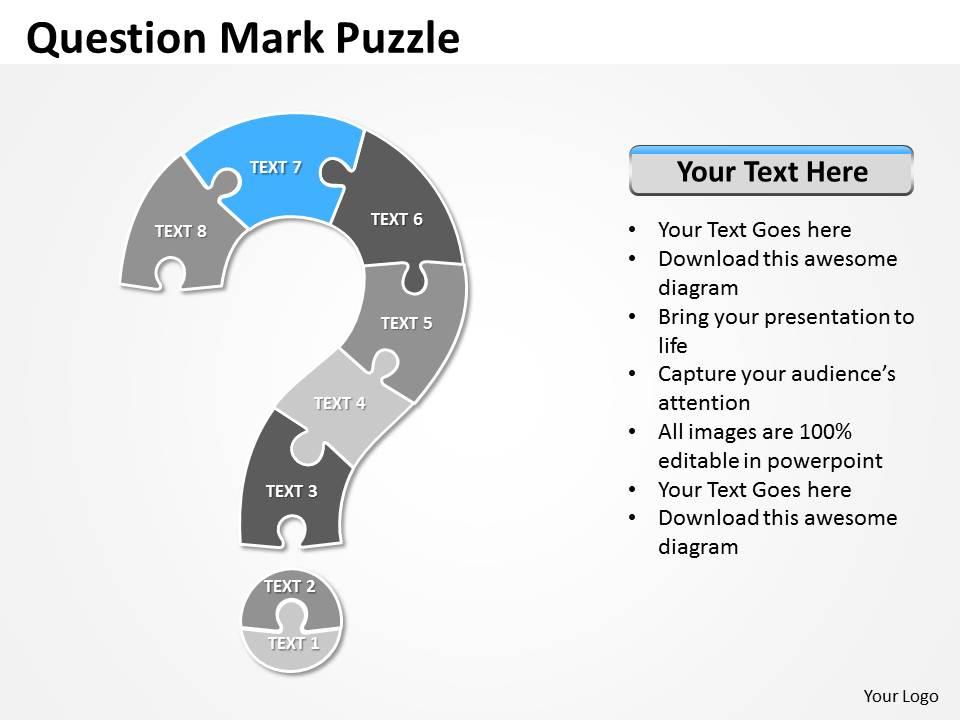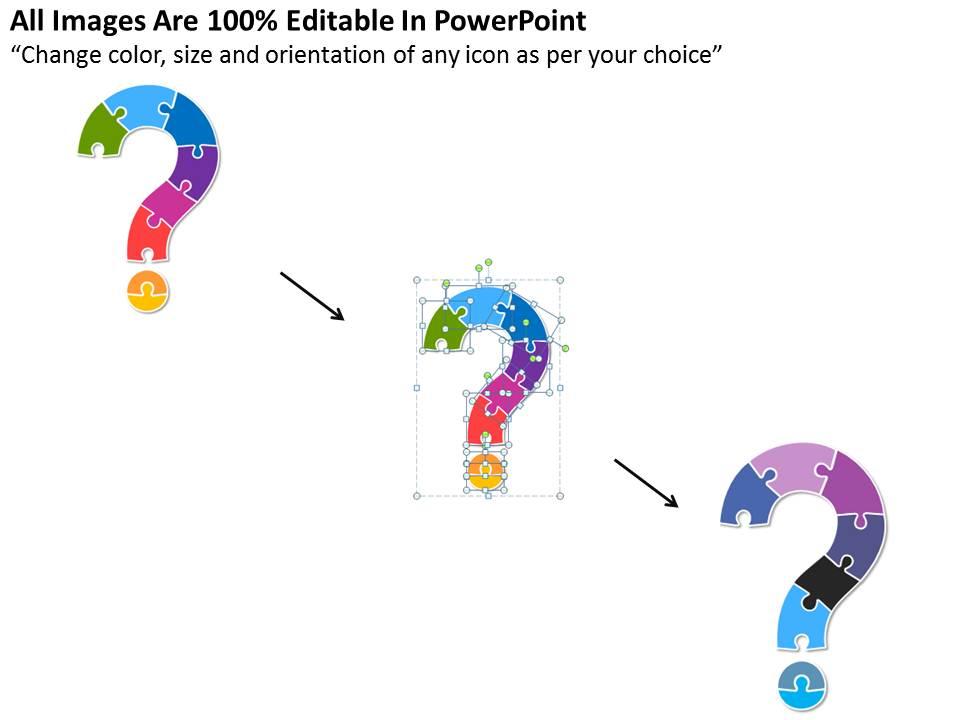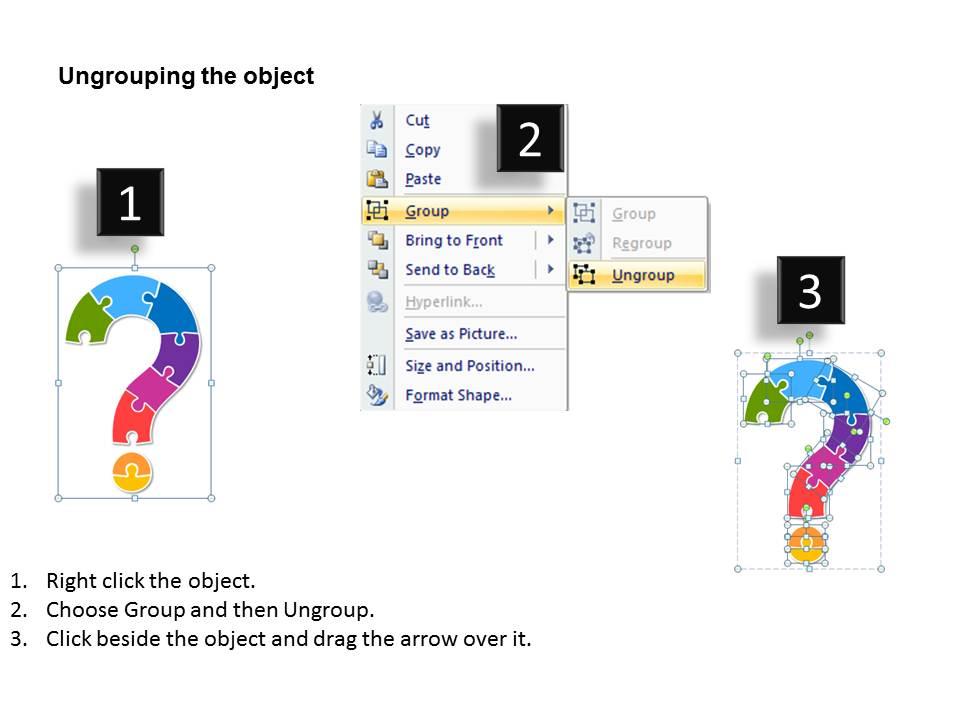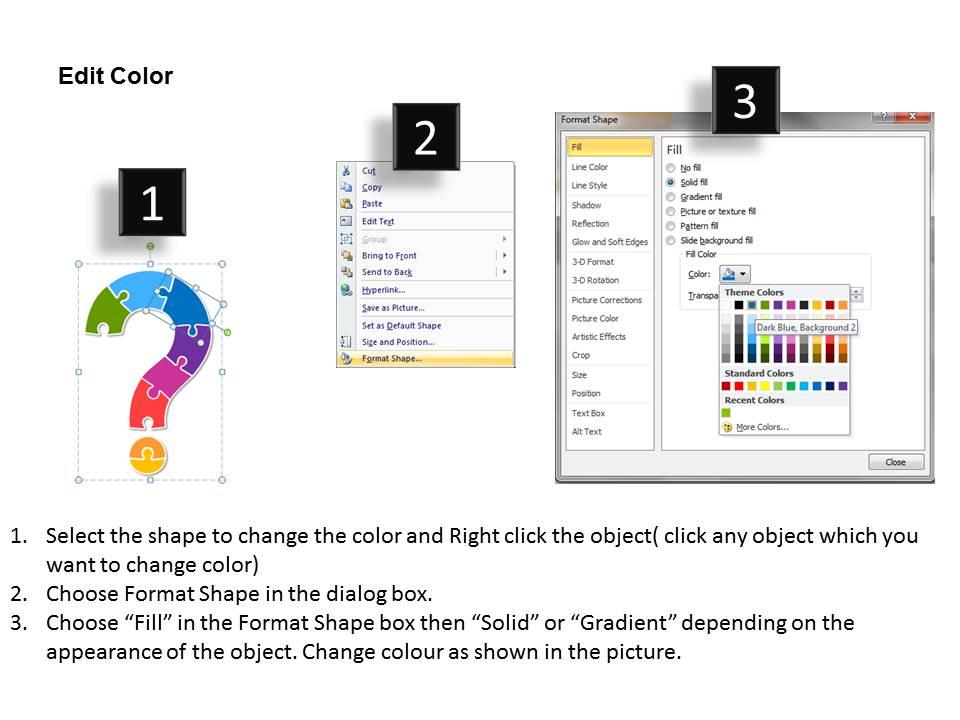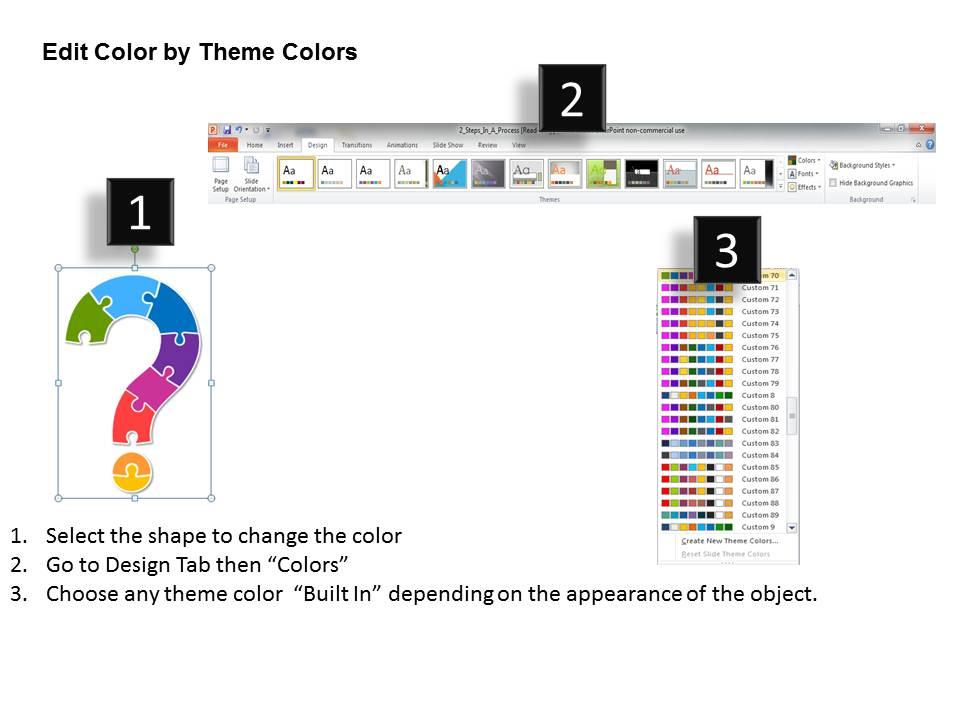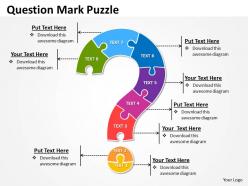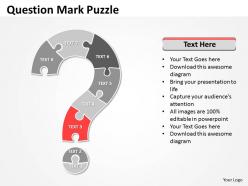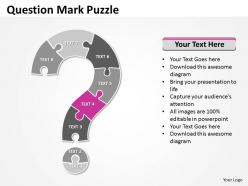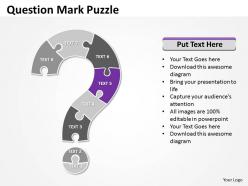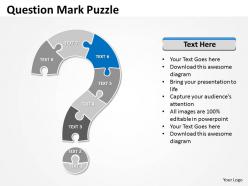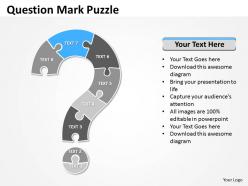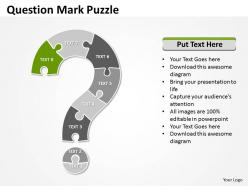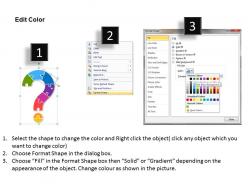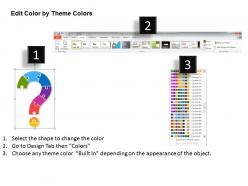
Question mark puzzle 4
Try Before you Buy Download Free Sample Product
Audience
Editable
of Time
Declare the reasons for your opinions. Our Question Mark Puzzle 4 will showcase your logic.
People who downloaded this PowerPoint presentation also viewed the following :
Question mark puzzle 4 with all 13 slides:
Only world class can help you put your best foot forward. Make sure to use quality Question Mark Puzzle 4 for your next presentation.
FAQs for Question
Regular puzzle-solving enhances cognitive function through improved memory retention, enhanced problem-solving skills, increased concentration, better pattern recognition, and strengthened analytical thinking. These mental exercises stimulate neural pathways by challenging different brain regions simultaneously, with educational institutions and corporate training programs increasingly incorporating puzzle-based activities to boost cognitive performance and strategic thinking capabilities.
Puzzles enhance learning by developing critical thinking, problem-solving skills, and collaborative abilities while making complex concepts more engaging and memorable. Teachers integrate crosswords for vocabulary building, logic puzzles for mathematical reasoning, and jigsaw activities for historical timelines, with many educators finding that puzzle-based learning significantly improves student retention and classroom participation.
Logic puzzles, mathematical brain teasers, spatial reasoning challenges, strategy games, and pattern recognition exercises are most effective for enhancing problem-solving abilities. These puzzle types strengthen analytical thinking, critical reasoning, and creative approaches to complex challenges, with many educational institutions and corporate training programs finding that regular puzzle-solving significantly improves decision-making skills and strategic thinking capabilities.
Different puzzle formats target distinct cognitive functions, with jigsaw puzzles enhancing spatial reasoning and visual processing, crosswords strengthening verbal skills and memory retrieval, and Sudoku developing logical reasoning and pattern recognition. These varied approaches enable comprehensive brain training across multiple neural pathways, with educational institutions and cognitive therapy programs increasingly incorporating diverse puzzle formats to deliver enhanced mental agility, improved problem-solving capabilities, and sustained cognitive health.
Puzzles promote mental health by providing mindful focus, reducing anxiety through structured problem-solving, enhancing cognitive function, and delivering satisfying achievement experiences that boost confidence. These activities enable stress reduction by redirecting attention from daily pressures, stimulating endorphin release, and creating meditative states, with many healthcare professionals and wellness programs increasingly incorporating puzzle-based interventions for therapeutic benefits.
Designing inclusive puzzles involves incorporating tactile elements, high contrast colors, adjustable difficulty levels, audio cues, and multiple solution pathways. These approaches enhance accessibility by accommodating visual, auditory, and cognitive differences, while puzzle manufacturers increasingly find that universal design principles ultimately deliver broader market appeal and improved user experiences across all demographics.
Latest puzzle design trends include augmented reality integration, adaptive difficulty algorithms, collaborative multiplayer formats, personalized content generation, and hybrid physical-digital experiences. These innovations enhance engagement by combining traditional problem-solving with interactive technology, enabling puzzle creators to deliver more immersive experiences while offering scalable solutions for educational institutions, entertainment companies, and corporate training programs seeking enhanced cognitive development tools.
Competitive puzzle-solving events enhance community engagement by bringing together diverse participants, fostering collaboration through team challenges, creating mentorship opportunities between experienced and novice solvers, and establishing regular social gatherings around shared interests. These competitions strengthen local puzzle clubs, libraries, and community centers while building lasting friendships and knowledge-sharing networks that extend beyond the events themselves.
Puzzle enjoyment stems from dopamine release during problem-solving, the satisfaction of pattern recognition, and the cognitive flow state achieved through optimal challenge levels. These psychological rewards activate our brain's reward system, enhance self-efficacy through accomplishment, and provide structured mental stimulation, with many individuals finding that regular puzzle-solving improves focus, reduces stress, and delivers sustained cognitive engagement.
Puzzle-based activities enhance team collaboration by encouraging problem-solving, communication, and strategic thinking through escape rooms, complex challenges, and collaborative brain teasers. These approaches strengthen workplace relationships, improve analytical skills, and boost morale, with many organizations finding that puzzle-solving sessions increase employee satisfaction and foster innovative thinking across departments.
Cultural variations in puzzle types reflect regional values, educational traditions, and cognitive preferences that shape problem-solving approaches across societies. These differences enable organizations to develop culturally-responsive training programs, educational materials, and team-building activities, with many international companies finding that incorporating region-specific puzzle formats enhances employee engagement and cross-cultural collaboration efforts.
Puzzles develop critical thinking in children by encouraging logical reasoning, pattern recognition, spatial awareness, and systematic problem-solving approaches. Through activities like jigsaw puzzles, logic games, and brain teasers, children enhance analytical skills, persistence, and strategic thinking, while schools and educational programs increasingly find that puzzle-based learning delivers improved academic performance and cognitive development.
Innovative puzzle-themed marketing campaigns include interactive social media challenges, augmented reality treasure hunts, gamified product launches, mystery box subscriptions, and collaborative community puzzles. These approaches enhance customer engagement by creating memorable experiences, encouraging social sharing, and building brand loyalty, with many retail and entertainment companies finding that puzzle-based campaigns significantly increase participation rates and customer retention.
Digital puzzles offer instant feedback, unlimited attempts, and adaptive difficulty levels, while traditional puzzles provide tactile satisfaction, social interaction, and tangible completion rewards. Many gaming companies and educational institutions find that combining both formats enhances user engagement significantly, with digital versions enabling scalable learning experiences and traditional puzzles delivering deeper satisfaction and collaborative problem-solving opportunities.
Physical puzzle production involves paper manufacturing, printing processes, packaging materials, and transportation logistics, while generating waste through defective pieces and end-of-life disposal. Digital alternatives significantly reduce environmental impact by eliminating material consumption and shipping, with many entertainment companies finding that cloud-based puzzle platforms deliver engaging experiences while minimizing their carbon footprint.
-
Unique and attractive product design.
-
Design layout is very impressive.