

RAD Model Phases Of Rapid Application Development Methodology Ppt Summary Designs





Try Before you Buy Download Free Sample Product
 Impress Your
Audience
 100%
Editable
 Save Hours
of Time


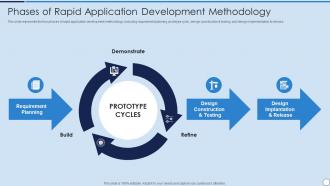
This slide represents the four phases of rapid application development methodology, including requirement planning, prototype cycle, design construction and testing, and design implementation and release.
People who downloaded this PowerPoint presentation also viewed the following :
RAD Model Phases Of Rapid Application Development Methodology Ppt Summary Designs with all 6 slides:
Use our RAD Model Phases Of Rapid Application Development Methodology Ppt Summary Designs to effectively help you save your valuable time. They are readymade to fit into any presentation structure.





FAQs for RAD Model Phases Of Rapid Application Development Methodology
So RAD has four phases you'll want to get familiar with. Business Modeling comes first - basically figuring out what your system actually needs to do. Data Modeling is next, mapping out how information flows around. Then Application Generation, which is honestly the best part - you're cranking out prototypes super fast and getting user feedback constantly. Testing & Turnover wraps it up before you go live. The whole thing is about speed over perfection, so don't fall in love with your first attempt. Get something rough but functional to users ASAP, then iterate like crazy based on what they tell you.
So basically RAD ditches that whole "plan everything perfectly first" waterfall thing. You jump straight into building prototypes and getting user feedback constantly - way less nerve-wracking than crossing your fingers and hoping you nailed it on the first try. Users stay involved the whole time instead of just at the start and finish. Quick cycles of build-test-refine rather than those marathon planning sessions (honestly who has time for that anymore?). Perfect if your project requirements keep changing or you're under tight deadlines. Definitely worth suggesting to your team!
Dude, prototypes are literally how RAD works. You throw together rough ones first so stakeholders can see what they're asking for - trust me, they never actually know what they want until it's in front of them. Then you keep tweaking based on feedback, making them more detailed each time. Eventually those prototypes become your actual system. The trick is keeping them simple enough that you can change stuff fast when someone inevitably says "oh wait, can we make this blue instead?" Don't treat them like throwaway sketches though - they're guiding your whole development process.
User feedback is basically the heart of RAD - it shapes everything. Your users help define what features they actually want during business modeling. When you're doing data modeling, they'll tell you if your structures make sense to them (not just to you). Process modeling gets way better once you see how they really work vs. how you assumed they'd work - there's always a disconnect there! Then you're constantly showing prototypes and tweaking based on what they say. Honestly, the whole thing falls apart if you're not listening to them. Set up regular check-ins and actually take their input seriously.
RAD's main thing is speed - you'll get working software out crazy fast with all that iterative prototyping. Users stay involved the whole time, so you catch problems early instead of when they cost a fortune to fix later. Teams can work in parallel too, which is nice since nobody's just sitting around waiting. Honestly, clients eat up seeing real progress fast rather than radio silence for months. Those feedback loops mean you're actually building what they want, not some fantasy version in your head. I'd say start small with a pilot project first - see how your team handles it.
Honestly, scope creep will probably be your biggest headache with RAD. Stakeholders see those quick prototypes and suddenly want to add everything under the sun. Your devs might burn out too - that pace is pretty brutal if I'm being real. Communication becomes make-or-break since you need constant feedback and fast decisions. If your team sucks at collaborating or the client goes MIA during review sessions, you're screwed. Oh, and definitely set hard boundaries from day one. Everyone needs to know what they're signing up for because RAD isn't for the faint of heart.
So RAD is all about those fixed timeboxes - like 60-90 days max for the whole thing. Each phase gets its slice and that's it, no extensions allowed. Honestly it's pretty brutal but works. Your team has to cut features instead of pushing deadlines, which actually keeps everyone moving. Requirements, design, construction, cutover - all squeezed into those tight windows. The pressure forces quick decisions and kills scope creep before it starts. I've seen it work way better than those endless traditional projects that drag on forever. Just set your boundaries early and don't budge.
For RAD stuff, I'd go with visual tools like PowerBuilder or Oracle Forms - basically anything that lets you drag and drop UI components. OutSystems and Mendix are solid too if you want something more modern. IBM Rational Rose is clutch for quick modeling. Honestly, don't overthink the "perfect" stack - just pick whatever your team can iterate with fast. Oh, and for databases, MySQL Workbench or PostgreSQL work great for rapid deployment. The whole point is speed over perfection, you know?
Look, RAD only works if everyone's actually talking to each other. You're building software *with* the business people, not just handing them something at the end and hoping they like it. Those joint sessions catch problems early - way better than the whole "wait, this isn't what we wanted" mess that happens with waterfall. Honestly, stakeholders get way more invested when they're helping shape things as you go. Just make sure people come ready to make quick decisions, or your whole rapid timeline falls apart. Oh, and maybe bring snacks to those sessions - keeps everyone focused.
Keep workshops short - 2-4 hours tops. Bring in real users, not the managers who think they speak for them (made that mistake before!). Each session should have clear goals like finishing wireframes or testing prototypes. Have someone taking notes the whole time. Between workshops, iterate fast - I'm talking days, not weeks. Always kick off by showing what you changed based on their last feedback before moving to new stuff. Oh, and don't let sessions drag on forever or people zone out. Quick iterations keep everyone invested and the whole RAD thing actually works.
Dude, iterative development is a game changer - you're basically tasting as you cook instead of crossing your fingers at the end. Problems get spotted super early, so you can pivot before wasting months on something users will hate. Each prototype becomes this learning moment where stakeholders actually see progress happening. Honestly, I've seen too many teams skip this and regret it later. You'll constantly get feedback and refine things, which means your final product actually matches what people want. Way better than the old "build everything then pray" approach, trust me.
RAD's great when deadlines are tight and you know requirements will shift. Perfect for prototypes or smaller business tools where users can give feedback constantly. Your team better be solid though - there's way less planning than usual methods. It totally breaks down on huge projects or anything mission-critical where mistakes are costly. Honestly, I've seen teams struggle with it if they're not experienced enough. Short story: if you're cool starting with something decent and polishing later, go for it. Just don't expect perfection right out the gate.
Don't save testing for the end - that's a recipe for disaster. Get users involved from day one during requirements planning. The prototype phase is honestly where you'll catch most issues if you're actually listening to feedback. Keep testing with real users throughout construction, not just your internal team. Those rapid cycles are actually your friend here since you're fixing small problems instead of one giant nightmare later. Oh and definitely do daily check-ins so people can speak up if something feels wrong. Your team should know they can hit pause if needed.
RAD cuts your timeline down to weeks instead of months - it's pretty wild how fast you can move with those constant feedback cycles. Money's trickier though. Yeah, you'll pay more upfront for good devs and tools, but catching problems early saves your ass from those budget-crushing changes later. Overall you come out ahead financially. Just make sure your team actually knows RAD first - I've seen teams tank both deadlines and budgets trying to figure it out as they go. That's never fun to watch.
RAD's actually pretty solid for handling scope changes - you're building and testing in these short cycles, so feedback gets worked in naturally. Prototyping is where it really shines because stakeholders can see actual working stuff instead of just nodding along to requirements docs (which honestly, half the time they don't fully get anyway). Changes get spotted early when they're way cheaper to fix. When scope creep hits - and yeah, it definitely will - you just roll those changes into your next iteration. Don't fight it, work with it.
-
Thrilled to see several customizable templates catering various verticals and industries.
-
If you are looking for satisfactory PowerPoint services, SlideTeam is your go-to place. I am fully contented with their research and development team.