


Radio Station Service Proposal Powerpoint Presentation Slides




Try Before you Buy Download Free Sample Product
 Impress Your
 Audience
 100%
100% Editable
 Save Hours
 of Time


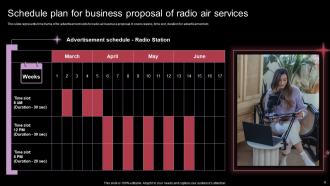
The Radio Air Services Business Proposal is ideal for covering business entry in a new global market and building brand image through marketing. Grab our insightfully designed template on Radio Station Service Proposal. It showcases the project context for the proposal by analyzing current market trends and building a customized plan for product promotion, along with the services and capabilities offered by it to the clients. Our Radio advertisement deck incorporates the time frame for its commercials, showcasing weeks, time slots, the duration for advertisement, etc. It also highlights the Companys information exhibiting the details related to the team members, the vision of the organization, and the long term goals to be achieved. Further, the Radio commercials module includes the client testimonials with their designations and an outline of the terms and conditions for the agreement policy and also covers service and payment, contract cancellation, etc. Get access to this powerful template now.
People who downloaded this PowerPoint presentation also viewed the following :
Content of this Powerpoint Presentation
Slide 1: This slide introduces Radio Station Service Proposal. State your company name and begin.
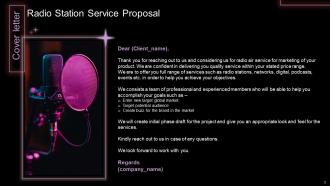
Slide 2: This slide shows Cover letter for Radio Station Service Proposal.
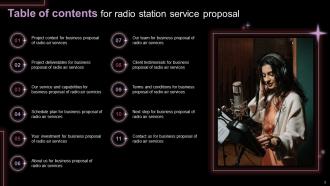
Slide 3: This slide incorporates the Table of contents.
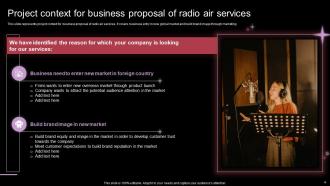
Slide 4: This slide represents project context for business proposal of radio air services.
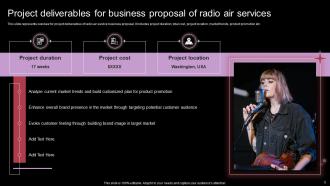
Slide 5: This slide highlights the overview for project deliverables of radio air service business proposal.
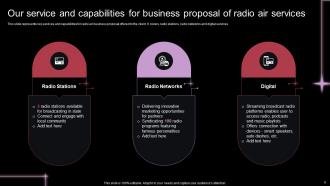
Slide 6: This slide indicates the key services and capabilities for radio air business proposal offered to the client.
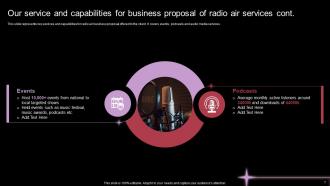
Slide 7: This slide showcases key services and capabilities for radio air business proposal offered to the customer.
Slide 8: This slide illustrates the Schedule plan for business proposal of radio air services.
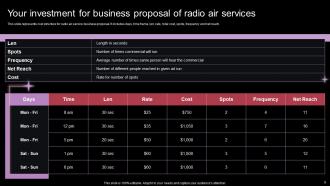
Slide 9: This slide represents cost structure for radio air service business proposal including days, time frame, len, rate, total cost, spots, frequency and net reach.
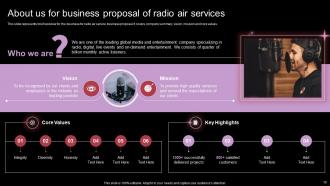
Slide 10: This slide depicts the brief overview for the business for radio air service business proposal covering company summary, vision, mission and core values.
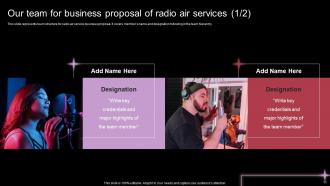
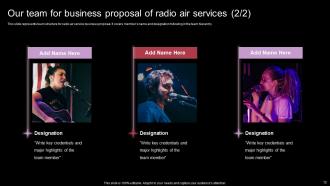
Slide 11: This slide presents team structure for radio air service business proposal showcasing member’s name and designation following in the team hierarchy.
Slide 12: This is yet another slide continuing the team structure for radio air service business proposal.
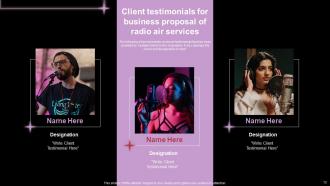
Slide 13: The following slide shows customer testimonials that has been provided by multiple clients to the origination.
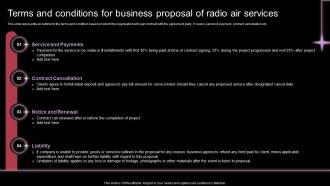
Slide 14: This slide depicts an outline for the terms and condition based on which the organization will sign contract with the agreement party.
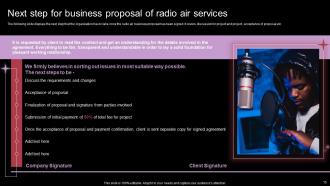
Slide 15: The following slide displays the next step that the organization has to take once the radio air business proposal has been signed covering discussion for project, acceptance of proposal etc.
Slide 16: This slide presents the Company information for business proposal of radio air services.
Slide 17: This is the Icons slide containing all the Icons used in the plan.
Slide 18: This slide is used for depicting some Additional information.
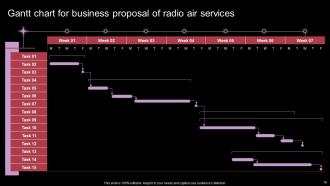
Slide 19: This slide shows Gantt chart for business proposal of radio air services.
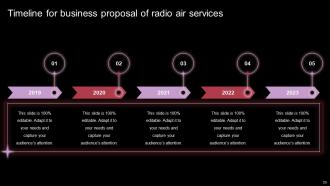
Slide 20: This slide displays Timeline for business proposal of radio air services.
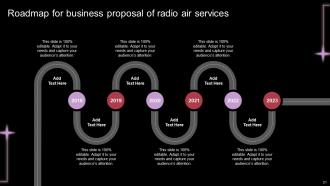
Slide 21: This slide represents Roadmap for business proposal of radio air services.
Slide 22: This is Our Mission slide with related imagery and text.
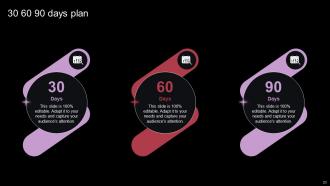
Slide 23: This slide provides 30 60 90 Days Plan with text boxes.
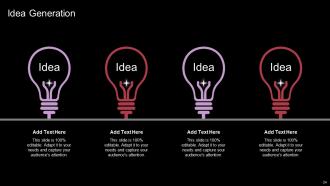
Slide 24: This is an Idea Generation slide to state a new idea or highlight information, specifications etc.
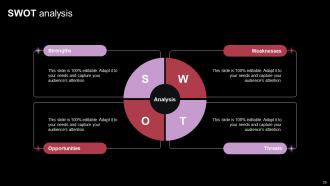
Slide 25: This slide shows SWOT describing- Strength, Weakness, Opportunity, and Threat.
Slide 26: This slide shows Post It Notes. Post your important notes here.
Radio Station Service Proposal Powerpoint Presentation Slides with all 31 slides:
Use our Radio Station Service Proposal Powerpoint Presentation Slides to effectively help you save your valuable time. They are readymade to fit into any presentation structure.





FAQs for Radio Station Service Proposal
Start with age groups - 25-54 works great for talk radio, while 18-34 loves contemporary stuff. Income matters since advertisers want people who actually spend money. Geographic stuff is massive too. Are you going super local or hitting multiple markets? Think about lifestyle segments - commuters, parents at home, people working nights. The more specific you get, honestly the stronger your pitch becomes. Oh, and definitely look into what demographics aren't being served well in your area. That's where you can really shine. Just make sure you've got actual census data and listening studies to back it all up.
Honestly, your original content is what'll set you apart from the big stations playing the same stuff on repeat. Survey your audience first - find out what gaps the major players are ignoring. Maybe it's underground hip-hop, local artists, or some weird niche nobody's touching. Big stations play it safe with focus-grouped nonsense, but you can actually take risks. Hyper-local shows work great too. Interactive segments that get people calling in, late-night talk shows - whatever fits your community's vibe. You're way more agile than they are, so use that advantage.
Honestly, you can't launch without decent tech anymore. People expect live chat during shows, mobile apps for song requests, that kind of stuff. Streaming is a must - nobody uses actual radios these days (okay, some people do, but you know what I mean). Social media integration helps too. I'd probably focus on like 2-3 solid features that your audience actually wants instead of going crazy with every bell and whistle. Podcast hosting is pretty standard now. Maybe throw in some automated posting tools so you're not glued to your phone 24/7. Just match what your listeners are already doing.
Advertising spots are gonna be your bread and butter - both local and national. Sponsorships from businesses too. If you go digital, maybe throw in some subscription stuff. Event partnerships and remote broadcasts can actually make decent money (my cousin's station does pretty well with those). Merchandise, podcast syndication, selling airtime to weird niche shows - there's options. But honestly? Don't put all your eggs in the ad revenue basket because that stuff fluctuates like crazy. I'd scope out what businesses are around you first, see who might bite, then expand from there.
Dude, partnering with local artists and businesses is honestly your best move right now. When you feature someone's music or do interviews, they'll blast it on their socials - free marketing right there. Local businesses are perfect for sponsorships and ads, which you'll definitely need for revenue. The cool part? You get exclusive stuff that big stations can't touch. Live performances, first listens, covering local events. I'd honestly rather listen to that than another corporate playlist. Start small though - maybe hit up three artists and two businesses this week, see what clicks.
FCC licensing is gonna be your biggest headache - the ownership rules and technical stuff are no joke. Local zoning for your transmitter site is another pain point. Also you'll need environmental assessments depending on where you're setting up. The paperwork is absolutely brutal but people do get through it. Don't sleep on EEO compliance and kids' programming requirements either. Honestly, just nail down those FCC filing deadlines first because if you miss those you're basically screwed from the start.
Dude, social media turns your radio station into this crazy content machine that works around the clock - way past your normal broadcast area too. You can livestream, post behind-the-scenes stuff, make clips that actually go viral. Some radio hosts I know have more Instagram followers than actual listeners, which is wild when you think about it. The cool part? Direct engagement with your audience and building real communities around your shows. TikTok's perfect for testing bits before you put them on air. Don't spread yourself thin though - pick maybe 2-3 platforms and stay consistent. That's way better than half-assing it everywhere.
Honestly, radio proposals are getting brutal with all the streaming competition out there. You've got to tackle the "why not just use Spotify?" question right upfront. Focus hard on what radio actually does better - emergency info, local news, live community stuff that streaming can't touch. People still want that shared experience during big events, you know? Maybe throw in some hybrid digital options too. The key is emphasizing real-time local connection over generic playlists. Nobody wants to sit through random ads anymore, so your live content better be worth it.
Honestly, figure out what makes you different from Spotify first - that's your whole foundation. Maybe you're all about discovering underground bands, or you're the voice of your local scene, or just playing forgotten gems with actual personality behind the mic. Your vision should make people feel something specific, not just list what genres you'll spin. Most radio mission statements are boring and identical, so get weird with it. What's your actual vibe? Test it on friends - if they're not immediately like "oh yeah, I'd listen to that," then you're probably being too generic. Keep tweaking until it clicks.
Hey! So you'll need to watch both audience stuff and money metrics. Listener ratings and market share tell you if people actually care about your content. Time spent listening is big too. For revenue - track your ad rates, sponsorship deals, and overall profit. Digital's super important now (honestly more than traditional radio sometimes) - website traffic, social engagement, podcast downloads. Demographics are everything for landing advertisers. I'd set quarterly goals for each metric so you can pivot fast when something tanks. Makes it way easier to spot problems early.
Think of community feedback as your secret weapon for programming. Listener surveys work great, but don't sleep on social media polls or even old school town halls. I've watched stations do complete 180s on their music after getting weird feedback they weren't expecting. Monthly listening sessions are clutch - or just do call-in segments where people pitch content ideas. The trick? Make it stupidly easy for folks to give input, then actually follow through. Nobody wants to feel ignored after they took time to share thoughts. Start with one monthly feedback thing and see how it goes.
Focus on three big things: your online game, getting involved locally, and finding good partnerships. Social media is huge - be where your listeners actually are, and fix your website so it doesn't suck on phones. Sponsor stuff around town, team up with local businesses, show up at events. Radio's still super local, even now. Honestly, cross-promotion with established businesses nearby is probably your best bang for the buck. I'd start by looking at what events are happening in the next couple months and see how you can jump in.
Hit up local spots that match your audience - coffee shops, bookstores, gyms, whatever fits. They can fund your startup costs for on-air shoutouts or ad packages later. Some stations get their whole studio setup sponsored this way, which honestly sounds amazing. For partnerships, maybe team up with venues for live shows or music stores for gear discounts. Show them real numbers though - projected listeners, demographics, what exposure they're getting. Oh and start building those relationships now, not when you're broke and desperate.
Go music-heavy with interactive stuff - that's what really works. Mix current hits with throwbacks and spotlight local artists too. People want to discover new music but also hear songs they already love. Keep talk segments conversational, not that over-produced radio voice thing (seriously, who talks like that anymore?). Morning shows and drive-time with call-ins are solid. Social media integration is huge. Maybe throw in some trivia or light games? The goal is making listeners feel like they're part of something, not just listening passively. Oh, and definitely test different formats with focus groups before you commit to anything.
Figure out who you're actually talking to first - like, what's your audience and what makes you different from every other station? Your on-air people are honestly gonna make or break this whole thing, so they need to actually GET the vibe you're going for. Create logos and colors that don't suck and use them everywhere. The music style and personality you pick should feel real to your community, not some corporate boardroom idea. Oh and whatever tagline you come up with, make sure it actually means something. Consistency across everything is key.
-
Delighted to see unique and eye-catching PowerPoint designs that are so easy to customize.
-
“Thank you to the SlideTeam. Your presentations look really skillful and have made my life so much easier.”