


Real Estate Investment Fund Powerpoint Ppt Template Bundles





Try Before you Buy Download Free Sample Product
 Impress Your
 Audience
 100%
100% Editable
 Save Hours
 of Time


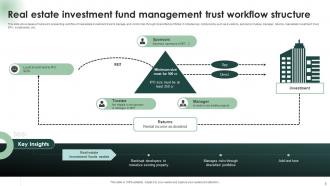
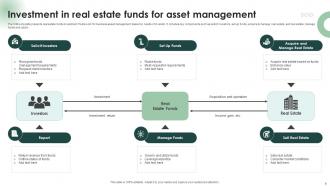
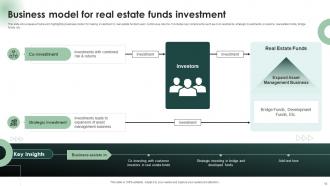
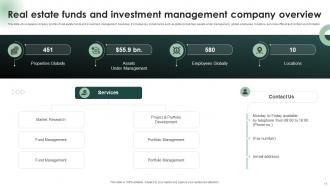
Introducing our comprehensive PowerPoint presentation PPT on the Real Estate Investment Fund. This meticulously crafted resource is designed to provide a comprehensive understanding of income structures, infrastructure investments, REIT valuation, and private equity firms within the realm of real estate. Our PPT delves into the intricacies of income structures, offering insights into rental income, capital gains, and dividend distributions. We explore the vital role of infrastructure investment, highlighting its impact on property values and potential returns. The presentation also dives into the nuances of REIT valuation, showcasing key metrics and methodologies for assessing investment performance. Additionally, we shed light on the involvement of private equity firms, uncovering their strategies and contributions to real estate investment funds. Engaging and informative, this PPT equips investors, professionals, and enthusiasts with the knowledge necessary to make informed decisions in the dynamic world of real estate investment.
People who downloaded this PowerPoint presentation also viewed the following :
Real Estate Investment Fund Powerpoint Ppt Template Bundles with all 20 slides:
Use our Real Estate Investment Fund Powerpoint Ppt Template Bundles to effectively help you save your valuable time. They are readymade to fit into any presentation structure.











FAQs for Real Estate Investment Fund Powerpoint
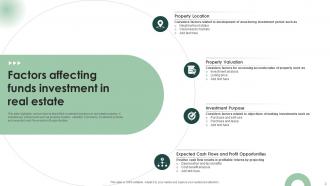
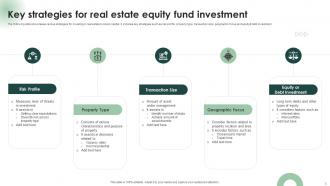
Okay so four big things to look at. Track record matters most - how did their past funds actually do through good times and bad? Their strategy too, like are they doing commercial or residential, what areas they focus on. Fees will absolutely kill you if you're not careful - management fees, carried interest, all that stuff adds up fast. Oh and check out what's currently in their portfolio plus how they plan to exit investments. I know it sounds like a lot of work but honestly, you really want to make sure these people know what they're doing and it matches what you're comfortable with timeline-wise.
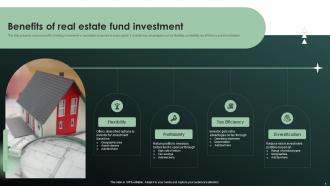
So basically, with investment funds you're pooling money with other people to buy properties together. Traditional real estate means you own the whole thing yourself. Funds are way easier honestly - you don't need massive upfront cash and won't deal with tenant drama (nobody wants calls about broken AC units). Plus you get spread across multiple properties instead of putting all your eggs in one basket. Downside is you can't control decisions and won't see huge gains if one property really blows up. But if you want real estate exposure without the hassle? Funds are solid.
Most real estate funds target big commercial stuff - office buildings, shopping centers, apartment complexes, warehouses. Hotels and industrial properties too. Single-family homes? They don't bother with those since it's way too much work for the return. What they want is steady rental income plus properties that'll go up in value over time. Some funds get really niche though, like only doing student housing or medical buildings. I'd say definitely look into what types they focus on before you put money in. Makes a huge difference in your returns.
Honestly, the biggest thing to watch out for is how volatile real estate can get - values tank pretty hard during recessions. You can't bail out quickly either like you would with stocks. These funds usually have annoying lock-up periods or delays when you want your money back. Interest rates are brutal too since higher rates make borrowing more expensive and properties look way less appealing compared to bonds. Bad management decisions can screw you over if they pick terrible properties or borrow too much. I'd check their performance during past crashes first - that tells you everything.
So you wanna track how your fund's doing? Total return is the big one - that's growth plus any cash they've paid out. NAV trends show if it's actually climbing over time. IRR matters a ton since it factors in when money went in and out. Compare it against REIT benchmarks too, not just what the fund company tells you. Marketing stuff is usually garbage honestly - stick to audited financials and third-party reports. Oh, and don't get caught up in short-term swings. Real estate moves slow anyway.
Okay so there's a bunch of fees to watch out for. Management fees are like 1-2% per year, plus they'll hit you with acquisition fees when buying properties and disposition fees when selling. Performance fees kick in if returns are good. Then there's all the boring stuff - administrative fees for accounting, asset management fees for running the properties day-to-day. Honestly the administrative ones are super sneaky because they seem small but add up quick. My advice? Get them to break down every single fee before you put money in. These things eat into your profits more than most people realize.
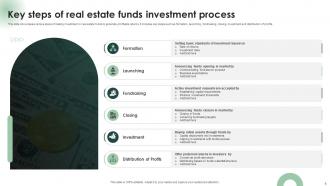
So most real estate funds use this "waterfall" thing where you get paid in a specific order. First, investors get their preferred return - usually around 6-8%. Then the fund takes their management fees and carried interest. Whatever's left gets split between you and the managers, typically 80/20 in your favor (though I've seen it vary). Some funds pay out quarterly instead of making you wait until they sell everything. Honestly, you really need to read through their specific waterfall structure before putting money in. The details matter way more than people think and can totally change your actual returns.
So diversification basically means you're not putting everything into one type of property or location. Like instead of just buying office space in one city, you'd want residential, commercial, maybe some industrial stuff spread across different markets. That way if offices crash (which honestly, they kinda have been lately), your apartments or warehouses might still do fine. The tricky part is finding funds that actually do this right - some claim they're diversified but then own like 30 apartment complexes all in Phoenix or whatever. You want real variety across property types and geography so one bad market doesn't wreck your whole investment.
Check what your current broker has first - you might already have access and not even know it. Most real estate funds work just like buying regular mutual funds or ETFs through brokerages, fund companies, or advisors. Minimums are pretty decent too, usually $1K-$5K for retail stuff. Private funds need accredited investor status but public REITs don't. There are those fancy institutional ones requiring $100K+ but honestly that's way more than most people need. Oh and some brokers have zero minimums on certain REIT ETFs if you're just starting out.
Honestly, it's wild out there right now. Interest rates are all over the place, so everyone's scrambling to adjust their game plans. ESG stuff isn't optional anymore - institutional money won't touch you without it. Tech and data centers are the hot thing, but like... everyone's fighting over the same deals at this point. Oh, and retail investors can jump into REITs through apps now, which is cool but creates way more competition for funding. You'll want to figure out how to handle these higher borrowing costs. Also make sure your portfolio actually hits those sustainability boxes or you're basically out of the running.
Economic factors basically control everything with real estate funds, honestly. Rising interest rates = higher borrowing costs and property values usually tank. Inflation's weird though - properties appreciate but your construction and maintenance costs go through the roof. GDP growth is solid news since more people want commercial and residential space. Unemployment? That's when rent collection gets messy and vacancy rates climb. I learned this the hard way watching my neighbor's rental property sit empty for months during the last downturn. Diversify across different areas and property types so you're not totally screwed when one trend hits.
Honestly, it's a mess of regulations depending on how you structure things. SEC's the big one - stick to accredited investors and you can use Rule 506(b) or 506(c) exemptions. Want retail investors? Good luck with full registration requirements. Then there's the Investment Company Act (most RE funds find ways around it though). State securities laws are their own nightmare too - every state's different. My advice? Find a solid securities attorney now. Seriously, compliance costs upfront beat the hell out of penalties later. I learned that one the hard way with a different project.
So most real estate funds keep cash on hand from new investors and rent payments to cover when people want out. They'll usually limit withdrawals though - like only letting you pull money quarterly or capping how much everyone can take at once. Honestly, some just make you wait longer when markets get weird (kinda sketchy but whatever). Closed-end ones are trickier since you're stuck until they sell everything or you find someone to buy your shares. Check their withdrawal rules first - you don't want your money trapped for years.
So REITs usually pull around 6-10% annually over the long haul - not bad honestly. They're kind of the sweet spot between bonds and stocks. You'll get steadier returns than regular equities but way better than bonds. Property values generally keep up with inflation too, which is nice. Though yeah, 2008 was brutal for anything real estate related. The downside? You can't just dump them instantly like stocks when you need cash. My cousin learned that the hard way last year. But if you want something that smooths out your portfolio without going full conservative, they're decent for that middle ground.
Honestly, ESG stuff is everywhere in real estate now. Environmental metrics like energy efficiency actually move property values - LPs care about this data way more than they used to. Social impact matters too, especially affordable housing and community projects. Governance is basically just "don't be sketchy with management" but you'd be surprised how often that's an issue lol. Funds doing ESG well are pulling in more capital. Better returns too, from what I'm seeing. Track these metrics if you're not already - it's becoming non-negotiable for serious investors.
-
“Excellent service from the customer support team when I wanted a slide that was a bit different from those on their standard menu. Super helpful.”
-
“There is so much choice. At first, it seems like there isn't but you have to just keep looking, there are endless amounts to explore.”