


Development Lifecycle Of Real Estate Properties




Try Before you Buy Download Free Sample Product
 Impress Your
 Audience
 100%
100% Editable
 Save Hours
 of Time


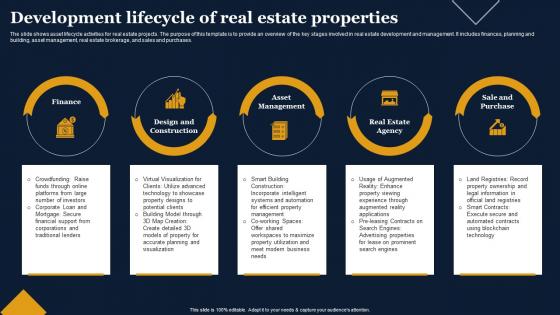
The slide shows asset lifecycle activities for real estate projects. The purpose of this template is to provide an overview of the key stages involved in real estate development and management. It includes finances, planning and building, asset management, real estate brokerage, and sales and purchases.
People who downloaded this PowerPoint presentation also viewed the following :
Development Lifecycle Of Real Estate Properties with all 9 slides:
Use our Development Lifecycle Of Real Estate Properties to effectively help you save your valuable time. They are readymade to fit into any presentation structure.








FAQs for Development Lifecycle Of
So there's basically three phases but they kinda blur together tbh. Pre-development is all your research stuff - market analysis, site work, getting permits and money lined up. Then development is when you're actually building and dealing with contractors (which is honestly the most stressful part). After that you've got post-development - marketing, sales, property management, all that. Each phase eats up different amounts of cash and has its own headaches. I'd figure out where you are right now first, then you can plan what comes next. The timeline and cash flow planning early on will save you so much trouble later.
Honestly, market analysis is what saves you from making expensive mistakes. Look at demographics, income levels, and who you're competing against in different areas. I've watched developers get obsessed with beautiful locations that nobody actually wanted to live in - kind of heartbreaking. The data shows you if people actually need what you're planning to build and if they can afford your prices. Also check if zoning and infrastructure make sense for current trends. My dad always said trust your gut, but with real estate? Let the numbers do the talking first.
Think of it like different gas tanks for different parts of the trip. Most people start with equity or development loans to grab the land and handle early costs. Then construction financing kicks in when you're actually building. Here's the thing though - you absolutely cannot wing the timing on this stuff. Once everything's built, you either refinance into long-term debt if you're keeping it, or sell and pay everyone back. Honestly the biggest mistake I see is people not mapping out their financing before they start digging. Don't be that person scrambling for money halfway through.
Okay so first thing - don't skip the boring upfront stuff like soil tests and zoning research. I know it's tempting but trust me, finding problems early beats dealing with disasters later. Budget at least 10-15% extra for random crap that'll pop up (and it will). Each phase has different headaches - feasibility, design, construction, then leasing. Build relationships with contractors who actually show up when they say they will. Get decent insurance obviously. If you're new to this maybe partner with someone who's been through it before? Oh and have your backup plans ready BEFORE things go sideways, not after.
Oh man, zoning approvals are the worst - seriously prepare to hate your life during that process. Building permits and environmental compliance will eat up months too. Local zoning laws are totally different everywhere, which is super annoying when you're trying to scale. Environmental stuff gets crazy if there's any wetlands or soil issues. Then you've got building codes, fire safety, accessibility requirements... the list never ends. Each city has their own weird rules that make zero sense. Start talking to planning departments ASAP and honestly? Budget like double the time you think you'll need.
Dude, don't skip community engagement - I've watched so many developers learn this the hard way. Get locals involved early and you'll spot problems before they cost you serious money. Trust me, it makes permitting way smoother too. Plus people will actually give you ideas that improve your design (some are surprisingly good). The trick is having real conversations before you've decided everything. Set up those neighborhood meetings and actually listen to what people say. Oh, and respond to their concerns like you mean it - nobody likes feeling ignored. Engaged communities will fight FOR your project instead of against it.
Focus on three big things: green building stuff, how it fits with the community, and long-term efficiency. Get LEED standards and energy-efficient systems built in from the start - don't try to retrofit later, it's a nightmare. Walkability and transit access are massive now; buyers actually care about this stuff. Mixed-use designs cut down on car dependency too. Oh, and water management with rainwater systems and native plants makes a huge difference. Here's the thing - sustainability isn't just feel-good anymore. Properties typically jump 7-10% in value and slash operating costs.
Dude, get a feasibility study before you throw real money at this thing. It'll show you if there's actual market demand, what construction will really cost, zoning headaches you might face - all that stuff. I know it seems like extra paperwork, but I've watched people skip it and get burned hard. The study covers soil conditions, financing options, basically gives you the real picture of what you're walking into. Some short sentences work better here. Don't even think about breaking ground without one, even if you're totally pumped about the project.
Dude, interest rates are basically make-or-break for real estate deals. Low rates? Everyone's buying and your construction loans are cheap. Rates go up and the whole market just dies. Material costs are killing people right now too - like, steel prices are insane. You also gotta think about whether people actually have jobs to afford your units. GDP tells you if investors are feeling confident or scared. Oh, and always run different rate scenarios in your numbers. Trust me, you don't want to get caught with your pants down when the Fed decides to mess with rates again.
Dude, the tech stuff happening in real estate right now is wild. Predictive analytics helps with site selection, IoT sensors track construction progress in real time. VR presentations blow those clunky 3D renders out of the water - honestly such a game changer for client meetings. Digital twins are pretty much standard now for building management, and blockchain's making property deals way smoother. BIM's getting more sophisticated too, though I still think some of it's overhyped. Check out proptech conferences near you - that's where you'll actually see what's working versus what's just marketing fluff.
Get your plans to the city planning folks ASAP - seriously, do this before you're locked into anything. Find architects who actually know your local codes because those books are absolute nightmares to read through yourself. Don't wait until the end for inspections either - schedule them as you go or you'll hate yourself when expensive fixes pile up. Oh, and be nice to your building officials! They're usually cool about helping if you show up with real questions instead of just winging it. Building relationships there will save you tons of headaches.
Okay so first thing - set up regular check-ins right away and document literally everything. I can't tell you how many times I've watched projects crash because people didn't write down scope changes or just assumed everyone was on the same page. Your contract needs to spell out who does what and when. Also? Build in extra time because stuff always takes longer than you think. Oh and here's the thing - don't treat them like some random vendor. When you actually work with them like partners, they'll go way harder for your project and you'll save yourself so many headaches.
So adaptive reuse is pretty much like regular development - you've got feasibility, due diligence, design, permits, construction. Just without the demo part since you're working with what's already there. Design gets wild though, like figuring out how to jam luxury condos into some crusty old warehouse. Your feasibility study has to factor in structural stuff and whatever random garbage is lurking behind the walls. Honestly, I learned this the hard way - always pad your budget and timeline because you WILL find weird surprises once you start ripping into things.
Track your core numbers first - ROI, IRR, profit margins vs what you projected. Did you hit construction deadlines and lease-up targets? Occupancy rates matter big time, plus what rents you're actually getting. Cost per square foot compared to similar projects is honestly where I've seen the biggest surprises. Tenant retention too if it's multi-tenant. Monthly dashboard keeps you sane so you can pivot quickly when things go sideways. Timeline stuff bites people more than they expect.
Honestly, social media is a game-changer for real estate. Pick Instagram and Facebook first - perfect for showing off project photos and those satisfying construction progress videos. LinkedIn's your friend for commercial stuff and finding investors. TikTok actually works if you're targeting younger buyers (weird but true!). The trick is posting consistently and actually responding to comments and DMs. Don't spread yourself too thin though - start with maybe two platforms where your buyers actually spend time. Good visuals plus clear calls-to-action are everything. Virtual tours do really well too.
-
Out of the box and creative design.
-
Well-designed and informative templates. Absolutely brilliant!