

Real Estate Company Sales Flow Chart




Try Before you Buy Download Free Sample Product
 Impress Your
 Audience
 100%
100% Editable
 Save Hours
 of Time


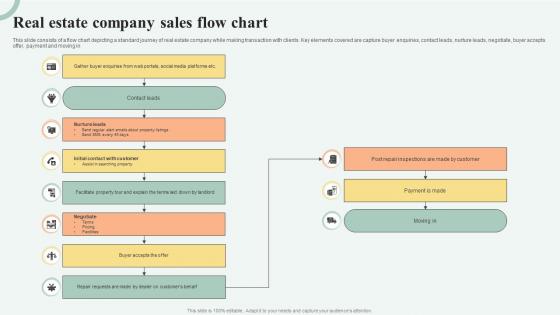
This slide consists of a flow chart depicting a standard journey of real estate company while making transaction with clients. Key elements covered are capture buyer enquiries, contact leads, nurture leads, negotiate, buyer accepts offer, payment and moving in
People who downloaded this PowerPoint presentation also viewed the following :
Real Estate Company Sales Flow Chart with all 6 slides:
Use our Real Estate Company Sales Flow Chart to effectively help you save your valuable time. They are readymade to fit into any presentation structure.






FAQs for Real Estate Company
Honestly, it breaks down pretty simply: lead gen, initial consult, evaluating/pricing the property, marketing and listing it, showings, negotiating offers, then closing. You'll be stuck in that marketing and showing phase forever when the market sucks - I swear some listings feel cursed. Keep your pipeline stuffed at every stage though, otherwise you're just sitting there twiddling your thumbs waiting for one deal. Start by nailing down your lead generation system and follow-ups first. Everything else you can figure out as you go.
Look, market analysis is your pricing compass - shows you exactly where to set your listing price. Check recent comps from the last 3-6 months, see what's sitting on the market, and figure out if buyers or sellers have the upper hand right now. I've watched too many agents just throw out a number and pray it works. Spoiler: it doesn't. The data tells you whether you can push the price or need to play it safe. My neighbor tried winging it last year and their house sat for like 4 months. Don't be that person - pull the comps and price smart.
Look, real estate agents are basically your middleman for the whole thing. They'll price your place right and handle all the showings and negotiations - honestly such a pain to do yourself. The paperwork is insane too. Your agent coordinates with inspectors, lenders, all those people so nothing falls through. Plus they actually know what's selling in your area. I mean, you could try going solo but why stress yourself out? Find someone you click with and let them deal with the headaches while you figure out where you're moving next.
So staging is basically making your place look like a model home instead of where you actually live. Get rid of personal stuff and clutter first - that's huge. Arrange furniture so rooms feel spacious and flow well. I swear it's crazy how much bigger spaces look when done right! You want buyers picturing their own life there, not feeling like they're snooping through your house. Keep everything neutral but still aspirational, you know? Hit the main living areas first since those pack the most punch. Professional stager's worth it if you can swing the cost.
Watch out for anchoring - they'll throw out some crazy high/low number first to mess with your head. Fake urgency is huge too, like "this deal expires tonight!" Yeah right. Buyers always lowball using comps they found online, and sellers? They love pretending there's a bidding war when honestly it's just your client. Then there's nibbling - after you agree on the big stuff, suddenly they want the fridge AND the lawn mower thrown in. Oh, and that "take it or leave it" thing is mostly BS. Just double-check those so-called deadlines and competing offers before anyone panics.
Dude, the tech stuff in real estate is insane now. Virtual tours let people "walk through" houses from anywhere - I showed a place to someone in Texas last week without them flying out. CRM systems track all your leads automatically. Social media targeting is crazy precise too. Mobile apps are the real winner though - clients can search, book showings, even make offers from their couch. Digital signatures make closings so much faster, no more printing stacks of papers. Oh, and AI generates leads while you sleep which is kinda wild. Pick one tool to try this quarter, seriously.
You'll definitely want to get your disclosures right - property defects, environmental stuff, HOA info, all of it. Title searches are huge for verifying clean ownership. Your purchase agreements have to follow state laws and include the right contingencies. Fair housing rules apply to everything you do, marketing to closing. The paperwork honestly feels insane when you're starting out, but it protects everyone's ass. Oh, and find a good real estate attorney plus title company now - seriously, before you need them. They're worth their weight in gold when things get messy.
Honestly, start with figuring out who's actually gonna buy your place. Then get decent photos - I can't stress this enough, those grainy phone pics are instant deal-breakers. Virtual tours help too. Obviously list on MLS, but don't sleep on social media. Instagram and Facebook work well for millennials, maybe LinkedIn if it's a fancy property. Your agent can set up targeted ads based on where people live, what they make, all that stuff. Way better than just throwing ads everywhere and crossing your fingers. Oh, and millennials love scrolling through house content apparently.
Oh trust me, you don't want to skip inspections! I learned this the hard way when my cousin tried to save money and ended up with a flooded basement two weeks after closing. Inspections catch all the scary stuff - bad wiring, leaky pipes, foundation cracks, busted AC units. Your buyer gets peace of mind, and you can fix issues beforehand or negotiate price. Yeah, sometimes deals get messy when problems pop up, but it's way better than lawsuits later. Always put inspection clauses in contracts and find a good inspector who won't drag things out forever.
Dude, social media is huge for real estate right now. Instagram and Facebook are perfect for posting those gorgeous property photos and virtual tours - people eat that visual stuff up. TikTok's actually killing it too if you can make fun property videos (who would've thought?). The trick is jumping into local community groups and using hashtags that actually target buyers in your area. Oh, and don't be one of those agents who just dumps content and disappears. Answer comments fast, reply to DMs - that's where the real connections happen and deals get made.
Definitely start with the big four - conventional, FHA, VA if they qualify, and cash. Most people have no clue how many financing options exist! Pre-approval vs pre-qualification confuses everyone, so explain that difference early. First-time buyers especially need to know about local down payment assistance programs (seriously, these can be game-changers). Ask about their finances first though. That way you can actually recommend what fits their situation instead of dumping everything on them at once. Oh, and don't forget jumbo loans for pricier properties - those work differently than regular mortgages.
Interest rates are huge - they control how much house people can actually buy. Low rates? Buyers everywhere, bidding wars, houses gone in days. When rates shoot up, suddenly half your buyers can't qualify anymore and everything sits longer. I swear the Fed has more control over my commissions than I do sometimes. You gotta watch those announcements religiously. And honestly, most clients only think about purchase price, but show them how a rate change affects their monthly payment - that's what really opens their eyes. Pricing strategy has to shift with the rates or you're screwed.
Honestly, it's all about the prep work. Stage everything nicely and make sure your place is spotless - I mean like, weirdly clean. Get your brochures and business cards ready beforehand. Here's something that actually works: bake cookies or light a candle because people buy with their noses more than you'd think! When visitors show up, be friendly but don't hover over them while they're looking around. Definitely grab everyone's contact info and follow up the next day. Oh, and pay attention to which rooms people ask the most questions about - that tells you everything you need to know for next time.
Ok so closing is when the house officially becomes yours - like the final handoff. Usually happens 30-45 days after your offer gets accepted. Before that date hits, there's tons of stuff going on: inspections, appraisals, loan paperwork, title searches, all that fun stuff. The actual closing day? You'll sign what feels like 500 documents (I swear they multiply), money gets transferred, and boom - you get the keys. Oh, and definitely do a final walkthrough a day or two before. Trust me, you don't want any surprises after you've already signed everything.
Listen first, then acknowledge what they're saying before jumping in with your response. Ask questions to dig deeper - "too expensive" usually means they don't see the value yet. Try the feel-felt-found thing: "I get it, other buyers felt the same way, here's what they discovered..." Sounds cheesy but honestly it works. Have your data ready - comps, market trends, all that stuff. Don't get defensive (easier said than done, I know). Instead, remind them why they wanted to buy in the first place and connect that back to solving whatever's bugging them.
-
What an exhaustive collection of templates you guys have there in slideteam. Impressive!!!
-
Loved the templates on SlideTeam, I believe I have found the go to place for my presentation needs!